
-
The awareness of timeLeibniz v Newton is still a topic in history of ideas and physics, to do with their competing understandings of time.
-
Evolutionary Psychology- What are people's views on it?For some reason, Freud springs to mind here, but I have to go and engage in other cultural pursuits (i.e. gym) so I'll come back to it later.
-
Evolutionary Psychology- What are people's views on it?I beg to differ as reproduction is not a "physiological need". — schopenhauer1
I think the pleasure associated with sex is rooted in evolutionary physiology. it is natural that the reproductive urge harness all the pleasure centres in seeking to express itself. Humans, uniquely, are then able to detach the associated pleasure from its biological origin and pursue it for its own sake (although there are accounts of eroticism in other species, famously bonobos.) -
Evolutionary Psychology- What are people's views on it?various people have drawn up lists, like Maslow. — BC
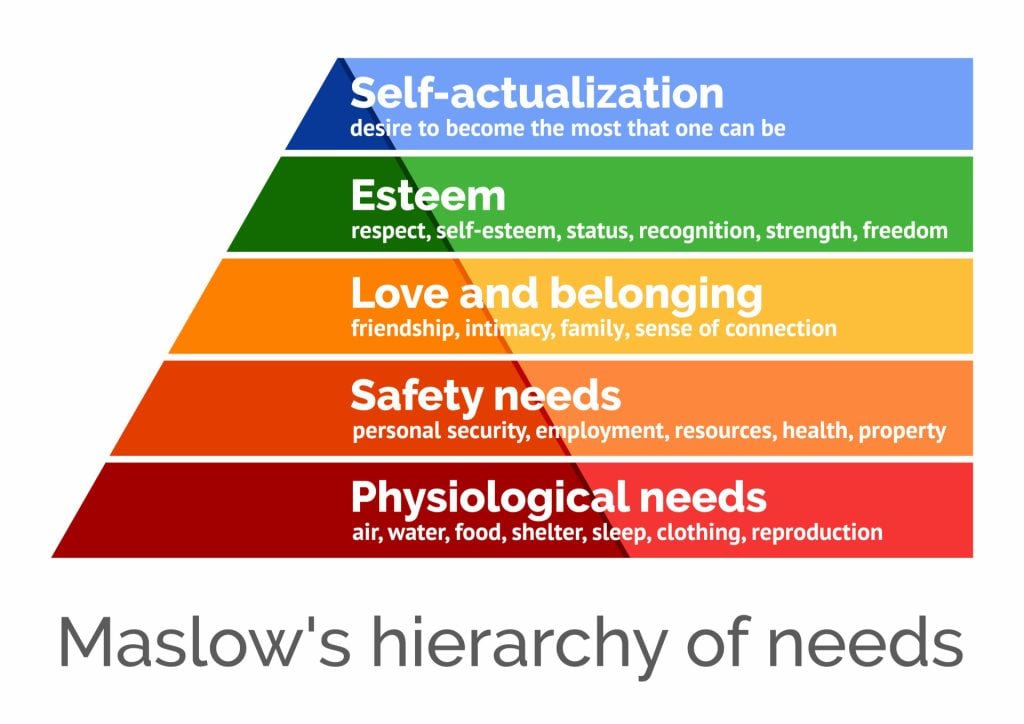
Evolutionary biology accounts mainly for the ground floor. Evolutionary psychology maybe 2 & 3, but its relevance wanes as you go further up. -
Evolutionary Psychology- What are people's views on it?I think the problem with much of this, is that we look to evolutionary theory as a philosophy, which it isn't. Many 20th C philosophers regard evolutionary biology as a kind of procrustean bed, to which all other philosophical ideas must be conformed. But it is a biological theory intended to account for the evolution of species, not actually an epistemology or a metaphysics. But because it is assumed to be so, it smuggles in a good many naturalistic assumptions that have no grounding in what used to be understood as first philosophy.
There's that nice expression that evolution is driven by the four F's - feeding, fighting, fleeing, and reproduction. None of that encompasses one of the very most basic attributes of h. sapiens: to ask why. Why are we doing all this? Why should we continue to reproduce? Plainly there's a small but significant coterie within the human population who consciously decides not to. Why on earth not? Makes no sense! :chin:
Mary Midgley (not one of Richard Dawkins' favourite philosophers) has a good book on this, Evolution as a Religion: Strange Hopes and Stranger Fears. It's part of the larger overall trend of treating science as religion, as being the source of normative judgement as to how we should live. -
Donald Trump (All General Trump Conversations Here)Trump is under multiple indictements, and by year's end will be under many more. For those inside the Fox media bubble, these are simply 'instruments of the corrupt state trying to destroy the greatest President the US has ever had.' Those outside know they are likely to be fatal to his candidacy.
-
Enactivism and Eastern PhilosophyWhich I remember being the exact point of my post. Why does it sound like you're pointing this out to me? And keep in mind, I learned this from science. — Srap Tasmaner
Yes I see what you mean. First paragraph: scientific realism (first, there is a mountain)
Second paragraph: 'but we know scientific realism is a construct (then there is no mountain)
Third para: This is a knot.
Indeed it is. -
Kant's Notions of Space and TimeAny empirical entity I encounter is given to my perception as a complex of sensations that has already been completely organized according to a principle which always precedes and is unrelated to any subsequent, deliberate effort on my part to attempt to conceptually categorize or classify the entity. — charles ferraro
Ah, but that's not the point. That's an 'instinctively empiricist' view - you're assuming the prior reality of the object. Kant's philosophy is about how we make sense of experience, without making that assumption. -
The awareness of timeYes but the dispute over whether it was Newton or Liebniz who came up with calculus is the part you will hear about outside mathematics class.
-
Donald Trump (All General Trump Conversations Here)It’s obvious that he’s ‘leading in the polls’ but in this case there are, ahem, other factors to consider.
-
Donald Trump (All General Trump Conversations Here)Apparently they’re on it https://apple.news/AuWeVrjq2S16H2tjkoitkDQ
-
Donald Trump (All General Trump Conversations Here)Let’s remember the fact that the Never Trumpers damn near kneecapped Trump at the 2016 Convention. You can only imagine what will happen at the 2024 Convention if he were the nominee (which I’m sure he won’t be.)
-
Enactivism and Eastern Philosophykeep in mind, I learned this from science. — Srap Tasmaner
But that seems in conflict with theconception of organism here, environment there. — Srap Tasmaner
I’ll come back to that when I have time.
Such an existence is not unintelligible, but is rather intelligible, but yet to be understood, meaningful although the meaning is yet to be discovered, just as unseen worlds are visible, but yet to be seen. — Janus
An empirical fact - but there’s always an implicit first-person perspective in such conjectures.
The Tao Te Ching is full of subtly different uses of language, — T Clark
You mean translations of the Tao. It is notable that no two translations into English are the same. -
Nice little roundup of the state of consciousness studiesMore seriously, I suppose my Practice of writing down my philosophical thoughts, and subjecting them to criticism, is a form of Praxis. — Gnomon
I think it is. I'm sure you all your efforts are driven by what used to be understood as a calling. It's how to answer that is the challenge!
Incidentally about praxis - rather a good Wikipedia article on that also -
Enactivism and Eastern Philosophy:ok:
On the one hand, there's a story that says, here's an organism and here's its environment, and here's how the organism is or isn't well adapted to that environment, and here's how evolution takes hold to shape future generations of that organism. — Srap Tasmaner
Which is scientific realism. It assumes that the world is as it is, absent any or all observers or beings. That is an empirical fact, as science attests. But what it doesn't see is the role of the mind in creating the context within which empiricism itself is meaningful. And as the mind itself is never amongst the objects of cognition, then realism carries on as if it's presence doesn't really matter, or is a recent arrival in an otherwise mindless world which would be just the same in its absence. (This is where the recent book, Mind and the Cosmic Order, Charles Pinter, is invaluable - not a philosophy book, as such, drawn mostly from neuro- and cognitive science.)
also why I have so little sympathy for your approach which places such heavy emphasis on ontological issues: is physicalism true? — Srap Tasmaner
Having put a lot of weight on the fact that it is true, to question it is irksome. For our culture, the whole question is done and dusted, it's signed, sealed and delivered, in a locked box. Please don't open it again.
do you think there is anyone on the more materialist side of the consciousness issue who doesn't believe.... — T Clark
I think many do now, mainly as a result of just the kinds of sources we've been discussing, but that is an indication of how the times are a'changing.
The idea that naming brings the world into existence — T Clark
I agree, but would prefer the subtly different 'brings the world into being'. I suggest that is why we are designated as such. It's not as if, absent beings, the universes ceases to exist, but that such an existence as it has is unintelligible and meaningless. -
Enactivism and Eastern PhilosophyBoth enactivism and embodied cognition as these are currently known – neither of which is on its own a comprehensive metaphysical ontology – will tend to hold views that more or less correspond to the central tenets of physicalism. — javra
I really don't know if that's true of The Embodied Mind book, in particular. That book, as mentioned, draws mainly from phenomenology and also Buddhist psychology, which is not physicalist in orientation. One idea is that the brain simulates or recreates sensory and motor experiences when engaging in cognitive tasks. For instance, when understanding language, we may simulate the associated sensorimotor experiences (gestures etc) to comprehend the meaning better. It is combined with the enactivism that emphasizes the active role of the agent in shaping cognition. Cognition is viewed as emerging from the dynamic interaction between the agent and its environment, which is not, as physicalism presumes, a pre-given, independently existing domain of objects, but is more like the Husserlian 'meaning-world' or 'lebesnwelt', a world of meanings rather than objects. Obviously its main focus is not on eschatology or other such religious concerns, but I wouldn't describe it as physicalist in orientation either.
if consciousness can in principle only occur in a duality between I-ness and non-I-ness (as the quote above seems to affirm), and it thereby cannot occur in a purely nondual form as just described, then it so far seems to me the notion of Moksha in Hindu philosophy could only be concluded utter fallacy. — javra
I don't consider myself learned in any depth in Eastern philosophy, but I think the response of one who was adept in those traditions would be to reject the claim that Mokṣa is a notion or a concept in the first place. In both Vedic and Buddhist traditions, the aim is to realise a state of non-conceptual wisdom (Jñāna or Prajna) arising from insight into the psychological causes of distress and dissatisatisfaction. As such, it's not a conceptual construction in the sense that theories or hypotheses generally are. The term 'Upaniṣads' is derived from 'sitting near to' or 'sitting close', indicating that these texts were always conveyed in a guru-chela relationship. Seeing a guru is a 'darshan' meaning something like 'an audience' in which the living presence of the guru is a major factor in imparting the sought-after wisdom. I think the gist is, the guru conveys a wholly different way of being or orientation which is impossible to convey in conceptual terminology, or at least not without some degree of immersion in the tradition. That's not much of a rebuttal, but I think it's as close as I can make it at this point.
In contrast, in the worldview of idealism, the possibility of personal consciousness that transcends into a literally egoless awareness remains viable. — javra
The condition of 'self-and-other', or awareness of oneself as a separate being, is another deep issue. In terms of philosophy of religion, it symbolises 'the plight of existence', so to speak. Whatever exists is by definition finite and separate - the 'ex-' in 'exists' is the same prefix in 'external' and 'exile'. I think there is a sense in all the ancient philosophies that to exist at all is to have 'fallen' into a state characterised by death and decay. The first noble truth of Buddhism is that existence is dukkha - distressing, unsatisfying. From a scrapbook entry 'Existence refers to what is finite and fallen and cut of from its true being. Within the finite realm issues of conflict between, for example, autonomy (Greek: 'autos' - self, 'nomos' - law) and heteronomy (Greek: 'heteros' - other, 'nomos' - law) abound. Resolution of these conflicts lies in the essential realm (the Ground of Meaning/the Ground of Being) which humans are cut off from, yet also dependent upon. In existence man is that finite being who is aware both of his belonging to and separation from the infinite. Therefore existence is estrangement." Hence the theme of 'union' or 'returning' which is universal in all of the perennial traditions, but again, something that escapes easy (or any!) conceptualisation.
There are millenia of debates about whether this entails some sense of continuity life to life, or whether union with or return to the One amounts to complete cessation of any sense of oneself. For example, Christian theology, while it drew on many elements from neoplatonism, rejected Plotinus' depiction of union with the One as being impersonalistic, whereas, supposedly, in theosis according to Christian doctrine, the soul continues (presumably the meaning of Heaven). The Buddhist perspective is that the desire for continued existence is itself decried as 'eternalism' - a subtle form of craving - but then, you can't help but notice that Buddhist cultures, such as Tibet, have a firm belief in the reincarnated lamas, which seems to fly in the face of that dogma. It's a perplexing issue. (There is a doctrinal rationale for that, but it would take us even further afield.)
(Interestingly, in discussions with Apokrisis, the term 'epistemic split (or cut)' has come up. For instance, Howard Pattee in discussing origin-of-life, observes that: 'Self-replication requires an epistemic cut between self and non-self, and between subject and object. Self-replication requires a distinction between the self that is replicated and the non-self that is not replicated. The self is an individual subject that lives in an environment that is often called objective, but which is more accurately viewed biosemiotically as the subject’s Umwelt or world image'. (Notice the resonance with embodied cognition, not a coincidence.) But you also find explicit awareness of the 'self-other' duality in non-dualist philosophy, where it is understood as the root of the anxiety that pervades individual existence. Of course, the contexts of the two discussions are worlds apart, but I feel that they're both touching on the same deep issue.) -
Enactivism and Eastern Philosophythat double negative in the first few words is not not confusing.....
From the snippets of Lakoff and Johnson that I've read, I think they (as distinct from the others mentioned above) are quite wedded to physicalism, although I'd have to read more than snippets to really get a feel for their work. -
Enactivism and Eastern PhilosophyA number of very deep questions presented here!
First, with respect to enactivism and the whole 'embodied cognition' school. Let's not forget that one of the seminal books in this field, The Embodied Mind, by Francisco Varela, Evan Thompson and Eleanor Rosch (first published 1991, revised edition 2015) drew considerably on Buddhist principles as well as, and complementary to, the phenomenology of Husserl and Merleau Ponty. Indeed, Varela was one of the founders of the Mind-Life Institute of which the Dalai Lama is Patron, and even took a form of lay ordination prior to his untimely death from hepatitis C. Varela's interest in Buddhism stemmed from his contacts with the (somewhat maverick) Buddhist lama Chogyam Trungpa Rinpoche. Evan Thompson also draws on Buddhist philosophy (notwithstanding his recent publication Why I am Not a Buddhist), and Eleanor Rosch was a cog. psychologist with an interest in Buddhist psychology. So I don't see enactivism and embodied cognition as endorsing any form of physicalism, but it's also not part of the other side of the dichotomy, viz, idealism. They're seeking to subvert the whole 'mind-body' divide which has bedevilled Western philosophy especially since Descartes.
(I have more to say on the other points you've raised but will be away for a couple of hours.) -
Information Theory and the Science of Post-ModernismYour prose is always a model of clarity, and this piece is very well written, but I wonder if it is too much information (speaking of information!) for a forum post. I don't know if you write on Substack or Medium or any of the long-form prose platforms that are beginning to proliferate, but I suspect a piece of this length and density might be better suited to those media.
I did read the entire post, and hereunder a few points.
In any deductively valid argument, the conclusions must already be implicit in the premises.... — Count Timothy von Icarus
I don't know if this allows for the all-important role which Kant assigns to the synthetic a priori. A purely deductive truth, that if a man is a bachelor he must be unmarried, is indeed kind of trite, if not scandalous, but the role of the synthetic a priori is a different matter. Einstein's theory of special relativity could be considered an example. Concepts like time dilation, length contraction, and the equivalence of mass and energy (E=mc²) were not deduced purely from logical analysis but were derived from a combination of theoretical reasoning and empirical evidence. However, they are a priori in the sense that they hold true in all inertial frames of reference and do not require direct empirical verification for their validity. There are countless other examples in science (one classic being Dirac's prediction of anti-matter on the basis of mathematics.)
Shannon’s theory shows how information flows from a source to a destination. — Count Timothy von Icarus
Shannon's theory has been the source for an abundance of metaphors and allegories about the purported metaphysics of information, but we can't loose sight of the fact that Shannon was an electrical engineer, and his theory applies to the transmission of information across media (which is why the theory is so fundamental to technology.) The fact that he linked his theory with entropy gives it an additional level of suggestiveness (do you know that Shannon only introduced the idea of 'information entropy' at the urging of Von Neumann, who told him that, as nobody really understood what it meant, it would give him the edge in any debate?)
In any case, the major point is that Shannon's theory strictly speaking applies to information transmission via electronic media, and its use beyond that is allegorical.
Cognitive science tells us there is no one “destination,” no Cartesian homunculus, who ultimately understands the message; consciousness is an emergent process. — Count Timothy von Icarus
I don't think the fact that cognitive science can identity such an entity detracts from the all-important role of judgement in the reception of information, nor does it account for the subjective unity of consciousness, which is the lived reality, even if cognitive science can't account for it. As you go on to say:
The initial signals we receive are combined with a fantastic amount of information stored in the brain before we become consciously aware of a meaning. — Count Timothy von Icarus
That information is not only 'in the brain'. I don't know If you're aware of the cognitive scientist and philosopher Alva Noë. In "Out of Our Heads," Noë argues against the view that consciousness is solely a product of the brain's activity. He contends that the traditional approach of trying to understand consciousness by studying neural processes within the brain is insufficient and ultimately misleading. Noë proposes that consciousness is not something that happens exclusively inside the brain but emerges through dynamic interactions between the brain, body, and the external world. As such he is aligned with enactivism or embodied cognition which explores how our perception and experience of the world are shaped by our embodiment and interaction with our surroundings.
That's about all, otherwise my own response will also be too long! I have a few other points but I'll save them for now. -
Nice little roundup of the state of consciousness studiesHow did you add the "Reveals" to your post? — Gnomon
When you're in Edit mode, notice the 'eye' icon in the controls (for 'hide and reveal). Select the text and click on it.
That passage about Pierre Hadot makes the point that philosophy in the classical sense was a matter of practice and (I suppose) self improvement (although I don't like that term much) rather than just arguments about concepts. I'm no exemplar of the classical virtues although I did go through a long period of daily Buddhist meditation. But somehow, you have to change your frequency, like tuning in to the right wavelength.
After all, say what you will about 'materialistic science', its practical benefits in technology, medicine, transport, food production, and countless other areas has been astoundingly productive. So if philosophy has anything to contribute, it is in learning how to live more contentedly, without needless wants. -
The Argument from ReasonPerhaps. But I don't know if the 'form of the Good' could be described in terms we would now call naturalistic although I agree there's nothing corresponding to 'divine grace' in Plato's dialogues.
-
Ukraine CrisisI just find it truly bizarre that in a world of democratic institutions who've successfully fought for years to expand the reach of Human Rights to some of the most difficult areas in the world, all of a sudden the only way we can think of to oppose aggression is with more aggression. — Isaac
The democratic institutions had to fight Hitler in WWII. The costs were of course appalling beyond all imagining, but the alternative would have been worse. Nobody wants this war to continue, and nobody wanted it to start, except for Vladimir Putin, sorrounded by cronies and yes-men who fed his delusions of grandeur.
Anyway, I've made my point and will hand the thread back to the regulars. -
Ukraine CrisisSO if you're saying that as a negotiating gambit, that Ukraine should 'give him the land', meaning recognise Russian ownership of the lands that have been seized, then I don't agree, as this would be rewarding Putin's aggression (i.e. by allowing him to keep the spoils of war). Of course continuing to fight the war will result in more deaths, but appeasing the dictator will only empower him to continue on his path of militarist aggression.
I'm hoping he is overthrown. I don't for one minute expect a democratic revolution in Russia, but there may be powerful actors who recognise the futility of Putin's isolationism and the ruin he has brought to his people, and who in the event of regime change, would be prepared to negotiate a withdrawal in return for the lifting of sanctions. Faint hope, I know. -
Ukraine CrisisWhy not save the thousands of lives, give him the land — Isaac
You mean, to appease Putin? -
Ukraine CrisisSeems to me the impassable obstacle to any kind of settlement is that Putin cannot afford to be seen retreating. As everyone outside Russia, and some inside, knows, the invasion has been a failure, insofar as the original aim was a complete occupation of Ukraine and overthrowing the Government. Seems that is not going to happen, but for Putin to now turn around and say OK we'll withdraw our forces would be seen, obviously, as complete defeat. Now they're dug in, sorrounded by minefields, it's going to be a much harder proposition for Ukraine than stopping the shambolic and badly-planned offensive which comprised the first phase of the war.
The upshot of all of this being that it's likely this situation will be at a stalemate for a long while, with Ukraine harrying the enemy for small gains on the ground and Russia regularly destroying civilian targets with air-power. A glimmer of hope is that the Russian economy contracts so badly that even the poor brainwashed citizens of that country begin to chafe under the boot, although even that is a long way from open rebellion. -
Kant's Notions of Space and TimeWhen I ask "what" a spatio-temporal entity is that I am experiencing, its "what," its "nature" cannot be a thing-in-itself precisely because I am able to experience it. — charles ferraro
You have a sensory experience of an object - i.e. you see it - but your categorisation of it ('it's a tree') etc is dependent on your prior knowledge of what such objects are. Both the sensory apprehension and the apperception are elements of experience but both are needed to interpret the meaning of objects, in line with the maxim 'percepts without concepts are blind, concepts without percepts are empty.'
However, the entity's what, its nature, that which makes the entity be what it is rather than something else, is itself not a spatio-temporal property of the entity. It is the entity's meaning. — charles ferraro
or the 'form', 'principle', or 'idea'.
Also, the meaning or nature of entities is itself empirical, not transcendental like space, time, and the categories, and can only be experienced, determined, and verified in an a posteriori fashion. — charles ferraro
But is it? Identifying something as a black hole, for instance, might require empirical evidence (i.e. an image or observation of refracted light) but you will only know to look for it, and know how to interpret the data, because of theory. You could not have even begun to look for a black hole, prior to the theoretical basis on which they were projected (which was wholly mathematical). -
The Argument from ReasonThe translation is this https://www.platonicfoundation.org/republic/republic-book-7/
Quoting from the text:
... an image of our nature in its education and want of education ... (Republic 514a)
The nature of the education of the cave dwellers, that is, our education, is that:
... such men would hold that the truth is nothing other than the shadows of artificial things. (515c)
What is wanting is an education in the truth. — Fooloso4
Quoting selectively from the text. Those 'dwelling in the cave' only know the appearances (shadows on the wall), and the 'education in the truth' is described in the following:
“Now,” I said, “consider what liberation from their bonds, and cure of their ignorance, would be like for them, if it happened naturally in the following way. Suppose one of them were released, and suddenly compelled to stand up, crane his neck, walk, and look up towards the light. Would he not be pained by all this, and on account of the brightness be unable to see the objects whose shadows he previously beheld? And if someone were to tell him that he beheld foolishness before, but now he sees more truly, since he is much closer to ‘what is’, and is turned towards things which partake of more being, what do you think he would say?"
This is in reference to those who have 'ascended from the cave', and seen the true light of the good, compared here with the Sun
Again, what is the meaning of 'things which partake of more being'? What does it mean to be 'much closer to what is?'
A god would know if it happens to be true, but Socrates does not. — Fooloso4
But he says immediately afterward:
When it comes to knowledge, the form of the good is seen last, and is seen only through effort. Once seen, it is reckoned to be the actual cause of all that is beautiful and right in everything, bringing to birth light, and the lord of light, in the visible realm, and providing truth and reason in the realm known by reason, where it is lord. Anyone who is to act intelligently, either in private or in public, must have had sight of this.”
There is no suggestion that this is something he himself hasn't seen.
That quoted passage says nothing about the "forms". — Janus
'When it comes to knowledge, the form of the good is seen last, and is seen only through effort.'
But Plotinus is not introducing a personal God to witness the activities. — Paine
Of course not, but there are echoes of his doctrines in Christianity, due to the considerable influence of platonism on later Christian theology (for better or worse). I read recently that it's possible that Plotinus and Origen (one of the Church Fathers) were both disciples of the same teacher. -
The Argument from ReasonThank you :pray:
Unlike the other things she is not born of some seed but is a primary cause. When she is outside the body, she remains absolute mistress of herself, free and independent even of the cause which administers the world. — ibid. III, 1, 8
You can definitely see echoes of this in Christian theology, in which each soul is created by God (i.e. 'not born of some seed'). -
Nice little roundup of the state of consciousness studiesUnfortunately, any metaphysical worldview (an -ism, like Materialism) can be turned into a dogmatic cult/religion by gurus who are motivated to gather admiring followers, who don't think for themselves. — Gnomon
There's something else, though. To truly penetrate or understand the nature of being (I prefer 'being' to 'reality' in this context) requires a re-orientation or a change to one's way of being - walking the walk. That is what philosophical praxis (distinct from theoria) requires.
RevealAccording to Pierre Hadot, twentieth- and twenty-first-century academic philosophy has largely lost sight of its ancient origin in a set of spiritual practices that range from forms of dialogue, via species of meditative reflection, to theoretical contemplation. These philosophical practices, as well as the philosophical discourses the different ancient schools developed in conjunction with them, aimed primarily to form, rather than only to inform, the philosophical student. The goal of the ancient philosophies, Hadot argued, was to cultivate a specific, constant attitude toward existence, by way of the rational comprehension of the nature of humanity and its place in the cosmos. This cultivation required, specifically, that students learn to combat their passions and the illusory evaluative beliefs instilled by their passions, habits, and upbringing. ...
For Hadot...the means for the philosophical student to achieve the “complete reversal of our usual ways of looking at things” epitomized by the Sage were a series of spiritual exercises. These exercises encompassed all of those practices still associated with philosophical teaching and study: reading, listening, dialogue, inquiry, and research. However, they also included practices deliberately aimed at addressing the student’s larger way of life, and demanding daily or continuous repetition: practices of attention (prosoche), meditations (meletai), memorizations of dogmata, self-mastery (enkrateia), the therapy of the passions, the remembrance of good things, the accomplishment of duties, and the cultivation of indifference towards indifferent things...
Modern science doesn't necessarily imbue those qualites (although it might, amongst some of its exponents). But the difference is, scientific method assumes the separation of knower and known, whereas in traditional philosophical discipline, these are not necessarily separate domains.
RevealPlotinus wishes to speak of a thinking that is not discursive but intuitive, i.e. that it is knowing and what it is knowing are immediately evident to it. There is no gap, then, between thinking and what is thought--they come together in the same moment, which is no longer a moment among other consecutive moments, one following upon the other. Rather, the moment in which such a thinking takes place is immediately present and without difference from any other moment, i.e. its thought is no longer chronological but eternal. -
The Argument from ReasonIdeas are first in the mind of the individual, as what are present to the mind. — Metaphysician Undercover
'universals are not thoughts, though when known they are the objects of thoughts.' ~ Bertrand Russell -
The Argument from ReasonThe escape from the cave is an escape from the bonds of our education, an escape from the images of the truth. Replacing an image with another image, one of a transcendent realm of Forms, is not to escape the cave, but to remain bound within it. — Fooloso4
Your interpretation is at odds with the text, though, and every interpretation of the meaning of the Allegory of the Cave that I've read. In the allegory 'prisoners' represent those ignorant of the forms:
For in the first place, do you think such people [i.e. the prisoners in the cave] would ever have seen anything of themselves, or one another, apart from the shadows cast by the fire onto the cave wall in front of them? — Republic VII
So the education in question, is the education necessary to overcome their attachment to the illusory domain and to perceive the real (i.e. be closer to 'what is'):
“Now,” I said, “consider what liberation from their bonds, and cure of their ignorance, would be like for them, if it happened naturally in the following way. Suppose one of them were released, and suddenly compelled to stand up, crane his neck, walk, and look up towards the light. Would he not be pained by all this, and on account of the brightness be unable to see the objects whose shadows he previously beheld? And if someone were to tell him that he beheld foolishness before, but now he sees more truly, since he is much closer to ‘what is’, and is turned towards things which partake of more being, what do you think he would say? Moreover, if they showed him each of the passing objects and forced him to answer the question ‘what is this?’, do you not think he would be perplexed, and would believe that what he saw before was truer than what he is now being shown?”
What do you think it means to 'partake of more being'?
The philosopher desires, but does not possess, transcendent knowledge. — Fooloso4
Then what to make of all this? First there is the passage where the philosopher (I presume it's a philosopher) returns to the Cave, but his eyes are now unaccustomed to the gloom:
Now, suppose that he had to compete once more with those perpetual prisoners in recognising these shadows, while his eyesight was still poor, before his eyes had adjusted. Since it would take some time to become accustomed to the dark, would he not become a figure of fun? Would they not say that he went up, but came back down with his eyes ruined, and that it is not worth even trying to go upwards? And if they could somehow get their hands on and kill a person who was trying to free people and lead them upwards, would they not do just that?
“Definitely,” he said.
“Then, dear Glaucon,” I said, “you should connect this image, in its entirety, with what we were saying before.[2]Compare the realm revealed by sight to the prison house, and the firelight within it to the power of our sun. And if you suggest that the upward journey, and seeing the objects of the upper world, is the ascent of the soul to the realm known by reason, you will not be misreading my intention, since that is what you wanted to hear. God knows whether it happens to be true, but in any case this is how it all seems to me. When it comes to knowledge, the form of the good is seen last, and is seen only through effort. Once seen, it is reckoned to be the actual cause of all that is beautiful and right in everything, bringing to birth light, and the lord of light, in the visible realm, and providing truth and reason in the realm known by reason, where it is lord. Anyone who is to act intelligently, either in private or in public, must have had sight of this.”
“I also hold the same views that you hold,” he said, “after my own fashion, anyway.”
“Come on then,” I said, “and agree with me about something else. Do not be surprised that those who have attained these heights have no desire for involvement in human affairs. Their souls, rather, are constantly hastening to commune with the upper realm. For I presume that is what is likely to happen, if this really does accord with the image we described earlier.”
Bolds added. I think 'the realm known by reason' makes the meaning perfectly clear, and that as a whole that the allegory shows that, on the whole, prisoners of the cave (the hoi polloi) do not inhabit that realm, but require a 'painful education' in order to reach it. -
Donald Trump (All General Trump Conversations Here):100:
If Trump wins the next election…. — Michael
Do you really think that’s even conceivable? He’s only ever won one election, every election since has been on a downward trajectory. As is well known, his influence cost the Republican Party dearly at the MidTerms. There’s a hard core of support who will never waver but the swing vote, surely, will not favour him. Even if he is the eventual candidate, which is unlikely in the extreme, in my view. -
The Argument from Reasonyour argument that things all exist for us in the same way — Janus
That's about the opposite of what I stated. -
Climate change denialAre the current round of exception heat, exceptional rain, exceptional drought, etc. the result of large systems "tipping", producing dramatic change? — BC
It seems obviously the case. Sea temps, air temps, Antarctic ice formation and extreme weather events are all off the charts, at once. What science has been warning about for at least 20 years is happening in plain sight. It was also pointed out in respect of the Antarctic sea ice, that the diminution of the floating ice pack won’t have that much of an effect, as the total volume of water is not changed much by it, BUT that it also serves to slow down the glacial flows into the ocean. And if they accelerate markedly, then we could be seeing sea-level changes measured in meters, not centimetres. -
Nice little roundup of the state of consciousness studiesI'm not sure what term you would prefer, to refer to the fundamental element/essence/substance of the universe (Mind ; Spirit ?) — Gnomon
I am very wary of the attempt to identify some putative ultimate in objective terms. But those terms do make sense in the context of the cultures and traditions in which they were meaningful. I suppose in terms of an ostensible ultimate, I could assent to 'dharma', which is from the Indic root meaning 'what holds together'. There are convergences between 'dharma' and 'logos'.
For me the Source of all power in the universe remains a mystery, beyond the scope of empirical Science. — Gnomon
Indeed, and a major part of the kind of philosophy I've pursued is realisation of that - the 'way of unknowing' or 'way of negation', expressed in various idiomatic ways. We ourselves are beyond the scope of empirical science. -
Donald Trump (All General Trump Conversations Here)This indictement is the Big One. All the others are serious, for sure, but even being charged with attempting to prevent the transition of power must be seen as enormously consequential. I mean, really, how could someone under indictment for trying to subvert the Presidential election realistically run for President? 2024 is going to be one hell of a year in US politics.
-
The Argument from ReasonI am not an Empiricist philosopher… — Janus
Don’t make me go back and copy the hundred thousand times you’ve claimed that we all learn abstract concepts through experience.
If they can "reason" — Ø implies everything
Having to use scare quotes on that context vitiates whatever comes next.
Wayfarer

Start FollowingSend a Message
- Other sites we like
- Social media
- Terms of Service
- Sign In
- Created with PlushForums
- © 2026 The Philosophy Forum