
Comments
-
Philosophical jargon: SupervenienceI don't think we need any special formal language to discover that a neural event cannot be considered to be true or false, valid or invalid, in any way analogous to how inferences can be. I don't see how this fact could even be arguable, whatever we might think the implications of it are. — Janus
But notice, that is an argument I’ve put forward - there’s nothing directly corresponding to such a conjecture in Davidson’s paper or the articles on supervenience that we’ve been referencing. It may be completely off target for some reason that I haven’t understood yet. I have to allow that possibility. -
Philosophical jargon: SupervenienceCan you give an example of such an inference which is not merely a matter of definition? — Janus
Isn’t much of scientific exploration built around reasoned conjecture of that kind? Using a discovery made about some subject to infer that, if we do this, or observe that, then this will happen, or we will observe that. Also recall that in the progress of mathematical physics the last hundred years, many discoveries were made which required the development of a new conceptual language and novel terminology, which was then extended by the processes of inference. A stellar example would be Einstein’s prediction of the curvature of light by the mass of stars, confirmation of which made Arthur Eddington famous. -
Philosophical jargon: SupervenienceThe point I have not found in the discussion of 'mental states' or 'mental events' is the status of reason. Quiz anyone about almost anything they are doing in a methodical way and they will give reasons for why they're doing it. Let alone actually doing mathematics or chip design or other highly intellectual activities that are formal and structured according to axioms, rules and inferences - the application of reason, you might say. 'Why did you set the apparatus up that way?' 'To allow for (x)' (some factor known to the scientist). Are such acts covered by the catch-all of being 'mental events' or 'mental states'? I suspect not, although perhaps it's expected that, should mental acts or events be defined satisfactorily, then they might be included under those terms.
But Davidson says there are no psycho-physical laws, which I take to mean that there are no laws which detemine mental acts analogous to the laws which govern physical events (presumably those are the laws of physics - he says 'Physical theory promises to provide a comprehensive closed system guaranteed to yield a standardized, unique description of every physical event couched in a vocabulary amenable to law.')
But this is where I'm asking, what about the logical laws? Rules of valid inference? If you know that x is the case, then you can infer that y must be the case. If that is a mental act, then it's appealing to the 'law of reason', isn't it? And we have to presume such laws hold if we are to make any kind of argument. They're embedded in every act of reason. But then, maybe I'm talking at cross-purposes to Davidson, I've only just read this one paper (and intend to read it a second time, it's said to be one of his seminal papers.) -
Philosophical jargon: SupervenienceThis is almost exactly what you were worried about, no? — Leontiskos
That's pretty well it. I'm not specifically aligned with Thomism, but, on the other hand, I think the case can be made that Aristotelian Thomism is a Western form of perennialism, and my sympathies lie nearer to that, than to the current mainstream. On the other hand, I do recognise that space needs to be given for discussion of the modern mainstream, so having expressed my objection, I'll butt out. (BTW that last quote attributed to me is from Ed Feser, although I'm in furious agreement with the thrust of it.) -
Philosophical jargon: Supervenience(You'll find here a critique of Davidson's anomalous monism from a A-T perspective by Edward Feser. He puts the kind of criticism I had in mind like this:
'In understanding a physical system qua physical, we do not and need not attribute to it beliefs, desires, or any other sort of intentionality, and we do not expect it to abide by norms of rationality. Such systems are governed instead (at least on the modern “mechanistic” conception of the natural world) by patterns of brute, purposeless efficient causation. This should already make us suspicious of the very idea of a one-to-one match-up between mental state types and physical state types. The notion seems to rest on a category mistake, a failure to understand that the network of rationally-cum-semantically interrelated mental states is no more susceptible of a smooth correlation with a particular network of causally interrelated physical states than the content of a book can be smoothly correlated with a certain kind of physical format (a modern printed book, say, as opposed to a scroll, wax tablet, or electronic book). As Wilfrid Sellars might put it, the “space of reasons” and the “space of causes” are simply incommensurable.') -
Avi Loeb Claims to have found evidence of alien technologyA follow-up to this thread. The NY Times has published a very long piece on Avi Loeb, for which I provide here a gift link. It's a balanced piece, the journalist obviously spent a lot of time talking to Loeb and gives him a fair representation, but it's also upfront about his tendency to rub other scientists up the wrong way.
“You don’t leap to ‘it’s alien technology’ before you’ve exhausted everything thoroughly,” Meech (Karen Meech, an astronomer at the University of Hawaii and the lead author on the Oumuamua discovery study) said, “and I get the feeling that Avi’s so excited about his ideas that he picks out bits of the observations that fit and discounts the others that do not.” She continued, “That’s what we’re trying not to teach young students to do, because that’s not science.”
... His sense of being slighted, dismissed or overlooked bubbles up frequently and spontaneously. If you get him talking for more than an hour or so, invariably his mood turns dark, his eyes narrow and he starts listing resentments and perceived injuries.
.... Loeb says he doesn’t care what his critics say, but he spends far too much time complaining about them for that to be entirely true. It’s probably more accurate to say that he’s betting that if he’s right, any transgressions against scientific norms and protocols will be forgiven. That’s a sentiment that I heard in various forms even from some of Loeb’s harshest critics. They were tired of Loeb’s antics, his bullying, his delusions, but it was hard not to wonder ... what if? A good scientist can never completely dismiss a nonzero possibility. When I spoke to Karl Gebhardt, one of the astrophysicists who discovered the M-sigma relation, he told me wearily that he wished the news media would stop indulging Loeb’s over-the-top ideas and let the field get back to doing science. Then Gebhardt paused. “Now, that being said, if he finds something, it’s life-changing,” he said. “It will change everything.”
Let's see. It must be close to crunch time for a definitive analysis of the Pacific Ocean spherules. But it's hard to believe that he's not on what, in sixties terminology, would be described as a major ego-trip. -
Philosophical jargon: SupervenienceMore philosophical jargon:The Nomological Net: The nomological net is the background of general knowledge, laws, and regularities that provide the necessary context for interpreting and understanding specific linguistic expressions and mental states. It encompasses our understanding of the physical world, the principles of causation, and the norms of rationality that govern human thought and communication. — Davidson, Mental Events, op cit
(Rather surprised, reading that paper, to note mention of Noosa Heads as an hypothetical example of a place name. Did Donald Davidson visit or holiday in Australia?) -
Thing-in-itself, Referent, Kant...SchopenhauerI am sure I have a few Schopenhauer books including his main text books in 2 volumns. — Corvus
I confess never to having gotten through the entire volume. I find most of what resonates with me in the very first sections, but I'm pressing ahead. (Currently reading the section on the Ideas.)
Here are some other resources: Project Gutenberg Online Version - both the HTML and .pdf versions are good.
Analytic idealist Bernardo Kastrup has a good current title Decoding Schopenhauer's Metaphysics, you can find his intro page to it here. (Notice that Kastrup is very critical of another frequently-mentioned book by Christopher Janaway. I pay heed to Kastrup in this matter, as he like Schopenhauer is a philosophical idealist.)
I've also mentioned another title I've discovered, a 2014 book by the name of Schopenhauer's Compass by Urs App. Can't sing its praises too highly, it's written entirely from primary sources including Schopenhauer's margin notes and correspondence, and situates him in his intellectual milieu.
I can't speak for Wayfarer, but he seems to believe in the Buddhist idea of karmic cycle and that to escape from the cycle one has to reach Nirvana so that they are not reborn. In a less religious-sounding way, I think he thinks that identity of self is a delusion compounded by our ego's desires. When we reach enlightenment, we cease to identify as this or that person who is attached to this or that worldly desires. He thinks this sublime state is possible, and I am skeptical. — schopenhauer1
I was drawn to Buddhism through my youthful conviction that there really was such a state as enlightenment. This was in the late 60's and there was a lot of that in the air. The Beatles and Maharishi Mahesh Yogi, Alan Watts had an actual television show. Over many later years I formed the view that Buddhism had the most credible offering ('Hinduism stripped for export' was Watts' description). Of course with the wisdom of hindsight I now recognise the immaturity of my quest, and the naive belief in 'instant enlightenment' which seemed to be the message of popular Zen (and also learned a lot more about Alan Watts' life and times :roll: .) But I did have a genuine conversion experience (or several) in those days (although of course, this never turns out to be the 'ending of suffering' by a very long shot.) Nevertheless some of these realisations were both cathartic and impactful. So, while far from any 'sublime state', it really had the concrete impact of making me less self-centered. It's perhaps not coincidental that around this time (early 80's) I married and had children. Recently I read the free intro to Evan Thompson's Why I'm Not a Buddhist , and I agree with him that designating oneself 'Buddhist' is often a kind of conceit for us middle-class moderns. And I'm currently not part of an active sangha, although that might change. But I definitely part with the various philosophers (Mainlander, von Hartmann) cited in this thread, as I believe the original premise of the Buddha that there is an ending of suffering that is not mere non-existence. -
Philosophical jargon: SupervenienceI did not receive a notification that you mentioned me, — Leontiskos
It happens sometimes, it’s a sporadic bug. You'll still generally see them on your Mentions page.
My take is that the term ‘supervenience’ has been used to preserve the credibility of naturalist and physicalist accounts of the mind and intentionality - not that physicalism is explicit in its formulation, but because it's the presumed consensus of the peer group for whom all of this material is written, namely, other academics. Notice in the intro to the SEP entry, 'For example, it has been claimed that aesthetic, moral, and mental properties supervene upon physical properties.'
I attempted to leap in with a sweeping argument based on the impossibility of reducing rational propositions to brain-states. But I'm learning that, by the rules of this particular language-game, the arguments are very carefully circumscribed, and are anything but sweeping, so I will refrain from flailing about henceforth.
That attitude, our intent towards each list, supervenes on the list. — Banno
However, that seems to conflict with the leading quotation which says that 'supervenience might be taken to mean that there cannot be two events alike in all physical respects but differing in some mental respect, or that an object cannot alter in some mental respect without altering in some physical respect'. -
Donald Trump (All General Trump Conversations Here)It's that Trump and Trumpism has precisely the right enemies in an era of burgeoning tribalism, surging right-wing nationalism and the burning nostalgia for 'golden eras'. — Tom Storm
But that demographic is on the wane. The reason Republicans are frantically trying to gerrymander everything is because they know their electoral base is dying out and the electorate is becoming younger and more diverse. Plus everything they say is amplified through the Fox boom-box, without that they would be seen for the dwindling force they are. -
Thing-in-itself, Referent, Kant...SchopenhauerDo some more reading on him. That’s all I could recommend.
-
Thing-in-itself, Referent, Kant...SchopenhauerWe know nothing better than we know our own will. — Mww
I have frequent problems understanding my will. What I want is often in conflict with what I think I should do. -
Thing-in-itself, Referent, Kant...SchopenhauerHis idealism is much more interesting than his pessimism in my view.
-
Thing-in-itself, Referent, Kant...Schopenhauer(Schopenhauer0 used to preach that life is not worth living, and it would be better for all life not to have been born into this world, which is nothing but suffering. — Corvus
It’s true that Schopenhauer’s philosophy is described as pessimistic, but he never said those things. And he did say that there could be freedom from suffering. Maybe a good place to start would be the Stanford Encyclopaedia of Philosophy entry which has been cited a number of times in this thread. -
Donald Trump (All General Trump Conversations Here)A suit has been filed by a lawyer in Florida, to disqualify Trump from the ballot on the grounds of the 14th Amendment. Read more here https://thehill.com/regulation/court-battles/4171623-florida-lawyer-files-challenge-to-disqualify-trump-from-2024-race-citing-14th-amendment/
-
Philosophical jargon: Superveniencethanks. I’m definitely sympathetic to ‘reasons as causes’. I remember an anecdote, can’t remember who by, in answer to the question ‘why is the water boiling?’ To which both the answers ‘because it has reached 100 degrees Celsius’ and ‘I’m making a cup of tea’ are valid answers. However I took the anecdote as a comment on the distinction between material causation and the Aristotelian final causation. Pierre Normand also mentioned a book which seems related, Rational Causation, Eric Marcus, albeit with a different kind of slant on the question. It is however firmly within the bounds of analytic philosophy I think. Seems there is a lot of scope in questions about causation.
-
Philosophical jargon: SupervenienceThanks. You might help me unpack this paragraph:
Understood as rational, the connection between reason and action cannot be described in terms of any strict law. Yet inasmuch as the connection is also a causal connection, so there must exist some law-like regularity, though not describable in the language of rationality, under which the events in question fall (an explanation can be causal, then, even though it does not specify any strict law).
What kinds of 'law' do you think this is referring to here? I presume the laws which govern causal relationships. So supervenience has to obtain here, so that 'mental events' can be said to be causally efficacious and so as to avoid any implication of dualism. -
Philosophical jargon: SupervenienceBut do you think I’m barking up the wrong tree? //Actually I see that Davidson has an article called Reasons, Actions and Causes - I suppose I should try and find a copy.//
-
Philosophical jargon: SupervenienceI don't see how that follows. — Banno
Because if the mental act of grasping a logical truth supervenes on a physical state, then there is a causal relationship between the former and the latter, isn’t there? How can it not follow?
@Leontiskos - can you throw any light on my query? It seems related to the last paragraph you quote from the SEP entry but I’m struggling with putting it together. -
Donald Trump (All General Trump Conversations Here)100K voters in swing states — EricH
How much do you reckon Trump has done to attract additional undecideds and swing voters? (as distinct from making his rusted-on followers even more vocal in their support.) I would say he's done nothing to increase his base. He lost fair and square last time, and he's going to keep losing (even if he were on the ballot, which I doubt). I think whatever power Trump wields rests on the illusion that he's powerful. If people stop believing it, he'll have no power. It's a real emperor's new clothes scenario. -
Philosophical jargon: SupervenienceWe've discussed the relationship between physical causation and logical necessity. I think the consensus is that these are different in kind. But if you say that mental acts supervene on physical (i.e brain) states then you're saying that logical propositions, insofar as these are grasped in mental acts, supervene on physical states, i.e., are instances of physical causation. Which seems just obviously wrong to me.
-
Philosophical jargon: SupervenienceHave you a direction for this thread? — Banno
As the whole discussion about 'supervenience' centres the argument that 'mental states supervene on physical states', then it is at least germane to say what is covered by the term 'mental state'.
My direction, I've already given. It's a variation on multiple realizability which was Putnam's argument against supervenience. -
Hidden Dualismnon-physical by definition doesn't exist — Mark Nyquist
But
neurons have the ability to contain the non-physical — Mark Nyquist
If puzzled
go back in the archives of my comments — Mark Nyquist
:chin: -
Philosophical jargon: SupervenienceDo you think that propositional knowledge (as distinct from, say, endogenous depression) can be depicted as ‘a mental state’?
-
Donald Trump (All General Trump Conversations Here)Which was the problem of the previous results not being accepted because one can do that if desired. The proof cannot be proven because the forces of evil are just that good. — Paine
I think giving way to cynicism actually feeds the Trump myth. I think there's an electoral wipeout coming for the Republicans. There was already one in 2022, but the next will be much bigger. I don't entertain the idea that Trump/MAGA is *actually* powerful, as distinct from generating the illusion of power. At the end of this cycle, the electorate will make it crystal clear.
Furthermore, that when the current indictments are brought to trial, that Trump will be found guilty and and that by Jan 6th 2025, he and many of his co-conspirators will be in jail. Don't forget that a large number of persons have already been imprisoned over the disgraceful Congress invasion. It will take time, but that will be the outcome. -
Donald Trump (All General Trump Conversations Here)One by one, some with a little hesitation, six hands went up on the debate stage Wednesday night when the eight Republican candidates answered whether they would support Donald Trump for the Republican presidential nomination if he were a convicted criminal. Hand raising is a juvenile and reductive exercise in any political debate, but it’s worth unpacking this moment, which provides clarity into the damage that Mr. Trump has inflicted on his own party.
Six people who themselves want to lead their country think it would be fine to have a convicted felon as the nation’s chief executive. Six candidates apparently would not be bothered to see Mr. Trump stand on the Capitol steps in 2025 and swear an oath to uphold the Constitution, no matter if he had been convicted by a jury of violating that same Constitution by (take your choice) conspiracy to obstruct justice, lying to the U.S. government, racketeering and conspiracy to commit forgery, or conspiracy to defraud the United States. (The Fox News hosts, trying to race through the evening’s brief Trump section so they could move on to more important questions about invading Mexico, didn’t dwell on which charges qualified for a hand-raise. So any of them would do.)
There was never any question that Vivek Ramaswamy’s hand would shoot up first. But even Nikki Haley, though she generally tried to position herself as a reasonable alternative to Mr. Ramaswamy’s earsplitting drivel, raised her hand. So did Ron DeSantis, after peeking around to see what the other kids were doing. And Mike Pence’s decision to join this group, while proudly boasting of his constitutional bona fides for simply doing his job on Jan. 6, 2021, demonstrated the cognitive dissonance at the heart of his candidacy.
Only Chris Christie and Asa Hutchinson demonstrated some respect for the rule of law by opposing the election of a criminal. ....
Mr. Christie managed to say something that sounded somewhat forthright: “I am not going to bow to anyone when we have a president of the United States who disrespects the Constitution.” For this Mr. Christie and Mr. Hutchinson were both roundly booed. — NY Times, Raising a Hand for the Man in the Mugshot
Just shows how utterly f***ed the GOP and their voters have become by following Trump into the abyss. My sincere hope is that in November 2024 this is resoundingly proven by the election results. -
Reading "The Laws of Form", by George Spencer-Brown.Fair enough. I kind of get the appeal but as said, I have other projects to pursue, although I'm very pleased that this thread has been created for the benefit of those interested in it.
-
Philosophical jargon: SupervenienceHere's an 7 year old article from the New York Times, Do You Believe in God, or Is That a Software Glitch?, commenting on a scientific paper demonstrating a high rate of false positives in fMRI research.
How convenient for you. Like a lurking moray, backed into a crevice, ready to lunge at any passing morsel, secure in the knowledge that nothing is behind you. -
Reading "The Laws of Form", by George Spencer-Brown.Have a glance at the two pdf's that Unenlightened provided in the OP. LoF is not *just* presenting a new form of predicate calculus, it is intended to build from fundamental principles - the opening sentence states 'that the universe comes into being when a space is severed or taken apart'. Coincidentally, or serendipitously, I appended the following aphorism to my profile page several days before this one appeared: 'The fundamental condition of existence is alterity'. (I'm not as yet really going through it, I'm about 300 years behind on my own self-selected reading list.)
-
Philosophical jargon: SupervenienceWell, of course, but then, you're not defending physicalism, and presumably have no need of 'supervenience' to prop up your philosophical outlook.
-
Philosophical jargon: SupervenienceJust about everybody agrees that the mental supervenes on the physical, which means that the only way for a mental state to change is for something physical to change. Disagreements arise regarding the form of necessity here. — frank
I sometimes wonder what physical difference there would be in ‘understanding something’. I mean, say, for example, I am trying to learn maths - I was always very poor at maths - but I learned at least some maths and a bit of algebra. So how does the ability to understand maths and algebra, in whatever degree, ‘supervene on’ or otherwise relate to physical configurations in the brain?
Such symbolically-mediated knowledge can be represented in a variety of ways. We have our conventional numerical system, but there’s no reason there mightn’t be other quite different systems of representation that still signify the same values. Furthermore in computation, all such symbols are converted to binary code. So the meaning can stay constant, while the physical forms are changeable. So if even the physical forms of the symbols that represent maths can be varied while preserving the meaning, then in what sense can maths be said to be physical?
I suspect there’s a subterfuge in supervenience. What I think Davidson wants to establish is that brain states actually represent understanding. But if brain states are physical, as distinct from symbolic, then how can they represent anything? I mean, crystals, marks on paper, clouds, stellar formations - all physical things - don’t mean anything whatever. They might mean something to a chemist, a reader, a metereologist, or an astronomer, respectively, but that’s because they’re trained in how to interpret such phenomena - they can ‘see the meaning’ in them. Surely brain-states are analogous to that, insofar as they’re physical. So to say a mental act supervenes on physical states is a futile attempt at reductionism as far as I’m concerned by attempting to paper over the fundamental difference between the interpretive and the physical domains.
This is because Davidson, as a physicalist, has to show that mind, thought or judgement are dependent on the physical, as the physical is ultimately what is real. If mind, thought or judgement has any intrinsic or independent reality, then physicalism fails. So ‘supervenience’ - called ‘a term of art’ in the SEP entry on same - becomes an essential gap-filler in all kinds of physicalist arguments for philosophy of mind. -
Donald Trump (All General Trump Conversations Here):lol: Great saying, very apt. As we say in English, people can ‘turn a blind eye’ when faced with something they don’t want to know. Astonishing numbers of people are turning a blind eye to Trump’s transgressions.
-
Thing-in-itself, Referent, Kant...SchopenhauerThat is to say, if one achieves "nirvana" and quiets the Will for good in oneself, is that quieting the whole Will? That seems to be at odds. ...he seems to be saying that with Nirvana, one Will Proper will cease. How is that so? — schopenhauer1
Actually, the SEP entry addresses this very question in Section 6.
This advocacy of mystical experience creates a puzzle: if everything is Will without qualification, then it is unclear where to locate the will-less mystical state of mind.
It goes on:
in terms of its degree of generality, the mystical state of mind seems to be located at a level of universality comparable to that of Will as thing-in-itself. Since he characterizes it as not being a manifestation of Will, however, it appears to be keyed into another dimension altogether, in total disconnection from Will as the thing-in-itself. This is to say that if the thing-in-itself is exactly congruent with Will, then it is difficult to accept Schopenhauer’s mystical characterizations of the ascetic consciousness, and at the same time identify a consistent place for it within Schopenhauer’s three-tiered philosophical schema of reality.
Schopenhauer’s position on whether the thing-in-itself is Will consequently presents some interpretive difficulties.
Quite so! That's where the idea of will as a kind of universal force comes unstuck in my view. It can't really account for what is other than it, as it has no intentional intelligence. But equating 'will' with 'the divine' is exactly the kind of idea he vehemently criticizes in Fichte and Schelling, saying that they are preaching religion in the guise of philosophy.
Then again, maybe his hostility to religion colors his judgement. After all,
he states explicitly that his views on morality are entirely in the spirit of Christianity, as well as being consistent with the doctrines and ethical precepts of the sacred books of India (WWR, Section 68). ...Far from being immoralistic, his moral theory is written in the same vein as those of Immanuel Kant and John Stuart Mill, that advocate principles that are in general accord with Christian precepts.
There's a saying in the NT, basic to the Christian faith 'let not my will be done but thine' which is as much a denial of will as anything Schopenhauer says. But because he denies God, that avenua does not seem to be open to him. It's puzzling. I think, maybe, it's 'churchianity' which he's so hostile to, more so that 'religion' per se.
In the very last paragraph of WWI, we read:
if we turn our glance from our own needy and embarrassed condition to those who have overcome the world, in whom the will, having attained to perfect self-knowledge, found itself again in all, and then freely denied itself, and who then merely wait to see the last trace of it vanish with the body which it animates; then, instead of the restless striving and effort, instead of the constant transition from wish to fruition, and from joy to sorrow, instead of the never-satisfied and never-dying hope which constitutes the life of the man who wills, we shall see that peace which is above all reason, that perfect calm of the spirit, that deep rest, that inviolable confidence and serenity, the mere reflection of which in the countenance, as Raphael and Correggio have represented it, is an entire and certain gospel; only knowledge remains, the will has vanished. — Schopenhauer
He then compares this to the Prajñāpāramitā of the Buddha. We may well ask - If only knowledge remains, then what is it knowledge of? Maybe the answer is that we won't know until we reach it - and precious few are destined to do that. Until then, we'll never know. -
Donald Trump (All General Trump Conversations Here)The fact that so many people are prepared to believe it is one of his weapons, so I refuse to. Besides leading in the polls is as much because he gets 24x7 media coverage. When it comes to the voting booth we might see another story. (If he were on the ballot, which I also don't believe.)
I'm eager for the orange jumpsuit edition. -
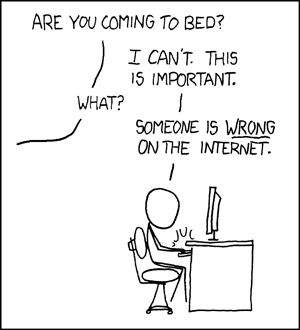
Climate change denialSo this thread is now a message board for climate deniers to post whatever “thoughts” pop into their heads. :yawn: — Mikie
I intend to post actual news updates here from time to time. Deniers will always deny, but so what? Just another voice in the hubbub.
-
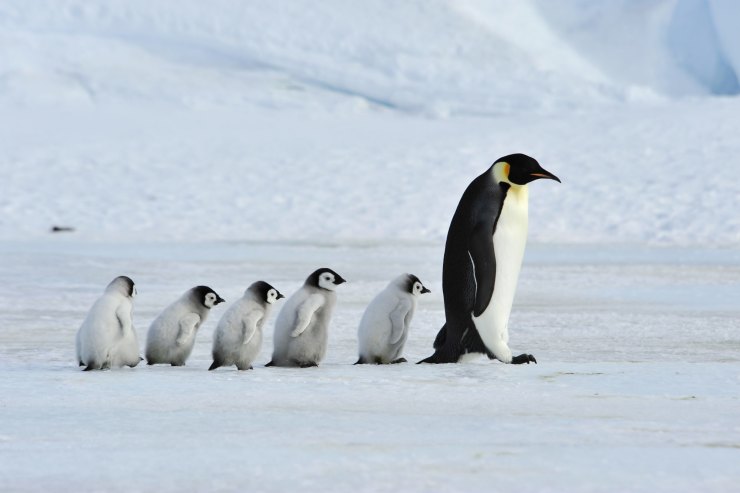
Climate change denialHeartbreaking story today in the Sydney Morning Herald - that nearly the entire brood of last year's Emperor Penguin chicks, around 10,000 in number, have drowned due to the premature break-up of pack ice in the Antarctic Ocean, largely due to the effect of global warming on the ice pack. They're not able to swim until fledged, and the ice broke up before they were ready.
:fear: -
Donald Trump (All General Trump Conversations Here)Just as Trump abuses 'first amendment freedoms' to spread vitriol and encourage violence against his opponents, so he will also abuse 'the presumption of innocence' to portray all accusations against him as baseless conspiracies.
So, sure, he like anyone may be presumed innocent until proven guilty, but the evidence already in the public domain is damning. And as I've said many times, how can he even be part of a contest, if he doesn't agree to abide by the rules, which he patently ignores and flouts. Wouldn't even be allowed into a tennis tournament with that attitude, let alone an election for public office. -
The von Neumann–Wigner interpretation and the Fine Tuning Problemeven though we still puzzle over what it means. — Moliere
Right! My point.
Neither the moon nor the electron cease to exist — Moliere
And this is where the 'mind-created world' of idealism enters the picture, but I won't drag Tim's thread any further in that direction.
the Copenhagen interpretation encouraged shut up and calculate — Moliere
I believe that saying was coined by David Mermin. Heisenberg himself did not shut up - he continued to lecture and write throughout his life, albeit that his international reputation suffered because of his association with the Nazi bomb project.
Wayfarer

Start FollowingSend a Message
- Other sites we like
- Social media
- Terms of Service
- Sign In
- Created with PlushForums
- © 2026 The Philosophy Forum