
-
 Punshhh
3.6k
Punshhh
3.6k
I have experienced that, where time is a dimension. But it raises some serious questions and invites in transcendent realities.Could be as the events of a Block Universe. -
Punshhh
3.6k
Karma in so much as there is a causal thread of some kind. Karma is bound up in reincarnation and requires an entire transcendent cosmogony. We can go there if you like, but I tend to avoid such ideas here as it can be seen as woo woo.I don't know the answer to that—we are given what we are given. Are you suggesting Karma?
Perhaps it can be broached in the sense that there is a lineage of some kind in our evolution as a group (the biosphere as one group, or being). With a causal thread and an evolutionary progression. With each individual being on the planet playing their part in the story.
Yes, I do agree with this, but it becomes complicated because I subscribe to the idea that what we know can be radically altered by the addition of one new thought, like when we have a lightbulb moment. This one new thought can in a sense rearrange what we knew prior to the lightbulb moment, such that what we know has changed. A reorientation process within the mind. So we might know one thing one day and something quite different the next. (This is an important process for me, which I have developed quite a lot). So I do agree that we do know what it is we know, but we must as you say provide the caveat that we don’t know the thing in itself, or why we and the thing in itself are here. So we are in a sense blind, but can feel with our hands a world that we find familiar.I think we do know what it is we know.
We know the world non-discursively and that non-discursive knowledge is not separate from what is known. We always already do know the world non-discursively, it is just a matter of learning to attend to that, rather than being lost in discourse and explanation. Mind you, I'm not saying there is anything wrong with discourse and explanation, just that it needs to take its place alongside our non-discursive awareness, lest we lose ourselves in the confusion that comes form "misplaced concreteness" (Whitehead).
I agree entirely and I go further, I screen out the intellectual mind and its findings a lot in contemplation. Although there is an art in using thought in a more non-discursive immediate process of discovery. -
 Janus
17.9kWe can go there if you like, but I tend to avoid such ideas here as it can be seen as woo woo. — Punshhh
Janus
17.9kWe can go there if you like, but I tend to avoid such ideas here as it can be seen as woo woo. — Punshhh
I've spent enough time thinking about it, to be satisfied that there is no point to it, since we can have no knowledge of such things.
Yes, I do agree with this, but it becomes complicated because I subscribe to the idea that what we know can be radically altered by the addition of one new thought, like when we have a lightbulb moment. — Punshhh
I was only referring to ordinary knowledge of the world. I think the kind of intuitive ideas you are referring to may or may not be knowledge, and that there is no way to tell. That said, I'm all for imaginative speculation, but I value that in terms of the feelings it may evoke, not because I believe it tells me anything about reality.
The non-discursive knowledge I referred to is the knowledge of participation, familiarity, feeling. It enriches our lives, but doesn't tell us anything about what is the case, in my view. If we try to convert it into discursive knowledge we inevitably seem to go astray. -
Punshhh
3.6k
Some scientists have lightbulb (eureka) moments too. Or what was Einstein up to when he came to his realisation about the speed of light and relativity?I was only referring to ordinary knowledge of the world. I think the kind of intuitive ideas you are referring to may or may not be knowledge, and that there is no way to
There are a number of applications of this idea. Look at the tree example, I have been talking about. I sometimes contemplate the commonality between myself and a tree. Given that we are both alive, are constituted of almost identical cells. We grow and are present in the moment. There are opportunities for lightbulb moments here and it is a contemplation with strict parameters and doesn’t require much in the way of imagination. But more a process of stepping outside one’s pre-conditioned ideas and forming different ways of thinking and knowing.
On the contrary, it is our most direct arena of discovery. Enabling us to escape our discursive tendencies.It enriches our lives, but doesn't tell us anything about what is the case, in my view. -
 Gnomon
4.3k
Gnomon
4.3k
Ha! I was in the Navy --- killing the little yellow man, figuratively not literally --- while the US was going through that New Age of Aquarius, when "love will steer the stars".↪Gnomon
Yes. And don't forget, we are stardust, we are golden, we are billion year old carbon. And we got to get ourselves back to the garden. — Wayfarer
I'd be interested to get your reaction to the Right Stuff for Consciousness post*1 that I linked in my reply above. It was a response to Janus' reply to Wayfarer in this thread. If not "stardust", what then was the "mindless substance" that became "conscious material"? Although the post is trying to be Realistic, any discussion of Consciousness is necessarily going to skirt the line between Realism and Idealism. What is the question being begged by Philosophers on one hand, and Scientists on the other?
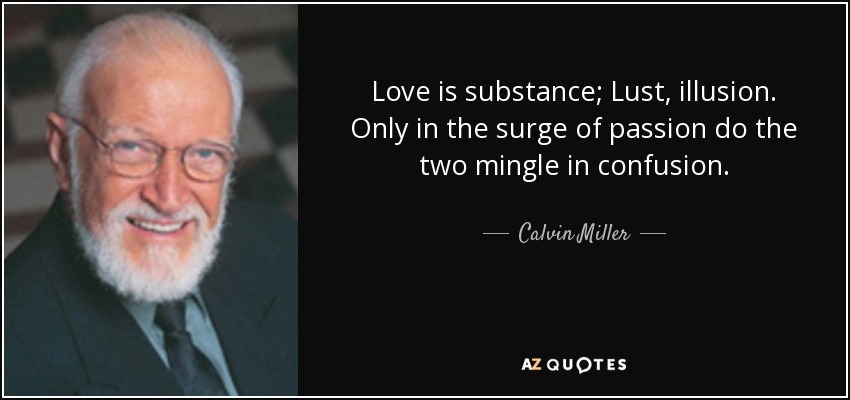
I have just begun to read a new book by Federico Faggin --- quantum physicist and microprocessor inventor --- IRREDUCIBLE, Consciousness, Life, Computers, and Human Nature*2. Although he began as a pragmatic computer engineer, he had a mid-life Mystical (not-religious) experience --- a spiritual awakening --- that turned him to the Light Side of Idealism. I personally have never had such an "ineffable unitive experience", so his encounter with The One is hearsay for me. But I'm currently exploring various views of the Science-Philosophy Hard Problem.
Faggin asserts that "consciousness is a quantum phenomenon" and the fundamental "substance" of the world. My blog post is a slightly different view of that mindful substance ; and I reserve the term "consciousness" as an evolved phenomenon/noumenon instead of the fundamental substance. But he boldly goes way beyond my timid postulations to affirm that "everything is made of love". Does that sound New Agey to you? Does the notion of a Love Substance fit your philosophy of Idealism? :cool:
*1. Right Stuff to Evolve Consciousness
“If matter, in all its forms, were nothing but mindless substance, then of course it would follow by mere definition that conscious material is impossible. But that is specifically the "question-begging presumption" I was referring to.” ___Janus
https://bothandblog9.enformationism.info/page10.html
*2. "Federico Faggin is probably the most well-rounded idealist alive. He embodies the near-perfect combination of hard-nosed, scientifically informed thought with direct introspective insights into the primacy of consciousness." ___ Bernardo Kastrup
-
 PoeticUniverse
1.7k@Wayfarer @Gnomon @Punshhh @Janus.
PoeticUniverse
1.7k@Wayfarer @Gnomon @Punshhh @Janus.
On our reality’s message as received and its messenger as the implementation…
The implementation of what we feel as physically real could be mental only, it creating all that goes on, with a working physics, but for some night-dream flaws in probably that same mental model of reality, they perhaps explained away by the model being somewhat diminished during sleep, although mostly seeming as all to real to us.
Imagination is like a waking dream of sorts, it being about 90% transparent, perhaps so as not to interfere with waking reality, yet we take it as mental and not as real.
Philosophers like to consider the nature of our reality and thus wonder about the implementation of the mind, seeking the messenger, but I would suggest that in one regard this may not matter so much, but for curiosity, for the message is the same, whether either its physical or mental basis.
Maya’s perfect illusion would seem as real as if it were physically real; so, then, a difference which makes no difference is truly no difference to the message delivered by the implementation messenger!
The message of our reality can be taken and used as real, for it has an origin somewhere, even if all is mental, in which case the so-called illusion is mentally real in its mental way.
I’m not saying that our reality is meaningful overall, but it comes forth.
So, apparently, saying such as “suffering is not real” doesn’t really help the situation of either a mental or physical broadcast, for the broadcast is real and has a source. -
Janus
17.9kIt enriches our lives, but doesn't tell us anything about what is the case, in my view.
On the contrary, it is our most direct arena of discovery. Enabling us to escape our discursive tendencies. — Punshhh
My point was that if you try to frame your insights into accounts of what-is-the-case in some quai-empirical sense, which is precisely not to escape our discursive tendencies, you will inevitably produce something that may or may not have any bearing on actuality. Whether it does or not is rationally undecidable. That said, all that matters is how you feel about it, and no justification is required for that.
I agree with you that the idealism/ materialism debate is senseless. It just doesn't matter. As someone quipped "no matter, never mind". -
Gnomon
4.3k
By "idiosyncratic", do you mean peculiar or individualistic? For an autobiography, I would think individualistic would be a good thing. I've only read the introduction, but so far it seems to be a fairly typical expression of the Consciousness is Fundamental worldview, as imagined or experienced by a quantum scientist. Kastrup seems to find him to be a fellow-traveler on the slender Idealism branch of modern science. Incidentally, Faggin defines The One as "the totality of all that exists" but refrains from using religious terms like "God".oh yeah, I know Faggin. I read (actually, listened to) his autobiography, Silicon. I’ve looked at Irreducible a few times but I have mixed feelings about it, I think his approach is a bit too idiosyncratic. — Wayfarer
I know your time is limited, but I would appreciate a quick review of the blog post on The Right Stuff to Evolve Consciousness*2 (it's only two pages). It presumes that human-like Consciousness is not fundamental to physics or metaphysics, but a late development from eons of physical evolution : i.e. an emergent property. So, it may be closer to Janus' worldview ; although I think causal Energy is more fundamental than tangible Matter, which is also emergent.
However, it assumes that some mysterious precursor to sentient awareness in physical bodies existed at the beginning of space-time evolution, and is the irreducible necessity to explain how & why you & I now consciously experience Seity*3. Would you call that prerequisite The One or The Form or Cosmic Mind or something else?
I'm hoping that Janus will also chip-in his opinions on the blog post, so I can compare two eloquent defenders of philosophical positions in the great dialog/debate on the role & nature of Mind in the real & ideal world. :nerd:
*1. Irreducible :
The book "argues consciousness is a fundamental, quantum phenomenon, not an emergent property of matter, proposing an idealist model where the physical world is a symbolic representation of a deeper, conscious reality".
https://www.google.com/search?client=firefox-b-1-d&q=irreducible+book
*2. Right Stuff : Spirit or Causation?
“In essence, the Big Bang transformed a highly energetic, almost featureless state into the structured, information-rich cosmos we observe today, with energy providing the fuel and quantum randomness providing the initial blueprint.” ___Google search
Note ---
How could Chaotic “randomness” create the “blueprint” for an orderly & organized Cosmos with a logical structure of natural Laws? Randomness does imply freedom for exploration of possibilities. But only purposeful, systematic, and intentional design can impart systematic order upon Chaos.
https://bothandblog9.enformationism.info/page10.html
*3. [u]Seity[/u] means the quality of being uniquely oneself, selfhood, or individuality, referring to something peculiar or particular to a specific person or thing, derived from the Latin word "se" (oneself). It signifies that unique essence or identity that sets something apart, often used in philosophical or spiritual contexts to describe the fundamental, unique reality of a person or even the divine.
https://www.google.com/search?client=firefox-b-1-d&q=seity+meaning -
 Wayfarer
26.1kBy "idiosyncratic", do you mean peculiar or individualistic? — Gnomon
Wayfarer
26.1kBy "idiosyncratic", do you mean peculiar or individualistic? — Gnomon
Not peculiar - I think Federico Faggin is highly intelligent and genuine. I did tackle that book - actually I think I have the Kindle edition, but I couldn't really follow the argument. He introduces a term, seity, ' a seity is defined as a self-conscious entity that can act with free will.' However not necessarily a conscious being. ...'A seity is a field in a pure state existing in a vaster reality than the physical world that contains the body. A seity exists even without a physical body.'
I couldn't really get my head around it.
The other thing is, because Faggin has come from a background outside philosophy, scholarship, cognitive science, etc, I don't think he's going to get a lot of attention from consciousness studies. So it's very hard to integrate his ideas, good though they may be, into the landscape, so to speak.
But don't let it put you off, there are many who will say Irreducible is a landmark book and they may well be right. -
Punshhh
3.6kOn the contrary, it is our most direct arena of discovery. Enabling us to escape our discursive tendencies.
Yes, but that’s not what I’m talking about, I’m talking about orientation. It’s more of a negation of the rational interpretation of insights. The insight is made, witnessed and logged, stored in memory. It is not rationalised. (It is rationalised at a later date in a different department of thought, but that is entirely separate from the experience of the insight). The aim being to arrive at an inner sight, or seeing. The discursive mind is only a passenger on this journey. It’s not so much about feelings either, but more about identification, witness* and communion. A seer develops these faculties so as to develop realisation, knowledge, experience and understanding independent of the rational mind. Yes, the rational mind is also present in this process, but takes a back seat and may offer thought out interpretations now and then.My point was that if you try to frame your insights into accounts of what-is-the-case in some quai-empirical sense, which is precisely not to escape our discursive tendencies, you will inevitably produce something that may or may not have any bearing on actuality. Whether it does or not is rationally undecidable. That said, all that matters is how you feel about it, and no justification is required for that.
Then there is another department of mind which combines the two, the knowledge garnered through seeing and the intellectual interpretation and philosophising. The idea being to develop intellectual, architecture, imaginative worlds, so to speak. Which may be of use at some point in developing contemplative techniques.
* I have brought up witnessing in other threads, to bear witness is something important in the development of intuition. The best way to illustrate it is in the case of a traumatic event. If a person witnesses a traumatic event something is burnt into their memory and they can never un-see it. The distinction being that the intellectual mind is absent during this process. This faculty can be developed absent the traumatic event and used in contemplation. -
Gnomon
4.3k
I suppose Faggin's notion of Seity is another attempt to define Cosmic Consciousness in scientific and non-anthropomorphic terms. It's his technical description of a fundamental unit of consciousness, and may be similar to A.N. Whitehead's "occasions of experience", which I found hard to grok. Personally, I prefer a holistic concept of Cosmos : the totality of existence, including matter & mind. I'll leave the atoms of consciousness to others.Not peculiar - I think Federico Faggin is highly intelligent and genuine. I did tackle that book - actually I think I have the Kindle edition, but I couldn't really follow the argument. He introduces a term, seity, ' a seity is defined as a self-conscious entity that can act with free will.' However not necessarily a conscious being. ...'A seity is a field in a pure state existing in a vaster reality than the physical world that contains the body. A seity exists even without a physical body.'
I couldn't really get my head around it. — Wayfarer
Ironically, when he describes Seity as a Field, it begins to sound like a scientistic version of religious Spirit. Fields in physics (e.g. electromagnetic & quantum fields) are real in their effects, but immaterial in substance. On the other hand, I'm exploring the use of Energy (causation) in a similar manner. But exactly how the universal Power to Transform can result in sentient Matter, is the question being begged in my theory.
He refers to Max Planck's Quantum of Action as a fundamental constant. Yet it's not a thing in itself, but more like a Field of Potential that can only be defined mathematically & functionally. So I'd label Faggin's "Seity" as Quantum Field Spirituality, which may not align with your more traditional philosophical understanding of the Mind/Matter relationship.
Anyway, Faggin seems to imagine the Conscious Cosmos in terms of Potential, whereas the material world is Actual. And that is close to my own emerging understanding of the origin of Mind in a physical world. Somehow, in a not-yet-understood manner, the self-conscious Cosmos has created a world of little selfish minds with ideas of their own. But unlike the mythical & literary Jehovah, CC leaves it up to us to "know the mind of God". :nerd:
PS___ The "vaster reality" seems to be what several Mind/Matter theorists (e.g. Noetic Science & Ideonomy) call "higher dimensions". Some even claim to have experienced those ideal or spiritual dimensions. -
Janus
17.9kYes, but that’s not what I’m talking about, I’m talking about orientation. It’s more of a negation of the rational interpretation of insights. The insight is made, witnessed and logged, stored in memory. It is not rationalised. (It is rationalised at a later date in a different department of thought, but that is entirely separate from the experience of the insight). — Punshhh
It doesn't sound like you are disagreeing with what I've said, although it does sound like you think you are. I don't deny the reality of altered states of consciousness, and the profound effects they can have on people's lives. It's been a reality in my own life. I am just wary of drawing discursive conclusions from those altered states. -
Wayfarer
26.1kI suppose Faggin's notion of Seity is another attempt to define Cosmic Consciousness in scientific and non-anthropomorphic terms. — Gnomon
Wait until you read it. I don’t think that term is used anywhere in the book. (I’d love to see a discussion between Faggin and Glattenfelder. They’re both kinds of ‘techno mystics’.) -
 AmadeusD
4.2kI am just wary of drawing discursive conclusions from those altered states. — Janus
AmadeusD
4.2kI am just wary of drawing discursive conclusions from those altered states. — Janus
Feel like as the resident psychonaut I have to come and agree with this. One of hte biggest turn offs of that set is that people tend to make wild claims and conclude things based on their altered experiences. There might be something to that, but god lord its tiresome when people essentially form cult-like beliefs based on something that cannot be shared. -
Punshhh
3.6k
I began my reply with “yes”, I was agreeing with you.It doesn't sound like you are disagreeing with what I've said, although it does sound like you think you are.
Going back to where this line of exchange started, whether we do know what it is we know?
I’ll put my reservation slightly differently, yes we do know what we know, but the “what it is” is subjective within our own personal understanding. This necessarily requires a personal perspective and knowing. I’m saying that this perspective can change in a non discursive way and that there are ways of knowing, or there is knowing in non discursive ways. That these changes can occur as a result of an experience of identification, an experience of witnessing something, or an experience of communion (I’ll leave communion to one side for now as it can have a vague meaning). It can also happen due to intuition, but I refrain from including this as intuition does include discursive processes.
So what we know can change, by ways which are not necessarily logical, or rational, but due to changes in ourselves.
If this happens, then what we knew before the change in ourselves was incorrect was it not? What we know changes as a result of something in us, while the circumstances outside of ourselves have not changed.
Going back to what you said earlier;
Again, I agree, but then I think well what do I know non-discursively and is that coloured or dictated by what I think. Is it a separate (from discursive knowledge) knowledge and how can it be the same as “what is known”?We know the world non-discursively and that non-discursive knowledge is not separate from what is known. We always already do know the world non-discursively, it is just a matter of learning to attend to that, rather than being lost in discourse and explanation.
Apologies if I’m diving a bit deep here, but I’m interested in non-discursive knowing and how our perspective is shaped non-discursively.
Just to clarify, I’m not talking about altered states. But rather a different way of knowing through experiences.I don't deny the reality of altered states of consciousness, and the profound effects they can have on people's lives. -
Gnomon
4.3k
If, by "that term' you mean "cosmic consciousness" you may be correct. I just used that New-Agey Mystical term in place of his more cryptic concept of The One. But he does use the more specific term Seity*1 throughout the book. He postulates, in great detail, how he imagines that Quantum Physics adds up to self-conscious & causal Cosmic Mind. Although he avoids ascribing human-like personality to The One, it still sounds like a 21st century God ; whose oblique revelation is inscribed in quantum uncertainty . . . . perhaps, to keep us biological agents guessing about divine intentions.I suppose Faggin's notion of Seity is another attempt to define Cosmic Consciousness in scientific and non-anthropomorphic terms. — Gnomon
Wait until you read it. I don’t think that term is used anywhere in the book. (I’d love to see a discussion between Faggin and Glattenfelder. They’re both kinds of ‘techno mystics’.) — Wayfarer
I don't think of myself as a Mystic, but my philosophical exploration is currently reconnoitering the margins of Quantum Mysticism. And I see a lot of parallels with ancient Greek & Oriental philosophies, although the technical terminology may seem idiosyncratic (out of place) to those with more traditional philosophical backgrounds. Faggin does quote the Vedas.
My "Right Stuff" blog post*2 was written before I got Faggin's book. But it begins by quoting the Epicurean poet Lucretius, whose Atomism may have been the ancestor of modern Quantum physics --- materialism minus the mysticism. Ironically, the modern Atom is not a hard little ball, but a locus of incorporeal mathematical information, that Faggin multiplies and adds-up to a woo-woo Cosmic Mind : The One or The Universe (one whole)*3. :smile:
*1. Seity : "a quantum entity with three irreducible and indivisible fundamental properties : consciousness, agency, and identity. The elementary seities, which I have called consciousness units, emanate directly from One." ___ Irreducible book glossary
*2. Right Stuff for Consciousness :
“If matter, in all its forms, were nothing but mindless substance, then of course it would follow by mere definition that conscious material is impossible. But that is specifically the "question-begging presumption" I was referring to.” ___Janus
https://bothandblog9.enformationism.info/page10.html
*3. "One is a Whole, both in potentiality and in actuality, irreducibly dynamic and holistic."
___ from Introduction to Irreducible
PS___ I just came across this quote in an article on the philosopher Friedrich Schelling, of whom I know nothing :
“idealism is the soul of philosophy; realism is its body only both together can constitute a living whole”.
# Then this from Google Search, which sounds a bit like Faggin's One.
Is the notion of Ungrund, a form of Idealism or Mysticism or 180proof's :sparkle:? :
Schelling's Ungrund (German for "non-ground" or "groundless ground") is a profound concept in his later philosophy, representing the mysterious, irrational abyss or primal darkness that underlies all existence, even God, a "nothing" from which being and all oppositions emerge, serving as the source of freedom, creativity, and the possibility of new realities, distinguishing his thought from Hegel's rational idealism by positing a pre-rational, chaotic potential before any self-conscious Spirit. It's a fundamental, ungroundable basis, a "ground of all grounds," essential for explaining how something new, evil, or individual can arise from the absolute.
https://www.google.com/search?client=firefox-b-1-d&q=Schelling+and+his+Ungrund. -
Wayfarer
26.1kI had a look at your 'Right Stuff' essay. (As it happens, I wrote an undergrad term paper on Lucretius, under the able tutelage of one Professor Keith Campell, who's 'Philosophy of Matter' course was one of the very best units I completed, which was given a High Distinction :blush: )
The way I see it is that modern culture, generally, is still labouring in the shadow cast by René Descartes' dualism, which posited Mind and Matter as separate kinds. Ever since then, philosophy and culture have tended to vacillate between them, with the scientifically-inclined seeking knowledge through the analysis of physical matter and energy, and the spiritually-inclined seeking understanding through ideas and the nature of mind. So since then philosophy has tended to adopt either materialism (matter is everything), idealism (mind is everything) or dualism (it is both), across a range of forms.
(Then of course there's Darwinian biology, which occupied the cultural vacuum left by the retreat of theology to become more or less an article of secular faith. The motif of evolutionary development is nowadays a kind of 'theory of everything' - that what is simple and elementary becomes complex and sophisticated through the course of time by being better adapted. There's even a theory of 'quantum darwinism.')
I think that your essay is attempting to fashion a theory out of these ingredients.
Where I stand - I'm sceptical of the Cartesian division in the first place - both mind and matter are abstractions. It is more like an economic model than a scientific theory as such. In reality, organisms are both physical and cognitive in nature (and then, in h.sapiens, there's reason and symbolic imagination as well). I'm more drawn to modernised versions of Aristotelian 'matter-form' philosophy, because the Aristotelian idea of form as 'formative principle' is considerably more subtle than that of 'res cogitans' (thinking substance. You will notice that Terrence Deacon, whom we have both read, references Aristotle.)
As regards Faggin - I sense that the One resonates with the One of Plotinus' philosophy. He has taken ideas from a variety of sources, and also developed his own using metaphors from quantum physics and computing. But still see him as rather idiosyncratic. He's not going to get noticed much in the 'consciousness studies' ecosystem for that reason. -
Gnomon
4.3kSo since then philosophy has tended to adopt either materialism (matter is everything), idealism (mind is everything) or dualism (it is both), across a range of forms. — Wayfarer
Perhaps. I explore various philosophical positions, but I don't label myself as Idealist or Materialist or Mystic. . . . . nor Immanentist nor Transcendentalist, . . . maybe a Causalist? My emerging & evolving amateur non-dual holistic philosophy is what I call BothAnd*1. Which is anathema to those of dogmatic Either/Or beliefs, such as . Your expressed views though are usually broad & flexible, yet rigorous & informed enough, to be amenable to my own dilettante dabblings.I think that your essay is attempting to fashion a theory out of these ingredients. — Wayfarer
I don't adhere to any religious or mystical beliefs, but I try to be open to plausible ideas circulating within the human orbit. Admittedly, my autodidactic personal philosophy/cosmology*3 is much more influenced by the diverse posits of Quantum theorists*3 than of Academic philosophers, ancient or modern. :cool:
*1. Both/And Principle :
My coinage for the holistic principle of Complementarity, as illustrated in the Yin/Yang symbol. Opposing or contrasting concepts are always part of a greater whole. Conflicts between parts can be reconciled or harmonized by putting them into the context of a whole system.
https://blog-glossary.enformationism.info/page10.html
*2. Enformationism :
A philosophical worldview or belief system grounded on the 20th century discovery that Information, rather than Matter, is the fundamental substance of everything in the universe. It is intended to be the 21st century successor to ancient Materialism. An Update from Bronze Age to Information Age. It's a Theory of Everything that covers, not just matter & energy, but also Life & Mind & Love.
https://blog-glossary.enformationism.info/page8.html
*3. Quantum Philosophy :
Understanding and Interpreting Contemporary Science by Roland Omnès is a book that bridges quantum physics and philosophy, arguing that modern quantum mechanics, particularly the "consistent-histories" approach, provides a new foundation for understanding knowledge, causality, and reality, reconciling them with common sense.
https://www.google.com/search?client=firefox-b-1-d&q=quantum+philosophy -
Wayfarer
26.1kI'm in agreement with your 'both-and' type of attitude. The 'either-or' dilemma is something stamped firmly into Western consciousness, for mainly historical reasons, which seems to want to force everybody into one 'side' or another. Unpicking the history and psychodynamics behind that has been one of my major interests.
-
 Esse Quam Videri
340Don't get me wrong, I don't want to idolize reason and rationality. It's more that I think the decline of the classical understanding of the faculty of reason has had hugely deleterious consequences. The decline of scholastic realism has had huge consequences for culture, but they're very hard to discern because nominalism is so 'baked in'.
Esse Quam Videri
340Don't get me wrong, I don't want to idolize reason and rationality. It's more that I think the decline of the classical understanding of the faculty of reason has had hugely deleterious consequences. The decline of scholastic realism has had huge consequences for culture, but they're very hard to discern because nominalism is so 'baked in'.
But you and I have been through that, and this is not our fate (to quote the bard). — Wayfarer
Sorry for being so slow to reply. Part of the reason I don't post here often is because I don't always have time to keep up with the pace of these discussions.
I did want to circle back to the original issue for a moment, which was the claim that metaphysical realism is incoherent. The line of reasoning goes something like this: when the mind posits the existence of a mind-independent object (the in-itself) it is actually just generating yet another idea. Since ideas are mind-dependent, any knowledge of mind-independent objects just reduces to knowledge of mind-dependent ideas. Ergo, knowledge of the in-itself is a contradiction in terms.
But this argument already assumes an ontology in which the direct objects of the mind are ideas. In other words, it simply assumes idealism and then proceeds to deduce that realism is self-contradictory. This is illicit. Ontology cannot be the starting point for an argument against realism without begging the question. -
Wayfarer
26.1kI did want to circle back to the original issue for a moment, which was the claim that metaphysical realism is incoherent. The line of reasoning goes something like this: when the mind posits the existence of a mind-independent object (the in-itself) it is actually just generating yet another idea. Since ideas are mind-dependent, any knowledge of mind-independent objects just reduces to knowledge of mind-dependent ideas. Ergo, knowledge of the in-itself is a contradiction in terms.
But this argument already assumes an ontology in which the direct objects of the mind are ideas. In other words, it simply assumes idealism and then proceeds to deduce that realism is self-contradictory. This is illicit. Ontology cannot be the starting point for an argument against realism without begging the question. — Esse Quam Videri
My claim is not that cognition knows only ideas, but that “objecthood” itself is a cognitive status — not something that can be meaningfully ascribed prior to recognition. Take any object - the proverbial 'apple' or 'chair' or 'tree' familiar from philosophy lessons. If you and I see it, or I show it to you, what will you say? You will name it accordingly, presuming you are of sound mind etc. That process of recognition and naming is what I'm referring to. If you didn't know what the thing was, you could at least give a description of it in terms of something else - the kind of shape or colour or some other attributes. These too rely on your cognitive system.
You will notice that a large part of the essay draws from quite a recent book by Chales Pinter, Mind and the Cosmic Order. His theory is that cognition (and not only human cognition) naturally operates in terms of gestalts. Gestalts are the meaningful basic units of cogniton. And I'm claiming that this is fundamental to the cognitive process by which we know what exists. Cognition is as Kantian philosophy (including Schopenhauer) says: an active process whereby the mind constructs or builds a synthesis of the various sensory data that it receives into meaningful wholes.
Now, I'm not saying that the world is ontologically dependent on our cognitive acts, but that outside cognition, it means nothing to us. That is what I take the 'in-itself' to mean: that the object (or world) as it is, outside of or prior to our assimilation of it, has no identity. By identifying it as a meaningful whole, we can say it exists, or doesn't exist.
So I don't mean 'idea' in the sense of representative realism, that the idea represents a thing. There is the thing, here the idea of it. Rather that 'the apple' *is* idea. That is nearer to Schopenhauer's 'vorstellung'.
So the world that realism thinks is 'there anyway', is not really so - because 'there' is also a cognitive construction. Hence my point - any idea of an 'empty universe' or 'the world prior to the advent of humankind' still relies on an implied perspective, which is supplied by the mind as basic to sense-making. We can't think outside of that. -
Esse Quam Videri
340Now, I'm not saying that the world is ontologically dependent on our cognitive acts, but that outside cognition, it means nothing to us. That is what I take the 'in-itself' to mean: that the object (or world) as it is, outside of or prior to our assimilation of it, has no identity. By identifying it as a meaningful whole, we can say it exists, or doesn't exist. — Wayfarer
But again I think you are still "smuggling" an ontology into your premises - namely, the ontology of the Kantian transcendental subject. In this ontology the content of the phenomenal world is entirely "for-consciousness" because it is the product of the operations of the mind operating on the in-itself (noumenal world). The conclusion that the in-itself is unknowable is completely predetermined by the selected ontology.
Instead of starting with ontology we could start with an analysis of acts of consciousness (such as questioning or claiming) and see what is presupposed by these acts. For instance, we can take for granted that the mind asks questions about the object without making any ontological assumptions about the relationship between the mind and the object. The act of questioning presupposes that the mind already knows enough about the object to formulate a question about it. What the mind already knows about the object is the object as it is for-consciousness. The act of questioning also implies that the mind doesn’t know everything about the object, otherwise it wouldn’t ask the question. What the mind doesn't know about the object is the object as it is in-itself. Therefore, the object as it is in-itself is in excess of the object as it is for-consciousness. Furthermore, the act of asking a question presupposes that what the mind doesn't yet know about the object (the in-itself) is knowable because, again, otherwise it wouldn't ask the question. Therefore, the act of asking a question about an object presupposes that the object as it is in-itself is knowable. -
Wayfarer
26.1kBut again I think you are still "smuggling" an ontology into your premises - namely, the ontology of the Kantian transcendental subject. — Esse Quam Videri
I don't believe that the transcendental subject is a being in a sense other than the indexical. We can't single out the transcendental subject and say what it is. I don't think that Kant thought that the transcendental subject was something we could know.
What the mind doesn't know about the object is the object as it is in-itself. Therefore, the object as it is in-itself is in excess of the object as it is for-consciousness. Furthermore, the act of asking a question presupposes that what the mind doesn't yet know about the object (the in-itself) is knowable because, again, otherwise it wouldn't ask the question. Therefore, the act of asking a question about an object presupposes that the object as it is in-itself is knowable. — Esse Quam Videri
Certainly there may be many objects or kinds of thing that I don't understand. There might also be much more to an object than meets the eye, or is apparent from a cursory inspection. But nevertheless, at every stage of coming to know more about the object, the mind is surely forming ideas as to what it is, in terms of identity, likeness, attributes and so on. The “excess” disclosed in inquiry is not an object standing outside cognition, but the open-endedness of meaning itself. And notice I'm not saying there is nothing outside of or apart from the cognized object - that would be to assert its non-existence - but that, whatever we make of the object, is through that process of assimilation, whereby it becomes incorporated into the network that comprises the world of lived meanings (the 'lebenswelt'). Were it totally outside that, then we couldn't even cognize it. -
Wayfarer
26.1kIt might help for me to explain what my argument is against. I’m arguing against the scientistic view, swallowed wholesale by a great many intelligent people, that the vast universe which modern science has discovered is a greater reality within which h.sapiens appears as a mere blip, the metaphorical striking of a match. The habit of objectivity holds such sway with us that we overlook that the ‘vast universe’ itself knows nothing of its vastness, nor of anything else for that matter. I know perfectly well that the cosmological story of the ‘big bang’ and the evolutionary story of human evolution is basically true, even if subject to modification. But to view ourselves against that background is implicitly to view ourselves from outside of our lives, to loose sight of the significance of the fact that as intelligent subjects, we are in some vital sense the way that whole process has come to begin to understand itself. And that is not a thought that is novel to me. To view ourselves simply as a species, or as phenomena, is really an artifice. It is not actually a philosophy. I believe Immanuel Kant saw this also, which is why his arguments are writ large in my essay about the matter, even if I have by no means assimilated all of his writings.


Welcome to The Philosophy Forum!
Get involved in philosophical discussions about knowledge, truth, language, consciousness, science, politics, religion, logic and mathematics, art, history, and lots more. No ads, no clutter, and very little agreement — just fascinating conversations.
Categories
- Guest category
- Phil. Writing Challenge - June 2025
- The Lounge
- General Philosophy
- Metaphysics & Epistemology
- Philosophy of Mind
- Ethics
- Political Philosophy
- Philosophy of Art
- Logic & Philosophy of Mathematics
- Philosophy of Religion
- Philosophy of Science
- Philosophy of Language
- Interesting Stuff
- Politics and Current Affairs
- Humanities and Social Sciences
- Science and Technology
- Non-English Discussion
- German Discussion
- Spanish Discussion
- Learning Centre
- Resources
- Books and Papers
- Reading groups
- Questions
- Guest Speakers
- David Pearce
- Massimo Pigliucci
- Debates
- Debate Proposals
- Debate Discussion
- Feedback
- Article submissions
- About TPF
- Help
More Discussions
- Other sites we like
- Social media
- Terms of Service
- Sign In
- Created with PlushForums
- © 2026 The Philosophy Forum