
Comments
-
A simple but difficult dilemma of evil in the worldevility — god must be atheist
How is "evility" different than "evil?" -
What does "real" mean?I know how it works but I am an old "fart" and my habits define my typing!
My eyes are trained to search for this pattern (-"bla bla bla ") and all those(
) get in my nerves! lol
After all I doubt there is anything interesting in my writings to read. I won't be offended if you ignore my posts Tom, seriously. (maybe I could use B or I)
— Tom Storm — Nickolasgaspar
I'm with @Tom Storm on this. Your way of formatting, as opposed to using the quoting mechanism provided by the forum, often makes it hard to follow your posts which are, as he noted, interesting and useful. -
What does "real" mean?Reality is by definition the containing medium of anything you're able to interact with. — Hallucinogen
That is not a standard definition of "reality." I listed several examples in my OP, although it was not my intention to limit discussion to those definitions in the list. I think your definition can be a useful one. It's similar to one discussed previously in this thread:
Reality and what is real are defined by the ability of elements and their structures to interact with each other and being registered by our observations. — Nickolasgaspar -
What does "real" mean?Sure; and that is what Austin has given you. I had supposed you had seen this, seems I was mistaken. — Banno
I've read what you've had to say about Austin, including the quote you provided, and I'm with @Nickolasgaspar, I don't see how it's relevant to the aspect of "real" I set out to discuss. I have no objection to including it in this thread, but I don't want to mix up the issues.
I've noted previously how folk seem to adopt a narrow view of ontology and then suppose that "that's not ontology" constitutes an argument. I find that most puzzling. So the use of "ontological" seems to have slide from the study of existence to the study of physical stuff. — Banno
"That's not ontology" constitutes an argument if the subject of the discussion is ontology.
I'd taken the OP to be related to the thread "Does quantum physics say nothing is real?". — Banno
Yes, my frustrations with that and similar discussions set me off on this one. My participation lead me to formulate what has come to be known as "the Clark Reality Principle," i.e. The idea of “real” has meaning only in relation to the everyday world at human scale. -
What does "real" mean?Sure, I have no issues as long as it isn't used as a red herring allowing others to avoid addressing the "problems" in my definition on " what qualifies as real."
The problem with that specific definition of the term real(as you stated is that a real tree) is that it has a huge spread, meaning that different entities in existence have different characteristics and most probably the answer can be gained by doing science(not philosophy)... — Nickolasgaspar
I admit I am lost about what Banno is saying. I don't think it is a red herring, i.e. a rhetorical device. Seems like he sees what Austin has to say as ontology, while I don't see it. He's talking about a different kind of "real" than I am.
There is a philosophical aspect in that question (what makes something a real "something".) but it can either be a very short conversation or an endless one with nothing important to gain. — Nickolasgaspar
As you and I have both noted, that is not the meaning of "real" I was setting out to discuss. -
What does "real" mean?↪Nickolasgaspar is considering only a restricted use of "real". This definition does not serve to sort a fake masterpiece from real Picaso, a counterfeit from a real bank note. These might be physically indistinguishable. — Banno
Since this is a philosophical forum I am only considering the use relevant to philosophy (ontology). Fine art art appraisal or Verification Of Genuineness do not challenge the ontology (existence) of a painting and they are technical not philosophical fields of evaluation. — Nickolasgaspar
@Nickolasgaspar is right that my purpose in starting this discussion was to examine "real" and "reality" from an ontological perspective. On the other hand, several people have looked at other possible meanings of the word. This late in the game I have no objection letting the discussion go where it wills. -
What does "real" mean?-Yes, I have interacted with people who make that claim. I think its an ambiguity issue. In my opinion they should identify the differences between a Real physical apple and an mental representation of a "real" apple. By identifying their properties we wil be able to justify or not the use of the term real for both cases. — Nickolasgaspar
I don't really have an opinion on whether or not an imagined apple should be considered real or not. What's important for me is the recognition that the further you get from things we can see with out eyes or hold in our hands, the more tenuous the connection to "reality" is. -
Asymmetry in What is at Stake and Why the Left Should Stop Eating its Own (as much)Ok, let's try. I'll start with a personal anecdote. My daughter aged 4 was a highly articulate, outgoing confident child able to engage children and adults in conversation and eager to relate to friends and strangers alike. She was thus very keen to go to school. But within a couple of weeks of starting school, she started to demand that her (white) father take and collect her, rather than her mixed race mother, and then, one evening, she cutoff all her long frizzy hair and hid it under the bed. — unenlightened
For me, this is the heart of the matter. I've told the story before of my friend who visited Hawaii for the first time when she was in her 60s. Because her skin color was similar to theirs, she was generally mistaken for a native Hawaiian. People treated her with friendliness and welcome instead of suspicion and disapproval. She says it was the first time in her life she felt at home. Very few of the discussions about race deal with this kind of experience. This is from an article about US Senator Tim Scott from 2016. Scott is a black Republican from South Carolina:
South Carolina Sen. Tim Scott gave a deeply personal speech on the Senate floor in Washington, D.C., on Wednesday about the "deep divide" between communities and law enforcement.
While many law enforcement officers do good, he said, some do not. "I've experienced it myself." Scott revealed that he has been stopped seven times in the course of one year as an elected official. "Was I speeding sometimes? Sure. But the vast majority of the time I was pulled over for driving a new car in the wrong neighborhood or something else just as trivial."
He described several encounters with police, including one where he was stopped because the officer suspected his car was stolen. He described a similar incident that happened to his brother, a command sergeant major in the U.S. Army. And he told the story of a staffer who was "pulled over so many times here in D.C. for absolutely no reason other than driving a nice car." The staffer eventually traded in his Chrysler for a "more obscure form of transportation" because "he was tired of being targeted."
"I do not know many African-American men who do not have a very similar story to tell no matter their profession. No matter their income, no matter their disposition in life," he said.
He asked his Senate colleagues to "imagine the frustration, the irritation, the sense of a loss of dignity that accompanies each of those stops."
Scott also described walking into an office building on Capitol Hill and having an officer ask him to show his ID even though he wore a Senate pin.
While he is thankful he has not faced bodily harm, he said, "there is absolutely nothing more frustrating, more damaging to your soul than when you know you're following the rules and being treated like you are not."
"We must find a way to fill these cracks in the very foundation of our country," he said.
The senator ended with a plea to his colleagues to "recognize that just because you do not feel the pain, the anguish of another, does not mean it does not exist." — NPR -
Justice MattersI wonder if anyone else noticed that a short time ago Glen Kirshner had a copy of Ayn
Rand's "Atlas Shrugged" on the table in the immediate background of his show?
One show was all I saw it in. I watch him regularly; the short snippets anyway. It just took me by complete surprise that someone who argues passionately against the actions of Trump would place a copy of a book written by an author who proposes a moral/ethical code of conduct that would exonerate Trump if he were judged by it. Rand would gladly assent to the fact that Trump's behaviours follow her code. — creativesoul
I don't know Kirshner or his politics and I dislike Ayn Rand's philosophy intensely. I think Donald Trump was a very bad president and is a very bad person. All that being said, and to be fair, I don't think Rand's philosophy supports Trump's actions at all. Rand was a puritan. Her obsession with personal independence included an emphasis on personal integrity.
Perhaps in Kirshner's defense, a lot of conservatives were strongly influenced by Rand and consider her an inspiration. I find that unsettling, but it's probably no worse than the left wing's attraction to Marx. -
Asymmetry in What is at Stake and Why the Left Should Stop Eating its Own (as much)okay, it is pretty much always a diversion from challenges to power, I totally admit that. Sorry for downplaying it. — ToothyMaw
I understand the point you were making and I generally agree. On the other hand, just as you've noted, those unwilling or unable to acknowledge our racial history often bring up subjects to downplay it's impacts.
I don't use the terms "racist" or "racism."
— T Clark
I think it is okay to use those terms as long as one understands the weight behind them. — ToothyMaw
I was speaking for myself, not criticizing your word choice. -
Asymmetry in What is at Stake and Why the Left Should Stop Eating its Own (as much)Am I a racist if I think black on black crime is worth accounting for when discussing race issues? — ToothyMaw
I don't use the terms "racist" or "racism." I don't think they're useful. But... if you and I were having a discussion about race, and if the first thing you brought up was black on black crime; or the second, or the third, or the fourth, or the fifth; that would tell me something significant about whether I can trust your judgement on racial issues. -
Poem meaningThe easy way: learn it by heart and let it live there. — Cuthbert
Which is why I like short poems. I tried to memorize "Two Tramps in Mud Time," but finally gave up. -
Poem meaningWilliams I have some feel for, but the rhythm is the hardest part to analyze or explain. Reading "This is just to say" is like unfolding a bit of origami. He's very tricky about how the syntax is broken up over the lines; you unfold the next bit and it's satisfying but then you're not sure where to tug next and suddenly pop the next fold has come open. By the time you get to the very end and it's all laid out, you're not quite sure how you did it. Some of these little poems of his sound like they're sentences, sound urgently and insistently like sentences, but turn out not to be if you look carefully. Some of that is a commitment to spoken vernacular American, in which syntax can be a bit malleable, but some of it is the way lineation offers a competing structure, and that structure is in part rhythmic. — Srap Tasmaner
As I mentioned to @Dawnstorm, this is the kind of explication I'd like to be able to do. -
Poem meaningFor me the breaks serve as one beat pauses, and the breaks between stanzas serve as two beat pauses -- though reading it again I think I actually give a three beat pause for the second break. When I read it like this, it's like the way the speaker would have said it, had they been there -- sheepish, slow, guilty -- but not so guilty, because the prize really was just that nice. The first two stanzas read like that slow admission of guilt, but then right after asking forgiveness, by way of explaining himself, the speaker relishes in the memory of the stolen plums, and finishes with that memory. — Moliere
I like this a lot. Sheepish guilt. Sheepish smirky guilt. In the end maybe a bit too smirky. That is what makes it amusing to me.
It makes me think of a close relationship you have with someone, and you know them so well that you know their favorite things -- and somehow along the way they kind of became your favorite things, too. So it sort of serves as a poem of familiarity and friendship, even though it's highlighting that part of familiarity where people are maybe too familiar. — Moliere
I like this too. I see the situation as a man writing a note to a woman, but it could be read differently. They are in an intimate domestic relationship. Man and wife? There may even be a bit of nastiness, competitiveness, in it, as you write "maybe too familiar," but I don't want to oversell that. Maybe more like a brother and sister. The poem is a note he left on the counter. Or maybe stuck on the refrigerator with a magnet. -
Poem meaningProsody matters enormously to the meaning of a poem. — Srap Tasmaner
How does that apply to this poem in particular? -
Is Buddhism truly metaphysical?Philosophy as dumpster diving. I can get behind that. — Tom Storm
I didn't really like the whole "philosophy bin of life" metaphor. I tried to think of a better one, but couldn't find it. I like yours better. -
Is Buddhism truly metaphysical?I know middle class Westerners seem to fetishize Buddhism but is there any good reason we should care what it (in any of its fecund forms) says? — Tom Storm
You are a self-described picker and chooser from the philosophy bin of life. I would think you've been exposed to eastern philosophy enough here on the forum and elsewhere to know whether or not you think it has anything to offer intellectually or spiritually. If it doesn't, toss it back in the bin. But if it does, you'd be foolish not to take it with you. -
Poem meaningI'm guessing it's that linebreaks slow you down, and you pay more attention to the words in themselves. — Dawnstorm
That's definitely part of it. I try to pay a lot of intention to different kinds of pauses when I write. They can be very expressive. Commas, colons, semi-colons, dashes, ellipses, line breaks, line spaces, paragraph breaks - each provide a different kind of pause. They allow for a lot of distinctness and subtlety. Even in my version of the Williams' poem, the short phrases and sentences and the punctuation brought me to a sharp stop in some places. If I had read the sentence first, maybe I would have edited it to change the rhythmic structure like I did with your poem about a cat earlier in this thread to make it a poem. Or maybe I was wrong and my edit to the Williams poem was a poem after all.
I think the visual layout is significant too, even if only as a sign that says "Look, poem here." Once I received an email with four short lines with line breaks after each. No rhyme. No particular meter. The email program gave me the choice of three prepackaged responses I could send just by pushing a button - "Beautiful poem", "Love it!", "I like it!". So, my email program thought it was a poem, even though it wasn't. -
Poem meaningIt's one of my favourite poems. — Dawnstorm
I like the poem a lot and I really like your explication. Is what you've written intended to be about meaning? It doesn't seem so to me. I wrote earlier in this thread and elsewhere that I don't think poems mean anything beyond the experience of the person reading or listening to it. Your post seems more like an explanation of how the poet has used language to help us share that experience.
I'm not sure I could do the kind of explication you have, but you've made me want to try. -
Poem meaningI went to look at his page on Poetry Foundation and didn't like any of the poems they had on offer as much as This is Just To Say:
I have eaten
the plums
that were in
the icebox
and which
you were probably
saving
for breakfast
Forgive me
they were delicious
so sweet
and so cold — Moliere
I like it too, and I it made me ask myself something. If I wrote "I have eaten the plums that were in the icebox and which you were probably saving for breakfast. Forgive me. They were delicious, so sweet and so cold."
Is that still a poem? If not, what made Williams' version one? The pauses at the end of each line? The way it flowed differently? The way it looks? What about the stanzas? Were the breaks between them just for visual purposes.
My initial thought - Williams' version is definitely a poem but my edited version is not. I haven't read much of his work. I should. -
Ukraine CrisisThe Soviet Union lost 10,000 to 15,000 men in Afghanistan out of a much larger population base, says Samantha de Bendern, an associate fellow in the Russia and Eurasia Program at the international affairs think tank Chatham House. And, she told The Associated Press, even the most conservative model suggests 50,000 men dead in Ukraine. That’s between three and five times greater than what the Soviet Union lost in Afghanistan in nearly 11 years.
“I can’t see how a society can sustain that,” de Bendern said. — Associated Press -
Poem meaningSorry. — Moliere
No need to be sorry. I've been reading everything here and I'll read if you post more on this, but I won't likely be able to respond intelligently. -
Poem meaning
Boy, you really lost me here. No need to go into a longer explanation. Sorry I can't respond more helpfully. -
What does "real" mean?oui mon ami — Agent Smith
As I noted previously, I find this affectation annoying. -
What does "real" mean?A circular definition, not particularly helpful. — Amity
I started out discussing what "real" means. Then, in the passage you quoted, I indicated that "reality" is the noun form of "real." No circularity at all. -
What does "real" mean?Wigner-grade "quantum weirdness" is when Wigner's friend in the lab is in a superposition of having measured state 0 and having measured state 1. From the friend's point-of-view, the wave function has collapsed whereas from Wigner's point-of-view, it has not. — Andrew M
Thanks for the response. I've always thought of this kind of paradox as a game physicists play, not really signifying anything substantive. But I'll admit to being relatively naive when it comes to quantum mechanics, so let's not get into that discussion here. -
What does "real" mean?Taking the concept of reality out of the equation for a moment, I believe we can assert with confidence that there exists variation in the way things are organized in the universe; meaning that we can be certain that there exist things different and separate from themselves and our bodies - the distribution of whatever it is that makes that which we call the universe is not isotropic. Even if this variation is real or not, it exists (no matter what real means, there is variation); it is undeniable, even from the human perspective, since the fact that there are things different from me implies that I am different from them - none of the schools of philosophy can exist without variation/difference/variety. In fact, any kind of organizing process, if that makes any sense, is unable to exist without variation - for how can there be any kind of organization in an absolutely isotropic quality/entity/substance? Now, to me, it seems this variation is ubiquitous across all levels of organization that pertain to the sciences, math, and logic, and I would say there is nothing more real than that, but again, it might not even be. — Daniel
As you say in your first line, you've taken the concept of reality out of the equation, which changes everything. As I see it, your interesting description of the world we live in is just a different way of looking at thermodynamics. You need stuff moving from areas of relatively high to areas of relatively low concentration for anything to happen. That's physics. The idea of reality is ontology, metaphysics. As I understand it, metaphysics is not something that can be verified empirically. But that's a long song I've sung many times here on the forum. -
What does "real" mean?Dyspeptic? I prefer bemused. — Tom Storm
Sorry, I just really like the word "dyspeptic." It feels good to say it. Also, when I use it, I imagine you scowling. -
What does "real" mean?This marketing of the 'real' is to me related to authenticity culture which for some years has been a defining quality in marketing lifestyle options, especially the 'hipsters' who, when they were more of a thing, pontificated about the authenticity of products like beer, music or clothing. Perhaps the vestigial traces of 1970's 'be real' imprecations. — Tom Storm
Probably right. I suspect part of this strand is even less defined - 'real' as somehow pure or good; it's opposite being not just artificial, but insalubrious, less moral. — Tom Storm
As you've acknowledged; real, meaning authentic; is not the main subject of this thread. Even so, your dyspeptic take on authenticity reminded me of an article by Stephen Jay Gould, probably my favorite writer. It's called "Counters and Cable Cars,” included in his book “Eight Little Piggies.” Here’s an excerpt:
Authenticity comes in many guises, each contributing something essential to our calm satisfaction with the truly genuine. Authenticity of object fascinates me most deeply because its pull is entirely abstract and conceptual. The art of replica making has reached such sophistication that only the most astute professional can now tell the difference between, say, a genuine dinosaur skeleton and a well-made cast. The real and the replica are effectively alike in all but our abstract knowledge of authenticity, yet we feel awe in the presence of bone once truly clothed in dinosaur flesh and mere interest in fiberglass of identical appearance.
If I may repeat, because it touched me so deeply, a story on this subject told once before in these volumes (Essay 12 in The Flamingo's Smile): A group of blind visitors met with the director of the Air and Space Museum in Washington to discuss greater accessibility, especially for the large objects hanging from the ceiling of the great atrium and perceptible only by sight. The director asked his guests whether a scale model of Lindbergh’s Spirit of St. Louis, mounted and fully touchable, might alleviate the frustration of nonaccess to the real McCoy. The visitors replied that such a solution would be most welcome, but only if the model were placed directly beneath the invisible original. Simple knowledge of the imperceptible presence of authenticity can move us to tears. — Stephen J Gould - Counters to Cable Cars
Here’s a link to the article on the Internet Archive. You’ll have to sign in, but there’s no cost. You can use your Google account.
https://archive.org/details/eightlittlepiggi0000goul/page/238/mode/2up -
What does "real" mean?Then how would you even begin to talk about sensations like hearing, seeing, etc., if there is not something doing the sensing? If you have an aversion to the term "self", that's one thing, but isn't it still necessary to assume something which is sensing, in order to make sense of sensation? — Metaphysician Undercover
I wasn't disagreeing with what you wrote. My intention was to expand on this part of your post:
But prior to coming to this conclusion, isn't it necessary to do our due diligence toward understanding the thing which is doing the measuring? If the thing doing the measuring isn't real, then what validity does "if we are measuring it, it must be real" have? — Metaphysician Undercover
The eastern philosophical skepticism about the self does exactly what you said. It undermines our confidence in our understanding of reality. -
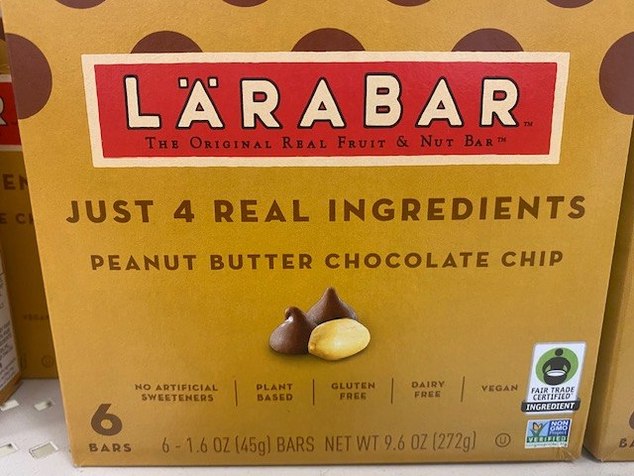
What does "real" mean?There are two definitions:
* Belief Independent
* Authentic
Conflating them will only lead to confusion — hypericin
Just 4 real ingredients. — Tom Storm
Isn't the contrast here real against artificial? — Banno
Yes, I know the difference between real and real. I posted the photo because I thought it was amusing. -
Form Versus Function in ArtBut I didn’t intend the thread to specifically be about music; my threads just tend to go there because it’s what I know the best and I use music to try to illustrate my points. If you have any thoughts about these ideas in relation to another art form (or even something not specifically art) please feel free to bring it up. — Noble Dust
I understood that, but I don't think I understand your distinction between function and form in music enough to compare it to something I'm more familiar with, e.g. poetry or fiction. Besides, I'm enjoying hearing you, @Dawnstorm, and the others talking shop. -
Poem meaningI can recommend the same recommendation that was given me -- don't worry too much about the scholarly side, just feel it like you would any other poem. — Moliere
That's generally how I approach poems when I read them. If they get to me enough, I'll put more effort into subsequent reads. That's why I'm enjoying this thread. It gives me motivation to dig deeper. -
Poem meaningWhile browsing for poems -- I have never before ventured down the path of The Wasteland until now. And I really did love it. — Moliere
Oh, geez. Now you're going to make me read "The Wasteland." It may take me a while. I did have an experience perhaps similar to the one you describe at the beginning of your post. I remember reading and hating Elliot in high school, in particular "The Love Song of J. Alfred Prufrock." About six months ago I decided to take another look and I was surprised to find I really enjoyed it. I'll try to keep that in mind as I read "The Wasteland." -
Form Versus Function in ArtAm I missing something? Is there a sense in which artistic function is bottomless/eternal, or am I right in demarcating it's beginning and end points? What do your opinions say about your philosophical predisposition on what art does and is? Just my semi-annual art rant. — Noble Dust
As you probably know, I am very interested in art - how it works, what it does, why it matters. You and I have discussed in the past that music is the art form I have least to say about, not from lack of interest but from lack of knowledge. That being said, I'm really enjoying this thread. I've read all the posts and I'm just allowing it to percolate rather than trying to figure everything out. I don't have much to contribute, but the passion and knowledge of you and the other participants is inspiring. -
What does "real" mean?But that’s full of mental phenomena, I don’t see a way around that. Take your atime example of an apple in front of you: you’ll say this is real. Perfect. Now I’m not in front of it, so I have to take your testimony as accurate and I have to imagine that what you mean when you say “this is an apple” will evoke in me, a similar object to what you are seeing. Likewise if I look out my window and say I see a car, a real car, not a toy car, you would have to imagine a car in your head, unless you look at a car. What’s the issue here- this looks to me like “ordinary, humdrum reality”. What’s your concern in such a situation? — Manuel
I don't have any problem with what you've written. I'm not saying the memory of an apple is not real. Is it "ordinary, humdrum reality?" Let's see... I guess if you put me in thumbscrews or on the rack and forced me to make a definitive statement as to what everyday reality is, I'd say it is something physical, something made of physical substance, matter or energy, something you can observe directly with human senses.
Thank you for forcing me to say that. Your use of torture devices is forgiven. I didn't realize that's what I think till I wrote it out. -
What does "real" mean?Right, that's the point. We consider whether or not the thing being measured (through sensation) is real, and we naturally conclude that if we are measuring it, it must be real. But prior to coming to this conclusion, isn't it necessary to do our due diligence toward understanding the thing which is doing the measuring? If the thing doing the measuring isn't real, then what validity does "if we are measuring it, it must be real" have? — Metaphysician Undercover
It's a pretty standard thought, at least in eastern philosophies, that the self is an illusion.
T Clark
Start FollowingSend a Message
- Other sites we like
- Social media
- Terms of Service
- Sign In
- Created with PlushForums
- © 2026 The Philosophy Forum