
Comments
-
The Mind-Created World
I just came across a quote in the book I'm currently reading, after the author discussed Aldous Huxley's notion : "that our entire perception of reality is a hallucination". That's a strange way to think about the "reality" philosophers have striven to understand rationally for 3000 years. He then quotes neuroscientist David Eagleman :And Kant concluded that Ultimate Reality (noumenon) is fundamentally unknowable to humans. He seems to be implying that philosophers are just ordinary humans, who have made it their business to guess (speculate) about non-phenomenal noumena. — Gnomon
It’s more a question of intellectual humility - no matter how much we know there’s still a sense in which we lack insight into how things really are. Human knowledge is necessarily incomplete, in that sense. — Wayfarer
". . . . what we call normal perception does not really differ from hallucinations, except that the latter are not anchored by external input. . . . . . Instead of reality being passively recorded by the brain, it is actively constructed by it."
That's a big exception for rational thinkers. But does the notion that humans "actively construct" their worldview resonate at all with your concept of a Mind-Created World? :smile: -
Opening Statement - The Problem
Hopefully, semi-sentient but heartless AI will be able to scan your words, and summarize them, without a personal agenda, to warp your intended meaning. Unfortunately, I can't say the same for my own understanding of "the problem" with analytical philosophy. I may have opinions of my own.Your *1 Thank you for putting this on this forum. The one issue I have is that the responses you quote (Core argument, Beyond conceptualisation, ...) is generated by artificial intelligence, which is (currently still) incapable of abstract thought. I will address your notes: — Pieter R van Wyk
I can understand your reticence to reveal bits & pieces of your thesis on the "TPF inquisition" forum, which may evoke unsympathetic & prejudiced responses, by those who enjoy pointing-out Flaws more than noticing Virtues. Any “flaw” in your reasoning would most likely be found in the intuitive or inferential leap from parts to whole. But analytical minds may more easily see the flaws in isolated parts than the synthesized system. :smile:
For those of us on the outside, can you summarize your “System”, and its Principles, in a single paragraph? If so, I may be able to determine if it is A> of interest to me, and B> within my range to understand. However, due to my own limitations & flaws, I may or may not be able to discern the "fatal flaw" in your reasoning. I'm currently reading a large book on a similar controversial topic : "to expose the fallacies of some of our culture's deepest metaphysical convictions". So I may not be able to get into your book for a while. :meh:I propose an understanding that is NOT based on 2,600 years of philosophical endeavour BUT on a fundamental, deduced from 'first principles', definition of a system - now looking for a possible fatal flaw in my reasoning. — Pieter R van Wyk
Note --- According to the Wiki quote below, the philosophical quest for wisdom seems to be an abject failure. And yet, some of us still quest-on.
"Philosophy is the study of wisdom, understood as the ability to conduct the human activities; and also as the perfect knowledge of all the things that a man can know for the direction of his life, maintenance of his health, and knowledge of the arts". https://en.wikipedia.org/wiki/Principles_of_Philosophy
The “demarcation problem” is a struggle to distinguish between Science and Pseudoscience. And I don't have a simple solution. Sometimes today's Woo becomes tomorrow's Wow! : e.g. Plate Tectonics & Germ Theory. Those conjectures were only accepted after they were defined in enough detail to fit a puzzle piece into the whole picture. Can you express your "solution" in a single sentence? :wink:Very valid questions, but easily resolved with a valid solution to the "demarcation problem" in philosophy. — Pieter R van Wyk
Note --- If you don't want to over-simplify, in view of trolls & critics, you can message me in the Inbox.
I define Laws of Nature simply as “limitations on change”. No ethical implications intended ; unless you imagine those laws as discriminating between Good & Evil, from the perspective of the Programmer. From my cog-in-the-works perspective, they simply steer the evolving cosmos in the direction of Time's Arrow. :nerd:I have started reading some of your musings on 'enformationism' - my first response is: be very careful of what I call a "philosophical trap", you only end up with oxymorons like "ethics of science". "The Laws of Nature have no morality, no honour nor any legal standing." — Pieter R van Wyk
Excerpt from another reply :
What you call General Systems Theory may be what Jan Smuts encapsulated as Holism. Which is one of the basic principles of my own thesis. It's fundamental to my worldview. :cool:The question that I claim to have found an answer to is: Is there a different foundation from which answers, to this question (why are all these problems so pervasive and seemingly unsolvable) and these problems (poverty and war), could be sought. I claim the answer is in a general systems theory deduced from first principles. — Pieter R van Wyk
Holism and Evolution
Orderly Cosmic Transformation
https://bothandblog8.enformationism.info/page33.html
Note 3. What is complex systems science? : “Complex phenomena are hidden, beyond masking by space and time, through nonlinearity, randomness, collective dynamics, hierarchy, and emergence”.
https://www.santafe.edu/what-is-complex-systems-science
Claudius van Wyk
https://claudiusvanwyk.academia.edu/ -
The Mind-Created World
Personally, I have a very parochial view of the world. Except for four years in the navy, my body, with its sensory organs, has seldom experienced the wider world beyond my location, within a radius of a few miles, on the North American continent. Since I live in a small city, I seldom see any stars, except for Venus. So, my "knowledge of the physical universe" is not "as it is in itself", but as reported by humans who have made it their business to explore parts of the universe beyond my ken.The point I'm pressing is the distinction between the empirical facts of science, which I'm not disputing in the least, and the grounding of these facts in the philosophical and scientific framework through which we understand them. That argument is that our knowledge of the physical universe (world, object) is not knowledge of the universe as it is in itself but of how it appears to us. — Wayfarer
Presumably, those reports --- from scientists, philosophers, explorers --- describe the universe "as it appears" to them. From those varied accounts, I have stitched together a worldview of my own. But, it's still a patchwork, and not knowledge of the world "as it is". And Kant concluded that Ultimate Reality (noumenon) is fundamentally unknowable to humans. He seems to be implying that philosophers are just ordinary humans, who have made it their business to guess (speculate) about non-phenomenal noumena.
And yet, mystics, shamen, prophets, psychonauts, etc, have claimed to see beyond the limits of human senses, with introspection, or extra-sensory perception, or drugs that dull the left brain (rational mind). Should I take their reports as descriptions of what the world is really truly like --- or as it "appears to them"? :wink: -
Opening Statement - The Problem
I too, have no training as a philosopher, and most of my relevant reading prior to retirement has been in the empirical sciences : especially Quantum Physics and Information Theory. But I do "wonder" about non-empirical problems & "why?" questions. So, my retirement hobby is to explore the practical & theoretical implications of my personal worldview*2, which is explained in a website and blog*3.Thank you for the invitation to join this forum. I am joining with some trepidation - I am not a philosopher and I have not any formal qualification in philosophy. But then, according to Jostein Gaarder in 'Sophie's World' - "...the only thing we require to be good philosophers is the faculty of wonder ..." I also have to admit that I do not speak any of the peculiar languages 'ology', 'ism' and such, I prefer plain English.
The Problem, from my "faculty of wonder": For more than 2,600 years philosophers has studied and contributed to our knowledge and understanding but we still suffer from strife, civil disobedience, revolution, and war. "The only results I see from philosophy are a world in which we are: unable to have peace, unable to eradicate poverty and hunger, and a world in which a well-balanced coexistence with our environment and among ourselves is but a pipedream!" (from How I Understand Things. The Logic of Existence). Why is this? — Pieter R van Wyk
I haven't read your book, but I have scanned the Google summary*1. Based on that overview, it seems that our worldviews may have some ideas in common, but others that may clash. I'm not familiar with Meta-Mathematics, but I do know a bit about Systems Theory & Holism. I don't meditate, and don't do drugs ; so if we have anything to inter-communicate, it will have to be done in conventional English language, with allowances for a few necessary neologisms. :smile:
*1. How I Understand Things. The Logic of Existence :
https://www.google.com/search?client=firefox-b-1-d&q=How+I+Understand+Things.+The+Logic+of+Existence
Core argument : "It challenges the idea that existence can be adequately captured by concepts, whether through rationalist or phenomenological approaches".
Note --- If we can't understand the world conceptually, and put it into words, do you think we can only explore the world system experientially, via meditation or drugs?
Beyond Conceptualization :
"It argues that existence is not solely a concept but is inherent in the act of being itself, and that we often lose sight of this when trying to define it through language."
Note --- Again, this "argument" seems to dismiss rational Western Philosophy as incapable of dealing with the ontological problems of humanity. Are you recommending something like Sartre's "being-in-itself" or the spiritual awakening of Ram Dass : "Be Here Now"?
Reception and Criticism :
"The book is described as a potentially controversial work, challenging established philosophical ideas.
It has received criticism for its lack of concrete examples and its potential to alienate readers familiar with traditional philosophy."
Note --- My own amateur personal philosophy questions both "established" philosophical concepts, and "classical" concepts of Newtonian Physics.
Summary :
In essence, the book invites readers to question their assumptions about existence and to consider the possibility that a more fundamental understanding of being is needed to address the complexities of human existence and the world around us.
Note --- I don't know if my Information-theoretic worldview provides a "more fundamental understanding of being", but it is certainly different from both traditional religious & scientific ideologies. If your responses seem encouraging, I may even attempt to read your book.
*2. ENFORMATIONISM
A philosophical worldview or belief system grounded on the 20th century discovery that Information, rather than Matter, is the fundamental substance of everything in the universe. It is intended to be the 21st century successor to the ancient worldviews of Materialism and Idealism. An Update from Bronze Age to Information Age. It's also a Theory–of–Everything that covers, not just matter & energy, but also Life & Mind & Love.
https://bothandblog8.enformationism.info/page44.html
*3. Introduction to Enformationism :
From Form to Energy to Matter to Mind to Self
https://bothandblog6.enformationism.info/page80.html -
The Mind-Created World
Obviously, the human mind is doing the measuring in terms of locally conventional increments. But the point is that the physical universe existed long before metaphysical minds. So, logically, the mechanisms of Physics must have had the Potential (the "right stuff") for mental functions all along. Apparently, it just took Time to evolve mental mechanisms (thinking organisms) from the raw materials of Matter & Energy, wondrously produced by the explosion of a long long long ago Black Hole Singularity. Something from What-thing?Yes, according to modern cosmology, the physical universe existed for about 10 billion years without any animation or "cognition" : just malleable matter & causal energy gradually evolving & experimenting with new forms of being ; ways of existing. — Gnomon
Where does the measure 'years' originate, if not through the human experience of the time taken for the Earth to rotate the Sun? — Wayfarer
Yet, where did that un-actualized pre-bang Potential come from? Is that unknowable Source of Probability (creative power) temporal or eternal? Is it Mathematical (statistical) or Mental (ideal) or Spiritual (G*D)? How and why did the evolving universe of mostly simple hydrogen atoms assemble simple holons (parts) into complex wholes that can self-reflect, and can imagine countless balls of radiant energy (stars) as a living & thinking Cosmos?
Some scientists are now exploring the notion that the Cosmos is a computer*1, processing Information (raw data) into complex Forms with novel functions, such as Thinking & Feeling. But who or what is the Programmer that set-up the system to pursue a Teleology leading to observant & reflective Minds? How do those mindful brains create an ideal mental world within the real physical world? :smile:
PS___ Which came first Mind or Potential?
*1. The idea that the universe is a computer is a fascinating and complex concept explored in digital physics and simulation theory. It suggests that the universe operates based on fundamental principles of computation, where physical laws and processes can be understood as algorithms and information processing. While not universally accepted, this idea has gained traction, particularly with the development of quantum computing and the exploration of the universe's computational capacity.
https://www.google.com/search?client=firefox-b-1-d&q=universe+is+a+computer -
The Mind-Created World
Yes, according to modern cosmology, the physical universe existed for about 10 billion years without any animation or "cognition" : just malleable matter & causal energy gradually evolving & experimenting with new forms of being ; ways of existing. So, you could say that the universe was not awake or aware until the last 4 billion years : the fourth trimester. Could that pre-conscious era be described metaphorically as Gestation : the period between Conception and Birth?On the empirical level, of course we say the cosmos existed long before us. But from the standpoint of critical philosophy, what we mean by “cosmos,” “existence,” or “visibility” only makes sense within the framework of our cognitive faculties. — Wayfarer
The book I'm currently reading is entitled, The Sapient Cosmos, by James Glattfelder. It's published by Essentia Books, which produces "scholarly work relevant to metaphysical idealism". The author was trained as a physicist, and practiced as a mathematician. But he now goes beyond the pragmatic limits of both professions, to explore the world philosophically ; which is to say "meta-physically". He refers to his methodology as "Empirical Metaphysics". What he finds most interesting is the emergence of Meaning in a material world.
Greek "Cosmos" simply means orderly or organized, but it also seems to imply some Teleological Purpose. The Latin root of "Sapient" means, not just cognitive, but also "wise". At this 1/3 point of the book, I'm not sure if the appellation is intended to apply to the physical universe or to the Organizer, whose purpose is being implemented in material & mental forms. As far as I can tell, the author is simply presenting "brute facts", if you can call philosophical deductions factual. And he is not presenting "institutional facts" under the auspices of Science or Religion. Yet, the question remains : did cosmic Mind exist before the emergence of embodied personal Minds? Or, as some postulate, did our accidental (fortuitous) collective human minds merge into a Cosmic Mind?
Personally, I am not inclined to worship a sentient world, or the implicit Inventor of a "mind-created world", nor to join a social group centered on a relationship with a Cosmos that doesn't communicate or correspond with me. I'm just exploring the wider world to satisfy my own philosophical curiosity. Am I missing some deeper meaning here? :smile: -
The Mind-Created World
I think your Epistemological approach is more appropriate for a philosophy forum, than the Empirical methods that some advocate. Besides, the Uncertainty Principle of Quantum Physics seemed to open the door to Epistemological discussions. But injecting Philosophy into Physics often raises objections of Mysticism and Woo-woo. So, we typically avoid using the fraught term "spiritual" when referring to Mental, as opposed to Material, essences & causes. Does Phenomenology successfully bridge over the spooky abyss of Spiritualism? :smile:The approach in the Mind Created World is epistemological rather than ontological - about the nature of knowing rather than about what the world is made from or of. I said 'The constitution of material objects is a matter for scientific disciplines (although I’m well aware that the ultimate nature of these constituents remains an open question in theoretical physics).' Also notice the word 'spiritual' does not appear in it. — Wayfarer -
Opening Statement - The Problem
As the dictionary noted, Philosophy is the "study" of Nature, including human nature. And it has produced many "theories" for thinking about the problems you listed. But human culture has also developed Religion and Science to do something "practical" about our problems.↪Wayfarer
I am not blaming, merely asking a question. According to the Oxford Dictionary, philosophy is:
1. the study of the fundamental nature of knowledge, reality, and existence.
2. the study of the theoretical basis of a branch of knowledge or experience.
3. a theory or attitude that guides one's behaviour.
So, after 2,600 years of this study we still have armed conflict, poverty and hunger, we are destroying our own environment and we are somehow on the verge of being taken over by artificial intelligence. Why is that?
You mention "unruly human nature" - so, do we accept that the "human nature" that has been studied for this 2,600 years is in fact strife, civil disobedience, revolution and war? — Pieter R van Wyk
Religion typically blames errant human nature for human problems, and prescribes tolerant endurance (Faith, attitude adjustment, virtue development), and/or busy work (rosary & rituals) to keep your mind off your troubles, but postpones any final resolution to another time & place. Meanwhile, Science has produced technological fixes for many of our problems with Nature, but has done little to remedy our troubles with Human Nature*1.
So, it seems that we can either wait patiently for our absconded Savior to return, or philosophically sigh that perhaps another few million years of Evolution will perfect the imperfections of Incomplete Human Nature*2. Meanwhile, we can continue to "study" the People Problem from various perspectives*3. Perhaps beginning with the mote in the eye of the observer. :wink:
*1. “Hell Is Other People”:
Jean-Paul Sartre on Personal Relationships
https://1000wordphilosophy.com/2021/02/08/hell-is-other-people/
*2. Incomplete Nature :
https://en.wikipedia.org/wiki/Incomplete_Nature
*3. Buddhism presents a nuanced view of human nature, emphasizing both its potential for goodness and the presence of inherent challenges. While acknowledging our capacity for greed, hatred, and delusion, Buddhism also teaches that we possess Buddha nature, an inherent purity and potential for enlightenment. This nature can be obscured by negative mental traits, but through spiritual practice, we can remove these obstructions and realize our true, enlightened state.
https://www.google.com/search?client=firefox-b-1-d&q=buddhism+human+nature -
The Mind-Created World
I'm not very well-versed in Phenomenology. But it points to a key difference in worldviews upon which many of the contentious posts on this forum pivot : Realism vs Idealism. The notion that our world is actually an idea in the Mind of God (world mind), may be unintelligible, not just to secular scientists, but also to many spiritual religionists. It just goes against our intuition of Self vs Other.My position is closer to what might be called a phenomenological form of idealism: it asserts that there is no reality outside of some perspective, not in a merely epistemological sense (i.e., that we only know from a point of view), but in a deeper sense—namely, that the very structure of the world, as intelligible and coherent, is constituted in and through the relation to mind. Not an individual mind, of course, but the noetic act—the perceiving, structuring, and meaning-bestowing – that makes any world appear in the first place. — Wayfarer
Which, I suppose is the point of the Buddha's "non-dual unstructured awareness". Personally, I can accept it intellectually, but not experientially. However, the Matrix and Tron movies gave me some imagery by which to imagine a local mind within an encompassing non-local Mind. :cool:
Substance metaphysics and phenomenology represent distinct, yet sometimes intertwined, philosophical approaches. Substance metaphysics, particularly in the Aristotelian tradition, focuses on identifying and defining the fundamental, underlying realities (substances) that exist independently and support properties. Phenomenology, on the other hand, prioritizes the study of conscious experience and how things appear to us, often questioning the possibility or necessity of grasping underlying substances.
https://www.google.com/search?client=firefox-b-1-d&q=substance+metaphysics+vs+phenomenology+
In philosophical idealism, the "mind of God" refers to the idea that the ultimate reality is fundamentally mental or spiritual, and that God's mind is the source and sustainer of all existence. This concept is central to many forms of idealism, particularly subjective idealism and objective idealism, where the perceived world is seen as existing within the mind of God or as a manifestation of divine consciousness.
https://www.google.com/search?client=firefox-b-1-d&q=idealism+mind+of+god -
The Question of Causation
FWIW, one kind of Mental Causation is defined in the science of Cybernetics : "Cybernetics is the study of goal directed systems that receive feedback from their operating environment and use that information to self regulate."What are your thoughts regarding Mental Actions as Causal Actions? — I like sushi
In a guided missile or remote-control drone, the "Goal" or target or purpose originates outside the physical system, in the mind of the goal-setter. That Goal, once established in the system, sets-off a chain of cause & effect which guides the missile to its intended target. Likewise, in almost everything that humans do, a mental action (intention or inclination) is what initiates the subsequent chain of causation. It's a future-imagining Self that regulates the system, not necessarily by internally adapting to feedback, but by pointing beyond in the direction of the target, and by defining (setting values) what counts as on-track. :smile: -
On Purpose
Like Deacon, I try to stay close to the scientific evidence in order to avoid picturing the Cosmic Cause as a Biblical Creator, magically producing a world of mini-mes*1 (little gods) to serve his ego. Teleology seems to imply a human-like creator, for which the evidence is ambiguous. So, I typically refer to the First Cause as something like the Programmer of a computer program. In which case Teleonomy*2 might better apply. And the ultimate purpose may be more exploratory/experiential than definitive.What Deacon and others are trying to do, is accomodate purposefulness in an extended naturalist framework - to see how purpose can be understood without appealing to divine creation, but also without reducing living things to machines or bits of matter. — Wayfarer
I do see evidence that the Universe began in an inexplicable state of high Energy & low Entropy, and is gradually complexifying and organizing into living & thinking things. Also, Time's Arrow seems to be pointing to some unknowable future state. However, modern science has found a fundamental element of unpredictability (uncertainty, nondeterminism) underlying that obvious progress. So, the evolutionary "machine" seems to have some degree of freedom to explore options as it progresses in a general direction. In any case, we are just guessing about the motives (if any) of the Prime Mover (if any). :smile:
PS___ My reason for quoting Philip Ball was to indicate his use of "Information" rather than "Consciousness" as a causal force. Not to promote Teleology or Teleonomy.
*1. What is Mini-Me a parody of?
Mike Myers has acknowledged that the character was directly inspired by the character of Majai in the 1996 film The Island of Dr. Moreau, who is similarly a miniature version of Marlon Brando's titular villain character. ___ Wikipedia
*2. Teleology and teleonomy are related concepts, but they differ in how they explain goal-directed behavior. Teleology refers to explanations based on an inherent purpose or end goal, often implying a conscious or supernatural design. Teleonomy, on the other hand, describes goal-directed behavior resulting from a pre-programmed mechanism, like genetic coding, without implying a conscious or preordained purpose, according to a philosophy forum and Wikipedia. . . . .
Teleology suggests a purpose for a system, while teleonomy describes a purpose within a system.
https://www.google.com/search?client=firefox-b-1-d&q=teleonomy+vs+teleology -
On Purpose
I just came across a quote in physicist James Glattfelder's 2025 book on The Emergence of Information, Consciousness, and Meaning. After discussing Energy & Entropy, along with Dissipative Structures, he concludes : "However, one of organic life's most stunning features still remains obscure, namely agency, intentionality, volition, and purpose. Phillip Ball reports on a workshop held in 2016 at the Santa Fe Institute investigating the uniqueness of terrestrial biology" :Much of the debate about purpose revolves around an ancient idea, telos. The ancient Greek term telos simply means end, goal, or purpose. — Wayfarer
"It's hardly surprising that there was no consensus. But one message that emerged very clearly was that, if there's a kind of physics behind biological teleology and agency, it has something to do with the same concept that seems to have been installed at the heart of fundamental physics itself : Information." :smile: -
On Purpose
Yes. Enformationism*1 is similar in some ways to ancient World Soul and Panpsychism worldviews. But it's based on modern science, specifically Quantum Physics and Information Science. The notion of a BothAnd Principle*2 illustrates how a Holistic worldview can encompass both Mind & Body under the singular heading of Potential or Causation or what I call EnFormAction. Here's a review of a Philosophy Now article in my blog. :smile:So, your model seems to me a bit like the 'world soul' present in some hellenistic philosophies, i.e. the universe as a whole as a sort of living being. So it seems to me that you are proposing a dualistic model or a dual-aspect monism, where mind and the 'physical' are two aspects of the whole. — boundless
*1. Dual Aspect Monism :
Another article in the Philosophy Now magazine attempts to find “a balance between two extreme views of consciousness. . . . Physicalism and panpsychism sit either end of a metaphysical seesaw, and when one is in the ascendancy it is only by bringing the other unduly low.” The author, Dr. Sam Coleman, proposes a different kind of stuff (essence) that is “neither mental nor physical in itself, but which possesses properties capable of generating both the mental and the physical.” The “one fundamental stuff” he's referring to is Consciousness, but for technical purposes I think that the scientific term “Information” fits the description better. As Claude Shannon discovered in mid-20th century, Information is not just ideas in human minds, it is also the substance of physical objects; it's both physical and mental. Coleman also offers a novel term to replace Panpsychism : Panqualityism. He admits that name is a merely a placeholder for unspecified “neutral properties” (potentials) that are able to emerge into reality as either physical or metaphysical, depending on the context. Yet again, Information already has this monist/dualist BothAnd property, which could explain how metaphysical minds emerge from the functioning of material brains. It might also suggest how a physical universe could emerge from a mathematical Singularity consisting of nothing but the information for constructing a universe from scratch : a program for creation.
https://www.bothandblog.enformationism.info/page14.html
*2. Both/And Principle :
My coinage for the holistic principle of Complementarity, as illustrated in the Yin/Yang symbol. Opposing or contrasting concepts are always part of a greater whole. Conflicts between parts can be reconciled or harmonized by putting them into the context of a whole system. . . . .
https://blog-glossary.enformationism.info/page10.html
*3. EnFormAction :
Ententional Causation. A proposed metaphysical law of the universe that causes random interactions between forces and particles to produce novel & stable arrangements of matter & energy. It’s the creative force (aka : Schopenhauer's Will) of the axiomatic eternal First Cause that, for unknown reasons, programmed a Singularity to suddenly burst into our reality from an infinite source of possibility. AKA : The creative power of Evolution; the power to enform; Logos; Change.
https://blog-glossary.enformationism.info/page8.html -
On Purpose
That is indeed "the problem" for explaining Purpose & Emergence in reductive physical terms. Which is why philosophers use holistic Meta-Physical terms, such as teleology to explain, not how, but why complex self-sustaining & self-organizing systems emerge from a world presumably ruled by the destructive & dissipating second law of thermodynamics (entropy). It's also why I coined a new term, EnFormAction, that refers to the constructive force in physics, formerly labeled dismissively as Negentropy. :smile:Yes. In other words the problem for the physicalist is: can we explain the 'strong emergence' of life and mind in purely physical terms given that reductionism seems to fail? — boundless
EnFormAction :
The concept of a river of creative causation running through the world in various streams has been interpreted in materialistic terms as Momentum, Impetus, Force, Energy, Negentropy, etc, and in metaphysical idioms as Will, Love, Conatus, and so forth. EnFormAction is all of those.
https://blog-glossary.enformationism.info/page8.html
Enformy :
In the Enformationism theory, Enformy is a hypothetical, holistic, metaphysical, natural trend or force, that counteracts Entropy & Randomness to produce complexity & progress. [ see post 63 for graph ]
1. I'm not aware of any "supernatural force" in the world. But my Enformationism theory postulates that there is a meta-physical force behind Time's Arrow and the positive progress of evolution. Just as Entropy is sometimes referred to as a "force" causing energy to dissipate (negative effect), Enformy is the antithesis, which causes energy to agglomerate (additive effect).
2. Of course, neither of those phenomena is a physical Force, or a direct Cause, in the usual sense. But the term "force" is applied to such holistic causes as a metaphor drawn from our experience with physics.
3. "Entropy" and "Enformy" are scientific/technical terms that are equivalent to the religious/moralistic terms "Evil" and "Good". So, while those forces are completely natural, the ultimate source of the power behind them may be supernatural, in the sense that the First Cause logically existed before the Big Bang. [ see ENTROPY at right ; Extropy ]
https://blog-glossary.enformationism.info/page8.html
Holism ; Holon :
Philosophically, a whole system is a collection of parts (holons) that possesses properties not found in the parts. That something extra is an Emergent quality that was latent (unmanifest) in the parts. For example, when atoms of hydrogen & oxygen gases combine in a specific ratio, the molecule has properties of water, such as wetness, that are not found in the gases. A Holon is something that is simultaneously a whole and a part — A system of entangled things that has a function in a hierarchy of systems.
https://blog-glossary.enformationism.info/page11.html -
On Purpose
A "weak"*1 scientific interpretation of evolution from simple to complex is specifically formulated to avoid any metaphysical (teleological or theological) implications. But a "strong"*2 interpretation directly addresses the philosophical implications that are meaningful to systematic & cosmological thinkers*3. Likewise a "weak" interpretation of the Anthropic Principle*4 can avoid dealing with Meaning by looking only at isolated facts. Both "weak" models are reductionist, while the "strong" models are holistic. The Strong models don't shy away from generalizing the evidence (facts). Instead, they look at the whole system in order to satisfy philosophical "curiosity" about Why such appearances of design should & could occur in a random mechanical process. :smile:Well, I think that 'emergence' in fact doesn't have 'theological' or even 'teleological' connotations for most people. One example I made is how 'pressure' of a gas 'emerges' from the properties of the particles it is composed of. Yes, for the reductionist version of physicalism life is an 'accident'. Still, it is curious that in a reductionist model something like 'life' would eventually happen. — boundless
*1. Weak emergence describes a situation where a system's properties or behavior, though seemingly novel, can be fully explained by the interactions of its constituent parts and their underlying rules. It implies that while the emergent behavior is a product of the system's components, it's not fundamentally novel or irreducible. Examples include traffic jams, flocking behavior of birds, or the structure of a school of fish.
https://www.google.com/search?client=firefox-b-1-d&q=weak+emergence
*2. Strong emergence describes a system property that arises from the interaction of its parts, but which cannot be predicted or understood from the properties of those parts alone, or from the interactions between them. It implies that the whole is more than the sum of its parts in a fundamental way, with novel behaviors or properties emerging that are irreducible to the lower-level components
https://www.google.com/search?client=firefox-b-1-d&q=strong+emergence
*3. Weak emergence and strong emergence are two ways of describing how complex systems exhibit properties not found in their individual components. Weak emergence refers to properties that, while not immediately obvious from the components, can still be explained and predicted by understanding the interactions of those components. Strong emergence, on the other hand, describes properties that cannot be predicted or explained solely by examining the components and their interactions, suggesting something genuinely new arises at the higher level.
https://www.google.com/search?client=firefox-b-1-d&q=weak+emergence+vs+strong+emergence
*4. The Strong Anthropic Principle (SAP) suggests the universe's properties are specifically arranged to allow for the existence of intelligent observers, like humans. It implies that the universe's laws and constants are not just compatible with life, but that they necessitate it. This contrasts with the Weak Anthropic Principle (WAP), which simply states that we observe a universe compatible with our existence because if it weren't, we wouldn't be here to observe it.
https://www.google.com/search?client=firefox-b-1-d&q=strong+anthropic+principle -
The Christian narrative
The myth of god/human sacrifice probably made more sense back in the day, when animal sacrifices were mandatory for many official religions. And the occasional human sacrifice was reputed to be more powerful for getting the goodies. But the sacrifice of a god was of cosmic importance. Obviously some myths were narrative explanations for natural events such as the rebirth of Spring emerging from the death of Winter. Today, we have less inspiring but more technical explanations for natural functions. :smile:True, and the sacrifice of Jesus has clear magical connotations: sacrifice this human, get good crops. So the sacrifice is celebrated at Easter, around the time of the spring equinox, which vaguely coincides with the last frost date in temperate zones. It's a fertility rite. — frank
Gods who sacrificed themselves :
Many deities in mythology are associated with sacrifice, including self-sacrifice for the benefit of others or to achieve a greater purpose. Some prominent examples include Jesus (Christianity), Osiris (Egyptian), Dionysus (Greek), and Odin (Norse). These gods often die and are reborn, or undergo symbolic deaths and resurrections, in narratives that explore themes of redemption, transformation, and the cyclical nature of life and death.
https://www.google.com/search?client=firefox-b-1-d&q=what+gods+sacrificed+themselves -
The Christian narrative
I guess that myth-makers create their god-stories for the same reason parents tell their own children about the tooth fairy : to get compliance without argument. "If you do this, something good will happen, But if you don't . . . .". Gods bring the goodies, or not, depending on your obedience.Are myths always this way? Or is Christianity a special case? — frank
In the case of religious beliefs, professional priests exploit adults for their inborn trust in authorities*1, in order to get political compliance without rational arguments. Even adults, when they reach the age of reason, may begin to doubt the official stories. But when everyone they know seems to believe the myth, they may go along to get along.
Moreover, communal myths*2 tend to bond individuals into team players and tribal roles. Socrates was condemned for "impiety" : not playing along with the official local worldview. Philosophers tend to ask embarrassing questions of parents & authorities about fairies & gods. :smile:
*1. Born to Believe :
The idea that people are "born to believe what we're told" stems from our inherent trust in authority figures and the narratives presented to us, particularly during childhood. This tendency is shaped by our early socialization and the narratives we're exposed to, which can influence our perceptions of reality. While this inclination is natural, it's also important to develop critical thinking skills and question information, even when it comes from trusted sources.
https://www.google.com/search?client=firefox-b-1-d&q=born+to+beleive+what+we%27re+told
*2. Communal bonding :
Myths serve as a foundational element of cultural identity, providing a shared narrative that shapes a community's understanding of itself, its history, and its place in the world. They establish social hierarchies, define roles, and offer explanations for the world's mysteries, fostering a sense of belonging and guiding individual and collective behavior.
https://www.google.com/search?client=firefox-b-1-d&q=myth+core+of+cultural+identity -
On Purpose
The Materialist explanation for the evolutionary emergence of animated & motivated matter is based on random accidents : that if you roll the dice often enough, strings of order will be found within a random process*1. But they tend to avoid the term "Emergence", because for some thinkers it suggests that the emergence was pre-destined, presumably by God. And that's a scientific no-no. So, instead of "emergence", they may call Life a fortuitous "accident".Sorry I missed your post. Anyway, assuming that what you are saying here is right, we should ask ourselves to explain how it can be right. Life has goal-oriented behavior, how does that 'emerge' from something that doesn't have anything like that. And assuming that in some ways it can, can we give a theoretical explanation for that? — boundless
However, another perspective on Abiogenesis*2 is that the Cosmos is inherently self-organizing. And that notion implies or assumes a creative goal-oriented process, and ultimately Teleology. My personal Enformationism*3 thesis is an attempt to provide a non-religious philosophical answer to the mystery of Life & Mind emerging from the random roiling of atoms. But if you prefer a "theory" from a famous & credentialed philosopher, check-out A.N. Whitehead's book Process and Reality*4. :smile:
*1. Order from Chaos :
Yes, order can indeed arise from chaos in various contexts, including evolution. While often perceived as random and unpredictable, chaotic systems can, under certain conditions, exhibit self-organization and lead to the emergence of new structures and patterns. This is observed in natural phenomena like ecosystems and even in the formation of stars and planets.
https://www.google.com/search?client=firefox-b-1-d&q=evolution+order+from+chaos
*2. Abiogenesis :
The origin of life, or abiogenesis, is a complex scientific question with no single, universally accepted answer. However, the prevailing hypothesis is that life arose from non-living matter through a process of increasing complexity, starting with simple organic molecules and culminating in self-replicating entities enclosed within membranes. This process likely involved the formation of a habitable planet, the synthesis of organic molecules, molecular self-replication, self-assembly, and the emergence of cell membranes.
https://www.google.com/search?client=firefox-b-1-d&q=how+did+life+emerge
*3. Enformationism :
A philosophical worldview or belief system grounded on the 20th century discovery that Information, rather than Matter, is the fundamental substance of everything in the universe. It is intended to be the 21st century successor to the ancient worldviews of Materialism and Idealism. An Update from Bronze Age to Information Age. It's also a Theory – of – Everything that covers, not just matter & energy, but also Life & Mind & Love.
https://blog-glossary.enformationism.info/page8.html
*4.Process Teleology :
Alfred North Whitehead's process philosophy redefines teleology, moving away from a predetermined, goal-oriented view to one of creativity and becoming. In his system, the universe is not static but constantly evolving through processes of "becoming". Teleology, in this context, is not about reaching a preordained end, but rather about the ongoing creative advance and the integration of past and present within each moment of experience.
https://www.google.com/search?client=firefox-b-1-d&q=whitehead+process+teleology -
Why are 90% of farmers very right wing?
I live in a conservative Southern state, so even city-dwellers tend toward the right-wing. But mainly what I meant by that remark was that the country mouse conservatives have traditionally been either farmers, working the soil, of small-towners providing services for farmers. Yet today, in the US, most farming is done by machines --- factory farms --- and most small towns are now suburbs of large cities. So, in my small city, when you see a man wearing cowboy boots & hats, odds are that he drives a pickup truck as a political image statement, not for working the soil or riding horses.Today, most right-wingers live in or near a city — Gnomon
Really? My experience would be attune more to Hypericin's that they are in the country for the reasons they mentioned. Where did you get the idea they are in the city? Your image does not prove they live in the city, from what I can see; it is showing states and their denomination, not city. — unimportant
What you don't see on the US map, is that the red states, especially in the West, are mostly unpopulated, and the few citizens live in small cities, like DesMoines, Iowa. Thousands of acres of wheat & corn are grown on "factory farms, and the grub-work laborers are mostly migrant Mexicans. However, in the Eastern Megalopolis*1, it's the opposite : very little non-urban land, but a significant percentage of the population votes Conservative. So, again, Right-Wing is more an indication of social-group than of location or occupation. They may no longer be rural or urban working class, but they identify with them.
Also, for many if not most Conservatives, their political leaning is determined by their religion. In the US, the most popular religions are Protestant, and a significant number are labeled as "Christian Right". Even the sweat-labor Catholic Mexicans tend to vote Conservative, if they vote at all. English religions may be different, so I suspect that British Conservatives may be less motivated by religion than by a reaction to years of Liberal politics, that favored big cities instead of small towns. For them, the ancient libertine City vs puritan Country mouse dichotomy may still apply. :smile:
PS___ My farm-raised father worked in a steel mill, and joined the workers union. But his political leanings were mostly influenced by his conservative protestant religion. So. even though he appreciated the wage & work-condition improvements, he did not like the socialist rhetoric in union hall meetings.
*1. Conservative Elites Prefer Living in Progressive Elite Cities
https://www.aaronrenn.com/p/conservative-elites-prefer-living -
Why are 90% of farmers very right wing?
Same in the US. See map below.I don't know but all I know is that rural britain is extremely right wing and I am wondering if it has always been like this or something that precipitated in recent years. I could not speak on any other country. Just my the experience of my own country. — unimportant
Aesop's fables (500BC) enshrined that political polarization in the story of the liberal City Mouse and the conservative Country Mouse. Back then, cities were the exception to the rule. But in modern cultures the country mice still seem to view the sybaritic city mice as immoral and living in squalor, crime, & fear. Moreover, the city mice are weak & interdependent, while the country mice are strong & independent. Today, most right-wingers live in or near a city, but feel that they live above it. Today, the difference is more a state of mind, than a place on the map. :cool:
LIBERAL BIDEN CITIES vs CONSERVATIVE TRUMP COUNTRY
-
On Purpose
Since Philosophy is primarily the study of Metaphysics (meaning), its practitioners are more likely to focus on the subject than the object on any topic. And, the "blind spot" is the blurry blob that we see out of the corner of the eye. Both kinds of observers may be missing something important. I won't jump in the middle of this finger-pointing, except to list a few excerpts from a recent non-technical article on the notion of a Blind Spot in Science. :cool:It's not phenomenology at all. There's a glaring omission in your model, as philosophy, but as it's situated squarely in the middle of the blind spot of science, I'm guessing it's something you wouldn't recognize. That blind spot is the consequence of the methodical exclusion or bracketing out of the first-person ground of existence. — Wayfarer
The Blind Spot
by Adam Frank, Marcelo Gleiser & Evan Thompson
(two physicists and a philosopher)
https://aeon.co/essays/the-blind-spot-of-science-is-the-neglect-of-lived-experience
Note --- my bold & italics
# Two Worldviews : "Behind the Blind Spot sits the belief that physical reality has absolute primacy in human knowledge, a view that can be called scientific materialism. In philosophical terms, it combines scientific objectivism (science tells us about the real, mind-independent world) and physicalism (science tells us that physical reality is all there is)."
# Metaphysics : "Experience is just as fundamental to scientific knowledge as the physical reality it reveals."
# The black hole in Science : "Because physical science – including biology and computational neuroscience – doesn’t include an account of consciousness.""
# What is Physical? : "We reject this move. Whatever ‘physical’ means should be determined by physics and not armchair reflection. After all, the meaning of the term ‘physical’ has changed dramatically since the 17th century. Matter was once thought to be inert, impenetrable, rigid, and subject only to deterministic and local interactions."
# What is Real? : "Alfred North Whitehead . . . . he argued that what we call ‘reality’ is made up of evolving processes that are equally physical and experiential."
# Ding An Sich : "Scientific materialists will argue that the scientific method enables us to get outside of experience and grasp the world as it is in itself."
Note --- "Ding an sich : It denotes the idea of an object or reality as it exists independently of human perception and understanding, a realm beyond our direct experience". {Kant's version of Plato's Ideal)
https://www.google.com/search?client=firefox-b-1-d&q=ding+an+sich
# Methodological Exclusion : "In general terms, here’s how the scientific method works. First, we set aside aspects of human experience on which we can’t always agree, such as how things look or taste or feel."
# Exclusion Delusion : "To finally ‘see’ the Blind Spot is to wake up from a delusion of absolute knowledge. It’s also to embrace the hope that we can create a new scientific culture, in which we see ourselves both as an expression of nature and as a source of nature’s self-understanding. We need nothing less than a science nourished by this sensibility for humanity to flourish in the new millennium."
# Summary : "Such an approach not only distorts the truth, but creates a false sense of distance between ourselves and the world. That divide arises from what we call the Blind Spot, which science itself cannot see. In the Blind Spot sits experience: the sheer presence and immediacy of lived perception"
. -
Rise of Oligarchy . . . . again
Some Utopian sci-fi stories envision such a global, or solar-system-wide, or multi-galaxy foundation based on some form of representative or direct democracy, so that the numerical power of the lower classes (98%) can balance the economic power of the upper classes (2%).In order to halt and reverse these trends it will require a coordinated global effort between nation states. — Punshhh
However, coordination between government "blocks" seems to depend more on the invisible-hand*1 of self-interest economic trade (market forces), than on rational political agreements. On the other hand, there is another invisible hand at play : Natural Forces. So, as natural disasters impinge on the flow of money, I suspect that international political changes will be grudgingly instituted by Oligarchs, whose fiefdoms are bleeding cash. :smile:
*1. What Is the Invisible Hand in Economics?
The "invisible hand" is a metaphor describing how, in a free market economy, individual self-interest can lead to positive outcomes for society as a whole. It suggests that individuals, acting in their own best interest, unintentionally promote the public good through their economic activities.
https://www.google.com/search?client=firefox-b-1-d&q=invisible+hand+economics

INVISIBLE HAND OF NATURAL FORCES
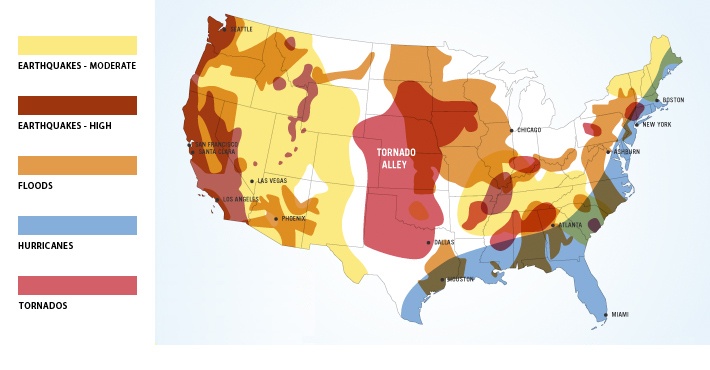
-
On Purpose
The electro-magnetic Potential of an AA battery is "found" in the order (organization ; structure : chemistry) of the metals & bases within. But scientists can't see or measure that statistical possibility (property) in situ, yet they can measure the Current flowing in a complete (whole) circuit, of which the battery is the power source. From that voltage measurement, they infer the latent prior potential. As you implied, the Potential is in the whole system, not the parts.If such a potentiality is not to be found in the parts of these systems, then the alternative I can think of is that it is to be found in the order of the 'cosmos'. In this case, the emergence of life is a potentiality enfolded in the regularities of the whole universe which remains implicit until the right conditions are met.
I don't think that assigning a property to the 'whole' - indeed, the whole universe - is something alien to physics. In fact, the conservation laws can be thought as being properties of 'isolated systems', rather than a (weakly) emergent features of their parts.
Of course, I have no idea of how such a 'potentiality' could be 'expressed' in a theory. — boundless
A human person is said to have Potential if she has the necessary qualities (intelligence, training, motivation) that can be put together for success in her future life trajectory. The Potential (power to succeed) is not in the parts, but emerges from the interaction of those elements. Cultural success emerges from applied human Potential. Similarly, the holistic process we call "Life" emerges from a convergence of natural laws & causal energy & material substrates that, working together, motivate inorganic matter to grow, reproduce, and continue to succeed in staving off entropy. Likewise, a Cosmos has Potential if it exhibits creative qualities (Causation), and an inclination toward some future state (arrow of time).
Cosmic Potential*1 was expressed in theory by Plato (Forms ; world soul ; demiurge : necessity). None of which would be accepted by modern scientists, to explain the gradual & eventual emergence of a habitable planet from an ancient ex nihilo explosion of omnidirectional Energy, and its limiting Laws. So, I have posited a thesis of Cosmic Potential (EnFormAction*2) that combines Thermodynamics with Information Theory to explain, philosophically, how & why questioning beings have emerged from a universe of 27% Dark Matter, 68% Dark Energy, plus a remainder of 5% ordinary matter that we can detect with our senses and our sensors. :nerd:
*1. In Plato's cosmology, the "cosmic potentiality" refers to the underlying, non-physical principles that shape and govern the universe. It's not a tangible, measurable entity, but rather a set of ideal forms and mathematical relationships that provide the blueprint for the physical world.
https://www.google.com/search?client=firefox-b-1-d&q=plato+cosmic+potential
*2. EnFormAction :
Ententional Causation. A proposed metaphysical law of the universe that causes random interactions between forces and particles to produce novel & stable arrangements of matter & energy. It’s the creative force (aka : Schopenhauer's Will) of an axiomatic eternal First Cause that, for unknown reasons, programmed a Singularity to suddenly burst into our reality from an infinite source of possibility. AKA : The creative power of Evolution; the power to enform; Logos; Change.
https://blog-glossary.enformationism.info/page8.html
Note --- Scientists call that causal Will by various names, such as Energy, Power, Force, Vitality. They can't say what it is (what it's made of), they merely infer its abstract existence from its effects on matter.
Note2 --- I also call that implicit "source of possibility" an eternal Pool of Potential. But Potential alone, without Intelligence & Intention could not impart Purpose to the Actual Cosmos. -
On Purpose
Seems to prefer the "how?" questions of Physical Science to the "why?" questions of Meta-Physical Philosophy. Ironically, some "how?" thinkers will admit that our evolving world presents the "appearance of purpose"*1, even as they dismiss that "appearance" as an illusion, or delusion.But the question of what all this is for? That’s not a scientific question. It’s a philosophical, moral, or spiritual one. And it’s exactly the kind of question that the language of telos is trying to keep alive — not in a dogmatic sense, but in the sense that human beings and living systems don’t just happen, they mean. — Wayfarer
Physicist Stephen Hawking wrote a book*2 intended to debunk the appearance of design based on evidence for an evolutionary mechanism programmed only by Natural Laws, requiring no programmer. But he seems to have assumed that the rules & limitations that guide the machine to perform its function, simply self-exist in a manner similar to the ancient notion of spontaneous generation of life. Which ignores the common law that "nothing comes from nothing".
Apparently, "why?" questions are taboo for believers in Scientism, because they may open the door for all sorts of spiritual creeds and mystical beliefs. Yet, secular philosophers have no problem separating their Meta-Physical notions (program ; design) from their Physical understanding of how the world works (self-organized mechanism). To tabooers, Teleology seems to be a slippery slope down to a slavish Hell of faith-blinded religious pietism, with mindless zombies bowing & praying to their dictatorial sky-lord. Personally, I no-longer feel the gravity of that un-founded fear. :smile:
*1. The whole point of modern evolutionary theory is that it explains the appearance of purpose (or telos, if you prefer) emerging from a purposeless process. There is nothing within evolution that indicates the existence of telos.
thttps://www.quora.com/Is-there-any-purp ... -evolution
Note --- Nothing in the step-by-step mechanism points to its purpose or ultimate function. Goals & Functions are holistic, not particularistic. Intention is an inference, not an observation. Meaning is mental, not physical.
*2. Stephen Hawking's Book – The Grand Design attempts to disprove the existence of God using Science and Mathematical models. In this book, it is claimed that the Universe is a result of the Laws of Physics alone, and God is not needed to explain how it began.
https://www.google.com/search?client=firefox-b-1-d&q=the+grand+design
Book Review : At best this book attempts to explain from a Physicist’s perspective, yet it fails to do so at so many other different levels. Thus it is incomplete and conjecture at best. Something as elegant, sophisticated, complex, and aesthetically beautiful, and massive in scale as large as the universe could not have materialized just spontaneously on its own.
https://www.linkedin.com/pulse/stephen-hawkings-book-grand-design-review-farzan-j-chishti -
Rise of Oligarchy . . . . again
My worldview imagines that the world is on "auto-pilot", and that internal control-system, Natural Law, seems to be functioning properly to keep the cosmos on course. But of course, any journey has its ups & downs, its cross-winds, and barriers to progress. So the historical track of progress is not a straight line, but a sinuous path full of twists & turns. Even the biblical Creation account, with God at the controls, at first looked like the story began at the destination : a perfect Paradise. But then, along came the snake to knock God's ship off course. And the rest is, as they say, history : full of diversions and course corrections.I wonder if the whole global system is just on auto-pilot with no one really "running" any of it. — frank
If you look closely at a specific historical era, it may seem chaotic and directionless. But if you zoom-out, and take a Hegelian Dialectic*1 perspective, you might notice that positives & negatives tend to balance-out over time. A historical thesis can be portrayed as a physical vector composed of both political force and philosophical direction. Then along comes a new vector to knock the ship off-track. So, the historical path will look like a meandering trail, except the average {historical direction below} is always pointed at the intended destination.
Physically, the throttle & steering of the world's autopilot is what we know as the First & Second & Third laws of Thermodynamics*2 : Energy vs Entropy & Equilibrium. The third law keeps the others from going to extremes. For example, extreme Energy would recreate the Hot Big Bang, and extreme Entropy would result in a Big Freeze. But a balance between them keeps the universe, especially the temperate planet Earth, on course to whatever destination the Bang was aimed at.
Closer to home, human culture has always had its Tyrants and Philosopher Kings, its Oligarchs and its Democratic leaders. For example, Rome began with war-lords at the helm, but eventually became a stable Republic, which later was ruled by Tyrants & Emperors, and eventually invaded by ransacking barbarians. But the Roman civilization, as a political entity, lasted for over a thousand years. And Roman culture continues in Europe to this day.
Our Cosmos has been cruising along for 14B earth-years, and finally reached the Promised Land of a habitable planet, whence Politics eventually emerged from Physics. Where we go from here remains to be seen by whatever observers are paying attention. :smile:
*1. The Hegelian dialectic is a philosophical concept describing a process of change and development through the interaction of opposing ideas. It involves a thesis, an antithesis, and a synthesis. The synthesis then becomes a new thesis, and the process repeats, driving progress and understanding
https://www.google.com/search?client=firefox-b-1-d&q=hegelian+dialectic
*2. The three laws of thermodynamics are: 1) the law of conservation of energy, stating that energy cannot be created or destroyed, only transformed; 2) the law of entropy increase, stating that the entropy of an isolated system always increases over time; and 3) the law of entropy at absolute zero, stating that the entropy of a perfect crystal approaches zero as the temperature approaches absolute zero.
https://www.google.com/search?client=firefox-b-1-d&q=first+law+of+thermodynamics
WE SEEM TO BE ENTERING THE PHASE OF DEMAGOGY
Let's hope the chaotic stage of Ochlocracy doesn't come to pass
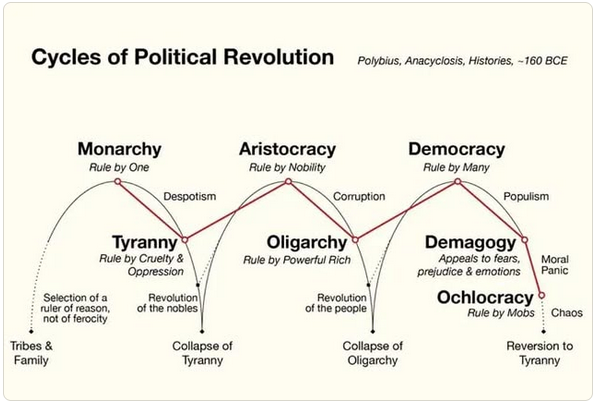
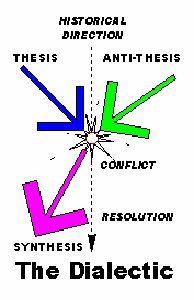
-
Rise of Oligarchy . . . . again
That is the problem with our current socio-economic system : money & power have become separated from political responsibility. The Oligarchs only have responsibility to their share-holders. But those who also hold the majority of shares can do as they please, with little limitation on their inclination. Fortunately, most of the "garchs" seem to be somewhat restrained by personal virtue and by public opinion. But their occasional ostentatious displays of over-weening wealth, such as a $50million wedding, may come to seem business-as-usual. :smile:So yes things tend to oligarchy, the question to me seems what kind of oligarchy. The king and nobility in a feudal system usually still had some responsibility to their subjects, because they were ultimately still dependent on them for their power. The current oligarchs have no such issues, they can be parasitic to a place and community and just pick up and relocate to somewhere else when things go south. — ChatteringMonkey -
On Purpose
Imagine that you could look inside a computer, to observe the micron-scale transistors blinking on & off, processing billions of bits of meaningless 1s & 0s. The close-up view would look no more purposeful than an icecap that melts from a mountaintop, into a series of streams that meander across the landscape, motivated only by gravity*4, guided by contingency, and eventually merging with the sea at gravitational equilibrium. Aristotle would say that the water seeks its proper place --- perhaps like an elephant, impelled by some mysterious purpose, journeying to the mythical graveyard.Indeed -- and I think Nagel goes into this as well -- it's precisely the pointlessness of the repetitive biological drives you cite, that causes many people to question the whole idea of purpose or meaning. It looks absurd, — J
The seeking-the-sea analogy may sound absurd, unless you back-off and look at it from a cosmic perspective. For example, the computer is motivated by bits of electricity (efficient cause) and guided by computer logic (formal cause). But the purpose behind the process is the Intention*3 of the Programmer (first cause). And the output (final cause) may not be known until the computation runs its course.
Likewise, when you look at biological Evolution*1 from close-up, it may seem pointless. But, from a cosmic perspective, when you compare the Big Bang scenario to the blue-green world we ambitious upright apes have civilized, the system has changed over time, dramatically. Hence, the cosmos presents the "appearance"*1 of a positive, teleological Purpose. Unfortunately, it is still processing (incomplete & imperfect), and may not have reached its final form. So we can't see the End, or the beginning. Hence, the "telos" is implicit, but unknown. :nerd:
Excerpts from a Quora Forum question : Is evolution a random process without any direction or purpose? If so, what is the significance of evolution? https://www.quora.com/Is-there-any-purpose-or-direction-to-evolution
*1. The whole point of modern evolutionary theory is that it explains the appearance of purpose (or telos, if you prefer) emerging from a purposeless process. There is nothing within evolution that indicates the existence of telos.
Note --- Darwin didn't attempt to explain the intention or goal of the evolutionary mechanism. It just endlessly cranks out widgets for no reason. But his example of artificial Selection by human farmers, to "improve" their plants & animals, necessarily required some vision of a future goal, and intentional motivation to manipulate natural systems to serve human needs & desires
*2. The key is whether purpose requires intent. If purpose requires a pursuit of a goal or telos, then intent would be required. This form of intent is subjective and presumes a host, such as an intelligent agent. Hence, evolution can have no purpose, scientifically speaking.
Note --- For pragmatic Science, teleology is taboo. But Philosophically speaking, why not entertain a theory of teleology, if no more complete explanation is available? The arrow of time is pointing at what & where?
*3. Evolution is a process... processes don't have aims in themselves... although they may be set up to purposely get a given result by an intelligent thing, or have intelligent things as parts in the process.
Note --- A digital computer has no philosophical goals. It simply computes until the computation ends. But a program has an intended function : the purpose.The "intelligence" is in the programmer, not the program. Likewise, teleology is in the First Cause, not in the mechanism.
*4. your premise is not right. Evolution has no goal. Evolution is just an observable fact. Like gravity. Gravity has no goal, it just has effects i.e. attraction. Evolution has no goal. But it has effects. The effect of the evolution, as we know, is the passing of the genome. This effect demonstrates itself in the species as heritable traits.
Note --- Every Effect has a Cause. This quote considers only the Material and Efficient causes. But ignores the First (intention) and Final causes (goal). Teleology assumes that an on-going process has all four causes.
*5. Everything looks designed. The difference is in the choice of the engine driving it. Evolution says it’s random mutation and natural selection exclusively. Others say that those evolutionary processes were directed by a designer, presumably God. The science is the same, the appearance of design is the same. The difference is how it was done - randomly or directed. That is, belief in God or not.
Note --- The impression of design is an inference in the mind of the observer, who has experienced intentional creativity in human culture. Darwin could avoid the implications of divine Selection, by assuming the world was eternal, and that gradual evolution was going nowhere fast. But today, the journey from formless Bang to a civilized planet presents the "appearance" of design & direction. But who or what is selecting for fitness, and filtering-out unfit forms. Can we call that Natural Design, and leave the "who" as an open question? -
Consciousness is Fundamental
Yes. My information-theoretic thesis says that human Consciousness is just one of many forms of Energy-transfer and Information-sharing. Atoms are known to send & receive Energy, which causes changes in their physical systems. For example, an electron absorbs energy from a photon, and then jumps to the next higher orbit. That physical change (transformation) is a Bit of Information.My position is that the phrase "consciously experience" is like "visually see". But my guess is you don't mean it that way. I would guess you mean something like knowingly, intellectually, or mindfully experience. Which, of course, humans do. But because we have mental abilities to be conscious of, not because those abilities are consciousness. — Patterner
On the macro level of reality, the emergence of Consciousness in an animal brain may result from billions of such lower-level information exchanges. But the phenomenon of Sentient & Self Awareness has novel holistic*3 qualities that don't apply on the sub-atomic scale. Emergence theory reveals that complex systems can exhibit properties and behaviors that are not detectable in their individual components. One atom may not be aware of anything, but a zillion atoms in a human brain may exhibit the subjective qualitative experience of Knowing and Knowing that you know*1.
And one of those mental novelties is the ability to reflect inwardly: to know your own "mental abilities". Some Materialistic scientists seem to be unable to see (metaphorically), by reflection, the observer (Self) in an experimental system. Consciousness is not an elemental thing, but an emergent process : a function of brain activity. Hence, while Consciousness may be emergent, Causation (energy ; EnFormAction) is fundamental*2. :nerd:
*1. Human consciousness refers to the subjective awareness of our own thoughts, feelings, sensations, and surroundings, essentially the state of being aware of our existence and the world around us. It's a complex and multifaceted phenomenon that encompasses various aspects, from basic wakefulness and sensory perception to more intricate cognitive processes like self-awareness and the ability to reflect on our own mental states. While there isn't a universally agreed-upon definition, consciousness is generally understood as a dynamic process rather than a static entity.
https://www.google.com/search?client=firefox-b-1-d&q=human+consciousness
*2. EnFormAction : Literally, the act of enforming --- to fashion, to create, to cause.
# Metaphorically, the Will of G*D flowing through the world to cause evolutionary change in a teleological direction.
# Immaterial Information is almost always defined in terms of its physical context or material container. (e.g. mathematical DNA code in chemical form)
# Raw En-Form-Action has few, if any, definable perceivable qualities. By itself, Information is colorless, odorless, and formless. Unlike colorless, odorless, and formless water though, Information gives physical form to whatever is defined by it.
# Like DNA, Information shapes things via internal rather than external constraints. Like the Laws of Physics, Information is the motivating & constraining force of physical reality. Like Energy, Information is the universal active agent of the cosmos. Like Spinoza's God, Information appears to be the single substance of the whole World.
# Information is the divine Promethean power of transformation. Information is Generic in the sense of generating all forms from a formless pool of possibility : the Platonic Forms.
https://bothandblog2.enformationism.info/page29.html
Note --- "G*D" is a functional concept, not a religious belief.
*3. Holism ; Holon :
Philosophically, a whole system is a collection of parts (holons) that possesses properties not found in the parts. That something extra is an Emergent quality that was latent (unmanifest) in the parts. For example, when atoms of hydrogen & oxygen gases combine in a specific ratio, the molecule has properties of water, such as wetness, that are not found in the gases. A Holon is something that is simultaneously a whole and a part — A system of entangled things that has a function in a hierarchy of systems.
https://blog-glossary.enformationism.info/page11.html -
Rise of Oligarchy . . . . again
In the OP, the economic math revealed invisible structures within the complexities of the world economic systems : One example is Ownership Networks : “Here the nodes can be corporations, governments, foundations, or physical persons”. He says this kind of analysis “reveals architectures of power invisible to any other type of examination. . . . . this economic power is much more unequally distributed than income or wealth. . . . . This highly-skewed distribution of power has economy-wide implications related to anti-competitiveness, tax avoidance, the role of offshore financial centers, and systemic risk.” Hence "free market capitalism" has devolved into private markets for Oligarchs, and off-the-books black markets for wealthy criminals. :sad:↪Gnomon
yes, he’s hit the nail on the head. That is what’s going on and capitalism, as in free market capitalism has turned toxic. — Punshhh -
Rise of Oligarchy . . . . again
No. I'm making broad philosophical/metaphorical associations, and using modern terminology to describe ancient hierarchical organizations. The point is that, what we now call Oligarchy has always existed in some form. :wink:Hmm. Are you assuming that the modern state has always existed? That there was always a single "government" attached to "nations" in a single "hierarchy"? — Leontiskos
Yes. The modern notion of a law-bound government would not apply to most ancient societies. It was mostly rule-of-men instead of rule-of-law. But the OP is intended to imply that the modern break-down of lawful governments is allowing strong-men (oligarch) to rule their little fiefdoms. :smile:It was probably much more a case of various loci of power and federation. "The government" could never have been reified in the past. — Leontiskos
Yes. The fiefs (tariffs, taxes) in pre-modern societies were mainly in the form of goods & services. Everything else was bartered : a pig for a dozen chickens. And gold or silver money was mostly limited to exchanges at the top, between Lords & Kings. Yet, again, the point of the OP is that modern Oligarchs seem to have a metaphorical license to print money*1. :cool:In this too I see a modern notion of the centralization of money. Without modern nation states there simply is no centralization of money. — Leontiskos
*1. License to print money : In the context of an oligarchy, this idiom takes on a darker connotation. An oligarchy is a system of government where a small group of wealthy and powerful individuals or families hold control. These individuals, often referred to as oligarchs, can leverage their economic power to influence political decisions and shape policies that benefit their own interests, rather than the needs of the broader population.
https://www.google.com/search?client=firefox-b-1-d&q=oligarch+license+to+print+money -
Rise of Oligarchy . . . . again
Yes. I was using the term "democracy" loosely. That's why I referred to Communism as "an extreme form of representative Democracy" where the party symbolizes the populace. Most of the modern political systems have been attempts to work around the negative aspects of the ancient pyramidal social organization that came to be known as "Feudalism". That name refers to the fiefs or fees that vassals pay to their lords higher in the hierarchy. In some cases, all the political power was concentrated at the top : Absolute Dictators & Despots*1. But that never lasted long. So, some sort of spread-the-power compromise was always necessary to form a stable government.I think the question is whether any of the regimes you speak about are properly called democracies, or ever were. — Leontiskos
The French & American "democratic" revolutions were not caused by popular uprisings among the serfs & slaves, or by upper level Land-Lords*2, but mostly by the emerging class of urban intellectuals & bourgeoisie who resented the capricious whims of Trump-like dictators. Personality-cult autocrats are typically tolerated by the upper hierarchy, and even sometimes beloved by the bottom levels, who were isolated from the king's erratic behavior. While his nation was being pummeled by a power-mad despot across the channel, Churchill quipped that "democracy is the worst form of Government except for all those other forms that have been tried from time to time".
Modern European Democracies have enjoyed several generations of relative peace, as the industrial revolution has shifted some of the economic goods down the hierarchy to the common people. But the Oligarchy seems to be reversing that trend. And the technical revolution of the computer age, now seems to be replacing the serfs with servers, and common people with automatons*3. But that's another topic for a different thread. :cool:
*1. Edward Gibbon suggested that the increasing use of Oriental-style despotism by the Roman emperors was a major factor in the fall of the Roman Empire . . . .[9]
https://en.wikipedia.org/wiki/Despotism
*2. Thomas Jefferson was an exception, being a philosophical Landlord & slave-owner in a rural agricultural setting.
*3. Those who control Things will be controlled by those who control People, and everybody will be controlled by those who control Money.
The phrase "He who controls the things will be controlled by those who control people's money" suggests that true power lies not just in controlling physical resources or means of production (the "things"), but in controlling the financial system that enables their acquisition and distribution. This idea implies that those who control the flow of money have the ultimate ability to influence and potentially control those who control the "things"
https://www.google.com/search?client=firefox-b-1-d&q=quote+%3A+who+controls+thing+will+be+controlled+by+those+who+control+people++money -
Consciousness is Fundamental
I can see why you might think that. But Properties*1 are not Laws. Laws are limitations on change. And they are known only by rational inference from observation of Processes. But Properties are qualities of material objects that are known by our physical senses. You can't see Newton's first law of Motion, but you can see the color of the object that is moving. And, yes, "mental creativity can follow the laws", by imagination, not observation. :cool:↪Gnomon
but why ideas can not have physical properties. Are not physical properties just laws, I think mental creativity can follow those laws. — Danileo
*1. Physical properties are characteristics of a substance that can be observed or measured without changing its chemical identity. These properties include color, density, hardness, melting point, boiling point, and electrical conductivity. Essentially, they are the qualities you can note using your senses or measure without transforming the substance into something entirely new
https://www.google.com/search?client=firefox-b-1-d&q=physical+properties
You seem to be influenced by the outdated belief system of Materialism, in which there is nothing non-physical. That common-sense worldview was a reaction to the Spiritualism of the Catholic Church, back in the 17th century. And it guided the explorations of Science, until the 20th century, when some basic assumptions of science were challenged by Quantum Physics. I won't go into that paradigm shift*3 here. But you can follow-up on that new worldview if you are interested in the philosophy of science. :nerd:You mentioned that logic inference*2 was non-physical and I am unsure about that claim. I think that a pure inference is not achieved to know. — Danileo
*2. Inference is not a physical entity; it is a cognitive process of drawing conclusions based on evidence and reasoning. It's a mental act, not a tangible object or substance.
https://www.google.com/search?client=firefox-b-1-d&q=inference+is+not+physical
*3. In the 20th century, science experienced several paradigm shifts, fundamentally altering how scientists understood the world. Key examples include the development of quantum mechanics, the theory of relativity, and the emergence of plate tectonics, each overturning established viewpoints and opening new avenues of research, according to Thomas Kuhn's theory*4.
https://www.google.com/search?client=firefox-b-1-d&q=science+paradigm+shift+20th+century
*4. Thomas Kuhn's theory, primarily presented in The Structure of Scientific Revolutions, describes the evolution of scientific knowledge as a series of paradigm shifts, rather than a linear progression of accumulated facts.
https://www.google.com/search?client=firefox-b-1-d&q=thomas+kuhn+theory -
Consciousness is Fundamental
For my philosophical purposes, I further define Consciousness as human subjective experience. That's the only type of awareness we forum posters have experienced first hand. I am skeptical that "everything", including atoms, consciously experience their existence. In any case, I don't presume to know what it's like to be a bat. :wink:How then, do you define Consciousness? — Gnomon
Consciousness is subjective experience. That's all. Everything experiences it's own existence. — Patterner
The concept of Information originally referred to the contents of a human mind*1. Later, Einstein equated invisible intangible Energy with abstract mathematical Mass, which we experience concretely as Matter. Then, Shannon defined his Information in terms of Uncertainty, and blamed it on Entropy, which is the opposite of causal Energy. Now, physicists and information researchers are doing experiments that convert Information to Energy and vice-versa*2.Very few posters on this forum are aware that physicists can now transform data (information) into energy and vice-versa. — Gnomon
I certainly was not. I'll look at your link. Sounds like an amazing topic. — Patterner
Exploring the philosophical implications of the Energy/Life/Mind interrelationships has become my retirement hobby*3. It's a complex and counter-intuitive topic. So my interpretation of an Information Theoretic worldview*4 annoys those who view Matter as fundamental. Moreover, I consider Cosmic Information (EnFormAction) to be more fundamental than causal Energy and emergent Sapiens Consciousness. :nerd:
*1. Information/Mind relationship :
Information plays a crucial role in the mind, influencing perception, memory, thought, and behavior. The mind can be seen as an information processor, taking in sensory input, filtering and processing it, and using it to guide actions. Working memory, a key aspect of cognition, allows us to hold and manipulate information to solve problems and plan.
https://www.google.com/search?client=firefox-b-1-d&q=information+relation+to+mind
*2. This is just a taste of the Energy/Information relationship :
Information can be converted into energy, though it's not a simple direct conversion like converting mass to energy via E=mc². Instead, it involves manipulating systems to extract usable energy based on information about their state. This concept is related to the thought experiment known as "Maxwell's demon" and is experimentally demonstrated by harnessing information about a particle's motion to guide its movement and extract energy.
https://www.google.com/search?client=firefox-b-1-d&q=information+to+energy+conversion
*3. Information is :
# Claude Shannon quantified Information not as useful ideas, but as a mathematical ratio between meaningful order (1) and meaningless disorder (0); between knowledge (1) and ignorance (0). So, that meaningful mind-stuff exists in the limbo-land of statistics, producing effects on reality while having no sensory physical properties. We know it exists ideally, only by detecting its effects in the real world.
# For humans, Information has the semantic quality of aboutness , that we interpret as meaning. In computer science though, Information is treated as meaningless, which makes its mathematical value more certain. It becomes meaningful only when a sentient Self interprets it as such.
# When spelled with an “I”, Information is a noun, referring to data & things. When spelled with an “E”, Enformation is a verb, referring to energy and processes.
https://blog-glossary.enformationism.info/page11.html
*4. An information-theoretic worldview is a perspective that interprets the world, especially physical phenomena like quantum mechanics, through the lens of information. It suggests that the fundamental nature of reality can be understood by examining how information is processed, stored, and transmitted. This approach often involves using concepts from information theory, such as entropy and mutual information, to analyze and model physical systems
https://www.google.com/search?client=firefox-b-1-d&q=information+theoretic+worldview -
Consciousness is Fundamental
I assume you are talking about the difference between a material Brain (noun) and its mental Functions (verb). Actions have consequences, but no physical properties. Objects have physical properties, but Ideas about*1 objects have qualia.↪Gnomon
I will like to know why logic distinctions are non-physical. If you don't want to go off-topic, you can direct message me. — Danileo
The brain is a gelatinous object with physical & chemical properties, that can be directly observed. The invisible Mind's properties*2, or functions or qualities, must be inferred indirectly from observation of whole-body behavior. You know your own Mind by using its functions. But you only know your neighbor's Mind by rational inference. The logical distinction*3 is between Objective & Subjective knowledge.
Ironically, when someone tries to picture a Mind or a Thought, they typically envision the brain. For vague non-philosophical purposes, that's OK. But philosophers need to be more precise. For example, a physicist can interpret Aristotle's writings on Meta-physics*4 to mean merely "after" the volume on Physics. But a philosopher would notice the "logical distinctions" between the first volume (Scientist's observations of Nature) and its sequel (philosopher's ideas & opinions about Nature) . :smile:
*1. In philosophy, aboutness (or intentionality) refers to the characteristic of mental states and linguistic expressions to be directed towards, or to represent, something beyond themselves. It's the idea that thoughts, beliefs, and utterances are "about" or "of" something. This concept is central to understanding the relationship between the mind and the world, and it's a key topic in philosophy of mind, philosophy of language, and logic
https://www.google.com/search?client=firefox-b-1-d&q=aboutness+meaning+in+philosophy
*2. The mind exhibits several key properties, including subjectivity, consciousness, intentionality, and agency.
https://www.google.com/search?client=firefox-b-1-d&q=properties+of+mind
*3. Logical distinctions refer to differences that are made through reasoning and thought, rather than being inherent differences in the things themselves.
https://www.google.com/search?client=firefox-b-1-d&q=logical+distinctions
*4. In ancient Greek, "meta" (μετά) primarily means "after," "behind," or "beyond". It can also signify "with," "among," or "in the midst of". In modern usage, particularly in English, "meta" often implies a more comprehensive, self-referential, or higher-level perspective on something
https://www.google.com/search?client=firefox-b-1-d&q=greek+meta+meaning
-
Consciousness is Fundamental
The "distinction" is between the physical Brain and its meta-physical function : Minding is what a Brain does. When I refer to Mind as "Meta-Physical" --- note the hyphen --- I'm using the term in its literal sense of non-physical.↪Gnomon
when you say *6 is the cause of metaphysical mind, why distinction is metaphysical ? — Danileo
The blog post, https://bothandblog6.enformationism.info/page17.html , has a link to a glossary entry entitled : What is Meta-Physics? https://blog-glossary.enformationism.info/page14.html , which also links to a Philosophy Forum thread, https://thephilosophyforum.com/discussion/comment/352174
The definition below*1 includes Consciousness among the topics & concepts that lie "beyond the physical realm". However for the Materialists on this forum, the term "metaphysical" is often construed as religious or mystical or unscientific woo-woo. The study of Meta-physics is indeed un-scientific, in that the Philosophical exploration goes beyond the empirical limits of physical Science.
As to the Cause of Mind --- or Causality in general --- that is another complex & unconventional topic in the Thesis and Blog. I've mentioned it several times in this thread. But a detailed explication could cause the thread to go off-topic. :smile:
*1. Metaphysics is a branch of philosophy that explores fundamental questions about reality, existence, and being. It delves into concepts beyond the physical realm, such as the nature of time, space, consciousness, and causality. It seeks to understand the underlying principles and structures that govern the universe and our experience of it.
https://www.google.com/search?client=firefox-b-1-d&q=what+is+metaphysical -
On Purpose
My own Enformationism thesis, coming from a different background --- quantum physics & information theory --- reaches a similar conclusion : that there is a continuity from physical structure to metaphysical forms of animation & sentience.A brief précis - 'Hans Jonas's The Phenomenon of Life offers a philosophical biology that bridges existentialism and phenomenology, arguing that life's fundamental characteristics are discernible in the very structure of living beings, not just in human consciousness. Jonas proposes a continuity between the organic and the mental, suggesting that the capacity for perception and freedom of action, culminating in human thought and morality, are prefigured in simpler forms of life.' That is very much the theme of the OP. — Wayfarer
This Cosmic Process of gradual transformation is a history of phase transitions. And the common factor of post-neo-Darwinian evolution is the causal power-to-transform (e.g. Energy). In the 21st century, scientists were surprised to learn that the creative & vital force is a basic form of Shannon's Entropy vs Negentropy definition of Information ; formerly only known as a mental phenomenon.
Therefore, the autonomy of Life, and the reflective stage of Mind, are merely intermediate phases in the continuing evolution of our Cosmos, from pure Big Bang Energy through manifold & maniform evolutionary phase changes to the emergence of living Matter, and eventually of thinking Minds. Each new phase of Physics, has "prefigured" a later phase of Metaphysics. :smile:
Emergent Evolution :
EnFormAction theory takes a leap of imagination, to envision a more holistic interpretation of the evidence, both empirical and philosophical. Contrary to the Neo-Darwinian theory of Evolution, EFA implies a distinct direction for causation, toward the top rung in the hierarchy of Emergence, as denoted by the arrow of Time. Pure Randomness would just go around in circles. But selection (Entention) works like the ratchet in a clock-work to hold the latest cycle at a useful, and ultimately meaningful, stable state : a Phase Transition, or a step on the ladder of Being.
https://bothandblog3.enformationism.info/page23.html -
Consciousness is Fundamental
How then, do you define Consciousness? Sentience*1 applies to most living creatures, but Consciousness*2, in the sense of self-awareness, seems limited only to humans and a few of the most highly evolved animals.I agree that that is absurd. But I do not equate consciousness with sapience or sentience. I can say atoms are conscious without meaning they are sapient or sentient. — Patterner
Therefore, I'm guessing that your notion of fundamental Consciousness may be similar to my own post-Shannon concept of Information --- the essence of Consciousness --- as fundamental. I avoid using the more general C word, because of its "absurd" implications. Yet Information*4 is fundamental in the same way that Mathematics*5 is. And it is Causal in the form of Negentropy : Energy.
Very few posters on this forum are aware that physicists can now transform data (information) into energy and vice-versa. Based on that cutting edge science, I have concluded that Cosmic Information*6 is the Cause of physical Energy and metaphysical Mind. As the power to transform, it is also the essence of everything in the world, both Matter and Mind. It's a difficult concept to conceive, but it explains many of the mysteries of physics & metaphysics. :nerd:
*1. Sentience is the ability to experience feelings and sensations. It may not necessarily imply higher cognitive functions such as awareness, reasoning, . . .
https://en.wikipedia.org/wiki/Sentience
*2. Consciousness : the state of being awake and aware of one's surroundings. {and one's self}
___ Oxford dictionary
*3. Consciousness :
Literally : to know with. To be aware of the world subjectively (self-knowledge) and objectively (other knowing). Humans know Quanta via physical senses & analysis, and Qualia via meta-physical reasoning & synthesis. In the Enformationism thesis, Consciousness is viewed as an emergent form of basic mathematical Information.
https://blog-glossary.enformationism.info/page12.html
*4. Information :
Knowledge and the ability to know. Technically, it's the ratio {rational} of order to disorder, of positive to negative, of knowledge to ignorance. It's measured in degrees of uncertainty. Those ratios are also called "differences". So Gregory Bateson* defined Information as "the difference that makes a difference". The latter distinction refers to "value" or "meaning". Babbage called his prototype computer a "difference engine". Difference is the cause or agent of Change. In Physics it’s called "Thermodynamics" or "Energy". In Sociology it’s called "Conflict".
https://blog-glossary.enformationism.info/page11.html
*5. Is Mathematics Fundamental? :
Yes, mathematics is often considered fundamental due to its role in logic, reasoning, and understanding the world around us.
https://www.google.com/search?client=firefox-b-1-d&q=is+mathematics+fundamental
*6. What is Information ? :
The power to transform, to create, to cause change, to make logical distinctions, the essence of awareness. . . . .
http://bothandblog6.enformationism.info/page16.html -
Consciousness is Fundamental
I agree with the intent, but interpret the words differently. Based in part on scientific Quantum & Information theories, I have come to believe that Consciousness is indeed emergent from Evolutionary processes. So, I reserve that generally-applied term for specific instances of human self awareness & intelligence, in order to avoid the absurdity of referring to atoms as sapient or sentient. However, contrary to Materialism, the stuff we see & touch is also emergent.It seems most people think consciousness is emergent . . . . .
explore the idea that consciousness is fundamental.: — Patterner
Therefore, what is Fundamental is Causation*1 : the power to transform (e.g. hylemorph). The causal force is similar to Plato's universal Form, and Aristotle's instantiation as Morph, but in modern scientific terms is essentially Energy. Which Einstein claimed could transform from invisible Potential (photons) into mathematical Mass (inertia), and thence into the objects we experience as Matter (actual stuff).
If we extend that idea to the last few million years of evolutionary emergence, we will need to somehow explain how immaterial Mind emerged from dumb Matter. One possible explanation is that the Potential was in there from the Big Bang beginning as general universal Causation : First Cause. :smile:
*1. Emergence, Phase Transitions, and Quantum Leaps :
EnFormAction theory takes a leap of imagination, to envision a more holistic interpretation of the evidence, both empirical and philosophical. Contrary to the Neo-Darwinian theory of Evolution, EFA implies a distinct direction for causation, toward the top rung in the hierarchy of Emergence, as denoted by the arrow of Time. Pure Randomness would just go around in circles. But selection (Entention) works like the ratchet in a clock-work to hold the latest cycle at a useful, and ultimately meaningful, stable state : a Phase Transition, or a step on the ladder of Being. Aimless Darwinian Evolution is going nowhere, but EnFormAction (directional causation) is going out-there into the unexplored future. . . . . . .
https://bothandblog3.enformationism.info/page23.html
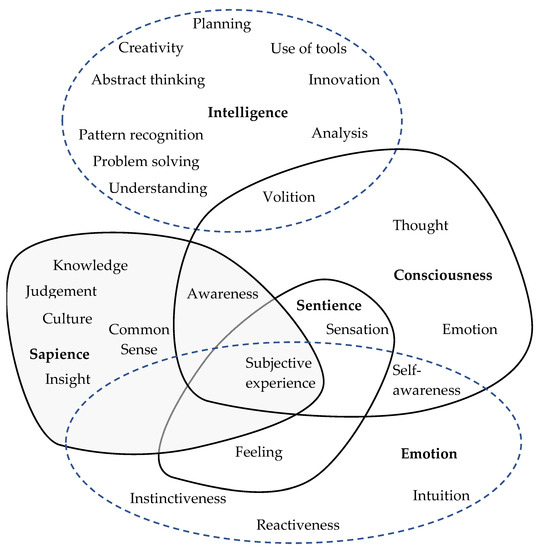
-
More Sophisticated, Philosophical Accounts of God
In the Judeo-Christian-Muslim traditions, God is wholly other*1 (Holy), so to equate oneself with God would be blasphemy. Therefore, Christian Mystics have always been viewed as outside the mainstream of Catholic doctrine. And, those who strive to remain on good terms with enforcers of orthodoxy, could never imagine themselves as a manifestation of God (Atman or son of God), or would hide it if they had such experiences.acknowledged that one’s self is god, as, as you say the living cosmos is the manifestation of god. So one plays a game with oneself, reaffirming that one does know god, because one is god, so how could one not know it? — Punshhh
Since my childhood religion was anti-catholic, I was never in the mainstream of monotheism, so didn't have to worry about being a heretic. Besides, I've never experienced the indwelling presence of God. Consequently, my philosophical notion of the human Soul/Self*3 as an instance of G*D substance (more like causal Energy than ghostly Spirit) is merely an intellectual knowing, with little or no emotional feeling. :nerd:
*1. "Wholly other" is a theological term, most notably used by Karl Barth, to describe God's radical transcendence and difference from all created things. It emphasizes God's complete otherness, beyond human comprehension and experience. This concept aims to safeguard God's transcendence against pantheistic views that might equate God with the universe or human experience.
https://www.google.com/search?client=firefox-b-1-d&q=wholey+other
*2. Several Christian mystics have faced accusations of blasphemy, often stemming from their unique spiritual experiences and interpretations of Christian doctrine. Meister Eckhart, a 14th-century German mystic, was investigated for heresy, though he was never formally declared a heretic,
https://www.google.com/search?client=firefox-b-1-d&q=christian+mystics+accused+of+blasphemy
*3. Self/Soul :
The brain can create the image of a fictional person (the Self) to represent its own perspective in dealings with other things and persons.
# This imaginary Me is a low-resolution construct abstracted from the complex web of inter-relationships that actually form the human body, brain, mind, DNA, and social networks in the context of a vast universe.
# In the Enformationism worldview, only G*D could know yourself objectively in complete detail as the mathematical definition of You. That Algorithmic/Logical formula is equivalent to your Self/Soul.
# Because of the fanciful & magical connotations of the traditional definition for "Soul" (e.g. ghosts), Enformationism prefers the more practical term "Self".
https://blog-glossary.enformationism.info/page18.html -
On Purpose
Kudos for clearly & concisely summarizing a vexing question of modern philosophy. Ancient people, with their worldview limited by the range of human senses, unaided by technology, seemed to assume that their observable Cosmos*1 behaves as-if purposeful, in a sense comparable to human motives. "As-If" is a metaphorical interpretation, not an empirical observation.Even the most rudimentary organisms behave as if directed toward ends: seeking nutrients, avoiding harm, maintaining internal equilibrium. Nothing in the inorganic realm displays these (or any!) behaviours. This kind of directedness—what might be called biological intentionality—is not yet consciously purposeful, but it is not mechanical either. It reflects the organism’s orientation toward a world that matters to it in some way. — Wayfarer
Inspired by your essay, I briefly scannned a Quora Forum*2 thread on the question of "purpose or direction" to our universe. Modern science tells us that our world has progressed from a dimensionless mathematical Singularity, to a burgeoning Cosmos of Matter, Life & Mind. Yet the majority of responses answered emphatically "no!".
However, even some of the "no god, no purpose, no telos" answers qualified their position by admitting that Evolution gives the "appearance of purpose". Yet, they seem to put more weight on Darwin's random mutations, and fail to ask "who?" or "how?" or "why?" Nature selects (choose, pick-out) the few fittest (orderly) products from among a (complex) cacophony of unfit failures. Empirical Science can provide a mechanical "how", but deliberately ignores the philosophical question of Final Cause : aims & ends & motives.
As you implied, the nay-sayers seem to be looking through the wrong end of the telescope. :smile:
*1. The cosmos is an alternative name for the universe or its nature or order. Usage of the word cosmos implies viewing the universe as a complex and orderly system or entity. ___Wikipedia
*2. The whole point of modern evolutionary theory is that it explains the appearance of purpose (or telos, if you prefer) emerging from a purposeless process. There is nothing within evolution that indicates the existence of telos. . . . .
The key is whether purpose requires intent. If purpose requires a pursuit of a goal or telos, then intent would be required. This form of intent is subjective and presumes a host, such as an intelligent agent. Hence, evolution can have no purpose, scientifically speaking.
https://www.quora.com/Is-there-any-purpose-or-direction-to-evolution
Gnomon

Start FollowingSend a Message
- Other sites we like
- Social media
- Terms of Service
- Sign In
- Created with PlushForums
- © 2026 The Philosophy Forum