
Comments
-
More Sophisticated, Philosophical Accounts of God
In the Judeo-Christian-Muslim traditions, God is wholly other*1 (Holy), so to equate oneself with God would be blasphemy. Therefore, Christian Mystics have always been viewed as outside the mainstream of Catholic doctrine. And, those who strive to remain on good terms with enforcers of orthodoxy, could never imagine themselves as a manifestation of God (Atman or son of God), or would hide it if they had such experiences.acknowledged that one’s self is god, as, as you say the living cosmos is the manifestation of god. So one plays a game with oneself, reaffirming that one does know god, because one is god, so how could one not know it? — Punshhh
Since my childhood religion was anti-catholic, I was never in the mainstream of monotheism, so didn't have to worry about being a heretic. Besides, I've never experienced the indwelling presence of God. Consequently, my philosophical notion of the human Soul/Self*3 as an instance of G*D substance (more like causal Energy than ghostly Spirit) is merely an intellectual knowing, with little or no emotional feeling. :nerd:
*1. "Wholly other" is a theological term, most notably used by Karl Barth, to describe God's radical transcendence and difference from all created things. It emphasizes God's complete otherness, beyond human comprehension and experience. This concept aims to safeguard God's transcendence against pantheistic views that might equate God with the universe or human experience.
https://www.google.com/search?client=firefox-b-1-d&q=wholey+other
*2. Several Christian mystics have faced accusations of blasphemy, often stemming from their unique spiritual experiences and interpretations of Christian doctrine. Meister Eckhart, a 14th-century German mystic, was investigated for heresy, though he was never formally declared a heretic,
https://www.google.com/search?client=firefox-b-1-d&q=christian+mystics+accused+of+blasphemy
*3. Self/Soul :
The brain can create the image of a fictional person (the Self) to represent its own perspective in dealings with other things and persons.
# This imaginary Me is a low-resolution construct abstracted from the complex web of inter-relationships that actually form the human body, brain, mind, DNA, and social networks in the context of a vast universe.
# In the Enformationism worldview, only G*D could know yourself objectively in complete detail as the mathematical definition of You. That Algorithmic/Logical formula is equivalent to your Self/Soul.
# Because of the fanciful & magical connotations of the traditional definition for "Soul" (e.g. ghosts), Enformationism prefers the more practical term "Self".
https://blog-glossary.enformationism.info/page18.html -
On Purpose
Kudos for clearly & concisely summarizing a vexing question of modern philosophy. Ancient people, with their worldview limited by the range of human senses, unaided by technology, seemed to assume that their observable Cosmos*1 behaves as-if purposeful, in a sense comparable to human motives. "As-If" is a metaphorical interpretation, not an empirical observation.Even the most rudimentary organisms behave as if directed toward ends: seeking nutrients, avoiding harm, maintaining internal equilibrium. Nothing in the inorganic realm displays these (or any!) behaviours. This kind of directedness—what might be called biological intentionality—is not yet consciously purposeful, but it is not mechanical either. It reflects the organism’s orientation toward a world that matters to it in some way. — Wayfarer
Inspired by your essay, I briefly scannned a Quora Forum*2 thread on the question of "purpose or direction" to our universe. Modern science tells us that our world has progressed from a dimensionless mathematical Singularity, to a burgeoning Cosmos of Matter, Life & Mind. Yet the majority of responses answered emphatically "no!".
However, even some of the "no god, no purpose, no telos" answers qualified their position by admitting that Evolution gives the "appearance of purpose". Yet, they seem to put more weight on Darwin's random mutations, and fail to ask "who?" or "how?" or "why?" Nature selects (choose, pick-out) the few fittest (orderly) products from among a (complex) cacophony of unfit failures. Empirical Science can provide a mechanical "how", but deliberately ignores the philosophical question of Final Cause : aims & ends & motives.
As you implied, the nay-sayers seem to be looking through the wrong end of the telescope. :smile:
*1. The cosmos is an alternative name for the universe or its nature or order. Usage of the word cosmos implies viewing the universe as a complex and orderly system or entity. ___Wikipedia
*2. The whole point of modern evolutionary theory is that it explains the appearance of purpose (or telos, if you prefer) emerging from a purposeless process. There is nothing within evolution that indicates the existence of telos. . . . .
The key is whether purpose requires intent. If purpose requires a pursuit of a goal or telos, then intent would be required. This form of intent is subjective and presumes a host, such as an intelligent agent. Hence, evolution can have no purpose, scientifically speaking.
https://www.quora.com/Is-there-any-purpose-or-direction-to-evolution -
More Sophisticated, Philosophical Accounts of God
Since my First Cause, Prime Mover, G*D is imagined as both transcendent and immanent, the only rmanifestation of G*D is the living Cosmos itself. Hence, empirical Science & theoretical Philosophy are our primary means of reading the revelation. Of course, those who "experience" G*D may prefer their holistic direct & personal knowledge over the piecemeal inferences & conjectures of the rational sciences. Unfortunately, I seem to be innately god-blind compared to the emotional & mystical sciences.I have no issue with Enformationism. It sounds like a useful theory and compatible with my way of seeing things. G*D being the crux of the issue, is unknown and unknowable*.
While I have an apophatic approach, I also leave wide open what a creator would entail, free from any preconceived ideas. — Punshhh
I can understand why some frustrated philosophers might turn to negative inferences when positive observations seem futile. For example, the Hindu notion of Brahman*1 is also unknowable by our mundane senses. But they seem to view the god/man relationship as a continuity, with the human soul as a "chip off the old block"*2, so to speak. And that metaphor may also apply to my own notion of a transcendent Mind who has transformed, for unknown reasons, abstract Potential into concrete Actual : our physical world. :smile:
*1. In Hindu philosophy, Brahman is often described as unknowable in the sense that it transcends human comprehension and cannot be fully grasped by the mind or described through language. While Brahman is considered the ultimate reality and the source of all existence, it is not an object that can be perceived or defined. . . .
The Upanishads use the phrase "neti neti" (not this, not this) to describe Brahman, emphasizing that it can only be understood by negating what it is not.
https://www.google.com/search?client=firefox-b-1-d&q=brahman+unknowable
*2. "Chip off the old block" is an idiom used to describe someone who closely resembles their parent, either in character or appearance. -
More Sophisticated, Philosophical Accounts of God
Partly due to my austere non-mystical fundamentalist Christian religious up-bringing, and partly due to my rational pragmatic personality, I have never had any spiritual experiences, and I've never been drunk or high. Even my attempts at meditation were empty of special or sublime content. I also have no drugs to "expand" my mind, or social group or guru to "guide" my development.Some mystical experiences are like the drugged state, such as the experience of a higher being, or presence (fitting the preferred, spiritual teaching). Or a feeling of being outside of the body, or feelings of peace, silence, or visioning profound knowledge, or experiences. — Punshhh
However, my rational, science-based, philosophical explorations point to the possibility of some impersonal, non-miraculous, god-like power in the universe, similar to some forms of Idealism. This is not a personal experience, but merely an abstract statistical concept. So, much of this talk about "profound" experiences is outside of my first-hand range of knowledge.
Therefore, while I'm open to discussing "spiritual" notions, it's essentially a foreign language to me. I engage in philosophical threads like this, not from religious or spiritual motivations, but merely from intellectual curiosity. Hence, my personal philosophical worldview, Enformationism, seems alien to both materialists and spiritualists. And elicits mostly shrugs of incomprehension, or of ad hominem abuse on this forum. :cool:
Enformationism :
As a scientific paradigm, the thesis of Enformationism is intended to be an update to the obsolete 19th century paradigm of Materialism. Since the recent advent of Quantum Physics, the materiality of reality has been watered down. Now we know that matter is a form of energy, and that energy is a form of Information.
As a religious philosophy, the creative power of Enformationism is envisioned as a more realistic version of the antiquated religious notions of Spiritualism. Since our world had a beginning, it's hard to deny the concept of creation. So, an infinite deity is proposed to serve as both the energetic Enformer and the malleable substance of the enformed world.
https://blog-glossary.enformationism.info/page8.html -
More Sophisticated, Philosophical Accounts of God
I am aware of how Mysticism is supposed to work. But I am not a mystic, by religious training, or by natural inclination, and I've never taken Psychedelic drugs, or Entheogens. So, I am not qualified to discuss mystical experiences on this forum.If God is totally ineffable, why would we waste time debating on this effing forum?
The ineffable God* can be known, understood and experienced by being it, in mysticism. Just not directly, It is done by it being witnessed, known through the experience of it and one becomes it, through the mystical practice. None of these means relies on intellectual, thought, or understanding, but rather a direct knowing, or knowledge of it. — Punshhh
I am however, able to imagine things that are not material objects, such as abstract concepts, laws of logic, mathematical principles, moral values, and a hypothetical transcendental First Cause of our contingent reality. But, even for theoretical philosophical purposes, I prefer to stay safely on the side of common sensory experience, instead of unusual extra-sensory percepts, whether directly or indirectly known.
I find that almost all Western languages are based on concrete experiences, so discussing knowledge & notions that are "more real" than physical reality tend to bog-down quickly. And I have been accused of propagating woo-woo nonsense when I attempt to discuss the possibility of a transcendent god-like entity that I have never experienced in any way, shape, or form.
Have you ever engaged in an Ayahuasca retreat, where many people can have similar experiences, and then discuss their Jaguar exploits in the spirit world with others who will understand what you are talking about? :smile: -
More Sophisticated, Philosophical Accounts of God
Yes. I'm aware that Mysticism has always been on the periphery of official Catholicism. But if mystics want to remain on good terms with officialdom, they must at least pay lip service to stereotyped Catholic doctrine & creeds.I think you'll find that the God of mystics doesn't conform to such a stereotype at all, which, for many, is precisely the attraction. Take the God of Thomas Merton, a 20th century Catholic mystic: his God defies categorization and theology and is more a presence to be encountered in silence than a figure to be obeyed or even defined. — Tom Storm
All I know of mysticism comes not from personal ecstatic experiences, but from reading Evelyn Underhill's Mysticism (1911) from cover to cover. She seems to view mysticism as a practical form of philosophy, instead of a religion in itself. From that perspective, it seems closer to Tantric Buddhism than to Catholicism.
Mystics through the centuries have felt that they could communicate directly to God or Jesus or Saints without going through the political authority of the pope. So, their free-thinking & behaving sometimes got them in trouble with the church hierarchy*1. Protestant mystics, such as Pentecostals & Charismatics are already divorced from the Pope, and some may consider themselves non-creedal. But as Christians, they still have some basic (sterotyped) beliefs that form the core of their religious practice. Since I am neither Catholic nor Mystic, my view of those beliefs & practices is Objective instead of Subjective. :smile:
*1. Individualist Mystics vs collective Church :
Mystics, individuals who seek a direct, personal experience of the divine, have often faced opposition and persecution from established religious institutions, including the Christian Church. This tension arises because mystics' direct access to God can be seen as a challenge to the authority and hierarchical structures of the Church.
https://www.google.com/search?client=firefox-b-1-d&q=mystics+oppressed+by+church
Yes. That may be why you seldom find Mystics posting on philosophy forums. Of course, a few mystics --- e.g. Meister Eckhart --- have attempted to translate their sublime experiences into mundane words. Unfortunately, as I have often noted on this forum, the English language is essentially Materialistic. So, the translations from abstract to concrete (metaphors, parables) are subject to variable interpretations. Ironically, some of my own posts that touch on immaterial or transcendent concepts are treated with sarcasm as mystical woo-woo. So, I can sympathize with mystics, even though I can't empathize with their sublime experiences. :cool:If God is totally ineffable, why would we waste time debating on this effing forum? — Gnomon
That's the standard question posed by critics (ususally materialists) of this account: at the very least, a dignified Wittgensteinian silence, is often recommended. The ineffable is, of course, to those who believe, experienced through mystical insight and contemplation, so it's not something readily put into words. But there's plenty of respectable literature on the subject. — Tom Storm -
More Sophisticated, Philosophical Accounts of God
I wasn't familiar with those technical terms, so I Googled Theistic Personalism*1. And that is definitely not anything like my own god-model, which is not Classic Theism, but more like Modern Deism : World Creator whose only miracle is the creation itself. Also, Apophatic Theology*2 seems most like abstruse medieval Scholasticism, which is of little interest to me. If God is totally ineffable, why would we waste time debating on this effing forum? One critique of such esoteric argumentation proposed a controversial but nonsensical question about nano-scale fairy-like angels*3. Both Theism and Mysticism view their God as a ghostly sovereign-in-the-sky commanding blind faith and obedient submission to the mysterious will & wishes of an invisible potentate, who loves you unconditionally. But that ain't for me.But in asking the question about more philosophical accounts of God, I guess I was primarily asking if this is fundamentally a matter of contrasting theistic personalism with apophatic theology/mysticism? — Tom Storm
On the other hand, my interest in God-models is more pragmatic & scientific, and similar to the causal & functional forces of Plato & Aristotle. For example, Big Bang cosmology and Quantum mechanics raised philosophical questions about Cosmic Origins and Mind/Matter relations. The classical Greeks postulated non-humanoid forces labelled as First Cause and Prime Mover. They also theorized, in metaphorical terms, on the relationship between Soul/Mind and Body/Matter (hyle/morph). So, their god-models were more philosophical & hypothetical than fearsome sky-lords to be worshiped in fear & trembling.
Apparently, those non-theological god-models are not what you were asking about in the OP. FWIW though, my own scientifically-sophisticated G*D-model has it's own technical term : PanEnDeism*4. :halo:
*1. Classical theism and theistic personalism are two distinct views on the nature of God, with theistic personalism emphasizing God's personal attributes and classical theism focusing on God's transcendence and aseity. Classical theism portrays God as the ultimate reality, the uncaused cause, and the source of all being, while theistic personalism views God as a person, albeit one with infinite perfections.
https://www.google.com/search?client=firefox-b-1-d&q=theistic+personalism
*2. Apophatic theology, also known as negative theology, is a way of understanding and approaching God by emphasizing what God is not, rather than what God is. It's closely linked to mysticism, particularly in Christian traditions, and stems from the belief that God's essence is ultimately unknowable and ineffable, exceeding human comprehension and language.
https://www.google.com/search?client=firefox-b-1-d&q=apophatic+theology%2Fmysticism
*3. How many angels could dance on the head of a pin : The phrase was originally used in a theological context by 17th-century Protestants to mock medieval scholastics such as Duns Scotus and Thomas Aquinas. Whether medieval scholastics really discussed the topic is, however, a matter of debate. The suggestion is possibly an early modern invention that was intended to discredit scholastic philosophy.
https://en.wikipedia.org/wiki/How_many_angels_can_dance_on_the_head_of_a_pin%3F
*4.Panendeism, a relatively new theological term, combines aspects of pantheism and deism. It proposes that God is both immanent within the universe (like pantheism) and transcendent beyond it (like deism), but that God also becomes the universe itself while remaining greater than it. Essentially, it suggests that the universe is a part, but not the whole, of God.
https://www.google.com/search?client=firefox-b-1-d&q=Panendeism%2C+a+relatively+new+term%2C -
More Sophisticated, Philosophical Accounts of God
From the OP reference to Classical Theism*1, I assumed that you wanted to revisit Catholic Scholasticism from the 12th to 16th centuries CE --- before pragmatic Science began to encroach on church authority for "explanations of the world or reality". But, as a non-catholic, I have little knowledge or interest in those biblical theological accounts of God. Hence, I focused on more relevant modern explanations of the metaphysical ground of physical reality.Sure, but I’m not asking for explanations of the world or reality. I’m asking how people defend and describe more philosophical accounts of God. — Tom Storm
However, there was another "classical" era of non-biblical God-philosophy, when the Greek philosophers --- 5th to 6th centuries BCE --- argued in favor of functional & non-anthro-morphic notions of deity. And most modern accounts of God/Reality/Mind --- Idealism, Panpsychism, etc. --- are merely ancient notions, up-dated to include scientific support for metaphysical god/mind concepts.
But modern defenses of the God-postulate can't compete against materialistic scientific concepts of reality by using only "sophisticated" idealistic "philosophical accounts". Today, even religious defenders feel it's necessary to address the Post-Quantum worldview in order to seem knowledgeable & believable. Otherwise, even pre-Newton idealistic God arguments appear to be just more "mystical or esoteric woo"*2.
I'm sorry to have wasted your time with my own more up-to-date interests. :smile:
*1. Excerpt from OP :
"I'm interested in conversations about more sophisticated and philosophical accounts of theism. I suppose this might take us back to classical theism, as opposed to a more contemporary theological personalism."
https://thephilosophyforum.com/discussion/15883/more-sophisticated-philosophical-accounts-of-god/p1
*2. But surely, today, idealism seems like a bit of a silly idea. Considering that we understand the material basis of reality, proposing an ontological relevance for consciousness appears like mystical or esoteric woo and certainly not a serious concept to entertain. Moreover, we suspect that the brain creates consciousness. Remarkably, however, idealism is experiencing a renaissance in science and philosophy. How can this be possible? ___ James B Glattfelder
https://medium.com/@jnode/idealism-a-consciousness-only-view-of-reality-c062fcd05091 -
Thomism: Why is the Mind Immaterial?
I suppose you mean a Functionalist*1, as opposed to a Behaviorist or Materialist or some other theory of Consciousness. Technically, a Function is the relationship between Inputs (sensory data) and Outputs (reasoning & acting). Mind is a Process which coordinates multiple physical (running) & metaphysical (thinking) Functions, and seems well designed (by evolution) to serve those disparate Purposes.Ah, so you are a functionalist, then? — Bob Ross
But, as a layman, I am not well informed about all those alternative theories of Mind. I simply observe that the primary business of the human brain*2, with its cerebral cortex & frontal lobes, seems to be designed to negotiate our complex social & cultural organizations with Reasoning, Learning, and Predicting the behavior of other minds*3. :chin:
*1. "Functionalist" generally refers to an approach that emphasizes the function or purpose of something in relation to the whole, often in the context of social systems, psychology, or design. In sociology, it describes a theoretical perspective that views society as a complex system with interconnected parts, each playing a role in maintaining stability and order. In psychology, it focuses on the mind's adaptive functions and how mental processes help individuals interact with their environment. Additionally, "functionalist" can describe an approach in architecture and design that prioritizes utility and practicality.
https://en.wikipedia.org/wiki/Functionalism_(philosophy_of_mind)
*2. The primary function of the brain is to act as the central command center for the body, coordinating and regulating all bodily functions. This includes processing sensory information, initiating movement, controlling emotions, and enabling complex cognitive functions like thinking, learning, and memory.
https://www.google.com/search?client=firefox-b-1-d&q=primary+function+of+brain
*3. The evolution of large human brains is likely due to a combination of factors, including environmental challenges, social complexity, and dietary changes. These factors likely influenced each other, driving the evolution of larger, more complex brains capable of processing more information and supporting advanced cognitive abilities.
https://www.google.com/search?client=firefox-b-1-d&q=reason+for+big+brain
Yes. For example, an engineer designs a machine with a particular Function (end) in mind, and the Form of the machine is organized to serve that end, its Purpose. Yet, the Form of the machine is not the Material it's made of, but the Essential interrelationships of its construction (design). Those inter-acting functions seem to indicate that a human brain was designed (by evolution?) for a different Purpose (function) from that of an Ostrich. The tiny ostrich brain is well suited (designed) for its physical & social habitat : a bunch of long-legged bird-brains.Functions point to ends; ends point to a form; and a form points to an essence. — Bob Ross
However, the human brain layout was originally "designed" (by evolution) for an ape's jungle environment. Nevertheless, in only a few generations, it has spawned & adapted to an un-natural cultural habitat --- cars, planes, phones, etc. --- which tend to minimize use of the leg functions, and maximize the brain functions. And yet, the functional flexibility of the human Mind allows a few athletes to run like an ostrich, while others become obese couch potatoes, or nerdy phone swipers. Somehow, evolution seemed to anticipate that, since the 19th century, we homo sapiens would need a body & brain designed for thinking instead of running, and swiping instead of swinging. :joke:

-
More Sophisticated, Philosophical Accounts of God
Since you opened the door to alternative concepts of God, I'll mention a chapter in the book --- by James B. Glattfelder (physicist turned quantitative analyst) --- I'm currently reading, subtitled : What a modern-day synthesis of science and philosophy teaches us about the emergence of information, consciousness and meaning. The chapter title is : Don't Be Silly, and the general topic is Consciousness. But a sub-theme is Panpsychism, which seems to the a modern substitute for traditional God-models among some non-religious scientists and philosophers. The author quotes a newspaper headline : "Why can't the world's greatest minds solve the mystery of consciousness?"I haven’t found that this thread is pointing in any particular direction, but it has highlighted a key theme: a conversation about what counts as a coherent or useful idea of God. . — Tom Storm
I won't go into the specific "sophisticated" arguments, but I'll list a few of the great minds. Arguing on the "pro" side of Panpsychism are David Chalmers, Philip Goff, Galen Strawson, Bernardo Kastrup, and David Bently Hart. On the "con" side, arguing against Panpsychism, are Daniel Dennett, Patricia Churchland, and Peter Vickers. Regarding the debate between Vickers and Kastrup, the author says "both thinkers seem to find it hard to grasp what exactly the other is really saying". So, the key barrier to communication seems to be "systemic and structural cognitive biases" in the form of Realistic vs Idealistic worldviews & belief systems.
In a previous book --- after noting that he has been accused of being motivated by religious beliefs --- Glattfelder says : "I do not believe in a personal God and I have never denied this but have expressed it clearly. If something is in me which can be called religious then it is the unbounded admiration for the structure of the world so far as our science can reveal it". And one aspect of that "world structure" seems to be what some thinkers call Panpsychism : "Panpsychism is a philosophical theory that proposes consciousness is a fundamental and ubiquitous feature of reality". Hence, no need to posit a traditional transcendent God to explain the emergence of metaphysical human consciousness in a physical world, that appears to be 99.99% non-conscious matter. :smile: -
More Sophisticated, Philosophical Accounts of God
The OP topic sounds like a reference to intellectual debates between two opposite standpoints : Theism (God is) vs Atheism (no god). Did you intend to make this thread more complex (sophisticated?), by including various shades of opinions on "shin-barking" reality vs Ultimate Reality?. Do you want to change the focus from God to Truth?Well, no, I think it’s rather more than that. In the end, any debate about God isn’t simply theism versus atheism. It’s about what we hold to be true. Arguments for or against God are really arguments about what counts as a valid claim to truth. And here’s the thing: how can we ground our knowledge at all? — Tom Storm
Non-philosophers seem to "ground" their knowledge in trusted authorities on the topic : Priests, Theologians, Preachers, etc. But philosophically-inclined thinkers seem to be more trusting of their own personal powers of reason. So, they "ground" their knowledge in formal rational exploration : Epistemology (theories to support beliefs). And that seems to be where the OP is pointing. But such threads typically wander away from the original topic. :smile: -
Thomism: Why is the Mind Immaterial?
I'll let Aristotle experts argue about what he means by "pure from all admixture". Maybe he was thinking of Mind/Soul as the Ideal Form (actualizing principle) aspect of HyloMorph, which by analogy, converts amorphous clay into a meaningful or representative sculpture. But the purity specification (unadulterated) sounds like a reference to the 19th century notion of transparent Spiritual Energy (essence ; ectoplasm ; ghost) compared to the opaque Material Body (admixture of many substances).1. What is Aristotle's view of the mind here? Is it a nothingness, a negativity, like Hegel? Is it pure form that is immaterial? — Bob Ross
However, my personal understanding of Mind is as a process (thinking) instead of a thing (physical entity). By that I mean : Mind is the function or purpose of Brain. For example, to coordinate all the various body parts, and to determine its place in space. Again, the material brain has many interacting parts (complexity), but the immaterial Mind, as a singular activity, is no-thing. Perhaps, as A.N. Whitehead suggested, it's a value-creating process. Yet, as in the notion of HyloMorph, Mind & Brain go together like clouds & weather; they are a team. :smile: -
More Sophisticated, Philosophical Accounts of God
I get the irony of both sides of the God Argument claiming human Reason as their agent to prove or disprove the existence of our modern invisible intangible "shy" God, who no longer works major miracles to prove His power to rationalizing skeptics. Since both sides have the same armament, that's why Atheism vs Theism disputation has been a Mexican Standoff for centuries. But in a practical popularity sense, it's still no contest.Well it is delightful when you consider that atheists have maintained that reason assists us to disbelieve theism, while the presupp says the atheist's reason and its effectiveness is a key proof of God. Many also reach for the evolutionary against naturalism as the next step. I — Tom Storm
However, the average religious believer probably does not know or care about abstruse Scholastic reasoning. Their Faith is in the heart, not the head. And atheistic reasoning against the God postulate probably sounds like nit-picky criticism of what's obvious to them : that the world is under cosmic control, whether you call it Fate or Faith. Their modern miracle is a 2000 year old book of revealed Truth. In the New Testament epistle of James 2:18, "“You and I have faith; I have works. Show me your faith without works, and I shall show you my faith by my works.” The typical believer behaves as-if God is real, and feels no compunction to prove that feeling by erudite reasoning.
Yet, those of us who post on philosophy forums, are aware that Faith without Reason is commonplace among simple-minded credulous people. Hence, the thousands of practical "faiths" throughout the world : from 4000 year old Hinduism to 20 year old Church of the Highlands*1. So, we autodidact wisdom-seekers search for a truish belief system, whose factish contents work-together to structurally support a flimsy over-arching film of Faith. Unfortunately, for some of us, the insubstantial immaterial rational evidence does not add-up to a real God --- only to an imaginary deity in a godless world.
However, for others more technically inclined, empirical Science has concluded that Reality itself, on the foundational quantum level, is only as substantial as the statistical mathematics used to describe it. For example, Quantum Mechanics is explicitly non-mechanical, and the material objects being processed are themselves essentially subjective*2 : believe it or not. Hence, score one for the God team. And the beat goes on . . . . . :joke:
*1. "By 2018, Church of the Highlands was listed as the tenth largest megachurch in the United States, according to CBS News"
https://www.google.com/search?client=firefox-b-1-d&q=highlands+church+history
*2.In the realm of quantum mechanics, the notion of objectivity is challenged. Some interpretations suggest that facts in the quantum world can be subjective, meaning that different observers might experience different realities. This arises from the fundamental principles of quantum mechanics, where objects can exist in multiple states simultaneously (superposition) until observed. Upon observation, the superposition collapses, and the object assumes a definite state
https://www.google.com/search?client=firefox-b-1-d&q=quantum+objects+subjective -
More Sophisticated, Philosophical Accounts of God
Sounds like a long word for Faith prior to Evidence. If you accept that blind faith is a good thing, then you will be hooked into whatever belief system you are currently engaged in. I suppose it's a clever argument for appealing to non-philosophers. But I don't see why you call it "delightful". :smile:A presuppositionalist would argue that God is the necessary precondition for us to even have a conversation, so in debating God's existence, you're actually proving it. Not convincing to me, but a delightful argument nonetheless. — Tom Storm
I was hoping for a more informative response. What is the pertinent difference between those pairs, in view of the "rambling OP", about "cartoon gods" and "mawkish literalism"? :cool:Do you think there is a valid philosophical distinction between Percepts and Concepts, between Physics and Metaphysics? — Gnomon
Yes, they are distinct but related areas that influence and inform each other. — Tom Storm
It seems that the "foundational nature" of your OP shows a preference for medieval Catholic Scholastic rationalistic arguments*1 over modern empirical Atheist vs Theist debates or observations. For example, "Apophatic" arguments for God, may sound erudite, but they only seem reasonable if you accept their premise that God is wholly other (unknowable, ineffable, supernatural) to the real natural world, and its imperfect (fallen) humans. But more critical philosophers may see it as a ruse*2 to trick the gullible into fooling themselves into accepting the Catholic definition of God (e.g. Unity & Trinity). :nerd:I have found many observations interesting (not sure what you mean by arguments) like this one which summarises the foundational nature of my OP: — Tom Storm
*1. Philosophical Argument vs Faith-based Observations :
In philosophy, an argument is a structured set of statements (premises) intended to support a conclusion. It's not simply a disagreement or a quarrel, but a reasoned attempt to justify a belief or claim. Arguments in philosophy are typically categorized as deductive or inductive, and understanding their structure and validity is crucial for philosophical inquiry
https://www.google.com/search?client=firefox-b-1-d&q=philosophical+arguments
*2. Ruse : Use negative abstract reasoning to disqualify positive empirical reasoning. -
Mechanism versus teleology in a probabilistic universe
The etymology of the word "Intention" seems to imply teleology*1. But a mere "tendency" refers to an apparent direction, e.g. toward future fitness & survival, yet without specifying any motivating purpose or end goal. So, was the eventual emergence of Life & Mind, after 14B years of non-life & mindlessness, A> an accident, or B> an afterthought, or C> sudden change from physical tendency to metaphysical entities, or D> a developmental Purpose realized?I looked at a few definitions of “intention” on the web. They fell into two groupings 1) as a near synonym for goal or purpose 2) as a mental state. The first definition is no help, since the presence of a goal or purpose is the question on the table here. The second definition clearly does not include the actions of DNA. — T Clark
Darwin's mechanism of Evolution (variation + adaptation) was intended to avoid any notion of divine purpose. But his model of Artificial Evolution*2, of plants & animals by human farmers, necessarily involved intentional Selection with a long-range Purpose --- long or short legs ; larger fruit, etc --- and the future goal was pre-imagined in the mind of the Selector.
Darwin's Natural Selection analogy, simply referred to the Selector (chooser ; specifier) as Nature. But any selection or choice is by definition non-random, so some directional intention or "force"*3 is logically necessary, even when not specified. So, the question remains : is Nature intentional & teleological? :smile:
*1. The word "intention" originates from the Latin word intentio, meaning "a stretching out, straining, exertion, effort" or "attention". It evolved from the verb intendere, which meant "to turn one's attention, to stretch out". This ultimately traces back to the Proto-Indo-European root *ten-, meaning "to stretch". In essence, the concept of intention, as we understand it today, involves a mental stretching or aiming of one's thoughts or actions toward a specific goal or purpose.
https://www.google.com/search?client=firefox-b-1-d&q=intention+etym
*2. Darwin used artificial selection as a key analogy in developing his theory of natural selection. He observed how humans selectively breed plants and animals for desired traits, demonstrating that traits can be modified over generations. This process, where breeders choose which individuals reproduce, served as a model for how nature could also select for advantageous traits, leading to evolutionary change.
https://www.google.com/search?client=firefox-b-1-d&q=darwin+artificial+selection
*3. Natural selection is not a random process. While the genetic variations that arise through mutation may be random, the process of natural selection itself favors certain traits that enhance survival and reproduction in a given environment, making it a non-random, directional force in evolution
https://www.google.com/search?client=firefox-b-1-d&q=natural+selction+not+random
COMICAL ACCIDENT OR INTENTIONAL DIFFERENCE ?

-
More Sophisticated, Philosophical Accounts of God
In his disdainful reply above, 180proof dismissed metaphysical god concepts as a "distinction without a difference". When I referred to Aristotle's non-anthro-morphic metaphysical concept of First Cause as "Infinite Potential", 180 sneered : "so it's not scienrific. . . . . it's not coherently philosophical". Yet you seem to be open to Metaphysical reasoning.In contrast, more nuanced conceptions of God, such as Paul Tillich’s idea of God as the "Ground of Being" or David Bentley Hart’s articulation of God as Being itself - represent attempts to have this conversation in metaphysical terms rather than anthropomorphic ones. — Tom Storm
As usual, 180 argues against idealism & deism with “kick the rock” reasoning : his “no testable predictions” is equivalent to “I refute it thus”*1. Like Sam Johnson, he missed the point of Berkeley's Idealism : not denial of material reality, but acknowledgment of the filter of individual interpretation (conception) of personal perception. Perhaps he thinks the distinction between Perception (pain) and Conception (rock hurts toe) is immaterial, hence meaningless, and unscientific, and "not coherently philosophical".
Do you think there is a valid philosophical distinction between Percepts and Concepts, between Physics and Metaphysics? :smile:
*1. Physical Percepts vs Metaphysical Concepts :
Samuel Johnson famously refuted Bishop Berkeley's philosophical idealism by kicking a stone, declaring "I refute it thus!". This act, meant to demonstrate the existence of material reality, is often seen as a simplistic response to Berkeley's complex philosophical arguments according to Wikipedia. Berkeley's philosophy, known as immaterialism, argued that objects only exist as perceptions in the mind, not as independent material entities. Johnson's action, however, highlighted the perceived solidity of the rock and the pain of kicking it, suggesting that these were undeniable material experiences.
Critics point out that Berkeley never denied the reality of sensory experiences like pain or the solidity of objects. Berkeley's point was that these perceptions are all that we can know, and there's no need to posit a separate material substance.
https://www.google.com/search?client=firefox-b-1-d&q=johnson+kick+the+rock
Note --- Obviously, humans do indeed imagine & assume that material objects can cause pain. That makes sense, from a materialistic worldview. Ironically, the cause of pain for Johnson was his own intention & action. -
Mechanism versus teleology in a probabilistic universe
Sounds like a computer program, for which the intention*2 is in the mind of the Programmer. But signs of intention can be found in such directional instructions as "if-then". :smile:If there is NOT intention, it is still a lot of organized work from different players using encoded information*1 to bring about a specific future. So teleology. — Patterner
*1. Information is :
Claude Shannon quantified Information not as useful ideas, but as a mathematical ratio between meaningful order (1) and meaningless disorder (0); between knowledge (1) and ignorance (0). So, that meaningful mind-stuff exists in the limbo-land of statistics, producing effects on reality while having no sensory physical properties. We know it exists ideally, only by detecting its effects in the real world.
For humans, Information has the semantic quality of aboutness , that we interpret as meaning. In computer science though, Information is treated as meaningless, which makes its mathematical value more certain. It becomes meaningful only when a sentient Self interprets it as such : revealing the intention of the programmer.
https://blog-glossary.enformationism.info/page11.html
*2. Intentional Programming : This is a programming paradigm that aims to capture the programmer's true intentions directly in the code, making it more understandable and easier to modify.
https://www.google.com/search?client=firefox-b-1-d&q=computer+program+intention -
More Sophisticated, Philosophical Accounts of God
Does the notion of God as ground of Being have any "practical use" in your world? Does it "open up" a new path for philosophical dialog? What do you find interesting about their theological "work"? Their approach seems to be based on the Ontological Argument*1, that goes back to Anselm's definition of God as self-evident to rational thinkers : if God is Being itself, then disbelief would be denial of Existence..↪Gnomon
I’m not saying I understand Hart or Tillich, their work is quite recondite, and in my life, it has little practical use. But it is very interesting and aligns with well-established ways of understanding ideas of God. All I’m hoping to do is 'open up' the subject. — Tom Storm
On the other hand, Sartre defined "being itself" as the material world devoid of consciousness, excluding humans. Which would define the "ground of being" as physical reality apart from any human interest such as Life, Consciousness or Choice. So, Existentialism*2 seems to shut-down the subject of ideal God vs material Reality, not open it up.
Have you found any of the arguments presented in this thread to be "interesting" or "practical"? :smile:
*1. Common arguments for the existence of God include the cosmological argument, the teleological argument, the ontological argument, the moral argument, and the argument from religious experience. These arguments explore different facets of existence, from the origins of the universe to human morality and personal encounters with the divine, to suggest God's existence.
https://www.google.com/search?client=firefox-b-1-d&q=common+arguments+for+god
*2. In existential philosophy, particularly in the work of Jean-Paul Sartre, "being itself" (or "being-in-itself," en-soi) refers to the mode of existence of inanimate objects and the fundamental, non-conscious reality of all things. It is characterized by a fullness of being, a self-contained and unreflective existence, lacking consciousness, self-awareness, and the capacity for choice or transcendence.
https://www.google.com/search?client=firefox-b-1-d&q=being+itself -
Mechanism versus teleology in a probabilistic universe
Yes. Our world seems to be fundamentally stochastic ; at least on the quantum level. So the pre-set mechanistic A> B> C> type of evolution doesn't fit the evidence. But your Probabilistic process implies a positive direction without specifying the end state. This is how Evolutionary Programming*1 works : to reach, not a pre-specified goal, but an optimum set of properties.Put simply: Teleological explanation requires a fixed end or final cause. But in a probabilistic system, the future is open at every step. To say that events are happening as a means to reaching some future state C, is nonsensical considering state C isn't even guaranteed. — tom111
As someone noted, the physical universe out there does not appear Teleological, except in one dark corner of a spiral galaxy. Where intentional creatures have emerged from the mud, and set about modifying their Natural environment to suit their species' needs for both physical (natural) and metaphysical (cultural) habitat.
I'm not sure what to call that process of artificial evolution, but "stochastic teleology"*2 sounds a bit too erratic & accidental. However, A.N. Whitehead labeled his Probabilistic Process as "Open-Ended Teleology"*3. Does that sound like a fit with your Probabilistic Teleology? :smile:
*1. Evolutionary Programming :
Special computer algorithms inspired by biological Natural Selection. It is similar to Genetic Programming in that it relies on internal competition between random alternative solutions to weed-out inferior results, and to pass-on superior answers to the next generation of algorithms. By means of such optimizing feedback loops, evolution is able to make progress toward the best possible solution – limited only by local restraints – to the original programmer’s goal or purpose. In Enformationism theory the Prime Programmer is portrayed as a creative principle (e.g. Logos), who uses bottom-up mechanisms, rather than top-down miracles, to produce a world with both freedom & determinism, order & meaning.
https://blog-glossary.enformationism.info/page13.html
Note --- This may be what Leibniz meant by "best possible world" ; that sounded absurd to Voltaire.
*2. Stochastic teleology refers to the idea that goal-directedness (teleology) can arise from systems governed by randomness (stochasticity). It challenges the traditional view that teleology requires a predetermined plan or purpose by suggesting that complex, goal-oriented behavior can emerge from probabilistic processes.
https://www.google.com/search?client=firefox-b-1-d&q=stochastic+teleology
*3. Open-ended teleology :
Whitehead's teleology is not about a single, predetermined goal. It's a dynamic process where new possibilities are constantly emerging and being realized. This means that while there's a direction towards something (e.g., beauty), it's not a fixed or predetermined path.
https://www.google.com/search?client=firefox-b-1-d&q=whitehead+teleology -
More Sophisticated, Philosophical Accounts of God
Personally, I haven't read any of Tillich or Hart*1, but I have constructed a non-anthro-morphic god-model that may have some features in common with their religion-biased explanation of Being. However, my Ontology*2 is based on 21st century scientific concepts, not on ancient theological reasoning. And it is the G*D of philosophers, not Theologians. Yet, if you can convince people to worship a featureless abstraction (pure Potential), maybe you can start your own religion. :joke:In contrast, more nuanced conceptions of God, such as Paul Tillich’s idea of God as the "Ground of Being" or David Bentley Hart’s articulation of God as Being itself - represent attempts to have this conversation in metaphysical terms rather than anthropomorphic ones. — Tom Storm
*1. David Bentley Hart’s articulation of God as Being itself :
https://www.google.com/search?client=firefox-b-1-d&q=David+Bentley+Hart%E2%80%99s+articulation+of+God+as+Being+itself+
# the ultimate reality upon which everything contingent depends.
Note --- Since god postulations inherently go beyond knowable temporal Reality, I prefer to "articulate" Ontology in terms of timeless Ideality : the metaphysical soil & substance of Philosophy.
# God as the Source of Existence: Hart argues that finite, contingent things (like the objects in our world) do not possess the cause of their existence within themselves.
Note --- The Big Bang theory implies that the universe had a beginning, hence is not eternal, and must be contingent on some prior State of Being : What Plato called First Cause. Lacking empirical evidence, all we can say about that world-creating impulse is to outline its logically necessary properties and powers.
# Beyond a "Creator God": Hart distances himself from a simplistic view of God as merely a "demiurge" or a maker who tinkers with the universe from the outside. Instead, he emphasizes that God is present in all things as the very act of their existence, the uncaused ground by which finite actuality and potentiality are created and sustained. This Creative Potential necessarily transformed some of its latent energy into the stuff of reality.
Note --- In my Information-based thesis*2, there is a "workman" who "tinkers" with the world from the inside : physicists call that invisible causal entity : Energy. But my label for that Agent of Change is EnFormAction : the power to transform Matter. (Or more properly, abstract Mass, which we perceive as Matter in many forms). Einstein's E=MC^2 equates causal Energy with inertial Mass and the cosmic speed limit of Light. You could even say that Matter-Mass is condensed god-stuff (creative power).
# Being as Actuality Itself: God is not just something actual, but actuality itself.
Note --- Pure Actuality is static & immutable. But I prefer to view our material Reality & conditional Actuality as actualized Potential. Hence, a creator G*D is infinite Potential for change, and the created World is Actualized possibility. Another way to put it is : G*D is both Immanent & Transcendent.
"In philosophical and theological contexts, the concept of God as pure actuality (actus purus) refers to the idea that God is entirely actual and lacks any potentiality or capacity for change."
https://www.google.com/search?client=firefox-b-1-d&q=God+is+entirely+actual+and+lacks+any+potentiality+or+capacity+for+change
*2. In information science, an ontology is a structured way to represent knowledge about a specific domain, defining concepts, relationships, and properties to organize and share information effectively. It's like a map of a subject area, showing how different elements connect and relate to each other, making it easier to understand, manage, and use data.
https://www.google.com/search?client=firefox-b-1-d&q=ontology+%28information+science%29 -
Why are there laws of nature ?
In the 17th century, it seemed natural to think of the rational regularities and mathematical principles of the universe as Divine Laws, by analogy with the political & civil laws of royalty-ruled human societies. They imagined animals & savages as lawless, ruled by internal impulse instead of external regulations. But some modern thinkers have posited that nature has just accidentally fallen into regular habits that seem law-like to us law-abiding humans. But that no-reason postulation is just as unverifiable as the divine law notion.The universe contains many laws which govern how the universe operates e.g. laws of physics. The question that is puzzling me right now is why are there laws in the first place and why is the universe not lawless instead ? — kindred
Isaac Newton set the example by defining three laws of motion, plus gravitation & thermodynamics. And our modern science would be stuck in the dark ages without such understanding of a logical structure to the natural order. So, whether you call that structure "laws" or "habits" or "regularities", without such reliable forces & logical limits, the Big Bang would have been a flash-in-the-pan, like 4th of July fireworks. Therefore, regardless of how you imagine the lawmaker, the notion of natural limits on causation & change provides a framework for understanding how & why the world works as it does.
But the natural anarchy notion, applied to the non-human world, would make modern Science a blind groping in the dark. So, like it or not, we rational humans seem to be born into a logically-organized world, not a meaningless maze of unpredictable random change. But any answer to your "why?" question will be contentious due to our differing worldviews (frameworks). :smile:
"Natural anarchy," or the idea that societal order can arise without imposed governance, is a complex concept explored in various anarchist philosophies. It suggests that humans and other living things naturally tend towards cooperation and mutual aid, and that societal structures like government are artificial impositions that disrupt this natural order.
https://en.wikipedia.org/wiki/Green_anarchism -
More Sophisticated, Philosophical Accounts of God
Sorry, if my word-choice seemed to put you in an irrational category. Since you used the term "belief", I simply substituted another term, "faith"*1, with the same basic meaning, to give you pause to see a different perspective. Trust in your own senses is intuitive and pragmatic. But philosophy is about the mental models of reality that we artificially construct from incoming sensory data. Our personal worldviews (belief systems) are resistant to "defeat" by epistemological arguments.No, it's not faith by my definition. It's a properly basic belief*. It's basic, because it's innate- not derived, and not taught. It's properly basic if the world that produced us would tend to produce this belief, which is the case if we are the product of evolutionary forces. It is rational to maintain belief that has not been epistemologically defeated. The bare possibility that the belief is false does not defeat the belief. — Relativist
I wasn't accusing you of promoting a religious Faith. I too, believe that my physical senses give me reliable information about the material world. But, as an amateur philosopher, I am also interested in the immaterial aspects of reality*2 : Ideas, Feelings, Reason, Self Concept, Mathematical Truths, etc. I also "believe" that humans are the "product of evolutionary forces". But we may differ on the exact nature of those forces. For example, based on cutting-edge science, I equate physical Energy with mental Information. If that notion intrigues or appalls you, I can provide scientific reasons for accepting that equation as a philosophically useful concept (in a separate thread, of course). :smile:
*1. While often used interchangeably, belief and faith have distinct meanings. Belief is an acceptance that something is true, often based on evidence or reasoning. Faith, on the other hand, is a deeper, often more active trust and reliance, often in the face of uncertainty or lack of proof. Essentially, belief can be a mental acceptance, while faith involves action and commitment based on that belief.
https://www.google.com/search?client=firefox-b-1-d&q=belief+vs+faith
*2. Immaterial aspects of reality refer to things that exist but are not made of physical matter. Examples include thoughts, emotions, concepts like justice or beauty, and even mathematical truths. These aspects are not constrained by physical laws and can be intangible and non-physical.
https://www.google.com/search?client=firefox-b-1-d&q=immaterial+aspects+of+reality+examples
Compared to the Determinism of Newtonian physics, the Stochastic (random ; probabilistic ; indeterminate) nature of sub-atomic physics has made Heisenberg's Uncertainty principle a note of caution about making factual assertions of Reality and our interpretations of the world. :nerd:Watchword? Not sure what you mean by that. — Relativist
Quantum philosophical uncertainty refers to the philosophical interpretations and implications of the quantum mechanical uncertainty principle, which states that certain pairs of physical properties, like position and momentum, cannot be known with perfect accuracy simultaneously. This principle, formulated by Werner Heisenberg, has sparked debate about the nature of reality, determinism, and free will.
https://www.google.com/search?client=firefox-b-1-d&q=quantum+philosophical+uncertainty -
More Sophisticated, Philosophical Accounts of God
So, you are aware that your "premise" is a Faith instead of a Fact? Most people, including Scientists, intuitively take for granted that their senses render an accurate model of the external world. But ask them to explain how that material reality-to-mind-model process works, and the story gets murky. Yet, philosophers tend to over-think it, and ask how we could verify (justify) that commonsense Belief as a Positive Fact*1.I take it as a premise that the external world exists and that we have a functionally accurate perception of it (I justify this as being a a properly basic belief: it's innate, and plausibly a consequence of the evolutionary processes that produced us.This is my epistemic foundation. — Relativist
From 17th century to 20th century, your Real World certainty (faith) would have been seemed justifiable. But since Quantum Physics undermined the sub-atomic foundation of Newton's Physics, Uncertainty has become the watch-word for scientists. Please notice that this response makes no reference to gods, or scriptures, or feelings . . . . just to the modern scientific worldview. :smile:
*1. The central problem in the epistemology of perception is that of explaining how perception could give us knowledge or justified belief about an external world, about things outside of ourselves. This problem has traditionally been viewed in terms of a skeptical argument that purports to show that such knowledge and justification are impossible.
https://plato.stanford.edu/entries/perception-episprob/
*2. Quantum epistemology explores the philosophical implications of quantum mechanics, particularly concerning knowledge, reality, and the limits of what can be known. It grapples with the strange and counterintuitive aspects of quantum theory, like superposition and entanglement, and their impact on our understanding of the physical world and how we can know it
https://www.google.com/search?client=firefox-b-1-d&q=quantum+epistemology
*3. The shift from Newtonian physics to quantum mechanics brought notable differences in understanding the universe :
# Determinism versus Indeterminism : Newtonian physics proposed a deterministic universe where future behavior could be predicted with certainty if initial conditions were known. Quantum mechanics introduced indeterminism, suggesting that not all outcomes can be predicted with certainty, with particles existing in states of probability.
# Uncertainty Principle : Unlike classical mechanics, where properties like position and momentum could be measured simultaneously with high precision, the Uncertainty Principle in quantum mechanics sets a fundamental limit on how precisely certain pairs of properties can be simultaneously known. Increasing the precision of measuring one property reduces the precision of measuring its paired property.
# Nature of Reality : Classical physics assumed an objective reality independent of observation, whereas quantum mechanics suggests that observation and measurement can influence the properties of a system. Some interpretations propose that properties may not exist until measured.
# The Uncertainty Principle has philosophical implications, challenging the notion of absolute knowledge and predictability and prompting discussions about reality and causality.
https://www.google.com/search?client=firefox-b-1-d&q=philosophy+newton+certainty+quantum+uncertainty -
More Sophisticated, Philosophical Accounts of GodThis post was started prior to the post above, but interrupted.
Until you brought it up, I was not familiar with the term "Negative Fact"*1. But the definition below sounds absurd to me. And I don't know anybody who bases a philosophical conclusion on nothing but the Absence*2 of that thing. Maybe their Immaterial Presence explanation*3 just doesn't make sense to your Matter-based Bias. Ideas & Concepts may be absent from Material Reality, but for humans, they are present in Mental Ideality. So, the negative term is useful only for denigrating the very talent that distinguishes humans from animals : reasoning from possibility to probability. That's our way of predicting the future.I chose my words carefully, and am highlighting the fact that the "problem of consciousness" only entails the negative fact: consciousness is not entirely physical. I have repeatedly pointed out that that this negative fact explains nothing. It opens up possibilities, but possibility is cheap. — Relativist
To say that "possibility is cheap" disparages the basic assumption of this forum, and of Philosophy in general : that possibility is fertile ground for rational exploration. By the way : you may be familiar only with traditional Dualistic*4 explanations for Consciousness. But my thesis is Monistic. :smile:
*1. In logic and philosophy, the concept of a "negative fact" refers to the possibility of a fact existing due to the absence of something.
https://www.google.com/search?client=firefox-b-1-d&q=negative+fact+possibility
*2. What Is The Power of Absence?
Terrence Deacon's 2011 book, goes into great detail to create a plausible hypothesis for solving the mystery of how living organisms suddenly emerged on Earth, after billions of years of spatial expansion & material aggregation had managed to build only simple inorganic chemical systems that strictly obeyed the zero-sum 2nd law of Thermodynamics.
https://bothandblog3.enformationism.info/page33.html
*3. Some people argue that consciousness is not entirely physical, or that it is not simply reducible to physical processes in the brain. This perspective is often associated with philosophical positions like Dualism, which proposes that the mind and body are separate entities, or with specific arguments like the Knowledge Argument, which suggests that knowing all the physical facts about consciousness doesn't fully capture the subjective experience of it.
https://www.google.com/search?client=firefox-b-1-d&q=the+negative+fact%3A+consciousness+is+not+entirely+physical.
*4. Dualism; Duality :
Descartes’ Dualism argued that the real world was composed of two “substances” : physical spatial Body and metaphysical non-spatial Soul. But modern Science is based on Materialistic Monism. Now Quantum science has theorized that the foundation of reality is non-spatial non-local fields of potential energy, that seem more like Soul than Body. So the Enformationism worldview is both monistic and dualistic. The single “substance” of our world is metaphysical EnFormAction, which is equivalent to all-pervading fields of energy. But all things we know with our physical senses are bodies, that are atomistic in the sense that they can be added & divided.
https://blog-glossary.enformationism.info/page12.html -
More Sophisticated, Philosophical Accounts of God
OK. But do you have a Positive Fact that "_____ does fully account for the nature of consciousness". A Materialist worldview might fill-in the blank with something like "Atomic Theory", or Aristotle's "hyle", instead of "morph", as Positive Facts. Yet, in what sense are these theories or views Factual? Are they proven or verified, or are the only open-ended Possibilities?The negative fact that is the topic is: physicalism does not fully account for the nature of consciousness. — Relativist
Do you consider yourself to be a Physicalist*1 or Monistic Materialist, with no immaterial subjective thoughts? If so, then you may view Chalmers' "hard problem"*2 as "superfluous and unparsimonious". What kind of matter are those beliefs, views, attitudes made of? Do you have a theory, or mechanism, to account for how Matter became Conscious, after 14B years of random accidents? :smile:
*1. Physicalism, the view that everything is fundamentally physical, struggles to fully explain consciousness because it struggles to account for the subjective, qualitative experience of consciousness, often referred to as qualia or phenomenal consciousness. While physicalism can describe the physical structures and processes of the brain, it doesn't fully explain how these give rise to the subjective feeling of what it's like to see, hear, or feel pain.
https://www.google.com/search?client=firefox-b-1-d&q=+physicalism+does+not+fully+account+for+the+nature+of+consciousness.
*2. The "hard problem of consciousness" refers to the challenge of explaining how subjective, qualitative experiences ("what it's like" to have a feeling) arise from physical processes in the brain. It contrasts with "easy problems" of consciousness, which are about explaining cognitive functions and behaviors like attention, memory, and language processing. Essentially, the hard problem asks why and how physical processes give rise to subjective, qualitative experiences like feeling pain or seeing the color red.
https://www.google.com/search?client=firefox-b-1-d&q=hard+problem
Note --- I am aware that I experience the world from a personal perspective. But I can only infer, rationally, that you have a similar awareness of the non-self world. And It's easy to assert that, given eons of time, random roiling of atoms could possibly develop feelings & sensations. But the hard part, the science part, is to describe "how" that happened. And the philosophy part is to explain "why" consciousness might emerge from a evolutionary process that coasted along for 99% of Time with no signs of Consciousness until the last .001%. -
More Sophisticated, Philosophical Accounts of God
So, you agree that incomplete empirical Physics*1 leaves something to be desired, that theoretical Philosophy can explore : perhaps a Theory of Everything? Theories are not about Actualities, but about Possibilities. Yes? :smile:If Consciousness was entirely physical*1, there would be no need for Philosophy — Gnomon
That would only be true if we had perfect and complete knowledge of how to reduce everything to fundamental physics, and the capacity to compute human behavior on this basis. — Relativist
*1. Yes, physics is generally considered incomplete. Current theories, like the Standard Model, have limitations and don't fully explain phenomena like gravity at the quantum level, dark matter, and dark energy. Furthermore, even with a complete theory of everything, complexity in emergent systems like the human brain would still pose significant challenges
https://www.google.com/search?client=firefox-b-1-d&q=is+physics+incomplete
Yes. But Properties are known by inference, not by observation. And Qualities cannot be dissected into fundamental atoms. Science is based on sensory observation, followed by philosophical Deduction, Induction & Abduction. When scientists study immaterial "aspects" of nature, they are doing philosophy. Yes? :smile:Modern physicalism has no problen dealing with the things you refer to as "not entirely physical". For example, energy is a property that things have. Properties are not objects, per say, but they are aspects of the way physical things are. — Relativist
Bertrand Russell "argued that negative facts are necessary to explain why true negative propositions are true"*2. But you seem to be wary of exploring unverified "possibilities" and hypotheses. Is that because you can't put a statistical Probability under a microscope, to study its structure? Are you fearful of Uncertainty? Were Einstein's ground-breaking theoretical discoveries based on hard facts, or on anomalies that puzzled expert scientists? Was the bending of light by gravity a known fact, or a mere hypothetical possibility? Do you prefer observational Science to theoretical Philosophy, because of the superiority of verified Fact over possible Explanation?The negative fact I referred to is "not (entirely) physical." I simply disagree with jumping to any conclusion based solely on this negative fact. Negative facts only entail possibilities - a wealth of them. If you wish to create some hypothetical framework, that's your business, but I won't find it compelling without some justification for giving it some credibility. — Relativist
Do you assume, just because my worldview is different from yours, that I am "just making sh*t up". Obviously, you haven't looked at the scientific "justification" --- primarily Quantum Physics & Information Theory --- that I present "for giving it some credibility". I don't quote scripture to account for my unorthodox worldview. I almost exclusively quote credible credentialed scientists. And I give links, so you can satisfy yourself that they should know what they are talking about.
So in my thesis, I "jumped to a conclusion" based, not on "negative facts", but on scientific anomalies, that open the door for philosophical explanation. And my conclusions are always tentative, subject to new evidence. That's why, as an amateur, I post on this forum, dedicated to criticism of speculations & conjectures. :cool:
*2. The existence and nature of negative facts have been debated in philosophy. Some philosophers, like Russell, have argued that negative facts are necessary to explain why true negative propositions are true.
https://www.google.com/search?client=firefox-b-1-d&q=negative+fact
PS___ You didn't say which "negative fact" I was using as a quicksand ground from which to "jump to a {unwarranted??} conclusion". So, my comments here are generalized. If you want a more warranted reply, you need to specify the unverified Possibility that I leaped from to a Conclusion you don't agree with. In the OP, the conclusion was "God" as the "ultimate reality", and the "grounds" were philosophical arguments, not scientific possibilities. -
The decline of creativity in philosophy
I'm just throwing this out there : maybe the lack of "creativity" is not just in Philosophy, but also in Physics, and in Politics. Are we seeing a general conservative turtle-shell retraction from taking risks. Instead of forging ahead into the unknown territory, we point fingers/guns at the opposition. Is this hyper-critical stand-off & stalemate how revolutions & civil wars begin? If so, maybe this is just the stagnant storm before the creative calm. :cool:If the biggest breakthroughs came from focusing on creativity rather than criticizing existing ideas, why is philosophy focused on the latter? — Skalidris
Dissection Over Discourse :
https://thephilosophyforum.com/discussion/16022/two-ways-to-philosophise/p1
Theoretical Physics Has Completely Stagnated Since the 1990s?

-
Question About Hylomorphism
I guess that conditional agreement depends on which traditions you refer to. Plato was very clear that he considered his Ideal & Universal Forms (e.g. circularity) to be perfect conceptual principles, transcending imperfect material reality*1. But Aristotle was more like a modern scientist in that he preferred to deal with immanent particular Reality.I partially agree. I don't think 'form' traditionally refers to some kind of transcendental idealistic 'idea' of a think attributed to it by cognition: it's an integrated actualizing principle of the thing, which is embedded into the thing by a mind. — Bob Ross
Ari does philosophize (theorize) in his distinction between Form (morph) and Matter (hyle). Yet, he probably thought of the formal properties of a particular thing as attributions, metaphorically "embedded into the thing" by a mortal mind*2. Plato might wonder though, if those general classifications (circularity vs squarity) are out there in Nature, or imposed on instances by a form-seeking mind.
Over millennia, the term "Atom" referred to tiny fundamental particles of tangible stuff : bits of Prime Matter? But now, the foundational element of physics is defined as an intangible non-local mathematical universal Field (similar to gravity), with localized measurable sub-fields & forces (e.g. electromagnetism). Like Gravity, these fields are invisible & intangible. So like Energy, we infer that they exist only by observing their formal & causal effects on matter. Do we perceive material objects, or do we observe meaningful patterns (Forms), and infer tangible Matter?
For my own purposes, I would reserve the term "Form" for a transcendent universal sense, and use "Prime Matter" in an immanent specific sense : of how humans categorize the various Kinds (elements) of material objects. Both are useful concepts, but PM more for scientific work, and Form for philosophical explorations. :smile:
*1. In Plato's philosophy, the Theory of Forms posits that the physical world is a mere shadow of a higher realm of perfect, eternal, and unchanging Forms or Ideas. While Plato doesn't explicitly equate God with the Forms, his concept of the Form of the Good is often seen as the ultimate source of reality and the origin of all other Forms, bearing strong resemblance to a divine principle. Some interpretations even place the Forms within the mind of God, suggesting a divine intellect that shapes and understands the universe through these perfect archetypes
https://www.google.com/search?client=firefox-b-1-d&q=plato+forms+mind+of+god
*2. Form vs Matter :
There is in any case already a considerable controversy at this basic level about what Aristotle means by matter and form: what precisely they are, how they are related to one another, how Aristotle intends to marshal arguments in support of them, and how best to deal with reasonable objections to their metaphysical consequences.
https://plato.stanford.edu/entries/form-matter/ -
Question About Hylomorphism
Exactly! As a part of speech, in our materialistic language, "circularity" is a noun, a thing, an object. Yet Properties (Qualia) are not actually material things, but ideas about things that are attributed to the matter by a sentient observer. Back to the hylomorph example : the hyle is a piece of wood made of non-wood atoms. Together, the system (splintery wood), and its primary components (cellulose molecules), combine with subordinate particles (carbon, hydrogen, oxygen atoms) to appear to us humans as malleable objects that can be shaped into lumber, or paper, or idols.E.g., circularity is not a part of a circle; but the atoms that compose the given circle are; and those atoms are comprised of electrons, neutrons, and protons; ... — Bob Ross
In the OP, you posited that "If I am right, then it seems like we can get rid of 'matter' (in Aristotle's sense) and retain form (viz., actuality)." But the mindless philosophy of Materialism would deny that possibility. Because, objectively Reality is the objects of perception, that we know via physical senses. Yet, Ideality is the subjects of conception, that we can't point to out there, but only imagine in the mind. Hence, Form*1 is immaterial, not real, and considered unimportant, and perhaps dispensable.
So, I think you have pointed-out the crux of much argument on this forum. Some of us think, impersonally, that only the useful Hyle is worthy of consideration. While others view reality from a personal human perspective, in which the Form (properties, qualia) is all we know about the thing. :smile:
*1. In philosophical contexts, "form" often refers to the essential nature or defining characteristics of a thing, shaping its identity and properties. It's distinct from the physical matter that makes up an object, and understanding a thing's form is crucial for understanding its behavior and properties
https://www.google.com/search?client=firefox-b-1-d&q=the+form+is+the+properties+of+a+thing -
More Sophisticated, Philosophical Accounts of God
If Consciousness was entirely physical*1, there would be no need for Philosophy*2. But even scientific Physics is not entirely physical*3, in the sense of tangible, material, or concrete. Newtonian physics was presumed to be about "things" perceived through the senses. Until he was forced by mathematical reasoning to posit a strange invisible force that acts at a distance*4, and can only be detected by it's effects on matter. Ironically, his belief in the biblical God should have prepared him to accept such magical powers.I chose my words carefully, and am highlighting the fact that the "problem of consciousness" only entails the negative fact: consciousness is not entirely physical. I have repeatedly pointed out that that this negative fact explains nothing. It opens up possibilities, but possibility is cheap. — Relativist
Centuries later, Einstein re-defined Newton's mathematical Gravity as the abstract geometry of space-time. And Quantum Physics extended the abstraction of the material world with its notions of statistical existence (probabilistic particles), and with mathematical definitions of abstract Fields*3 underlying the material world. Yet, such abstract ideas*5 have eroded our former confidence (uncertainty principle) in the substantial materiality of the natural world.
As I learned about the emerging abstraction of Physics, I began to see that the Causal Forces that act in the material world are more Mental than Material. For example, we now define Energy, not as a material object or substance, but as the Potential, or Ability, or Capacity to cause material change. We measure Energy, not by what it is, but by what it does : its effects, not its substance. I could go on, but these examples should suffice to illustrate that modern Science has encountered aspects of reality that are "not entirely physical", and can only be analyzed mathematically (mentally ; rationally ; theoretically ; philosophically).
Therefore, the need to treat Consciousness, not as a "negative fact", but as more like an invisible Force, or causal Energy, or space-time Field, should come as no surprise. I won't go further in this post. But my thesis & blog treat Consciousness and Life as philosophical subjects, not scientific objects of study. :nerd:
*1. Physical :
relating to things perceived through the senses as opposed to the mind; tangible or concrete.
___ Oxford Dictionary
Meta-Physical : conceived via mental reasoning instead of the physical senses.
*2. The idea that consciousness is not entirely physical, often called non-physicalism or dualism, is a viewpoint that suggests consciousness is separate from or irreducible to physical matter and processes. This perspective is supported by arguments such as the "explanatory gap" (the difficulty in explaining subjective experience from physical descriptions) and the qualia argument (the unique, subjective nature of conscious experience)
https://www.google.com/search?client=firefox-b-1-d&q=consciousness+is+not+entirely+physical
*3. In quantum field theory, the quantum field is considered fundamental and not composed of anything physical ; rather, it's the foundation upon which particles and forces emerge. It's often described as an immaterial realm of energy, light, and information, existing as frequency, and giving rise to what we perceive as matter
https://www.google.com/search?client=firefox-b-1-d&q=quantum+field+immaterial
*4. Newton's theory of gravity describes a force that acts at a distance, meaning objects exert a gravitational pull on each other without needing to be in contact. This concept, where gravity acts instantaneously across vast distances, troubled Newton himself, as he considered it a philosophical "absurdity". Despite his reservations, his mathematical formulation of gravity accurately predicted planetary motion and other phenomena, leading him to accept it as a working model.
https://www.google.com/search?client=firefox-b-1-d&q=newton+gravity+action+at+a+distance
*5. What does it mean to be abstract? :
having no reference to material objects or specific examples; not concrete.
https://www.dictionary.com/browse/abstract -
Question About Hylomorphism
Yes. The Substrate (hyle ; wood ; matter) already exists. But the Form (morph) is what converts wood into art. In the image below, notice the hands & mind that impart design (actualizing principle) to the malleable clay. Sans Mind, clay is just mud. :smile:Yes, but then there isn’t some other substance which can receive potentiality. ‘Matter’ is not a substrate which receives form. The ‘material’ out of which something is created is the already existed stuff (objects) which can be made into a whole (by way of it receiving the form of the whole); so each object is both comprised of form and matter only insofar as its parts are the matter and its form is the actualizing principle of the structure that makes those parts its parts. There is no substrate of ‘matter’. — Bob Ross

-
More Sophisticated, Philosophical Accounts of God
Quantum Field Theory is just one of the mind-expanding technologies that opens doors for novel philosophical & scientific exploration. Of course, an open door could invite dangerous strangers into your worldview. That's why a skeptical screen helps to filter-out the fake & false, while admitting new possibilities.No. I acknowledge everything you said about the impact of mind on the world, but it's independent of the (meta)physical nature of mind. The world we interact with (through human action and interaction) is best understood through things like social sciences, and not through quantum field theory. This is true even if reductive physicalism is 100% correct. The possibility of mind having some immaterial aspects also doesn't seem to have any bearing - it's still just a different sort of reduction. — Relativist
Some posters on this forum feel safer with the certainty of 17th century physics, and shy away from 20th century quantum physics*1. Both are "frameworks" for conceiving the real world. Newton's world was solid & stable & factual, safely outside the human mind : a closed door. But the Quantum realm is indeterminate & unpredictable & subject to interpretation. Even spookier is that quantum observations are somewhat dependent on the observer : opening a door of perception*2 into the personal domain of the human mind.
If you define "Mind" as "Brain", you can ignore any uncanny immaterial or metaphysical*4 implications. But, if you define "Mind"*3 as awareness & intellect & experience (feeling), you will be hard-pressed to find any "material aspects" that you can put your finger on. The choice is yours : open door & risk (exploration), or closed door & security (stay at home). :smile:
*1. Newtonian physics and quantum physics are two different frameworks for describing the universe, with Newtonian physics focusing on the motion of macroscopic objects and quantum physics delving into the behavior of matter at the atomic and subatomic level. Newtonian physics is deterministic, meaning that given the initial conditions of a system, its future state can be precisely predicted. Quantum physics, on the other hand, is probabilistic, meaning it can only predict the likelihood of different outcomes.
https://www.google.com/search?client=firefox-b-1-d&q=quantum+physics+vs+newtonian+physics
*2. The famous quote, "If the doors of perception were cleansed, everything would appear to man as it is, infinite," comes from William Blake's The Marriage of Heaven and Hell. It was later used as the epigraph for Aldous Huxley's book The Doors of Perception, which details his experiences with the drug mescaline.
https://www.google.com/search?client=firefox-b-1-d&q=doors+of+perception+quote
Note --- The sub-atomic world described by quantum physicists seems more like a psychedelic drug trip than the mundane reality of Newtonian physics. How can we tell what's real, and what's ideal? Remember, all we know about Reality is our images & experiences in the mind. Can we trust our own perceptions?
*3. Define Mind :
the element of a person that enables them to be aware of the world and their experiences, to think, and to feel; the faculty of consciousness and thought.
___Oxford dictionary
*4. Notes on Meta-Physics :
# Physics is the science of material Things & Forces. Things are Objects (nouns) ; Forces are Causes (motivators)
# Metaphysics is the science of immaterial Non-Things such as Ideas, Concepts, Processes, & Universals. Non-things are Agents (subjects), Actions (verbs), or Categories (adverbs, adjectives).
# Selves are meta-physical agents, in the sense that they are more than a collection of physical parts (integrated whole system). They are not Spiritual, in the sense of ghosts without bodies. At death, a Self dissipates even as the parts remain.
https://blog-glossary.enformationism.info/page14.html
PS___ I've noticed in several of the posts on this thread, negative assessments of Intuition & Imagination : the very talents that give humans a competitive edge over animals, who are able to see only what is within range of their senses. Eagles can see farther than men ; Dogs can follow scents that are insensible to their masters. But it's the ability to see what's not there, and to predict the future, that make men the masters over less endowed animals.
Of course, Intuition & Imagination & Wishful Thinking can lead us astray. But we do it anyway. Because the intellectual payoff outweighs the risks. And that ability to see over the horizon is what gives Scientists & Philosophers a leg-up on those who (metaphorically) stay safely at home, where food & shelter are guaranteed. And there's no need for discernment, curiosity, or ambition. ;) -
More Sophisticated, Philosophical Accounts of God
Yes. That's what exploring philosophers do : use our limited senses to learn what is within our reach, and then reach-out to "speculate" on what might exist outside our little valley, on the other side of the mountain. In other words : to expand our perspective. Universal Truths are not observations, but interpretations. :smile:However we are limited to what we can know in our world. This can also be extrapolated to some universal truths. But we can’t know the extent to which this knowledge applies to realities beyond our world. It could be a pale, or partial, representation of the reality beyond. As such we can do no more than speculate on what there is. — Punshhh

-
The Matrix (philosophy)
No. But the Matrix movie serves as a metaphor for the Information Age*1, in which computers do a lot of our thinking for us. A few centuries ago, humans began to off-load some of their memory to mechanical language processors (printing press). Now we are off-loading & up-loading some of our thinking tasks to large-language models (AI).Is the Matrix real? — Nemo2124
Both of those technical advances increased the scope & range of our thinking and communicating. But, as far as I can tell, they have changed Reality only in our perception and conception of what's real : "is it real, or is it AI?" A generation ago, audio recording technology resulted in the memorable advertising phrase : "is it real, or is it Memorex?"
The more technical-things expand our reach, the more human Reality stays the same : jello-like brain, in a temporary flesh & blood body. It's our Ideality (worldview) that changes in adaptation to the tech. Did taming Fire change reality, or our power-relation to Reality? :smile:
*1. The Information Age, also known as the Digital Age or Computer Age, is a period characterized by the rapid development and widespread use of information technology, particularly computers and the internet. It represents a shift from traditional industries to an economy centered on information and its manipulation. This era, which began in the mid-20th century, has dramatically changed how people access, share, and utilize information.
https://www.google.com/search?client=firefox-b-1-d&q=information+age -
More Sophisticated, Philosophical Accounts of God
I have used a practical example of Mind Over Matter before : the Panama Canal*1 was a dream of shippers for nearly three centuries before it had any physical "impact" on shipping. Early Spanish maps showed a bird's eye view of how narrow the isthmus is. And the conceptual implications for a shortcut to transport goods & gold --- two days of calm water vs two months around the hazardous Cape Horn --- were obvious, but immaterial, and "deemed impossible".The question I'm trying to sort out is: what impact does this alleged immateriality of mind have on my overall world view? It doesn't seem to undermine anything, except for the simple (possible) fact that there exists something immaterial. — Relativist
In practice, it took several failed attempts, and several decades of dreaming, and many human deaths to make that "impossible dream" a Reality. Nature might have eroded the isthmus over millennia, or it might not. But human Culture (and dynamite) did the job, by literally "undermining" Nature, and physically moving mountains. Can you agree that this is an example of the causal power of Mind in the Material world?
Moreover, modern human Culture --- with all its faults & failures --- is an ongoing example of mind-power motivating human potential. In material brains, processing immaterial (functional) minds, collective culture currently dreams of humans flying, like wingless birds with tails on fire, to the Moon and Mars. Are these shiny ships propelled by fire or by fantasy, or both? Do these pragmatic examples of Causal Conceptual Power (practical magic?) have any "impact" on your overall worldview? :smile:
*1. The initial concept for the Panama Canal arose from the desire to create a shortcut between the Atlantic and Pacific Oceans, eliminating the long and perilous voyage around South America. This idea, sparked by Vasco Núñez de Balboa's discovery of the Isthmus of Panama, led to early Spanish surveys in the 16th century, but the project was deemed impossible due to the terrain and engineering limitations. Later, the French attempted a sea-level canal in the late 19th century, but faced immense challenges with disease and landslides, ultimately leading to their failure. The American-led effort, which ultimately succeeded, involved a lock-based system to navigate the elevation changes across the isthmus.
https://www.google.com/search?client=firefox-b-1-d&q=panama+canal+original+concept -
More Sophisticated, Philosophical Accounts of God
Please note that I didn't say he definitively & finally answered the "why?" question of a purpose to the universe. "Questions of why and purpose" are indeed "inaccessible" to empirical science. But this is a theoretical philosophy forum, where such inquiries into Being & Consciousness should be admissible : yes/no?But, IMHO, Calleman's unorthodox method came much closer to answering the "why?" questions. Any questions? :smile:
Questions of why and purpose are inaccessible to us because they involve the purposes of who, or what brought the world into being. It might only be possible to understand, or map those purposes from the perspective of that agency (this also applies if the agency is unconscious). We are mere specs of dust in comparison. — Punshhh
In a local personal context : have you ever observed the behavior of a person, and asked "why?". Of course, we cannot objectively know another subjective mind, but we can reasonable infer a motive. If so, you were doing philosophy. And you might be able to confirm your suspicion of purpose by asking the oddly behaving "agency". Obviously, we can't interrogate the Causal Agent of our own existence. But we can introspect our inner awareness, and imagine "what it would be like" to have the power & potential to create a world from scratch.
Apparently, your observation of our Universe gives you the impression of blind random purposeless groping in the dark. But Charles Darwin had a grander "view of life"*1, implying that Natural evolution, like Artificial selection of plants & animals, was motivated by a future goal or purpose. And his theory postulated two principle mechanisms : random Mutation & non-random Selection. You have good company in viewing the world as bleak & meaningless : along with Nietzsche, Camus, Sartre, Kierkegaard, and Russian Nihilists. Ironically, the first four made concessions to personal meaning.
However, my impression of our Cosmos --- based in part on Modern Cosmology, Quantum Physics, and Information Theory --- is of a complex self-assembling system, that is motivated by a world-creating impulse (BB) of Cause & Laws. From such a simple yet powerful beginning, awesome complexity & beauty have evolved --- despite unfit mutations subject to de-selection. And that observation of gradual improvement implies, to more sanguine thinkers, some kind of long range Purpose, implemented in an ongoing Process, not in a six day Genesis fait accompli. I could post a list of my "company" of secular thinkers who reached a more positive & progressive understanding. But for brevity, I'll only mention the one I'm most familiar with : A.N. Whitehead*2.
Doesn't the gradual evolution of Life & Consciousness from an instantaneous explosion of space-time --- from whatever came before --- make you curious about the Why of your own life & mind in a material world? :smile:
*1. "There is grandeur in this view of life, with its several powers, having been originally breathed [by the Creator*] into a few forms or into one; and that, whilst this planet has gone cycling on according to the fixed law of gravity, from so simple a beginning endless forms most beautiful and most wonderful have been, and are being, evolved."
* Darwin added the phrase "by the Creator" from the 1860 second edition onwards, so that the ultimate sentence begins . . . .
https://en.wikipedia.org/wiki/On_the_Origin_of_Species
*2. Evolutionary Process and Cosmic Reality :
https://bothandblog8.enformationism.info/page43.html -
More Sophisticated, Philosophical Accounts of God
Thanks for the thoughtful re-question.Thank you for your thoughtful reply, but my question is a bit different. My question, "why take a hypothetical possibility seriously?" was intended to ascertain how you justify believing it as more than a mere possibility. In particular: do you actually believe this to be the case? If so, there must be some justification for the belief. Even if you don't actually believe it, you do seem to give it a level of credibility sufficiently high that you'd bring it up - so you must see something that makes it stand out from the rest. — Relativist
Due to the multiple lines of evidence from science & philosophy, I do think Causation did not originate in the Big Bang, but was expressed in the bang. No, I don't actually "believe" in this pre-bang Potential, in the sense of religious Faith. But I do think it's highly Probable. Which is the best we can say about events from 14b years ago.
If you are really interested in the lines of evidence, they are described in my 2010 thesis*1 and subsequent blog*2, when I was just beginning to take Philosophy seriously. The key indicators are found in Quantum physics and Information theory. But more recently I've read two books that attempt to discover how & why we humans emerged from an explosion in emptiness, then evolved to our current position at the top of the food chain. If that line of thought is of no interest, I can leave it at that.
But, if you are not afraid to ask "why?" questions that might philosophically transcend Reality, here's two recent samples of such forays into the unknown. Oxford biologist Tim Coulson wrote The Science of Why We Exist (2024) : a history of the universe from the Big Bang to Consciousness. He covered a lot of "how?" mechanics leading up to Life & Consciousness, but he did not actually address the "why?" (purpose) of the title.
On the other hand, Stockholm University biologist Carl John Callemann, phd, wrote The New Theory of Origins (2022) : Explaining Consciousness, the Big Bang, fine-tuning, dark matter, the evolution of Life and human history. In addition to the mechanical material stuff, he did directly address the philosophical "why?" of the origin of Life & Consciousness, by peering into the darkness beyond the BB. The ultimate Purpose remains murky, but it was a good try.
The Coulson book would be amenable to 180proof, in that it remained within the methodology of modern science, and within the bounds of material reality. But the Calleman book was more broadly philosophical, and took some liberties with orthodox science, and ancient myths --- what 180poo-poo would call "woo-woo". But, IMHO, Calleman's unorthodox method came much closer to answering the "why?" questions. Any questions? :smile:
*1. Enformationism : It's not something to believe, but something to think
https://enformationism.info/enformationism.info/
*2. The Enformation Hypothesis
https://bothandblog3.enformationism.info/page23.html -
More Sophisticated, Philosophical Accounts of God
Why take a hypothetical possibility (HP) seriously? Hmmm. There is a hypothetical possibility that US & Iran will soon be engaged in a nuclear war, and Armageddon is immanent. Personally, I don't worry about possibilities that I can't control. But some people get paid to take such prospects seriously, and others do it like touching a sore place.the theoretical pre-big-bang First Cause that you would call "supernatural", is in my own speculative worldview, analogous to the Physical Energy and Metaphysical Mind that we experience in the Real world. — Gnomon
Your speculation seems a mere hypothetical possibility. Why take it seriously?
If it is true, how does it impact you? — Relativist
However, your question sounds like it's coming from a pragmatic scientific perspective. In which case HP is nothing to waste time & effort on. Unless you are Elon Musk, who spends billions of bucks in order to make the hypothetical possibility of earthlings living on Mars an actuality. Is that HP practical or a motivating fantasy?
In any case, impractical philosophers have been taking preternatural possibilities seriously for centuries. But why? What is the payoff? Science is about manipulating the real physical world for animal values of : food, safety, sex, etc. But Philosophy is focused on the immaterial values at the top of the possibility pyramid. {image below} Philosophy is primarily directed inwardly toward cultivation of the human mind. Your pet dog may be dreaming of chasing a hypothetical rabbit, but you may have higher aspirations.
How does a holistic worldview --- including Nature & Culture & all Possibilities --- "impact" me, personally? It doesn't promise personal salvation or superpowers, if that's what you mean. Instead, it allows me to metaphorically "become one with the world". Aristotle, in his Metaphysics, said about Curiosity that "all men by nature desire to know". But only a few adventurous men are motivated to go beyond the known world, into the scary unexplored country beyond the bounds (bourn) of the familiar space-time world : "The undiscovered country from whose bourn no traveler returns". ___William Shakespeare.
The "impact" of such internal experiences is what some call "Spiritual", because it affects the metaphorical Heart, not the material body. How does posting on a philosophy forum impact you? Apparently some get an ego boost from showing Spiritual or Transcendental people the error of their curious ways. Others engage in philosophical speculation, not for material gain, but for spiritual or intellectual development & fulfillment. :smile:
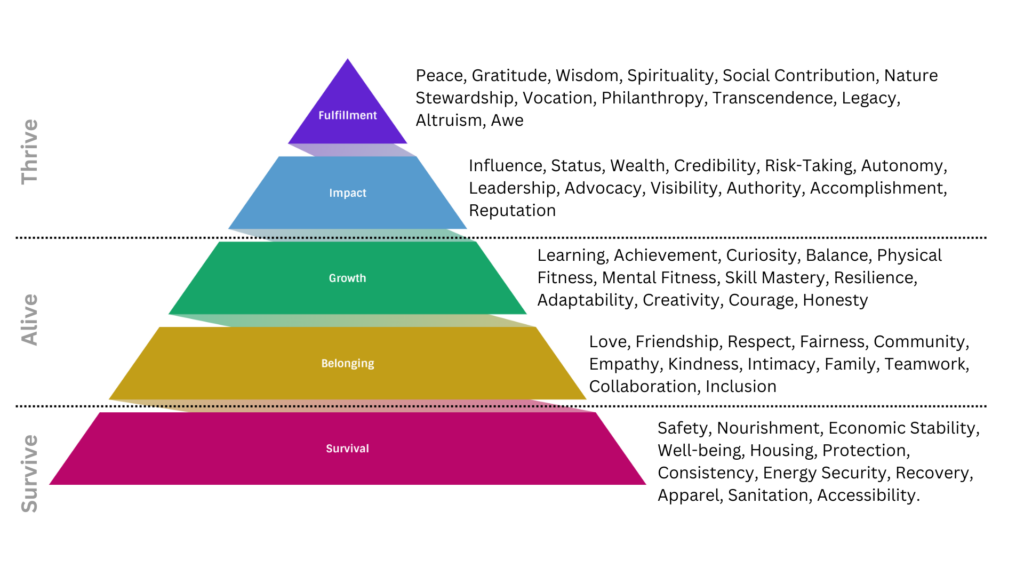
-
More Sophisticated, Philosophical Accounts of God
I no longer respond directly to 's sneering Gnomon-directed diatribes on this forum, over the last ten years or so. Therefore, I will address these comments to someone who seems to be more open to two-way philosophical dialogue. I will stipulate here that he may be much more intelligent & informed than me, but that haughty position allows him to make mike-drop supercilious denunciations of what he deems inferior reasoning. I'm sure he's a nice person though, if you agree with his worldview. And I agree with the immanent half of his Weltanshauung. And these analogies are intended to be illustrative, not demeaning.
Re Transcendence :
Dialoging with 180 is like discussing with your dog how & why his bowl is sometimes full, and sometimes empty. Like the dog, 180's highly evolved physical senses can detect the food, but can't reason about inferential questions : “it just is or it ain't”. The communication problem is that 180 has an extensive vocabulary with which to express his disdain for deduction, from circumstantial evidence, how & why an event --- e.g. full bowl or universe --- came to be, if it was not witnessed.
180's prosecutorial technique, in the courtroom of this forum, is to break-down the detective's holistic reasoning & inferences & hunches into isolated facts that don't add-up : “speculation!” ; “inadmissible!” ; “irrelevant!” The human's sense of smell is inferior to that of the dog*1, but his sense of reason*2 is superior ; especially deduction from circumstantial evidence*3. 180's 17th century worldview is based on watertight logic, except in the light of 20th century Relativity*4 and Uncertainty Principle. 180's jury is instructed to focus on the disconnected facts, and ignore the dot-connecting reasoning.
Obviously, or inferentially, 180 is skillfully defending his Matter-Immanent-only worldview by using all the tricks of courtroom drama. In my humble opinion though, on this forum, you should be able to view the evidence from a Philosophical worldview that goes beyond the limits of scientific investigation, but not of logical reasoning. :smile:
PS___ I will now go stick my head in a fox hole, to protect me from the return blast of icy logic.
*1. While dogs demonstrate impressive cognitive abilities, particularly in practical reasoning and inferential reasoning, human reasoning is significantly more complex. Humans excel at abstract thought, integrating diverse knowledge, and engaging in various forms of reasoning like deductive, inductive, and abductive reasoning. Dogs, on the other hand, are more attuned to the present and rely heavily on sensory information and past experiences to solve problems.
https://www.google.com/search?client=firefox-b-1-d&q=dog+reason+vs+human+reasoning
Note --- I'm not calling 180 a "dog", but merely illustrating the difference between practical Materialistic & theoretical Idealistic reasoning.
*2. "Sense of reason" refers to the capacity for logical thought and sound judgment, enabling individuals to understand, analyze, and make decisions based on evidence and logic. It involves the ability to draw inferences, solve problems, and form conclusions through a process of reasoning.
https://www.google.com/search?client=firefox-b-1-d&q=sense+of+reason
Note --- Unlike Science, Philosophy seldom has hard evidence to support its conclusions. So they are always debatable. But on a public forum, the dialog should be respectful of a variety of opinions. Are canine examples admissible?
*3.Circumstantial evidence is indirect evidence that suggests a fact in issue but doesn't directly prove it. It requires the fact-finder to draw inferences to connect the evidence to the fact in question. In essence, it's evidence that implies something happened or is true without directly proving it.
https://www.google.com/search?client=firefox-b-1-d&q=circumstantial+evidence
Note --- The suggested "fact" in question is a transcendental prior state to the Big Bang. Which opens to door to further reasoning on the ancient God question.
*4. Einstein's theory of relativity, encompassing both special and general relativity, significantly impacted philosophical thought by challenging fundamental assumptions about space, time, gravity, and the nature of reality itself. It questioned classical Newtonian physics' concepts of absolute space and time, introducing the idea of a spacetime continuum where space and time are interwoven and relative to the observer's motion. This shift in perspective influenced philosophical discussions on causality, determinism, and the nature of scientific knowledge.
https://www.google.com/search?client=firefox-b-1-d&q=einstein+relativity+philosophy
Note --- The Big Bang theory presented us with a hiatus in the spacetime continuum. Must we fill that knowledge-gap with more spacetime, or entertain the possibility of Infinity-Eternity? -
More Sophisticated, Philosophical Accounts of God
That statement depends on how you define "reality". Your comments seem to indicate that your "reality" excludes anything beyond the scope or our physical senses. Which are tuned to detect material substances. But philosophers are tuned into immaterial things like Other Minds. And we can infer that our interlocutors on this forum have rational minds (including AI ???), even though we can't see touch or taste them directly. The super-natural problem is similar : we infer other minds by analogy with our own inner experience. And reasoning is not a physical sense, but what philosophers think of as a meta-physical process of connecting dots. Which raises another question of definition ad infinitum. . . . . . . . . . . . . .Then you misunderstand. "The world" is the entirety of reality, which would include the supernatural, if it exists. — Relativist
Long story short, the theoretical pre-big-bang First Cause that you would call "supernatural", is in my own speculative worldview, analogous to the Physical Energy and Metaphysical Mind that we experience in the Real world. I won't attempt to respond to your other assertions, because they all hinge on the same old dichotomy of worldviews*1, such as Materialism vs Idealism. For what it's worth, my personal worldview is not so black & white exclusive, but includes both Matter & Mind, and both immanent Nature & whatever transcendent force lit the fuse of the Big Bang nature machine. :smile:
*1. A dichotomy of worldviews refers to the tendency to divide perspectives, ideas, or values into two opposing categories. This can manifest in various contexts, such as the classic good vs. evil, or in more nuanced ways like the human/environment dichotomy. Understanding these contrasting viewpoints is crucial for navigating complex issues and fostering better communication and understanding.
https://www.google.com/search?client=firefox-b-1-d&q=dichotomy+of+worldviews

Gnomon

Start FollowingSend a Message
- Other sites we like
- Social media
- Terms of Service
- Sign In
- Created with PlushForums
- © 2026 The Philosophy Forum