
Comments
-
A Wittgenstein CommentaryIf someone were to use a given word appropriately in every case, on what grounds could you claim: "Yes, but they do not know what it means." — Banno
On what grounds would you say they do know what it means? I mean, there's a possible world where a parrot uses "peanut" correctly every time. Does it know what "peanut" means? I'd say no.
In other words, the expectation that your fellow humans have linguistic capability is part of the assessment. That's part of the grounds. -
Crito: reading
I agree. But what do you think of the case Socrates' Law has made in Crito? Are you convinced or not? -
Climate change denialI don't think I'm saying anything out of the ordinary. We know climate is changing because of carbon emissions, and we know our economy and entire civilisation relies on the energy we get from fossil fuels. We also know that in 30 years we haven't managed to lower carbon emissions eventhough we have know it would become a problem.
None of this controversial or speculative. What is speculative, and in fact contrary to the evidence we seem to have, is that we can replace fossil fuels and all the infrastructure and economy that comes with that, and has been build up over 200 years, with a whole new alternative energy system without enormous changes to our societies.
I'm not just a doomsayer that says we can't and therefor shouldn't do something about it. I'm saying we should take serious the idea that it will be very difficult and will probably entail major economic and societal changes. I take issue with the idea that this is just a matter of political will, and that it's all the doing a the rich or the immoral ceo's of oil companies, instead of a deep systemic problem that includes all of us. — ChatteringMonkey
Well said. It's becoming the mainstream approach to think in terms of adaptation. It's just common sense at this point. -
Crito: readingFrom 50 on into 52 the Law continues to speak and offers something along the lines of social contract theory.
-
Climate change denialI assume that you live in America. I live in a commonwealth country and until recently had Queen Elizabeth as our reigning monarch. This worked very well because she had no direct political power in our country but she acted as our sovereign and head of state. This gave us the advantage of being a hybrid democracy-monarchy. It worked very well, but some people want us to become a republic. — Agree-to-Disagree
I don't think she had political power anywhere, did she? -
Crito: readingWho do you include in this description? — Paine
The description is of a revolutionary ideology, so people like Bolsheviks, Chinese and American communists, etc., and of course anyone who sympathizes with that crowd. -
Climate change denialFrank, do you have a personal preference for which system you would like to live in? Monarchy, Oligarchy, or Democracy? — Agree-to-Disagree
I think each one has a golden period in its youth, then they all turn to crap eventually. I think I'm living during the decline of modern democracy, maybe. So I'm seeing all the advantages to monarchy. -
Climate change denial
It's a cycle. Monarchy becomes corrupt and gives way to oligarchy (statesmen or clergymen), which become a burden on the people and gives way to democracy, which fails and gives way to monarchy. Over and over... -
Crito: readingt is the opinion of the men of Athens that Socrates is doing harm to the young people. His disobedience suggests that he thinks that whatever harm and injustice to the city and its laws his disobedience may cause, the suppression of philosophy is a greater harm. — Fooloso4
But he wasn't disobedient. He stayed and drank the hemlock. -
List of Definitions (An Exercise)
Not for me. I often think in terms of opposing viewpoints, or a triangle, or a square.
If you think of your own ideas about Being, notice that they make sense relative to the opposing view. What is that opposing view? What are its strengths and weaknesses? Are there other views that lie at an angle to this opposition, so they partake in some ways from each pole of the original opposition?
If you can't do this, it's probably because your intellect is being controlled by emotions on this one issue. If you let emotions go (or put them on a shelf), your mind will be able to move freely, recognizing that the question is beyond the limits of language anyway. -
Climate change denialA dictatorship is an autocratic form of government which is characterized by a leader, or a group of leaders, who hold governmental powers with few to no limitations. Politics in a dictatorship are controlled by a dictator, and they are facilitated through an inner circle of elites that includes advisers, generals, and other high-ranking officials.
— Wikipedia
Is that really what you want? — Agree-to-Disagree
If it accomplishes our goals whereas democracy, or in the case of the global political scene, anarchy, doesn't, then why not? -
Climate change denialAnyone have solid/reliable numbers for
• amount of fossil fuel deposits (let's say oil and coal) — jorndoe
I think it's classified. Just kidding. It would need to be a pretty recent assessment because of fracking. Pre-fracking numbers would be way too low.
Think we can burn all this accumulated stuff (geological timeframe) in a century or two without noticeable effects...? — jorndoe
It would take a few centuries to burn it all. There will definitely be a noticeable effect. :grin: -
Climate change denialThe incentive would be that we wouldn't need to inevitably fubar the grid and effectively cripple the economy by disintegrating coal plants. . . We either create that technology, or prepare for drastically diminished standards of living (excepting China of course). — Merkwurdichliebe
That sounds awfully rational. -
Crito: readingWell, you have to survive in order to act justly.
— frank
Yes, but can a city survive and not be just? Is it sometimes necessary to act unjustly in order to survive? — Fooloso4
I don't know :grimace: -
Crito: readingThe laws ask:
Or do you think any city can exist and not be overthrown when its just enactments have no force and are rendered ineffective by private citizens, and set at naught?”
(50b)
Would it be that there would be no city or would it become a different city, one with laws without their just enactment, or a city without law? — Fooloso4
The laws say:“Socrates, don’t be surprised at the question, just answer it, since you make such a habit of asking and answering questions. Come on,you are attempting to destroy ourselves and the city. On what grounds?" — 50C
This is stated in the context of the claim that Socrates wouldn't have been born without the law. He was raised and flourished in the stability provided by the city. I'd add that city was an integral part of identities of Athenian citizens. In a number of ways, the citizens and the city are inextricable. You can't really have an Athenian without an Athens and vice versa. Since it was a democracy, rule of law was also inseparable from the city.
So the point was that by breaking the city's law, Socrates would be undermining the foundation of his own existence.Put differently, is it a question of justice or survival? If, as the laws claim, the citizens are its servants or slaves, then what part does justice serve? Isn't justice replaced by obedience? Would it still the same city, still a democratic regime? — Fooloso4
Well, you have to survive in order to act justly. This represents a challenge to any ideology, for instance if I'm a conservative and I stand against change, it would behoove me to recognize that sometimes societies need to evolve and standing against that is to oppose life itself. If my choice is between my beautiful conservative values and the very life of my society, which do I choose?
But the challenge is even more acute for an ideology that aims to destroy the existing social order without any plan for an alternative, which I think fairly describes the average leftist perspective.
But on a more materialistic note, historians claim that the very idea of living alone beyond the safety of a city was unthinkable for the average Greek. So if Socrates leaves, it certainly wouldn't be to wander. It would be to find another home in a city.
Philosophy poses a threat to the city. Socrates is silenced by force. The law proclaims that he does not stand on an equal footing with the law. To convince them would require doing the very thing they want to prevent him from doing, that is, philosophizing. — Fooloso4
Socrates was blamed for Athens' defeat at the hands of the Spartans. He had previously publicly lauded the Spartan way of life, which probably wasn't the smartest thing to do. He irritated the crap out of the Athenians, so he became a target. More philosophizing probably wouldn't have helped. Our own local Socrates is @Banno. Imagine that he's now being tried for corrupting the minds of the youth. It's that kind of thing. -
Climate change denialChina produces about 70% of the world's coal output, although they only have about 13% of the world's coal reserves within their borders. But two of the biggest reservoirs are in countries that orbit China: Australia and Russia. So there is no incentive for them to reduce coal burning. Coal will continue to be a cheap option as their economic development continues.
The fact that they're now building new coal power plants instead of nuclear means that humanity's chances of reining in CO2 emissions is fading. One possibility would be that scrubbing technology could be developed to make coal plants carbon neutral. But what incentive would make that economical? -
Crito: readingAt 50B Socrates presents a Kantian perspective. If everyone ignored the laws of the city, there would essentially be no city.
-
Climate change denialChina is permitting the construction of about 2 coal power plants per week. — frank
Two odd things about this: 1) they decided to drastically increase their use of coal because it was so hot last year that the air conditioners were too big a load on their grid. And 2) that this is not particularly big news. Trump's latest circus is huge, but this, arguably a decisive fork in the road, is just miscellaneous news. -
Climate change denialif I didn't know any better, I'd be inclined to think China rejects the science of climate change — Merkwurdichliebe
Either that or they just don't give a flying fuck -
Crito: readingIn so far as I understand Kripke's interpretation of Wittgenstein, the rule following aspect of language games is seen as troubling the view that such games involve the description of facts. — Paine
Not to put too fine a point on it, but Kripke's point is that it ends up being an empty claim that communication involves rule following. This idea that we follow rules when we speak is an interesting hypothesis. It's not something supported by any facts (of the kind Kripke specifies). -
Crito: reading
From 48-50 Socrates addresses Crito's argument that it's right to flee because so many aspects of public opinion support it. Socrates points out that we usually only pay attention to worthy opinions, which are those which aim to improve our lives (little bit of consequentialism). He asks a couple of times if adults suddenly change their values when the shit hits the fan and execution awaits.
One of the threads running through 48-50 is the question of whether the ends justify the means. Per Socrates, only children live that way. -
Crito: readingUnfortunately, I need to leave the discussion for about 5dys.
You guys are providing food for thought. It's all good! Will see if I can add anything later... — Amity
Cool. -
Crito: readingThere's quite a lot to be getting on with, isn't there? Crito is a piece of work! — Amity
There is. I've read this dialog a couple of times. I'm rereading it thinking about what it says about normativity: Crito is giving all sorts of das Man type reasons to ignore the court's judgement and sentence. If the crowd gives us ethical normativity, then Crito is right. But the court is part of the foundation of the lives of the members of the crowd. The court is ordained, so to speak, remember the law court is a gift of Athena. The court helps us avoid mob action, so it's about stopping to think things through. The court means our judgments at least have a change to be tempered by reason. So Crito is advising Socrates to forget about rationality.
Except the whole situation shows that the court can be subverted by passions of the day, like with McCarthy. So where does that leave us? It's not the crowd, it's not reason. Then where is normativity really coming from? And since I'm applying all of this to normativity as it related to meaning, Crito suggests that meaning doesn't arise from the whims of the crowd, it doesn't arise from rationality. So from where? With the last two points, Kripke would agree. Meaning is not conventional if we define that as rule following. There is nothing in the world, all the way down to the intimacies of mental states that constitutes rule following in our communication, which is wild.
So if you haven't read Crito before, feel free to read further along. We'll catch up. -
Crito: readingCrito is not able to give a better argument for why Socrates should not comply with the court's decision. Can we? — Fooloso4
Sure. The court in this case is the judicial arm of a democracy. A democracy is like a ship whose owner has been tricked and manipulated into giving the helm over to sailors who know nothing about navigation. This ship of fools is more likely to end up at the bottom of the Aegean than any where close to where the owner wanted it to go. Where did I hear that argument? :razz:
Since democracies are poorly run, there's no obligation to adhere to their judgments. -
Crito: readingerhaps we can see here one way in which Plato's views differ from Socrates'. Since Socrates did not write his influence was more limited than Plato's. Plato did not simply write, he wrote in a way that heeded Crito's warning to care about the opinion of the many. He did this in two connected ways. He presents a salutary teaching that even though it did not make one wise it helped shape the opinions of the many. He also left some things unsaid that
The best people, whose opinions are more worthy of consideration
(44c)
might discern through careful reading and interpretation.
In this way Plato mitigates against Socrates concern that the written word does not take into consideration who it is addressing and so cannot say what is most appropriate for different readers to hear.
Socrates sought to benefit his friends without harming others. Plato wrote for posterity. — Fooloso4
Yes, I can see that. -
Crito: readingJust another note before moving on, it's good to remember the circumstances in which Socrates was accused of impiety and misguiding the youth of the city. Athens has just lost a war. With hindsight, we know Athens will never fully recover from this loss. The citizens became demoralized and turned to scapegoating.
They've always been irritated by Socrates, but now their feelings have turned to intolerance. There is a sort of blind madness to their desire to punish Socrates. -
Crito: readingone in which the real Socrates is allowed to speak.
— frank
For much of the dialogue he speaks on behalf of the city and its laws — Fooloso4
I meant that this has traditionally been thought to be about Socrates' real views as opposed to Plato's. The Republic, Phaedo, and Phaedrus are commonly thought to be expressions of Plato's views rather than Socrates'. Of course there isn't anything about Plato that's pinned down. At one time or another the authenticity of every work attributed to him has been questioned by some historian.
For much of the dialogue he speaks on behalf of the city and its laws. — Fooloso4
Right, as the dialog emerges, we'll find that Socrates is a strong advocate of the rule of law (although we could ponder whether that's the right way to put it.) We can compare and contrast other prominent views, like the Stoic view. It comes down to how one thinks about one's place in society.
We can see from the beginning of the dialog that the concept of individuality is in clear view, since it seems perfectly reasonable to Crito and his friends that Socrates should reject the judgement and run. That concept of individuality probably won't be eclipsed again until the middle ages.
Athens was a democratic regime. Socrates was convicted by a majority decision. His low opinion of public opinion, raises questions about how wise he thought the city and its laws actually were. And yet Socrates defends the city and its laws and abides by them. — Fooloso4
So we'll look into his reasons for abiding by the law and discuss whether this is a proto-form of social contract theory. -
Crito: readingCrito has arrived to visit Socrates and they discuss his coming execution. This passage is packed with ideas for me:
Crito: It seems all too clear but, dearest Socrates, even at this stage heed me, and save yourself. For if you die it is not just a single misfortune for me. No, quite apart from being deprived of a friend, the like of whom I shall never find again, many people who do not know you and me at all well will think that I did 44C not care enough to spend some money to save you. And what reputation could be more disgraceful than this, a reputation for setting higher value on money than on friends? For most people will not believe that you yourself were unwilling to leave this place, although we were willing to help.
Soc: But bless you, Crito, why does popular opinion concern us so much? The best people, whose opinions are more worthy of consideration, will believe that we acted exactly as we should have acted.
Crito: 44D But, Socrates, surely you can see that it is indeed necessary to care about popular opinion? The very situation we are now in demonstrates that, if someone is discredited in their eyes, the multitude can do harm, not only on the smallest of scales, but well-nigh the greatest harm of all.
Soc: I really wish the multitude were able to do the greatest harm, Crito, so that they might also be able to do the greatest good, and all would be well. As it is, they are not able to do either, for they cannot make someone either wise or foolish, and they do whatever occurs to them. — Horan translation
There's a tug-of-war going on about popular opinion. Crito says we have to "care" what others think, and I'd fill out his thought with: conform to what others want you to be, because the crowd is dangerous, and at worst, they'll kill you for failing to satisfy their expectations.
Socrates denies that the crowd has the greatest power, which in his view is the power to render others either wise or foolish. -
Crito: reading
I'm not sure how to quote from the Horan translation. I just get a little envelope when I try. Do you know how that works? -
Crito: readingA little introduction: Crito is a Platonic dialog that's about how the individual relates to society in terms of law and justice. If you receive an unjust verdict from your society, what should you do? Run away? Or face it?
This dialog is traditionally accepted as a legitimate work of Plato, but one in which the real Socrates is allowed to speak. The first time I read it, I found it to be kind of heartbreaking. -
Crito: readingI think the Horan translation might be a better choice for the discussion, but you might find West's translation and notes worth reading and having. I will keep a copy beside me and compare it to Horan.
Another advantage of Horan is that quoting the text by copy and paste is much easier. — Fooloso4
Ok. I'll go ahead and order the West translation, but we can stick to the Horan for the convenience. Cool! -
Crito: readingI prefer the West translation from Four Texts on Socrates, but I cannot vouch for the security of any PDF copies of this translation. — Fooloso4
I don't have that translation, but I can get it from Amazon. Up to you. -
Crito: readingI don't know what you have in mind in terms of moderating, but I look forward to participating. — Fooloso4
Like pick a translation you like and set pace? -
List of Definitions (An Exercise)Definitions are a post hoc invention. — Banno
On the one hand, the OP is saying: "give me the primary use for this word," but then everybody can specify their own. There's a little bit of a contradiction there. -
Climate change denialAm I describing what you are saying correctly? — Agree to Disagree
I thought about it too and I think he's right. If we dumped a dose of methane into the atmosphere now, wouldn't the energy it captures accumulate year after year? I think it would. After a decade, the accumulated heat would be higher than it was after the first year.
I think the conclusion is that if we dose the atmosphere with methane every year, it would contribute to global warming until equilibrium is reached, but I don't know how long that takes with a constant amount of methane. -
Climate change denialA word of caution Frank. Be careful what you wish for. — Agree to Disagree
What do you mean?
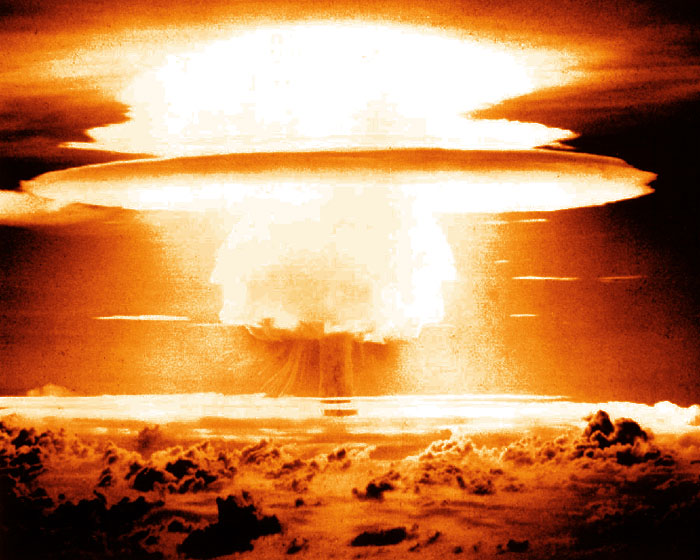
Please stop talking common sense. Somebody might believe you — Agree to Disagree
:grin: -
Climate change denial
Marriage Counselor: "So Micky, I hear you saying you think Minnie is mentally... unstable?"
Micky. "I didn't say she was mentally unstable. I said she was fucking Goofy."
frank

Start FollowingSend a Message
- Other sites we like
- Social media
- Terms of Service
- Sign In
- Created with PlushForums
- © 2026 The Philosophy Forum