
-
 Linkey
93As far as I can see, the Western democracy is mostly an illusion; the Western countries are ruled by the financial aristocracy. This works as follows: if a problem arises in society, the financial elite, represented by parliamentarians, passes laws to solve it; but these laws simultaneously serve one more purpose—increasing the wealth and power of the elite. In particular, these laws are always aimed at suppressing small businesses, because small businessmen are less dependent on the power and can overthrow it.
Linkey
93As far as I can see, the Western democracy is mostly an illusion; the Western countries are ruled by the financial aristocracy. This works as follows: if a problem arises in society, the financial elite, represented by parliamentarians, passes laws to solve it; but these laws simultaneously serve one more purpose—increasing the wealth and power of the elite. In particular, these laws are always aimed at suppressing small businesses, because small businessmen are less dependent on the power and can overthrow it.
I have a couple of examples, but I apologize for not fact-checking everything thoroughly; I hope someone here can help me with this:
1) I have seen an interview on Euronews, where it was said that agricultural subsidies in the European Union always help large agricultural holdings more than small farmers;
2) One blogger wrote about how laws aimed to combat global warming (greenhouse gas emission quotas) in New Zealand similarly benefit large agricultural holdings, and lead to ruining of small farmers.
Please comment my examples above and suggest any others. -
 Metaphysician Undercover
14.9kIn particular, these laws are always aimed at suppressing small businesses, because small businessmen are less dependent on the power and can overthrow it. — Linkey
Metaphysician Undercover
14.9kIn particular, these laws are always aimed at suppressing small businesses, because small businessmen are less dependent on the power and can overthrow it. — Linkey
In general, large business is advantageous to the government. There are many reasons, but it's easier and more efficient for the government to have the company rule over its various activities itself, and it's employees, collect taxes etc., and report to the government, then for it to govern over a whole bunch of small businesses.
So in agriculture and food production for example, the government can stipulate that the company must hire inspectors, and maintain a safe food supply, rather than having to send out a whole crew of inspectors around to all the different small businesses. The company does the inspections, but a small business couldn't afford this. It's a matter of efficiency. -
 LuckyR
735As far as I can see, the Western democracy is mostly an illusion; the Western countries are ruled by the financial aristocracy.
LuckyR
735As far as I can see, the Western democracy is mostly an illusion; the Western countries are ruled by the financial aristocracy.
To be more specific, the notion that democracy ignores the external influence of power, is an illusion. But did anyone actually believe this naive concept? -
 L'éléphant
1.8k
L'éléphant
1.8k
The public, consisting of the average people, is people's worst enemy.To be more specific, the notion that democracy ignores the external influence of power, is an illusion. But did anyone actually believe this naive concept? — LuckyR
One, the workforce (labor) seems to have given up on fighting for stronger economic condition. The pension plan had been eliminated by most corporations. What we're left with is compensation deferrals -- which is not a pension, but workers' own fruit of labor being set aside for their own subsidy in old age. Not everyone can afford to contribute to their own retirement accounts, at least meaningfully. And no one protested on the street when pension disappeared.
Two, we do not try to understand how our money held in banks and retirement accounts are being invested. The big money is beyond our comprehension -- we are passively providing the investment for corporations that, with their oligarchic behavior influencing government policies that benefit their wealth, uses money that eventually destroys us.
Three -- there is something to understand about living wages. The minimum wage is not a living wage. But increasing the minimum wage affects most small businesses and all other benefits that can be provided to the workers.
Four -- health insurance and affordable housing. I live in HCOL area, I just cannot understand how local governments can allow housing costs to go out of control without corresponding wages going out of control to match the housing costs.
And why is the social security administration still stuck in the old policy of not taxing all wages? Instead, the higher wages are not taxed after a certain amount.
Five -- taxation of the wealthy the size of the galaxy. -
 BC
14.3kthe workforce (labor) seems to have given up on fighting for stronger economic condition. — L'éléphant
BC
14.3kthe workforce (labor) seems to have given up on fighting for stronger economic condition. — L'éléphant
It's less 'have given up' and much more "they've been defeated'. It is extremely difficult to overcome the legal barriers erected against unionization; equally difficult is attempting to organize a company when the workers are deluged by anti-union messaging and threats. Fewer and fewer workers have experienced work in an effectively unionized company.
Another barrier is cheap labor (unemployed people, immigrants--documented and not documented) are willing to work for less than the previously unionized workers were. For the newly hired striker-replacements, the lower wages paid are still a lot better than what they were getting at home south of the border.
I live in HCOL area, I just cannot understand how local governments can allow housing costs to go out of control without corresponding wages going out of control to match the housing costs. — L'éléphant
As far as I know, local governments usually do not have control over rental rates. It isn't just that they haven't tried; they can't. They have to be granted that power by their state legislature. Needless to add, property interests fight VERY hard against rent control.
For the most party, government does not have control over wages (except for their state employees). Not congress, not legislatures, not city councils lay out wage rates which companies have to pay.
Wages and rental rates are affected by labor markets and housing markets far, far more than any regulation.
we do not try to understand how our money held in banks and retirement accounts are being invested. — L'éléphant
Pretty much true. And we don't know enough to invest our own money in a complex equity markets.
The minimum wage is not a living wage. — L'éléphant
No kidding! $15k vs $90k.
The Federal Minimum Wage is absurdly low -- $7.25 per hour. That's about $15.000 per year, full time. Some states have set higher minimum wages. Minnesota's minimum wage is $11.41, almost $24,000 working full time. The minimum wage in Minneapolis is $$16.37, or a little over $34,000 a year. $34,000 might be ok for a frugal single person, but it certainly would not be much for a family of 4 (2 adults, 2 children) not matter how frugal they were. An estimated "living wage" in Minneapolis is considered to be about $43.11 per hour for a single earner supporting a family of four (2 adults, 2 children). That works out to be a little over $90,000 a year. $90k isn't luxuriant. A reasonably nice apartment for 4 people could easily cost $36,000 a year.
Five -- taxation of the wealthy the size of the galaxy. — L'éléphant
What is the size of the galaxy -- the wealth that isn't getting taxed or the state income if we taxed wealth at the formerly high rates? -
BC
14.3kAs far as I can see, the Western democracy is mostly an illusion; the Western countries are ruled by the financial aristocracy. — Linkey
We aren't "ruled by the financial aristocracy"; we are ruled (so far) by civilian government. But as Marx said "The government is a committee for arranging the affairs of the bourgeoisie." So, a prime concern of the government has always been he needs and wishes of the wealthy class. -
LuckyR
735
I agree with your overall sentiment, but differ on some of your example interpretations.
First, pensions were a fine concept but those huge reserves made companies targets of corporate raiders who would buy the companies, transfer the pension money away, then send (their own company) into bankruptcy. Better to have an IRA and 401K with your name on it.
Second, investing sophistication is not required. A low fee S&P 500 index fund is a well appreciated foundation of personal investing. Everyone knows someone who can understand the basics of long-term investing. Especially in the current era whereby investment advice is plentiful and free.
Third, minimum wages should only be earned by teenagers, entry level folks or those whose compensation is actually made up of tips or commissions. In other words, no one should be making minimum wages alone and raising a family.
Fourth, the influence that local government has on lowering housing costs is to loosen building restrictions (or applying other incentives) to increase supply, thereby lowering costs. -
Linkey
93Let me continue. A common situation is when candidate A promises something ugly regarding question 1, but something good regarding question 2. Candidate B promises something good regarding question 1, but something ugly regarding question 2. So the voters do not have choice.
For example, some candidates promise to supress gays, while others promise to supress homophobes; and when these candidates change each other, nothing changes, because both parties are rather spoilers serving the financial elite. This is clealy seen in case of USA and Poland. -
 Punshhh
3.6kI agree with your premise, but would suggest that this system is better than all the others (except perhaps some forms of socialism, which are rarely successful).
Punshhh
3.6kI agree with your premise, but would suggest that this system is better than all the others (except perhaps some forms of socialism, which are rarely successful).
Democracy is about preventing authoritarian control of a population. What the political party’s do when they get into office is not all that important, provided the democratic principle is maintained.
We have a different problem when it comes to money. Capitalism has turned toxic, big finance strips out opportunity for small players to compete. The middle classes are becoming squeezed leaving the super rich and the poor (people who are struggling to keep their heads above water). This kind of polarisation is destructive. -
Linkey
93↪Linkey I agree with your premise, but would suggest that this system is better than all the others (except perhaps some forms of socialism, which are rarely successful). — Punshhh
Of course, but a better system can be easily invented - just if many referendums would be performed in each country. Currently the best political system is in Switzerland, since they have a referendum each 3 munths. But I believe that even in Switzerland there is o lot of manipulations by the politicans, which offer to the people only "politically correct" initiatives for the referedums. -
 Astorre
417
Astorre
417
Your post reads like the first steps of someone beginning to see beyond the veneer of "democratic values." I'd just like to clarify your choice of terminology. Instead of "authoritarianism," "oligarchy" or "plutocracy" would be more appropriate. Since you read posts in Russian, as you mentioned above, it seems you are a native speaker. I understand perfectly well the feeling when the visions of a Western paradise broadcast on "Voice of America" or "Radio Liberty" don't match reality.
At the same time, it's quite difficult to find anyone on this forum who is willing to share your thoughts. Well, I wish you luck in your search for the truth. -
 ssu
9.8kAs far as I can see, the Western democracy is mostly an illusion; the Western countries are ruled by the financial aristocracy. This works as follows: if a problem arises in society, the financial elite, represented by parliamentarians, passes laws to solve it; but these laws simultaneously serve one more purpose—increasing the wealth and power of the elite. In particular, these laws are always aimed at suppressing small businesses, because small businessmen are less dependent on the power and can overthrow it. — Linkey
ssu
9.8kAs far as I can see, the Western democracy is mostly an illusion; the Western countries are ruled by the financial aristocracy. This works as follows: if a problem arises in society, the financial elite, represented by parliamentarians, passes laws to solve it; but these laws simultaneously serve one more purpose—increasing the wealth and power of the elite. In particular, these laws are always aimed at suppressing small businesses, because small businessmen are less dependent on the power and can overthrow it. — Linkey
Democracy doesn't create a paradise, but it still works in some countries. Many people just look at their own "democracy" and assume others are similar. Especially now when the United States is at a political crisis with rampant and unchecked corruption going on, this is a very normal attitude that people will have.
Yet remember that it's the authoritarians themselves who push exactly this rhetoric that you say: that Western democracy is an illusion, that it is totally ruled by the financial aristocracy. This is the classic argument from the left, from the past Marxist-Leninists with the Nazis just adding to the line that the financial aristocracy is controlled by Jews.
But let's look at this from a different viewpoint and just ask yourself: If the above what you say is true, then how on Earth do a lot of countries have a welfare state? How do we enjoy universal health care? Free education including university level education? Having a home being a right of the individual? First a six-day working week and then a five day working week? Labour laws, work safety requirement and trade unions where the vast majority belong to these unions, including military officers?
Subsidies are usually paid for production and there obviously isn't a case of the laws having limitations like "If you produce well over this huge amount, no subsidies will be given to you". That would be extremely counterproductive.1) I have seen an interview on Euronews, where it was said that agricultural subsidies in the European Union always help large agricultural holdings more than small farmers; — Linkey
And let's remember just how agriculture has changed in the long run and is still changing.
Earlier in the West (just as now in the poorest countries still) peasants were subsistence farmers, land owners or renters, but basically dirt poor against our standards with only a few of the landowners being immensely wealthy. This has transformed into commercial farming, which is far more like modern manufacturing where the economics of scale bring in the real money. When farming is fully automated, the costs of having that modern tractor or the robots that milk the cows and the huge cowpen where the cows wander freely are far higher than the standard farmer working on the farm inherited from his/her parents can afford. So one option is simply to rent the fields and get another job, which is happening in many countries.
(Cows waiting in line for the milking robot. In a modern cowhouse the cows go freely to the milking and wander around freely. You can imagine what an investment this is.)
This leads to simply to the fact that largest producers get the largest subsidies, even if the subsidies originally were to provide for a large number of smaller producers. The loss in the number of smaller farmers is happening because of this transformation basically in every Western country. -
L'éléphant
1.8k
Good point, but I don't know how prevalent this phenomenon is.First, pensions were a fine concept but those huge reserves made companies targets of corporate raiders who would buy the companies, transfer the pension money away, then send (their own company) into bankruptcy. Better to have an IRA and 401K with your name on it. — LuckyR
All the rest of your comments, :up: -
L'éléphant
1.8k
Yes, union membership is now at its lowest. I think the inflexibility of a union is one of the reasons also. Speaking of which, look what is happening now with UPS and Amazon. UPS has laid off thousands, and will continue this year about 30k more due to the nonprofitability suffered by UPS under contract with Amazon.It's less 'have given up' and much more "they've been defeated'. It is extremely difficult to overcome the legal barriers erected against unionization; equally difficult is attempting to organize a company when the workers are deluged by anti-union messaging and threats. Fewer and fewer workers have experienced work in an effectively unionized company. — BC -
Linkey
93Yet remember that it's the authoritarians themselves who push exactly this rhetoric that you say: that Western democracy is an illusion, that it is totally ruled by the financial aristocracy. This is the classic argument from the left — ssu
Very strange - from the Left? For me, the ruling elites are in full collaboration with the Left in Europe (before Trump, in USA too).
The real rulers of the USA and the Western world in general (financial elite) do not allow smart and honest people to start a serious political career, because a smart politician can become a threat/competitor for these rulers. So only bad candidates can participate in elections, and so the voters do not have a good choice.
I have two questions relating last US presidential elections:
1) Am I right that the US mass media like CNN and Fox News supported Disantis instead of Trump, stating that Disantis is “a young and smart Trump”, “let it be the Trumpism without Trump”, “the approval rating of Disantis is increasing while the rating of Trump is decreasing”?
2) I saw the presidential debates between the candidates; Haley said there that Putin is a murderer. Disantis always said that he plans to stop supporting Ukraine. Logically this means that Haley must had hated Disantis, but instead they rather were “friends against Trump”. Am I right? -
ssu
9.8k
Yes. Just look at history. Just look at what Marxist-Leninists actually wrote. Here's some Soviet propaganda:Very strange - from the Left? For me, the ruling elites are in full collaboration with the Left in Europe (before Trump, in USA too). — Linkey

(Capitalists of the World, unite!)
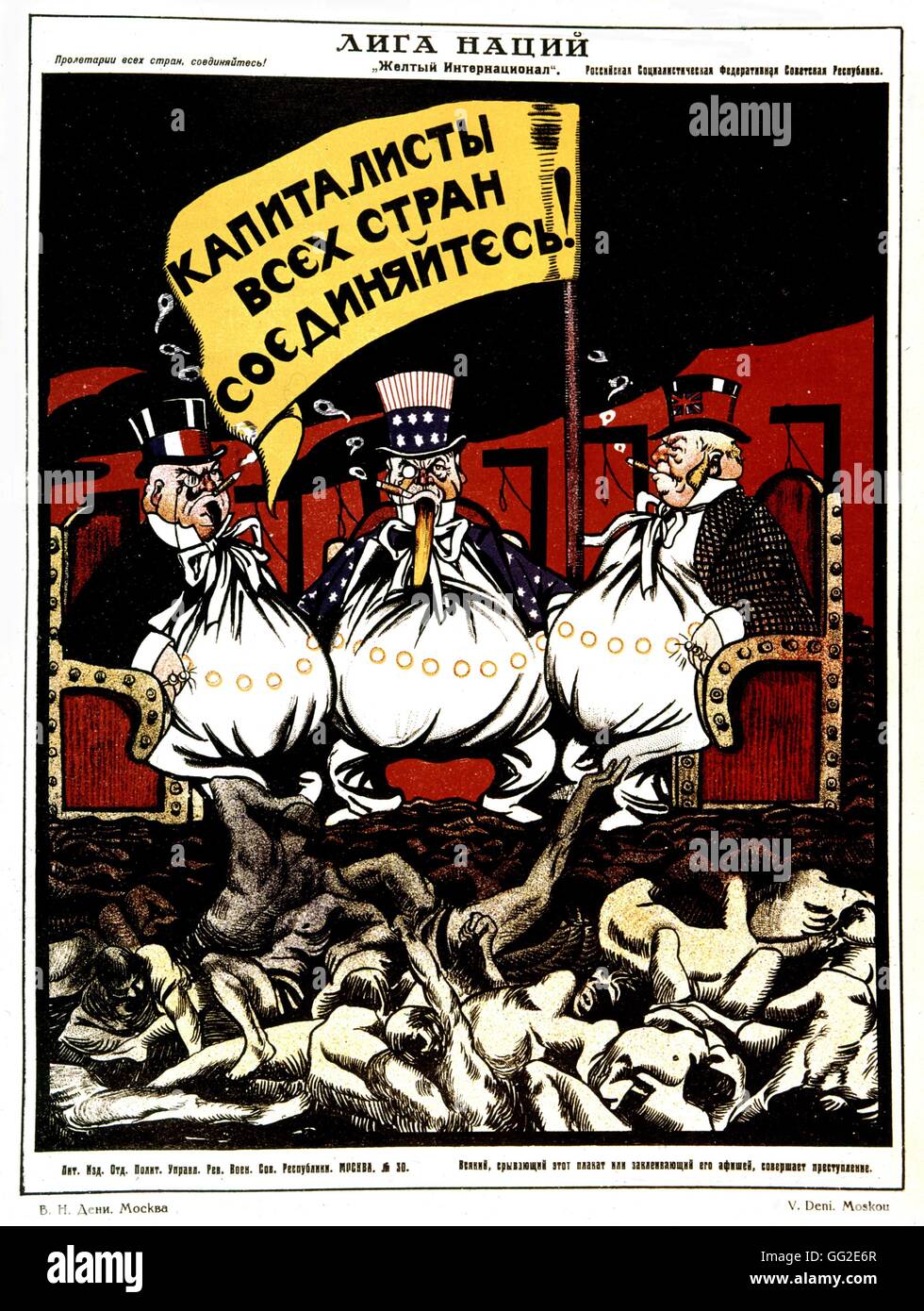
Then we can look back just how many millions of it's own citizens the Communist system killed in Soviet Union or in China.
To see the wrongs is easy, yet what radicals purpose to solve those wrongs is the crucial part that people don't notice. Or with Trump, he just says he'll do it, and the Maga-crowd believed him.
I'm not so sure about that. Many see how disgusting the politics is, think of what there family would be through if they would become politicians. They take other professions. Do perhaps some voluntary work etc.The real rulers of the USA and the Western world in general (financial elite) do not allow smart and honest people to start a serious political career, because a smart politician can become a threat/competitor for these rulers. So only bad candidates can participate in elections, and so the voters do not have a good choice. — Linkey
No, the problem starts from the ground roots. Ask yourself, how many of your friends and those who you work with or share a hobby are politically active, are in for example in communal politics? When's the last time when you have talked with a political representative of your country (Parliament member / member of Congress)?
If ordinary people don't participate in politics, what is the chance really for democracy to work? -
 Tom Storm
10.9kIf ordinary people don't participate in politics, what is the chance really for democracy to work? — ssu
Tom Storm
10.9kIf ordinary people don't participate in politics, what is the chance really for democracy to work? — ssu
Yes. One of the most powerful tools of the status quo and certain corporate interests is the idea that all is hopeless, all parties are the same. If people give up, nothing can change. -
 NOS4A2
10.2k
NOS4A2
10.2k
Alexis de Tocqueville came up with a good little concept called “soft despotism” that I think describes well the Western condition. We are fed the illusion of control (“representative” democracy), when in fact each of us have very little.
Rather, we are no more than serfs exploited for our resources. Some countries have such high tax burdens that such a livelihood is tantamount to forced labor, and I think many people are starting to realize that their governments are violating any and all contractual obligations to the people they lord over. -
 Athena
3.8k"Borlaug is often called "the father of the Green Revolution",[6][7] and is credited with saving over a billion people worldwide from starvation."
Athena
3.8k"Borlaug is often called "the father of the Green Revolution",[6][7] and is credited with saving over a billion people worldwide from starvation."
https://en.wikipedia.org/wiki/Norman_Borlaug#:~:text=Norman%20Ernest%20Borlaug%20(%2F%CB%88b%C9%94%CB%90rl%C9%94%CB%90%C9%A1%2F%3B%20March&text=was%20an%20American%20agronomist%20who,production%20termed%20the%20Green%20Revolution.
That is why governments support the big guys. They can produce more food and may even have enough to sell on the world market, improving the nation's economy. Unfortunately, this fact of life hurts the little guy. -
Athena
3.8kRather, we are no more than serfs exploited for our resources. Some countries have such high tax burdens that such a livelihood is tantamount to forced labor, and I think many people are starting to realize that their governments are violating any and all contractual obligations to the people they lord over. — NOS4A2
Now wait a minute. If nurses and hospital staff were as willing to work for low wages as they were not so long ago, medical care would be more affordable, if teachers also did so for less as they did when my grandmother was a teacher, we would have more affordable schools.
I am not so sure the US will avoid an economic collapse. If it does, it will mean people dying to maintain the present status quo.
:lol: Demanding higher wages and then complaining about inflation is a little nuts. If the labor costs more, the product/service will cost more. We cannot compete in the global market with the highest production costs. Long ago, when Britain realized how malnourished and sickly their military-aged laborers were, industrialists were asked to pay more for labor, and the industrialist explained they could not increase costs and compete in the world markets. The solution was government assistance to the poor, which can be seen as a subsidy for Industry. US workers have had to compete with lower-wage laborers in other countries without government assistance. I would not beat my chest and be proud of being the best. -
Athena
3.8k1) Am I right that the US mass media like CNN and Fox News supported Disantis instead of Trump, stating that Disantis is “a young and smart Trump”, “let it be the Trumpism without Trump”, “the approval rating of Disantis is increasing while the rating of Trump is decreasing”? — Linkey
According to AI Fox News heavily favored Donald Trump and the Republican party during the 2020 and 2024 election cycles. https://www.google.com/search?q=who+did+fox+news+support+in+last+campaign&rlz=1C1GCEA_enUS990US990&oq=who+did+fox+news+support+in+last+campaign&gs_lcrp=EgZjaHJvbWUyBggAEEUYOTIHCAEQIRigATIHCAIQIRigATIHCAMQIRigATIHCAQQIRigATIHCAUQIRigATIHCAYQIRifBTIHCAcQIRifBdIBCjIyMzQ1ajBqMTWoAgywAgHxBRc5dEh5ldiV8QUXOXRIeZXYlQ&sourceid=chrome&ie=UTF-8
[/quote]
Not only did Fox News support Trump, but Evangelical ministers told their flocks that Trump is the man God has chosen to lead us. -
NOS4A2
10.2k
Why did the British laborer run to the industrialists for jobs in the first place? Because of the “enclosure acts”; the government dispossessed the people from their traditional lands, so these people had to go work for subsistence wages in the towns and factories. It was either that or starve to death, after all. Had the industrialists not had a ready-made force of starving and sickly laborers to choose from they would have had to provide decent wages so as to entice the workers to work for them. All of this was occurring while the disastrous Poor Laws were already in place.
For every Josiah Bounderby there is bureaucrat behind him. -
Athena
3.8kWhy did the British laborer run to the industrialists for jobs in the first place? Because of the “enclosure acts”; the government dispossessed the people from their traditional lands, so these people had to go work for subsistence wages in the towns and factories. It was either that or starve to death, after all. Had the industrialists not had a ready-made force of starving and sickly laborers to choose from they would have had to provide decent wages so as to entice the workers to work for them. All of this was occurring while the disastrous Poor Laws were already in place.
For every Josiah Bounderby there is bureaucrat behind him. — NOS4A2
What were the lives of people living off the land, like before they were kicked off the land? How much responsibility should the landowners have had for the people living on the land? How could the landowners get the money to meet the needs of people living on their land?
How did that change affect the nation?
Where did the industrialist money come from? -
Linkey
93Speaking of the financial elites, I can explain who they are:
https://kimgriest.medium.com/real-reason-the-american-middle-class-is-disappearing-901cb78ababf
Many people I’ve met have concluded that it is getting harder to “make it” in America. When I was a kid in the 1970’s our neighbor worked as a butcher at a chain grocery store and was able to own a nice house, support his wife and two kids, and live a comfortable life, purely on the basis of wages he received. This was typical in my neighborhood; regular working people without advanced degrees could live well in America. Now, people who work 40 hours/week at a grocery store have no chance of buying a house on their own, and can barely afford rent. What happened?
The top right pie chart in Figure 3 shows the USA in 2014. We see how the middle class has shrunk and the top 1% have increased their share due to current economic policies (mainly low taxes on the wealthy).
Since the wealthiest 1% own and control most large corporations, we see that “business friendly” really means policies that help the 1% at the expense of the middle class. Also, since almost all mass media are owned and controlled by the 1%, we almost never see meaningful discussion of these ideas in the mainstream press. So-called liberal media such as the New York Times, Washington Post, CNN, NBC in fact almost always ridicule these ideas as impractical, socialist or even communism, even though they were part of main stream American economic policy from the 1940s through the 1970s, and are a big part of what made America great after WWII. The supposedly liberal media are owned and controlled, of course, by large corporations and the extremely wealthy, so it is not surprising that, like all privately owned entities, they serve the needs of their owners. In my opinion the US mainstream media do a “good cop/bad cop” routine on the American public, with Fox and AM radio playing the bad cop and the “liberal media” playing the good cop, but both conspiring to not let these ideas out. As proof of this, note that in 2016, when Bernie Sanders started outlining some of these ideas, ALL the “liberal” main stream media ignored the ideas, instead focusing on personalities, etc. Fox and the right wing media did focus on the ideas, but only to distort and lie about them, knowing their audience was not very demanding of factual information.
So these 1% welthiest are the "nobles", while maybe the FED bankers are "monarchs". -
ssu
9.8k
One thing is sure, I wouldn't start from the wages of the health care employees, but simply to take out the insurance companies from the racket. Have universal health care, have the government act as a single, bulk purchaser, leveraging high-volume demand in order for negotiating lower costs from manufacturers. Anyway, start with the profit taking and rent seeking. If you lower the wages of health care professionals, likely you won't get in the future as good people into the sector.Now wait a minute. If nurses and hospital staff were as willing to work for low wages as they were not so long ago, medical care would be more affordable, if teachers also did so for less as they did when my grandmother was a teacher, we would have more affordable schools. — Athena
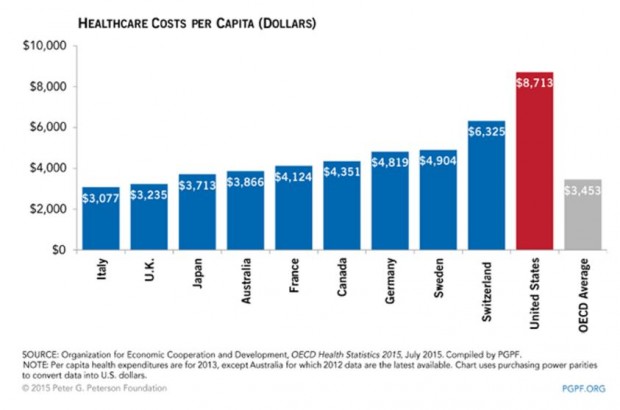
Do understand that the American health care system is a racket. It's a racket where some people don't have health care which leaves them to have their first appointment with health care system when they are carried from the ambulance to ER. That's insane and extremely costly. No other way could you spend so much money on health care with so mediocre results. Norway has lot's of oil revenue and it simply pours this into it's health care system (with the effect the Finnish nurses flock to Northern Norway thanks to the high salaries). Still it's spending isn't anywhere close to the US system.
Authoritarianism creates an opening for rampant corruption.I think authoritarianism is the wrong word. I think the right one is corruption - and yes, it is rampant. — Tzeentch
Authoritarianism basically means that the extremely important institutions that keeps corruption in check is replaced by favoritism and cronyism.
These two go hand in hand. -
Linkey
93As far as I can see, Europe (in comparison to the USA) is close to USSR: it has more equality, but less freedom.
There is often some correlation between the authoritarianism and the equality: for example, in China there is a large middle class now. Maybe the explanation is that since China is a hightly authoritarian country, its rulers are not afraid of the middle class (while in the Western world the middle class could overthrow the ruling elites, because it has more civil rights). -
 Tzeentch
4.4kWestern countries are not authoritarian, they are democratic. The 'hidden authoritarianism' the OP is talking about is the corruption of the democratic system and not actual authoritarianism.
Tzeentch
4.4kWestern countries are not authoritarian, they are democratic. The 'hidden authoritarianism' the OP is talking about is the corruption of the democratic system and not actual authoritarianism.
Calling it 'authoritarianism' is a misdirection, shifting the blame to people like Trump (who was democratically elected), and an attempt at perpetuating the myth that democracies would somehow be immune to corruption if it weren't for figures such as him.
The truth is of course that western democracies have arrived at the terminal end stage of corruption, and that this corruption was allowed to spread through ways inherent to the system; lobbies, power and wealth concentration, media manipulation, etc. etc.


Welcome to The Philosophy Forum!
Get involved in philosophical discussions about knowledge, truth, language, consciousness, science, politics, religion, logic and mathematics, art, history, and lots more. No ads, no clutter, and very little agreement — just fascinating conversations.
Categories
- Guest category
- Phil. Writing Challenge - June 2025
- The Lounge
- General Philosophy
- Metaphysics & Epistemology
- Philosophy of Mind
- Ethics
- Political Philosophy
- Philosophy of Art
- Logic & Philosophy of Mathematics
- Philosophy of Religion
- Philosophy of Science
- Philosophy of Language
- Interesting Stuff
- Politics and Current Affairs
- Humanities and Social Sciences
- Science and Technology
- Non-English Discussion
- German Discussion
- Spanish Discussion
- Learning Centre
- Resources
- Books and Papers
- Reading groups
- Questions
- Guest Speakers
- David Pearce
- Massimo Pigliucci
- Debates
- Debate Proposals
- Debate Discussion
- Feedback
- Article submissions
- About TPF
- Help
More Discussions
- Other sites we like
- Social media
- Terms of Service
- Sign In
- Created with PlushForums
- © 2026 The Philosophy Forum