
-
Currently Reading@Well, I mean, what did you make of it? — Manuel
I read it because @Noble Dust indicated he is going to start of thread about it. I don't want to lay my thoughts out till he does. -
Currently ReadingWoah, you read it already? Ok, I’ll see what I can do… I would like to re read it though, especially since I need to gather my thoughts in order to make a decent OP. — Noble Dust
I'm not in any hurry, I just wanted you to know I'm ready when you are. Keep in mind I don't have to work for a living, so I have plenty of time to read. -
Exploring the artificially intelligent mind of GPT4Can you provide one or two examples of the "significant figures" that it couldn't handle? — Pierre-Normand
Here's an extended conversation. My questions are bolded. I've hidden it because it's long.
RevealSolve 109 + ((-9.81) * 12)
To solve this expression, we need to follow the order of operations, which is parentheses, multiplication, division, addition, and subtraction.
So first, we need to multiply -9.81 by 12:
-9.81 * 12 = -117.72
Now we substitute that result back into the original expression and add 109:
109 + (-117.72) = -8.72
Therefore, 109 + ((-9.81) * 12) equals -8.72.
What is the rule for determining the number of significant figures in this problem.
The rule for determining the number of significant figures in a number is:
- Non-zero digits are always significant.
- Any zeros between two significant digits are significant.
- A final zero or trailing zeros in the decimal portion ONLY are significant.
- Placeholder zeros, which come before the first non-zero digit are not significant.
109 has three significant figures.
-9.81 has three significant figures.
12 has two significant figures.
When we multiply -9.81 by 12, the result is -117.72, which has four significant figures. However, when we add 109 to -117.72, the result is -8.72, which has only two significant figures because 109 has only two significant figures.
Therefore, the answer -8.72 should be rounded to two significant figures, giving us -8.7.
You indicated that 109 has three significant figures
You are correct, I apologize for the mistake. 109 has three significant figures because all non-zero digits are significant. Therefore, the final answer should also have three significant figures, which is -8.72. Thank you for bringing this to my attention.
Solve 1009 + ((-9.81) * 12)
To solve this expression, we need to follow the order of operations, which is parentheses, multiplication, division, addition, and subtraction.
So first, we need to multiply -9.81 by 12:
-9.81 * 12 = -117.72
Now we substitute that result back into the original expression and add 1009:
1009 + (-117.72) = 891.28
Therefore, 1009 + ((-9.81) * 12) equals 891.28.
Why are there five significant figures rather than four
You are correct, I apologize for the mistake. When we multiply -9.81 by 12, the result is -117.72, which has four significant figures. However, when we add 1009 to -117.72, the result is 891.28, which also has four significant figures because 1009 has four significant figures.
Therefore, the answer 891.28 should be rounded to four significant figures. Thank you for bringing this to my attention.
So the correct answer would be 891.3
Yes, that's correct! The answer 891.28 should be rounded to four significant figures, giving us 891.3.
how many significant figures in 1001 - 1
When we subtract 1 from 1001, we get:
1001 - 1 = 1000
Both 1001 and 1 have four significant figures. In this subtraction, the trailing zero on 1 is not significant, as it is a placeholder to indicate the magnitude of the number. Therefore, the answer 1000 has four significant figures as well.
So, the answer 1000 has four significant figures.
why does 1 have four significant figures
I apologize for the mistake in my previous response. The number 1 only has one significant figure, because it is a non-zero digit.
Therefore, when we subtract 1 from 1001, the result is 1000, which also has only one significant figure because it is derived from the number 1.
So, the answer 1000 has one significant figure.
how many significant figures in 1001 - 999
When we subtract 999 from 1001, we get:
1001 - 999 = 2
Both 1001 and 999 have four significant figures. In this subtraction, we are not adding or removing any significant figures, because both numbers have the same number of digits. Therefore, the answer 2 also has four significant figures.
So, the answer 2 has four significant figures.
so the correct answer is 2.000
That's correct! The answer 2 should have four significant figures to match the number of significant figures in 1001 and 999. Therefore, the answer can be written as 2.000 to indicate that all four digits are significant.
how many significant figures in 1001 - 1001
When we subtract 1001 from 1001, we get:
1001 - 1001 = 0
In this case, we have two identical numbers, both of which have four significant figures. Since there is no actual arithmetic operation being performed, the answer 0 is exact and has an infinite number of significant figures.
Therefore, the answer 0 has an infinite number of significant figures. However, in practice, we would usually write the answer simply as 0, without indicating any significant figures.
how many significant figures in 10000000000 - 100
When we subtract 100 from 10,000,000,000, we get:
10,000,000,000 - 100 = 10,000,000,000
The number 100 has three significant figures, and the number 10,000,000,000 has 11 significant figures. In this subtraction, we are not adding or removing any significant figures because the number 100 has fewer digits than the number 10,000,000,000. Therefore, the answer 10,000,000,000 also has 11 significant figures.
So, the answer 10,000,000,000 has 11 significant figures.
why does 10,000,000,000 have 11 significant figures
The number 10,000,000,000 has 11 significant figures because all non-zero digits are significant. In this case, all ten digits of the number are non-zero, so they are all significant.
Note that if the number had any trailing zeros after the decimal point, those would not be significant unless they were explicitly stated or measured with certainty. However, in the case of the number 10,000,000,000, there is no decimal point or trailing zeros, so all digits are significant.
doesn't 10,000,000,000 have just one significant figure
I apologize for the confusion. You are correct that the number 10,000,000,000 has only one significant figure, as it consists of a single digit that is non-zero.
Therefore, when we subtract 100 from 10,000,000,000, the result is 10,000,000,000, which also has one significant figure.
So, the answer 10,000,000,000 has one significant figure. -
Currently Readinga UBIK by Philip K. Dick thread. — Noble Dust
I'm ready to get started whenever you and the other interested parties are. Please put a tag for me on the OP to make sure I don't miss it. -
Welcome to The Philosophy Forum - an introduction thread
Welcome to the forum.
With regards to English, it is my second language, and even though I believe I have a decent grasp on the language, it should be relatively apparent in these kinds of high-level conversations that I am a non-native speaker. — Caerulea-Lawrence
The only way we might be able to tell you aren't a native English speaker is that your vocabulary, grammar, spelling, and clarity are all better than 90% of the members.
Why I'd like to join is a bit similar to what Wayfarer writes in this post.
https://thephilosophyforum.com/discussion/14024/meta-philosophy-types-and-orientations — Caerulea-Lawrence
Yes, @Wayfarer is great, keeping in mind he is one of only seven pleasant people here on the forum. No, I am not one of those seven. This is what we in English call a "joke." Which isn't the same as saying it isn't true.
My perspective on it would be to find others that want to harmonize not only different perspectives and insights, but also experiences, moral and everyday life as well. In that sense, my objective aligns with the concept of Intentional Community, but I am more focused on finding people that have a meta-vision with regards to their life, and have a longing for co-creating with others as well. — Caerulea-Lawrence
I see philosophy not as a subject, but as a practice, much like meditation. For me, the goal of that practice is to become more self-aware of how my intellect works. I'm especially interested in ontology and epistemology and I will try to force you to talk about them. The philosophers who mean the most to me are Lao Tzu, Emerson, and Collingwood.
I look forward to talking with you. -
Bunge’s Ten Criticisms of PhilosophyThis is just wrong. Much work has been done in reshaping man's relation to the world and conception of himself from the point of view of the environment as a whole. This gives rise to an entirely new value system which is necessarily in conflict with capitalism and scientism. It is very little discussed on this site, because it has been successfully marginalised, sidelined and ridiculed to a great extent. But there is a philosophy of ecology, that is even called Deep Ecology, and much related material on the concept of wilderness, and Ecosophy, and all sorts of interesting stuff that the Man does not want us to talk about. — unenlightened
Really good, thoughtful post.
I think this is right. I remember coming across a fairly well-known essay - "Should Trees have Standing" - looking at whether the environment should have legal rights. It struck me as both radical and sensible. I've spent some time thinking about what changes in metaphysics have taken place in my lifetime. I never even thought about ecology and environmental ethics. -
Bunge’s Ten Criticisms of PhilosophyDaniel Dennett updated the quote 50 years later with - "90% of everything is crap. That is true, whether you are talking about physics, chemistry, evolutionary psychology, sociology, medicine – you name it – rock music, country western. 90% of everything is crap." — Tom Storm
I always looked at it a little differently - 25% of people are really good at what they do, 25% are really bad. The rest are in the middle, somewhere along the line from pretty good down through mediocre to pretty bad. I have a friend who's a therapist. She told me the range for really good therapists isn't the top 25%, but the topo 10%. -
Exploring the artificially intelligent mind of GPT4
I just got off Chat GPT. I wasn't trying to fool it, just ask some simple questions about how to handle significant figures. It contradicted itself and got the questions wrong on almost all of them. It was frustrating. -
Bunge’s Ten Criticisms of PhilosophyMary Midgley: Philosophical Plumbing — Banno
Thanks for the link. I skimmed the essay quickly. To start off, I agree with Midgley that metaphysics and epistemology are practical enterprises. I come to it from my pragmatic role as an engineer, which I come to from a natural inclination toward problem solving. Then she lost me. In the rest of the first half of the essay, she gave an unappealing, high falutin vision of the role of philosophy, metaphysics in particular.
I was ready to toss it aside, but in the second half she caught my interest again. She started describing the historic sequence of political philosophies and how the changes in metaphysics proceeded. That's something I've thought about a lot, but more in the precinct of ontology than ethics and politics. I haven't spent as much time thinking about them. I think that's because I live my life mostly through my intellect and I'm most interested in becoming more self-aware about how I think.
I may go back and put some more time into the essay, at least the second half.
Again, thanks. -
Bunge’s Ten Criticisms of PhilosophyI think his view of Metaphysics is the only meaningful one. After all Philosophy's goal is nothing more than our efforts to produce wise claims about our world(etymology). In order for any claim to be wise it needs to interpret verified knowledge and reflect on the consequences of it. So by default Metaphysics provide solutions to questions and problems.
The best example of how good philosophy can be in problem solving can be found in Scientific Frameworks (Theories). — Nickolasgaspar
You and I are often in agreement about philosophical issues, but I disagree with just about all of your points here. No surprise - the definition and meaning of metaphysics is one of the most contentious and confusing issues on the forum and, I assume, in philosophy in general. -
Bunge’s Ten Criticisms of PhilosophyCarrier is an atheist and a materialist. I felt similar to you at times. But, overall, I liked what he said and found it interesting. — Art48
I can see why you and others would like what he said. I like meta-philosophy like his - philosophy about the nature of philosophy. I just didn't find his answers convincing. -
Bunge’s Ten Criticisms of PhilosophyCarrier defends philosophy and makes several points I found very interesting. — Art48
There is much here that I agree with, but his criticism is guided by a questionable assumption, that the goal of philosophy is to address and solve problems, to contribute "new knowledge", to be useful in the narrow sense of problem solving. — Fooloso4
I watched the first 20 minutes of the video, but I stopped because I disagreed with so much the presenter said about what philosophy is and should be. His understanding of metaphysics is much different from mine. Since that is the aspect of philosophy that is the most important to me, it made the rest of is points unconvincing. I also found his argument that science once was and still is part of philosophy technically true but trivial and irrelevant. -
The necessary good and evilThere are some people who treat others badly because they enjoy doing so. For example: compulsive and manipulative liars. In my own view, there is a lot of "evil" in such an act. I think being an asshole is more related to a lack of basic morals and education. — javi2541997
I'll revise my statement - Treating people badly doesn't necessarily mean you're evil, it means you're an asshole -
The necessary good and evilLet’s start with the golden rule which leads to a reciprocal relationship between two entites.
Scratch my back and I scratch yours kind of thing.
In this type of social exchange the benefits are mutual for both parties. So all well and good. — invicta
The golden rule does not describe an "exchange of benefits." It's unilateral, a statement of personal value. You don't treat people fairly or kindly for benefit, you do it because it is the right way to treat people.
The dilemma here comes to the problem of Evil where one of the parties doesn’t hold their end of the bargain hence broken level of trust. — invicta
Treating people badly doesn't mean you're evil, it means you're an asshole.
The question is can corporate or banking greed be stopped at all or should the government stay away from regulation.
In any case the Rich man will have so much money they won’t know what to do with it.
Question: what role should the government do to protect people on lower wages — invicta
Most regulation is put in place to benefit the interests of propertied people - rich people and businesses. The banking system couldn't work without banking regulations. Airlines couldn't make money without the air traffic control system. The radio and television industry could not operate without FCC regulations. Arguably, the most fundamental regulations of all are those related to property rights. For them what's got, the only problem with regulations is when they help or protect them what's not.
There are very few institutions that can effectively stand up against other large institutions and the interests of property owners to protect those with little power. The government is indispensable in that role. -
Currently ReadingWhich is ironic, since we've held several short story contests. — Noble Dust
I'm not really interested in writing stories. I like reading them; talking about them; and figuring out what they are, how they work, and how I experience them.
Went to library page on the web, downloaded "Ubik." As I always say at times like these - What a wonderful world we live in. -
Currently Reading@Noble Dust, @Manuel, @Jamal
If you'll pick one particular book and give me a couple of days to read it, I'll participate. Preferably one that's fairly accessible. I don't promise I'll have much to contribute, but I'll see what I can do.
We've had some interesting discussions about art here, but we haven't really dug into lichicher. -
Introspective Evidence against Emotivismfor those who might not know, Emotivism is the belief that the words "good" or "bad" refers to emotions that we have, not beliefs or true statements. — aminima
I agree with the position you seem to be taking against emotivism, but there is significant scientific evidence to show that emotion has a major role in human thinking on all issues, not just moral ones. It would make sense to me if moral beliefs form in a manner similar to other beliefs.
(1) if words like "bad" are supposed to express emotions, that we would predict that the stronger the emotion, the more "bad" something would be. however, in some cases this is not the true. for example, I think it is equally immoral to kill my mom than to kill a stranger, however, I have stronger emotions tied to the idea of someone killing my mom. — aminima
I don't find this argument convincing. Whatever connection emotion has with reasoning, moral or otherwise, it is unlikely it would act in such a simple manner.
(2) the way we form moral judgements is more like how we form other objective belief's, and less like how we acquire emotions. — aminima
I don't know that we simply "acquire" either emotions or beliefs, but as I wrote previously, it would make sense to me if moral beliefs formed in a manner similar to other ones.
for example if I want to know if capital punishment is bad, I think about it, read about it, and talk to other people about it. this is exactly like how I acquire my other beliefs (like the fine-tuning argument doesn't succeed, or there's an external world), and not at all how I acquire emotions. — aminima
I think the process of forming beliefs is significantly more involved than this and doesn't depend only on rational factors.
not at all how I acquire emotions. we don't read, discuss or think about what emotions we have, much less worry about getting them right. — aminima
It is my understanding that aspects of emotions are learned. I think many people worry a lot about getting emotions right. It's a common psychological difficulty I suffered from when I was a teenager. It's a terrible thing. -
BanningsBaffling. — Baden
Is it possible that Chat GPT or other similar program hacked into TPF and created Hoo and a chain of sockpuppets including all their discussions, posts, and other members responses to them just to undermine Green Flag's membership? It's my understanding that Dominion Voting Systems is a major sponsor of AI research. -
Donald Trump (All General Trump Conversations Here)I disagree — Hanover
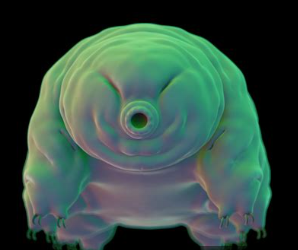
This is an image of a tardigrade. I've decided to use it as my new smiley face temoji. Temoji - that's short for T Clark emoji. -
Currently ReadingDoes anyone have a good recommendation on CS Pierce? On the one hand, his collected works are free in many places. On the other, they aren't particularly well organized and it's a 5,092 page PDF.
Is there a good "guided" tour that mixes the original writing with a solid framework for studying such a large body of work? — Count Timothy von Icarus
Yes. This would be helpful for me too.
Good luck. — Manuel
Thanks for the recommendations. -
Donald Trump (All General Trump Conversations Here)Thought I'd quote this quotable quote. — Hanover
You and I often agree when we're not trying to prove who the biggest smarty-pants is. -
A simple theory of human operationWe want contact and intimacy with other creatures, especially our own species. We are curious, we wonder, even as newborns, about the sources of sounds and other sensory phenomena. These motivations are not driven merely by pleasure and pain, in fact we will aim towards painful experiences to satisfy our curiosity and social desires. All this in place before any grand narrative to distract or give meaning is put in place. In fact any belief system needs to engage with these motivations - and often channels them, judges them, gives rules to restrict them. It's not that your post is incorrect. These belief systems do do the things you say, but there is tremendous motivation in place before these systems are plopped on top of them. — Bylaw
Good post - good ideas, well written. -
Donald Trump (All General Trump Conversations Here)There is a political reality that cannot be ignored. You can go on about how justice demands the prosecution of every prosecutable crime damn the torpedoes, and we can then end up with failed impeachments and acquittals followed by emboldened politicians who should have lost power.
The Manhattan case is a case about misuse of campaign funds and falsification of records. It's a finance regulatory case.
Prosecute the man for calling the Georgia Secretary of State and asking for fabricated votes and stop with this diversion into whether Form 1876-b (I made that form up, so don't look it up) was falsified. — Hanover
I think you're right about this indictment in particular. This is not the crime justice should be going all in on. -
A simple theory of human operationAnyways, the point is that you have a narrative of why you clean the dishes. You have just taken the narrative for granted to the point that to you, it seems the answer was written on high from Moses as to why you must do them. — schopenhauer1
I already told you that I need a narrative to communicate the situation to you, but I don't need one to motivate myself, which was the point of your OP.
Now I'm really done. No, seriously, I really mean it. For sure this time. La, la, la, la, la. I'm not listening. I'm going to turn my computer off now. -
A simple theory of human operationHow do you know that? — schopenhauer1
Sorry. That's enough. I'm all done. -
A simple theory of human operationWhy do you do the dishes even if you don't like it? — schopenhauer1
Because it's part of a job I do enjoy and I can't complete that without doing the part I don't enjoy. -
A simple theory of human operationWhy is "it's just how the world works" connected with you doing a job you would not want to do? — schopenhauer1
I've done a lot of worthwhile and enjoyable work in my life. All of it included aspects I didn't enjoy. If you like to cook, you have to wash the dishes. If you want to design the cleanup of a contaminated property, you have to figure out the budget and get the client to agree with it. This is where you and I always run into a wall. It's not unfair that life includes a bit of pain and unpleasantness. -
Donald Trump (All General Trump Conversations Here)Trump is slowly getting repositioned by the Democrats for a second presidency. Impeaching, indicting, or otherwise attempting to disqualify Trump from this election cycle is going to be seen as undemocratic and he'll become a martyr. — Hanover
I'm not sure your right, but I fear you might be. -
A simple theory of human operationExactly, and you are LITERALLY displaying the point I am making in real time. — schopenhauer1
That's not true. Your OP was about how people use narratives to provide motivation. What does that have to do with me saying:
Of course I've done things I didn't want to do. Jobs that need to be done are not necessarily enjoyable. All worthwhile activities include aspects that are unpleasant. I don't see that as unfair or unreasonable. It's just how the world works. — T Clark -
A simple theory of human operationI ought to be patient with you, because you are talking to a projection. Seriously, though, your theatrics are misdirected. I'm glad for my friend and his happiness. We just lost touch. Such is life. It's just how the world works.
I don't owe you this clarification. It's a belatedly tolerant response to your indulgent misreading. — green flag
I'll admit to being theatrical and indulgent if you'll admit to being condescending and pompous. -
A simple theory of human operationMotivation, as in why you continue to do something you might not otherwise want to do. The thing is, you are going to claim you have never done something you never wanted to do. Is that right? — schopenhauer1
Of course I've done things I didn't want to do. Jobs that need to be done are not necessarily enjoyable. All worthwhile activities include aspects that are unpleasant. I don't see that as unfair or unreasonable. It's just how the world works. -
A simple theory of human operationWe've been through this before. You tend to conflate what animals do and what humans do, and I don't even want to bother pointing out the difference in an animal that can use recursive linguistics to tell stories about itself and then buy into those stories, versus what animals do. — schopenhauer1
I think we probably agree it won't be very fruitful for you and me to spend a lot of time bashing things we already know we disagree on back and forth.
I just don't find this Taoist stuff compelling. In fact, if it was natural, we wouldn't need Toaism or anything related. We would simply BE. But we aren't. And so there in fact IS something in the way of that. I am saying that contrary to what dichotomy fiction you are purporting on me, the animals are living Tao. Humans are never doing so, and are always trying to get there. Hence TaoISM. — schopenhauer1
Yes, I thought it might not be a good idea to bring Taoism into this, knowing it is not a well understood or accepted way of knowing things. I was right, although I do think it provides a good reflection of human nature. Again, I think your sour way of seeing human nature and behavior undermines the credibility of your views.
You keep saying that, but here you are using language, having a narrative of being angry and upset. Think about it. — schopenhauer1
I'm not angry or upset at all. I went back and reread my post. It was polite, respectful, and responsive. I tried to make sure I left out any provocative language. I've always tried to treat your ideas with respect, even though I strongly disagree with them. It's true, all verbal and written communication is narrative, but communication is not motivation, which was the primary substance of your OP. -
Donald Trump (All General Trump Conversations Here)I am a liberal Democrat and I think Donald Trump was a very bad president and is a very bad man. I have no doubt he broke the law in important ways. Still, I think this could easily turn into a be careful-what-you-wish-for moment. To me, it's certainly nothing to celebrate.
To me, it would make more sense to just indict him for his actions on and before January 6, 2021 rather than this charge. Yes, I know the crimes are in different jurisdictions. -
A simple theory of human operationFriend of mine tried to express the ecstasy of becoming a father. We've lost touch. He's got three now, a hard working man with the picket fence and kids he always wanted, even a wife who stays home.
To me it's more like people find some role (hero myth, ideology) that feels right enough and keep getting out of bed every morning, largely to avoid losing a job, a lover, a home. We cling to what keeps us safe and comfortable. This is to be expected. Moloch demands it ! Those whose source code doesn't have them building a nice little web end up replicating less or not at all. — green flag
This is startlingly condescending. I think it shows your lack of respect for people who, apparently unlike you, find satisfaction in daily life, family, work, and other aspects of our humanity.
Is "these systems are ultimately fictions" itself a fiction ? Even the most negative ideology may help the species or the tribe as a whole contribute to the heat death. Antinatalism is the hand of god. It is the thought of genocidal violence taken to the last extreme. It is will-to-power. Does it not cry out after all for the coming of heat death ? — green flag
Such pompous arrogance. -
A simple theory of human operationHowever, unlike other animals, humans have the ability to separate our behaviors from our survival needs. We can choose not to work because we don't like it, we can choose to commit suicide, or we can engage in a range of other behaviors that have nothing to do with our basic survival needs. — schopenhauer1
I think this is an artificial distinction. Animals can also behave in ways that don't directly impact basic survival needs. They play, wander around exploring, and spend a lot of time napping. They hang out with their families. I'm not saying animals are the same as humans, but you are exaggerating the differences.
Despite our general fear of pain and seeking of pleasure, we still must write narratives of motivation. Our behaviors are not fixed for these end goals but are tied to the conceptualizing-human mind in social relations to others. Every single day, every minute even, we have to "buy into" motivating ourselves with narratives...
...Additionally, humans generally fear pain, displeasure, and the angst of boredom, while seeking pleasures to distract from this angst. Aesthetic and non-physical pleasures become a built-in mechanism to deal with this fear. However, this also creates a need for fictions to explain why we must do anything, — schopenhauer1
I don't think this is right either. Human motivations include more than just pursuing pleasure and avoiding pain. Calling artistic, recreational, and other non-instrumental activities "built-in mechanism to deal with fear," may be true for you, but they aren't for most of us. You and I have had this discussion before. Your vision of human nature is darker and less hopeful than mine is.
It is possible to act without intervention by narratives. Much of the point of Taoism is learning how to act spontaneously in line with our true natures. It is called "acting without acting." It is understood as the true source of human motivation. Narratives interfere with this rather than supporting it. Narratives don't generally promote action, they are more able to put the brakes on, to stop us from doing what our natural inclinations indicate. A lot of narratives are also post hoc additions put on to explain to ourselves why we did what we already did.
So my theory, along with Zapffe's, is more about our essential "break" with nature. We use narratives/fictions to create reasons which give us motivations. That's how a conceptualizing animal with recursive language capacity parses and synthesizes the world- one in which social arrangements are paramount. — schopenhauer1
I'll say it again. I don't think this is true, or at least not necessarily true. It's "seems to me" psychology/philosophy and I don't think it represents how people actually feel or behave. -
The difference between religion and faithSome truth in that, but I am nowhere near as gnarly or arrogant as you — universeness
You are just as arrogant as I am and significantly more gnarly.
You offer your mere opinion, as if there was some kind of authority — universeness
As I noted, I am the official Voice of the Spirit of Philosophy here on the forum. Only one other member has been graced with such a lofty office. That's @Noble Dust, who is the Mayor of the Shoutbox. -
Ontological arguments for idealismI would disagree. In order to do classical mathematics or certain types of logic, one has to view it through the lens of Platonic forms (or some other non-mental, non-physical substance). There is no way to experience absolute infinity, for example. We can define it, but to invoke it as an object/property without constructing it, one would have to postulate or imagine some kind of realm in which it exists merely because it was definable. — Ø implies everything
I think you and I are using the term "idealism" with different meanings. When I say "idealism" I mean philosophies similar to Plato's. From Wikipedia - "In its most basic fundamentals, platonism affirms the existence of abstract objects, which are asserted to exist in a third realm distinct from both the sensible external world and from the internal world of consciousness, and is the opposite of nominalism."
Am I using the word wrong? Anyway, whatever language differences we are having, I think you and I agree that seeing the world through Platonist glasses, as described in Wikipedia, would be useful for mathematicians. -
How bad would death be if a positive afterlife was proven to exist?As an aside, there was a movie that took up this issue - The Discovery - with Robert Redford and Jason Segal. In it, a scientist proves there is an afterlife, which leads to a lot of suicides. I haven't watched it. It is on Netflix.
-
Ontological arguments for idealismWhat are some good arguments for ontological idealism? — Ø implies everything
I'm not what anyone would call an idealist in the philosophical sense, but I do see value in using that kind of approach. In order to do math or logic, you would have to be able to see the world through idealist lenses. Also, although I am mostly drawn to pragmatic approaches with a bit of materialism mixed in, I often find myself drawn to more idealist elements - honor, human rights, fairness, kindness. -
The difference between religion and faithYour curmudgeon approach to others — universeness
It's an odd thing for you to call me a "curmudgeon." First, I don't think being one is necessarily bad. Every forum should have a few. And then, of course is the whole pot/kettle/black thing. One of the things I like about you is your feisty, argumentative attitude. You're as much a curmudgeon as I am.
I just wish you'd stop disrupting threads with irrelevant comments.
T Clark
Start FollowingSend a Message
- Other sites we like
- Social media
- Terms of Service
- Sign In
- Created with PlushForums
- © 2026 The Philosophy Forum