
Comments
-
What Are You Watching Right Now?@T Clark and @Baden
Perhaps I arrived a bit late because this film was released two years ago, but I watched it a few days ago.
Small Things Like These is a historical drama whose plot focuses on the Magdalene laundries in Ireland. Since it is an Irish-based story, I also tag Baden, because he may know more interesting things about this controversial topic.
Cillian Murphy is one of my favorite actors. It is true that he played an important role in the "Peaky Blinders" show, but I think he is very good at interpreting drama characters.
The film is extremely nice, I think.
-
Currently ReadingThese are the books I read in 2025. Another good year, but above all was the discovery of very nice Eastern European writers. Looking forward to reading them in 2026 too.
- The Kreutzer Sonata, Leo Tolstoy.
- The Eternal Husband, Dostoevsky.
- Morning and Evening by Jon Fosse.
- Dead Souls by Nikolai Gogol.
- Boyhood Island. My Struggle 3, by Karl Ove Knausgård.
- Demons by Dostoevsky.
- El gaucho Martín Fierro; La vuelta de Martín Fierro by José Hernández.
- Dormir al sol, Adolfo Bioy Casares.
- Ignorance by Milan Kundera.
- Coplas por la muerte de su padre by Jorge Manrique.
- El Aleph by Jorge Luis Borges.
- Blinding, Book One: The Left Wing by Mircea Cartarescu.
- Blinding, Book Two: The Body by Mircea Cărtărescu.
- Blinding, Book Three: The Right Wing by Mircea Cărtărescu.
- El asesinato del perdedor by Camilo José Cela.
- The Village of Stepanchikovo by Fyodor Dostoevsky.
- An Uneven Champion by Adolfo Bioy Casares.
- Inquisiciones by Jorge Luis Borges.
- The Transylvanian Trilogy: Volume I. They were counted. by Miklós Bánffy.
- The Transylvanian Trilogy: Volume II. They Were Found Wanting by Miklós Bánffy.
- The Transylvanian Trilogy: Volume III. You are torn to pieces. by Miklós Bánffy.
- Una magia modesta by Adolfo Bioy Casares.
- Jungle Tales by Horacio Quiroga.
- El Bataraz by Mauricio Rosencof.
- The Book of Laughter and Forgetting by Milan Kundera.
- The Petty Demon by Fyodor Sologub.
- War and Peace by Leo Tolstoy.
- Selected Works and Personal Notes (1880 - 1885) by Anton Chekhov.
- Report to Greco by Nikos Kazantzakis.
- Spring Flowers, Spring Frost by Ismail Kadare.
- Embers (often translated as Candles burn until the end) by Sándor Márai.
- The Bridge on the Drina by Ivo Andrić.
- The Festival of Insignificance by Milan Kundera.
- Bird on a fence by Dario Dzamonja.
- The Museum of Innocence by Orhan Pamuk.
-
Merry Christmas and Good Luck!But we did not lose anything either, well maybe you are out a few Euros, so everything is the same. — Sir2u
I agree! Honestly, I didn't expect to win. There are a lot of numbers and a lot of series too. It was very difficult. Although many winners were in Madrid, this time more were located in the north of the country—León and Zamora.
I am happy because I have about 2 thousand lights twinkling all over the house and I love the glow they make. Lots of shining coloured lights all over the place. — Sir2u
I have many twinkling lights all over the house too. Putting them correctly was tedious but worth doing! I think I will not remove them until the middle of January!
Feliz Navidad Javier. — Sir2u
Feliz Navidad y Felices Fiestas, Sir. :smile: :party: -
The News DiscussionPerhaps I came a bit late because you might already know this, but it is worth sharing the obituary anyway.
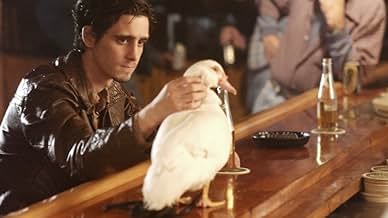
RIP James Ransone. Actor James Ransone, known for his role in ‘The Wire,’ dead at 46.
His fictional character, Ziggy Sobotka, was one of my favourites in The Wire. I read on the Internet that he also performed in other interesting works of American drama.
-
Merry Christmas and Good Luck!Sorry folks, the 1st prize is the number 79432.; the second prize is the number 70048; and the third prize is the number 90693. https://www.loteriasyapuestas.es/en/loteria-nacional.
We didn't win the jackpot, but better luck next time! -
Merry Christmas and Good Luck!Neat!
That red envelope is gorgeous.
I will share the results of the lotto tomorrow morning, I promise. It is fun to follow it in the street; near the palace of the ceremony, people go in disguise. :smile: -
How Account for the Success of Christianity?Interesting thread.
First, I think you are actually arguing against Christianity as an institution, not the religion. I can't disagree with you on the fact that Christendom got a lot of influence when it became the main religion of the Christian Empire. Also, it was very relevant when it started to spread around the "pagan" territories of the Rus (what is now Russia and Ukraine). They quickly erased their polytheism and then started to build churches and establish Christianity as the real and only dogma. There are books written by Mircea Cartarescu about this; they are very good and intriguing. I recommend them to you.
On the other hand, it is relevant to remark on the words of Kazantzakis when he did a pilgrimage to the Sinai Desert: Christianity is both too optimistic and too boring.
I think K's reflection on how Christianity works can help us to understand why it had much success in the world when it appeared to be a complex way of thinking in the beginning. Another example written by Kazantazakis: he is with a Greek Orthodox priest in a monastery, and then K asked him, brother what does God look like to you? And then the priest answered,God is in the eyes and the smile of every child. Kazantzakis got upset at such an ambiguous answer, and he replied back, saying, Isn't God supposed to be a flame that you can be burned by if you touch it?
Perhaps this is why it had much success. It is too optimistic for the reasons you expressed, but it is also "boring" in the sense that it doesn't encourage people to actually think in another way; it is repetitive and based on dull ceremonies (baptism, marriage, funeral), which makes its impact easier. Back in the day we had other ways of behaving when someone died. Now you know what we have to do because it was well established for the past 2,000 years.
Would you call Jesus a philosopher? — Tom Storm
I am just the son of Mary of Joseph. - Jesus in The Last Temptation by Kazantzakis. :smile:
Notice that perhaps he never said he was the Son of God. -
Beautiful Things:up:
Glad to know you enjoyed your time there.
I thought it was a peaceful place when I saw the photos, indeed. I think they are doing a good job humanising those spaces. I really love this type of initiative – when the city is designed for the citizens and not for the cars. -
Beautiful ThingsThis is very interesting and worth reading—the University of Leeds complex was a prototype for the Barbican, and the work done to it over time demonstrates how brutalist buildings can be humanised, writes Alan Radford. The Barbican refurbishment.

I just learnt about the Barbican-brutalist style and how the UK is working on its refurbishment. It is important to notice that the goal of the project is to make the buildings more comfortable or loving to people, but they are not considered ugly or outdated. Perhaps, after this project is done, some folks (who dislike this type of architecture) would see brutalist arts-and-towers in a different way.
I honestly think the staircase of the photo is pretty cool, by the way. -
Australian politicsCanada is a gorgeous country. But if you want to be a tourist for some days, you should come and visit Spain, Banno! We will not disappoint you.
Don't go to Barcelona. I dislike talking trash about my country, but catalanes (https://en.wikipedia.org/wiki/Catalonia) are not in the best mood nowadays. -
What are you listening to right now?Gracias, homie. — 180 Proof
:up: :cool:
I've listened to several, including his most acclaimed records:
Bicentennial Nigger. — 180 Proof
I love the name. It is even better than "That Nigger's crazy". :rofl:
Yeah, it could be, especially "PC" and "anti-woke" times like today. — 180 Proof
I understand. -
What are you listening to right now?It was my first time listening to Richard Pryor's 1974 vinyl called That Nigger's Crazy.
Honestly, the name of the title grabbed my attention because, as far as I am concerned, the N-word is controversial. In most cases, it is used with a racial slur, I guess. I searched it on YouTube, and luckily the album is complete.
Richard Pryor made jokes about the differences in the lifestyles of black and white American people. I didn't understand some of them, but the way he communicates is very funny.
The album was released in November 1975, and it won the Grammy Award for Best Comedy Album. Fifty years passed since then, and a lot of things changed. I think we became more bitter. Perhaps in the 1970s it was funny to make jokes about the sociological "differences" between Black and white people. But now I believe this sense of humor is gone. Furthermore, I can't imagine an album being called "nigger" nowadays.
I'd like to dedicate this album to @180 Proof. You are the only black person from the USA with whom I have interacted. Have you ever attended a Richard Pryor show or listened to his performances? Do you think that the name of the title might be offensive out of its context?
-
Are we alone? The Fermi Paradox...Yes. @Mijin's answers also seem to be far less positive. But it is not an issue. I learned a lot reading the opinion of each of you. They all are very nice. Even more clear and explicit than Fermi's paradox formulation. :sweat:
-
Are we alone? The Fermi Paradox...I know you are positive unlike the rest of the participants. :snicker:
-
Are we alone? The Fermi Paradox...Assuming every intelligent civilization lasts for 1 million years, what is the likelihood that there would be any time overlap in the civilizations? Even if there were 40 civilizations all at the same time, with the distances between them, it seems unlikely there would be any possible contact. — T Clark
A very well-written reply.
It is true that distance is one of the main obstacles, and it makes the possible contact very hard or even almost impossible. However, I see plausible that there are civilizations living together at the same time. I think that the lack of sending and receiving broadcasts successfully doesn't mean they are not there. Perhaps Fermi should have formulated the paradox in another way, because he stated that these Earth-like citizens could have had a sophisticated way of communication, but they wouldn't want to communicate with us, paradoxically.
Interesting. What I learnt from your responses in this thread is that most of you are pessimistic on the probability of a possible contact. -
Are we alone? The Fermi Paradox...That is not to mention that our planet was hit by an asteroid (or meteor?) that wiped-out the dinosaurs and arguably paved the way for the emergence of intelligent life. So while life may be a more likely occurrence on a planet that is similar to Earth in key respects, intelligent life may be far more rare. — NotAristotle
Yes, I almost forgot this important feature. Our planet was hit by a rocky object but fortunately was not very destructive. Therefore, there is a big possibility that the same happened to the Earth-like planets. This makes the chances of finding intelligent life even lower. :confused: -
Are we alone? The Fermi Paradox...Interesting argument. Yes, it is true that one of the flaws of this paradox is that we are making a claim about all the species, always. However, I think it is worth beaming signals to the vast universe. Perhaps we will reach more conclusions in the future; perhaps not. Better this than waiting to receive the broadcast from the other "neighbors." :rofl:
Add then the fact that radio signal get weaker when the ranges get longer. — ssu
This is true, ssu.
Yet the topic gets intriguing when we fantasize about the possibility that another intelligent life may be able to send a better broadcast. -
Are we alone? The Fermi Paradox...I agree, Tom.
This is what I like the most about this topic – it is open to many interpretations, and I consider them all valid. Furthermore, I am learning a lot precisely from having different perspectives. :smile: -
Are we alone? The Fermi Paradox...Yes, in a relative sense we might be "early" but even that tentative estimate still suggests around a billion rocky worlds before ours. And that's just in our galaxy. — Mijin
we are one of the very first intelligent species. — NotAristotle
I also think we are not the very first intelligent species. As pointed out, the estimate suggests around a billion rocky worlds before ours, so it is difficult to believe that we are actually the only intelligent species in the universe. However, given that we accept this point, perhaps we should start to wonder why they would want to communicate with us, or perhaps they have already been here but we never noticed it. It appears that we are in the middle of this paradox—whether they would rather not communicate or they already did.
NOTE: When I say "they," I am referring to the possible intelligent lives of Earth-like planets. -
Are we alone? The Fermi Paradox...Of course, if nobody broadcasts then the chance of any communication plummets. — NotAristotle
This is ture. Indeed, there is a positive aspect to that assertion.
Walk me through better to not have crossed paths; why would that be so? — NotAristotle
Understandable. Perhaps the rest of the civilisations on the Earth-like planets are thinking the same thing right now. We always tend to select the cautious choice. -
Are we alone? The Fermi Paradox...Or, to try to narrow it down a bit further, maybe the question of "odds" is really a question of just how similar other planets are to Earth, the closer the similarity, the more likely the chances of life on that planet. — NotAristotle
I agree.
Now that we got to this point, I think it is worth asking ourselves: would they (the civilisations of an Earth-like planet) show themselves to us if they were capable of doing it?
Furthermore, what if it is actually better for us and for them that our paths haven't crossed yet? -
Are we alone? The Fermi Paradox...Is it considered a false dilemma because the chance theory appears to present only two possibilities, when in reality there could be many?
Now that you bring this up, I think the chance theory (or whatever it is called) forces us to make a choice/decision between extremes.
As it happens I’m writing a novel on the subject of the propagation of life. — Wayfarer
Wow! This is very intriguing! -
Are we alone? The Fermi Paradox...
; @WayfarerThe timescale on when an ETI would be expected to send out a radio signal will consider 1. the odds of abiogenesis, and as ↪Wayfarer pointed out, 2. the times at which those planets formed. — NotAristotle
Does this really depend on the act of randomness or chance that much? -
Are we alone? The Fermi Paradox...Perhaps there is also another lifeform in the whole galaxy who is wondering exactly the same—if we (or they) are the only civilization in this vast system of stars.
-
Are we alone? The Fermi Paradox...So what are the odds of two matches being lit at the same time? You see the point? Other civilizations might have preceeded ours by tens of millions of years, or conversely we might have preceeded theirs by the same factor. Of course, all wild guesswork, but something to consider. — Wayfarer
Yep. Very nice point, Wayfarer. :up: -
Are we alone? The Fermi Paradox...I remember this thread very well. EnPassant had two delightful moments: and .
I regret asking him to prove that God created the universe if God actually did. It was plainly a strawman fallacy.
Perhaps I need to focus on why a mathematical concept is evidence of God's existence, but at the same time, it needs a mind to originate in.
If a mathematical concept needs a mind to originate in, then God's existence follows the same fate. -
BanningsI requested Michael in The Shoutbox to ban me; he can do it whenever he wants from now on because it is "morally praiseworthy" to keep me away from my addictions and emotional instability, as the philosopher stated.
-
BanningsSo, If I ask you to help me kill myself twice, you will do it without winking, because I am an "adult".
This is surprising, coming from a "philosopher" like you. -
BanningsI don't understand what either you or javi2541997 are expecting of us. — Michael
I expected that you would have given him the opportunity to calm down and reflect about his words. Perhaps, he might have thought it twice, and the situation would be different.
Well, I know I have to carry on and leave it there. Banned members do not come back, so I guess my arguments are flat and worthless.
javi2541997

Start FollowingSend a Message
- Other sites we like
- Social media
- Terms of Service
- Sign In
- Created with PlushForums
- © 2026 The Philosophy Forum