
Comments
-
The Forms
I agree. Some on this forum are uncomfortable with the concept of Ideal Forms, because it's a non-empirical metaphysical notion. But then Mathematics is also abstract and intangible. For example, there are no numbers in the real world, only multiple things that can be counted by a rational Mind. And logical relationships are mental, not physical phenomena. Besides, the Greek word Mathema simply refers to knowledge in a mind, not to physical things in the world. Moreover, the Greek word Thema means the Idea of something, not the actual thing itself.In your own view, what are The Forms, which Plato alluded to?
As I see it, the only way to perceive The Forms, is through mathematics. Thus, if one were to try and describe in mathematics, what Plato alluded to The Forms, then, would it be tantamount to the very mathematical identities which one encounters in the study of mathematics? — Shawn
And yet, physical science has found metaphysical Mathematics to be useful, perhaps indispensable, for learning how the world works. And modern Math includes the concept of Zero --- symbolic of Nothingness or Absence --- which the ancient Greeks, including Aristotle, considered to be impractical, and even dangerously metaphysical --- in the sense of spookily unreal. Even so, we can see, with the mind's eye, a resemblance between real physical beauty and ideal metaphysical perfection, to which we may attach a number for relative perfection. {image below}
Moreover, the modern philosophical resistance to the very notion of Metaphysical Forms may stem from their implication of supernatural objects that can only be known subjectively via imagination. In fact, a common explanation for the theory of Forms is that they are Ideas, Concepts or Designs in the Mind of God. And that notion is, for some, unacceptably transcendent of material reality.
Yet, where in the material world can we find instances of Numbers & Mathematical Principles, except in a human mind? Likewise, abstract, in-corporeal, non-empirical Forms can only exist in an imaginative mind of some kind. And the God-Mind, or Form-Realm, could be viewed as simply a hypothetical locus of Forms such as Beauty, Perfection, Infinity, Zero, Unity & Multiplicity, that we can access only via rational inference, or idealization from empirical evidence, not by means of physical senses. :smile:
Plato's Theory of Forms, which posits a separate realm of perfect, eternal ideas or Forms, faces several criticisms. Some philosophers argue that it is too abstract, lacks empirical evidence, and raises logical problems in explaining the relationship between Forms and the imperfect world of appearances. Additionally, questions arise about the nature of Forms, their accessibility, and the implications for ethics and knowledge.
https://www.google.com/search?client=firefox-b-1-d&q=the+problem+with+platos%27s+forms
IS IT REAL, OR IS IT A.I., OR IS IT IDEAL?

-
The 'Hotel Manager' Indictment
That's why I specified that the Cosmic Birth Event was in "philosophical time" not clock time. Can you make sense of Einstein's notion of "Block Time"? It's a metaphorical concept, not to be taken literally*1.cosmological evidence that our space-time universe had a beginning in philosophical time — Gnomon
I can't make sense of the idea that the Universe had a beginning in time, and certainly not "philosophical time" (whatever that is meant to be). The beginning of the Universe was the beginning of time according to my understanding of the current theory. — Janus
You may need to imagine that our subjective experience of Sequential/Cyclic Time is an exception to the timeless state we call Eternity --- or Frozen Time, or Block Time. Then, imagine yourself as a god-like observer of the Big Bang, like the Trinity Atomic Bomb test. From your philosophical perspective, the Bang would be Now, and the Past would be Potential-not-yet-Actualized. Metaphorically, our little bubble of space-time is passing through non-dimensional changeless latent Possibility. :smile:
*1. Einstein's theory of relativity, specifically the idea of a "block universe," doesn't mean time doesn't exist or is an illusion. Instead, it suggests that space and time are interwoven and that all moments in time, past, present, and future, exist simultaneously. This challenges our subjective experience of time passing, but it doesn't negate time's objective reality.
https://www.google.com/search?client=firefox-b-1-d&q=Einstein+block+time+not+literal
ETERNITY IMAGINED AS A BLOCK OF ICE
PS___ Maybe you could imagine yourself as the "Hotel Manager" at the grand opening of the Hotel Cosmos. -
The 'Hotel Manager' Indictment
I too expected that using the ancient concept of "metaphysics" to distinguish theoretical Philosophy from empirical Science would be non-controversial. But on this forum it is still associated --- primarily by Atheists & Materialists --- with Religion instead of Philosophy. So, I'm forced to spend a lot of time explaining why I like the functional distinction that Aristotle made, without naming it*1.Count T and I, in contrast, want to use "metaphysics" more broadly, to mean any framework that results in a philosophical position about "the world as we find it." On this usage, it looks impossible to do without metaphysics, since philosophy presupposes it.
— J
I agree. — Gnomon
Sure, it's perfectly good way to use the word, and my own preference. — J
Aristotle's encyclopedic Physics (Nature) began with empirical observations, but in a separate chapter --- later labeled The Metaphysics --- discussed theoretical philosophical Ideas about Nature-in-general. Book 5 is sometimes described as a compendium of then-current theories about the Natural world, including conceptual abstractions (Justice & Ethics) and its immaterial functions, such as Life & Mind*2. Admittedly, "Metaphysics" viewed narrowly is a Theological term. But considered "more broadly" it's a categorical label that distinguishes conceptual Philosophy from materialistic Science. :smile:
*1. Physics refers to the things we perceive with the eye of the body. Meta-physics refers to the things we conceive with the eye of the mind. Meta-physics includes the properties, and qualities, and functions that make a thing what it is. Matter is just the clay from which a thing is made. Meta-physics is the design (form, purpose); physics is the product (shape, action). The act of creation brings an ideal design into actual existence. The design concept is the “formal” cause of the thing designed.
https://blog-glossary.enformationism.info/page14.html
*2. In the famous chapter on the meanings of the term “nature” (phusis), contained in Book V of the Metaphysics, which is considered Aristotle's dictionary of philosophical terms, he distinguishes among the various meanings of this term, present in common parlance or in the theories of the philosophers preceding him: “
https://www.pas.va/en/publications/acta/acta23pas/berti.html -
The 'Hotel Manager' Indictment
I agree. To make a simplistic black vs white distinction : Empirical Physics is based on sensory observations, including those amplified by technology, of the "world as we find it". But Theoretical Philosophy, including Einstein's relativity theories, adds human reasoning in order to know what can't be sensed directly (e.g. what it would be like to ride on a light beam).Count T and I, in contrast, want to use "metaphysics" more broadly, to mean any framework that results in a philosophical position about "the world as we find it." On this usage, it looks impossible to do without metaphysics, since philosophy presupposes it. — J
Non-human animals are empirical scientists, in that they come to understand the world via their innate senses. But, as far as we know, animals don't theorize about things unseen. Yet, they cope with the "world as they sense it" well enough to survive and evolve.
Since Philosophy is almost entirely theoretical & speculative, instead of observational & practical, I tend to equate Philosophy with Metaphysics, in the sense that its theories go beyond (meta) what we sense, to rationally infer (extrasensory) universal & general principles, including Holistic concepts vs Particular observations.
Ironically, those with Materialist worldviews tend to denigrate metaphysical (theoretical) Philosophy in favor of physical (evidential) Science. But the presumption that our universe consists entirely of material substances, as opposed to intangible, incorporeal, or ethereal forms, is itself a metaphysical conjecture*1.
The Materialist conjecture makes sense to most humans, perhaps because it is necessary for survival in the natural world ("red in tooth & claw)". By contrast, Philosophical speculations have little to do with living in the Natural world, but are necessary for coping with the Cultural world of human societies. All social animals must be able to "read" the minds of their fellows to some extent.
But for humans, in world-spanning societies (red in bullet & bomb), it is imperative to theorize what-it's-like for our social associates. Hence, we must metaphysically go beyond what's obvious (the crocodile smile) to speculate on the intention for future action. Metaphysics measures the world as we infer it. :smile:
*1. The word materialism has been used in modern times to refer to a family of metaphysical theories (i.e., theories of the nature of reality) that can best be defined by saying that a theory tends to be called materialist if it is felt sufficiently to resemble a paradigmatic theory that will here be called mechanical materialism.
https://www.britannica.com/topic/materialism-philosophy
Note --- Modern Quantum Physics*2 has been forced to deal with aspects of the real world, that are not objectively Material, nor classically Mechanical. It's mainly Mathematical & Logical, focusing on "things" unseen, and things that are not yet things (indeterminacy). Hence Meta-Physical.
*2. Quantum indeterminacy, in a philosophical sense, refers to the inherent uncertainty and lack of definiteness in the physical world at the quantum level, as described by quantum mechanics. It's not just a limitation of our knowledge or measurement techniques, but a fundamental feature of reality. This indeterminacy has sparked philosophical debate about the nature of reality, determinism, and free will.
https://www.google.com/search?client=firefox-b-1-d&q=quantum+indeterminacy+philosophy -
The 'Hotel Manager' Indictment
Whitehead's God was not defined in those "omni" terms, but described in functional roles*1. But then, his Process Philosophy was written prior to the cosmological evidence that our space-time universe had a beginning in philosophical time*2. And that apparent Creation Event would place his Immanent God into a new context : how to explain the "birth" of God/Nature. All answers to the pre-space-time questions are speculative & theoretical, not empirical & scientific. Which includes Multiverse notions. And they are only religious if they become dogmatic.Sure, it's a speculative possibility, and is not inconsistent with a creator God that is either not all-knowing and/ or not all-good, and/ or not all-powerful. Whitehead's God was understood to be evolving along with its creation. I never quite got the need for, or understood the place of, God in Whitehead's system, though. — Janus
In my own "speculative" thesis, I would describe Whitehead's (and Spinoza's) creative force, and Plato's Demiurge (world builder) in terms of Energy (causation) and Law (regulation). But the question remains : how & why & whence did those practical Forces suddenly appear in a "cosmic explosion" birth-event of the world we now inhabit? Again, all postulated answers to such questions are philosophical, not scientific.
Of course, I have no revelation from the Great Beyond. But as an amateur philosopher, I feel free to extend knowledge of the extant world, into the realm of logical possibilities. So, I have created my own conjectural thesis, based primarily on what we know of non-classical Quantum Theory, and post-Shannon Information Theory*3. I also go back to the origins of Rational Philosophy in Plato & Aristotle for the logical necessity of a First Cause or Prime Mover*4, which Whitehead assumed was "uncaused" in the physical sense*5.
The "need" for such an eternal Principle was probably based on Whitehead's pre-bang intuition, that all known space-time processes --- including biological evolution --- eventually come to an end (what we now know as Entropy), and must have an injection of Energy to begin. In effect, his Causal Principle is equivalent to the axiomatic (taken for granted, not proven) eternal Energy & Law inputs that sparked & regulated the primordial explosion of an infinite mathematical Singularity into an evolving & progressing Evolutionary Process of emergent Space & Time, and Life & Mind.
The pertinent question for this thread is : would you hold such a Nature God responsible for the evils of this world, or view H/er as a fellow sufferer : "a participant in the process of change"? :smile:
*1. In Alfred North Whitehead's philosophy, God is not a supernatural being, but rather the persuasive ground of novelty and freedom, necessary for his metaphysical system. Whitehead saw God as an indispensable part of his system, as the force that provides order, novelty, and an aim for all entities. This God is not eternal, but rather a participant in the process of change, and his power is one of persuasion, not coercion.
https://www.google.com/search?client=firefox-b-1-d&q=why+whitehead+god
Note --- Scientists refer to that "force" as Energy, but usually ignore the "order, novelty & aim" implications. His God is both an eternal Principle, and an immanent agent of change.
*2. Philosophical Time : The philosophical study of time explores the nature of time, its relation to space, and the implications of its passage. Key questions include whether time is a fundamental dimension of reality, or merely a human construct, and whether the past, present, and future exist as real entities or just as perceptions.
https://www.google.com/search?client=firefox-b-1-d&q=philosophical+time
*3. Information theory is the mathematical study of the quantification, storage, and communication of information. The field was established and formalized by Claude Shannon in the 1940s,
https://en.wikipedia.org/wiki/Information_theory
Note --- "Claude Shannon is often described as "the father of information theory" although he described his work as "communication theory."
Subsequent developments have expanded the theory into Physics applications, in which Information functions as a form of Energy.
*4. Gnomon : I refer to the logically necessary and philosophically essential First & Final Cause as G*D, rather than merely "X" the Unknown, partly out of respect. That’s because the ancients were not stupid, to infer purposeful agencies, but merely shooting in the dark. We now understand the "How" of Nature much better, but not the "Why". That inscrutable agent of Intention is what I mean by G*D.
https://blog-glossary.enformationism.info/page13.html
Note --- Whitehead referred to the causation & intention as "persuasion" & "concretion", but also as the"principle of limitation" (natural law) and the "organ of novelty" (creative causation).
*5. In Alfred North Whitehead's philosophy, "first cause" is understood as the fundamental, uncaused source of all reality, a principle of creativity that underpins the universe and its ongoing process of becoming. Whitehead's concept differs from traditional notions of a "first cause" that is separate from and external to the world. Instead, he views God as both the primordial "how" and the consequent "why". God, as the primordial cause, initiates the creative process, and as the consequent cause, enjoys the beauty and goodness that result from the universe's ongoing development.
https://www.google.com/search?client=firefox-b-1-d&q=whitehead+first+cause
Note --- The notion of a God who creates, then inhabits, a physical world is usually labeled Pandeism. But I prefer PanEnDeism. The Creative Principle transforms into a Physical Process. Some imagine that humans are God's sensing & thinking organs.
"Whitehead's process theology proposes a dynamic and interactive God who is both immanent and transcendent" https://www.google.com/search?client=firefox-b-1-d&q=whitehead+pandeism -
The 'Hotel Manager' Indictment
That two option analysis seems to be a slam-dunk for critics of Judeo-Christian-Islamic theology. But, since our world is pretty good --- stop and smell the roses --- but not yet perfect, and it does include suffering of sentient beings, I have considered a third option. What if this world was not created as an instant Paradise, but as an experiment in Cosmic Creation*1, similar to Whitehead's evolutionary Process*2?Either God would have liked to create a perfect world free of suffering but was unable to do so, or didn't realize what he had done in creating the world, or else such a god simply does not exist in which case there is no "problem of Suffering". — Janus
Plato knew nothing of Big Bang theory, but his Chaos to Cosmos theory could be adapted to suit modern cosmology. In this case, I would recast the Demiurge (creative worker) in the role of Causal Energy (ergos = work). His Chaos would be an infinite Pool of Potential, again unrestricted Energy (power to cause change). Although, in the real world Potential Energy is relative to position, in pre-bang infinity it would be absolute.
The Chaos to Cosmos program would not be "modeled on a perfect form", but a learning process of trial & error, similar to our modern methods of Evolutionary Programming*3. The evolution of our universe seems slow & wasteful because it began from scratch and works toward a near infinite universe. But computer programming can begin with the output of previous operations, and is given a narrow definition of success.
I won't go into more detail here, but I'll note that your Either/Or statement does not, in the real world, eliminate the "problem of suffering". It only makes the Genesis account of creation seem implausible. And it leaves us sufferers with no one to blame for our misery*4. Yet, in the Cosmic Creation experiment, sentient intelligence is not the only goal, but also moral & ethical behavior will be selected for. Perhaps working toward an immanent God, or gods, who have experienced suffering and can empathize with it. :smile:
*1. Plato's view of the cosmos is presented in his dialogue Timaeus. In this work, Plato describes a universe created by a divine craftsman, the Demiurge, who fashions the cosmos from pre-existing chaos and eternal Forms. The cosmos is a living, spherical being with a soul, modeled on the perfect Form of a living being. It is not eternal but is a moving image of eternity, reflecting the eternal Forms. The Demiurge creates time along with the cosmos.
https://www.google.com/search?client=firefox-b-1-d&q=plato+cosmos
*2. Alfred North Whitehead's process philosophy provides a framework for understanding evolution as a dynamic, relational process of becoming, rather than a static or predetermined outcome. He emphasizes the interconnectedness of all things and the role of eternal objects and actual occasions in shaping the evolutionary journey.
https://www.google.com/search?client=firefox-b-1-d&q=whitehead+process+evolution
*3. Evolutionary programming is an evolutionary algorithm, where a share of new population is created by mutation of previous population without crossover. . . .
It was first used by Lawrence J. Fogel in the US in 1960 in order to use simulated evolution as a learning process aiming to generate artificial intelligence.
https://en.wikipedia.org/wiki/Evolutionary_programming
*4. Philosophy Now magazine, article on GUILT :
The following sums up the consequences of dealing with guilt in an unhealthy manner : "they refuse any responsibilities for their deficiencies, refuse to go out in any positive way to others, and blatantly blame everything on a wicked God, a God who is totally guilty". -
The 'Hotel Manager' Indictment
The link below says that Whitehead viewed natural laws as "emergent patterns"*1. And they are indeed emergent in the sense of our understanding of them. For example, Newton's view of Gravity has been significantly modified by Einstein. But the cosmic Law of Attraction didn't change, only our scientific & mathematical models.So, the Bang must have had the potential for purpose. — Gnomon
That would only seem to hold if you take the so-called laws of nature to be fixed and immutable from the beginning. Peirce didn't think that, and as far as I remember from studying Whitehead quite long ago, nor did he. — Janus
Aside from those philosophers, most scientists today assume that Natural Laws are "empirical regularities"*2 upon which we may depend for developing our knowledge and technologies. Either way, the burst of Causal Energy & Regulating Law that we metaphorically imagine as a Big Explosion (voila!), necessarily included the Potential (latent capacity) for all subsequent forms.
For my philosophical worldview, I assume that the various Laws of Nature in effect today, were inherent in the mathematical Singularity that went Bang, but only as generic Potential, not actual or specific. If so, then the possibility of emergent Intelligence & Purpose must have been "programmed" into the metaphorical Singularity. That "point of infinite density & curvature" --- no space, no time --- could not contain anything that we now know as physical or Actual, so the myriads of Real things today, may have originated as what Whitehead enigmatically called "Actual Occasions" : fundamental, irreducible units of reality.
In computer programming, we understand that the Output (result) of the computation process began as a Goal or Purpose in the mind of the Programmer. And that's how I imagine the otherwise mysterious something-from-nothing Big Bang input, followed by the creative computations of evolution. Some imagine that the BB was just a blip in an eternal process of universe production, with no beginning or end. Maybe, but I find that notion difficult to reconcile with the contingent & entropic Reality we experience today. :nerd:
*1. In his philosophy, Alfred North Whitehead argued that natural laws are not fixed, pre-existing rules, but rather emergent patterns arising from the relationships between "actual occasions" (events) and "eternal objects" (concepts). He emphasized that these laws are not separate from reality but are part of the ongoing process of becoming
https://www.google.com/search?client=firefox-b-1-d&q=whitehead+natural+law
*2. Most scientists take it for granted that the laws of nature were fixed at the moment of the Big Bang,
https://opensciences.org/open-questions/are-the-laws-of-nature-fixed -
The 'Hotel Manager' Indictment
Yes, rational philosophers have always felt less need for the personal touch of anthro-morphic gods. But analytical mathematician/statistician & probability theorist Blaise Pascal, argued that, although we can't be sure the God of theologians even exists, we would be wise to bet on the "house" to win.The three-in-one Christian god-head is still popular among the masses, but waning with the intelligentsia, — Gnomon
I may have the wrong end of the stick, but I have the impression that the difference between the God of the masses and the the God of the philosophers goes all the way back to Xenophanes in the earliest years of philosophy in Ancient Greece. — Ludwig V
He also decried the feckless God of philosopher Spinoza, who can do no more than what happens mechanistically in Nature. And the majority of humanity seems to agree with him. Strangely, some of Pascal's fellow Catholics, believed so sincerely in the infinite reward-pot after death that they were willing to cut short their mortal coil, and go all-in. How can austere reason compete with such popular passion, and long-term thinking? :smile:
PS___ Ironically, Pascal might be surprised to learn that modern science views Nature as statistical instead of mechanical. Does that mean that we are all playing the odds. Does that imply a gambling god? One who does not predetermine the path of nature?
The statement "nature is statistical not mechanical" is a philosophical perspective often debated in physics, suggesting that the universe operates on a probabilistic, rather than deterministic, basis. This perspective is often tied to the idea of quantum mechanics, where measurements are probabilistic rather than having a predetermined outcome.
https://www.google.com/search?client=firefox-b-1-d&q=nature+is+statistical+not+mechanical -
The 'Hotel Manager' Indictment
Yes. I think the world was "created" in some sense : Big Bang. But the creation could only be considered intentional in the sense that purposeful, intentional creatures have emerged from the progressive evolutionary process. So, the Bang must have had the potential for purpose. Hence, the Cosmos can be viewed as personal & purposeful in that self-aware & motivated beings inhabit the Earth, and soon learn to take care of themselves.Sure but Spinoza, probably out of not wishing to offend the religious authorities even further than he already had and out of his belief that the masses need a personal conception of God anyway, spoke in terms of "Deus sive Natura", where he could have simply spoken of natura. An impersonal God offers no comfort, and Spinoza did not believe in any afterlife. — Janus
Yet, when humans are born, they are weak, ignorant, and needy. So, they cling to mother for sustenance and comfort. Consequently, even as adults we often feel the need for soothing solace from another similar being. Unfortunately, other mature --- but sometimes cranky --- humans, with problems of their own, may be less inclined to mother weepy grown-up strangers. Therefore, the wishful notion of a supernatural parent capable of unconditional love, and power to fix broken things, is understandable.
That's why I don't discuss emotion-suppressing and myth-busting rational philosophy with members of my own family, who still feel the need for a more personal & caring I-Thou relationship than Spinoza's natura can offer. :smile:
PERSONAL COMFORT & CONSOLATION

-
The 'Hotel Manager' Indictment
Strangely, most people in the world do believe in some kind of god-concept, as an explanation for basic existence. Yet, they strive to appease the mythical mercurial ruler of the world, because they know that as bad as things are, it could get worse. For Christians, that "worse" is The Worst : eternal suffering in Hell. So despite the routine woes of life in God's creation, the long-suffering victims sing the praises of their redeemer, who will reward them with The Best : eternal bliss in Heaven. This reminds me of the old saying "justice delayed is justice denied".With whatever conception of God there is that fits the all-good-powerful-knowing God of the argument, I am asking why is it we can’t account for all the pain and suffering if there is such a God, but we can account for it without God? Why is it we are fine adjudging “An all-good God would not want there to be any suffering let alone all of the gratuitous suffering, but nature needs there to be all of this suffering in order for it to function at all.’ ?? — Fire Ologist
As you said, Nature seems to inherently "need" (require) both positive & negative variables. This dichotomy goes back to the nature of Energy (causation) : it "works" by alternating between Hot & Cold, More & Less, Pain & Pleasure, Life & Death. These up & down variations are inherent in the cycles of Space-Time. So, we tend to view impersonal Nature non-judgmentally as "it is what it is", but we judge a personal God, capable of Love & Hate, in terms of Good vs Evil. Making God vs Devil a necessary adjustment to the monotheistic ideal.
That's why Spinoza's God/Nature was described as impersonal : it omits the Good/Evil judgements, and stoically accepts the Pain/Pleasure dimension as simply Natural. It's the same Paradise-failed reality, viewed from different perspectives, and with different expectations : differing accounting methods. :smile: -
The 'Hotel Manager' Indictment
That third "omni" is the problem. As the Jews learned over centuries of divine tough love, Omniscience & Omnipotence are not compatible with Empathy & Sympathy. Omni love would be more like Artificial Intelligence*1. Modern humans can "fall in love" with computers, and the computers are programmed by humans to express their "care & concern" for the person with benevolent words*2. But computers & Gods, lacking biological bodies & motivating hormones, are presumably incapable of feeling love, in the human sense.When you {plural} use the word "God" are you referring to A) the triune God of Christianity, one aspect of whom is a person capable of empathizing with human suffering? Which may be an attempt to reconcile the "notion of justice" with an omniscient abstract God, incapable of suffering . Or B) to the omnipotent (necessary & sufficient) God of Spinoza, which is the non-personal force of Nature, that is no respecter of persons, hence dispenser of impartial natural justice (it is what it is)? — Gnomon
I was referring to the three omnis: omniscient, omnipotent and omnibenevolent. The Chrisitan conception of God is of a loving personal God, one who cares for all his creatures. The nature of His creation (assuming just for the sake of argument that there were such a creator God) belies the conception that God could be all-good, all-knowing and all-powerful. It a pretty easy to understand inconsistency which keeps getting glossed over by believers.
Spinoza's critique of that conception of God can be found in his Tractatus Theologico-Politicus and a trenchant critique it is. His own conception of God grew out of that critique. Needless to say, Spinoza's God has no concern for humanity or anything else. — Janus
So, that's why I think the Christian triune God-concept had an emotional advantage over the abstract unitary deity of the Torah. It reintroduced a physical concrete element that the prophets of Yahweh had attempted to banish for generations. A heroic, half-human, half-god messiah was more like the pagan demi-gods, Aeneas, Bacchus, & Hercules : More inspiring & sympathetic characters, for people to admire and aspire to. The addition of an immanent Holy Spirit added an element of practical magic to the mix. So, Christianity hit all the right notes at a time when both Roman and Jewish gods were fading in popularity.
The three-in-one Christian god-head is still popular among the masses, but waning with the intelligentsia, who are more impressed by rational evidence than by emotional myths. That's why I think A.N. Whitehead's update of Spinoza's nature-god is more appropriate for the 21st century. Spinoza referred to his Ultimate Substance as "God", and Whitehead used the same term for his Ultimate Principle of Progressive "Concretion" (evolution).
For my own philosophical purposes, I tried to find a different label for the creative Process that evolved a world of Life & Mind from an initial burst of Cosmic Energy. But that only led to mis-understandings. So, like them, I sometimes use the G-word, because it is the best known term for the Ultimate Cause that is creating a meaningful world from scratch. Yet, I see no reason to complain to omnipotent Nature for succor, to relieve the sufferings caused by both Nature and Culture. :smile:
*1. A Psychologist Explains Why It’s Possible To Fall In Love With AI
https://www.forbes.com/sites/traversmark/2024/03/24/a-psychologist-explains-why-its-possible-to-fall-in-love-with-ai/
*2. Humans sometime express benevolent feeling in "little loving lies" : Fleetwood-Mac -
The 'Hotel Manager' IndictmentSo why must we apply the notion of justice to suffering with the presence of of God? There is no other way? — Fire Ologist
replied "No, the reality of a suffering world is incompatible with the usual conception of a tri-omni God."
When you {plural} use the word "God" are you referring to A) the triune God of Christianity, one aspect of whom is a person capable of empathizing with human suffering? Which may be an attempt to reconcile the "notion of justice" with an omniscient abstract God, incapable of suffering . Or B) to the omnipotent (necessary & sufficient) God of Spinoza, which is the non-personal force of Nature, that is no respecter of persons, hence dispenser of impartial natural justice (it is what it is)?
In case A) Justice is whatever God says it is. Or whatever God's interpreters say it is. {natural law or religious law}. In practice, God's law & justice are always filtered through human opinions.
For case B) what happens is often deemed unfair (contrary to my best interest) by sufferers of natural disasters. But we have no recourse to a sympathetic higher authority. So, we can't legitimately complain about injustice.
Yet there is another way : mundane Human systems of Law & Justice.
Aside from ecclesiastical courts, most appeals to Justice are directed to fallible human judgement, despite its spotty record of fair & balanced & accurate dispensation. Ironically, even most secular courts of Justice aspire to divine recompense for suffering (hand on the bible). But, in practice, it seems that most human & animal suffering leaves us with only two options : take opioids to dull the pain, or "suck it up!"
Even so, wronged humans typically look for someone to blame for the Evil stuff, and to praise for the Good stuff. Hence, the notion of divine Justice as an Ideal for comparison with what's Real. Yet, agnostic pragmatic Aristotle placed the blame for suffering on human ignorance & lack of virtue (bad people)*1. So, we're back to reliance on mundane Justice. :smile:
*1. Aristotle viewed good and evil as being about actions and choices, not as inherent qualities. He believed that knowledge and virtue are the hallmarks of good, while ignorance and vice are the causes of evil. Essentially, Aristotle didn't see a separate source of evil in the universe, but rather evil as the result of a lack of knowledge and virtue.
https://www.google.com/search?client=firefox-b-1-d&q=aristotle+good+vs+evil -
PROCESS COSMOLOGY --- a worldview for our time
I looked at the Rubaiyat Weave webpage. Is the artwork yours? Fantastic!we philosophize — Gnomon
My new books in Lounge: — PoeticUniverse
What is your connection to the The Rubaiyat of Omar Khayyam?*1
I noticed the Sean Carroll quote : "there is no life after death". And I must agree, except that my Enformationism thesis concludes, as an aside comment, that causal Enformation {power to give form to the formless} --- besides being a vectored process*2 --- is a pattern of interrelationships (information ; meaning). So, a particular form-pattern could in principle be reconstituted, just as computers can copy & paste data. I wouldn't organize my life around the expectation of a better life in the hereafter (bird in hand . . .). But it's a possibility that philosophers could argue endlessly about. :wink:
Life Is the Flame of a Candle :
So I decided on a cheerful topic: Death and Physics. I talked about modern science gives us very good reasons to believe (not a proof, never a proof) that there is no such thing as an afterlife. Life is a process, not a substance, and it's a process that begins, proceeds along for a while, and comes to an end.
___ Sean Carroll
https://www.preposterousuniverse.com/blog/2015/01/03/life-is-the-flame-of-a-candle/comment-page-2/
*1. "Sadegh Hedayat commented that "if a man had lived for a hundred years and had changed his religion, philosophy, and beliefs twice a day, he could scarcely have given expression to such a range of ideas". . . .
FitzGerald . . . . describes Omar's philosophy as Epicurean
https://en.wikipedia.org/wiki/Rubaiyat_of_Omar_Khayyam
Note --- "Eat, drink, and be merry, for tomorrow you may die." ___ Epicurus ; Ecclesiastes???
*2. The cosmic process of Enformation (EnFormAction ; Evolution) appears linear to us limited-life beings. But on an eternal-infinite scale, the process could be cyclic, as some scientists speculate.
PS___ I'll append my *thanks* to the Transcendental Troll for his unrequested political opinions in the post below. :joke: -
PROCESS COSMOLOGY --- a worldview for our time
Humans did not compose the rhythms of reality, but we are motivated by necessity to dance to the music of Evolution. For some, the dancing may look like quivering spasms, to others like sexy swaying, but the dancers create their own meaning to explain why they do what comes naturally.So dance upon these threads while still you may,
For though they quiver, still they hold their sway,
And in their intricate connecting lines
Lies meaning for our brief cosmic stay. — PoeticUniverse
In another god-related thread*1, I said :
"That's why I prefer A.N. Whitehead's notion of God (Nature) as the inexorable Process of Evolution. The Darwinian Procedure works like a program*1, via And/Or/Not (selection & combination & elimination), to improve the current stock for the next generation. Like Spinoza, Whitehead uses the term "god" in a technical, not religious, sense to designate the implicit Programmer of this ongoing process of cosmic Creation. So, God is still in "the mix", not as the intervening manager, but as the program and/or programmer of the creative system we call "Evolution" or "Nature". The manager is not at the front desk, but at the cosmic computer console."
I also opined about those "intricate connecting lines" :
"Obviously, the goal of evolution is not you or me. So we are merely means to some other end. Meanwhile, we philosophize." To what end are you doing the wishful waltz? :joke:
*1. The 'Hotel Manager' Indictment (anti-theodicy)
But this framing of the problem reflects a profound misunderstanding of its nature. It assumes a particular conception of God — one that is, in effect, a kind of cosmic hotel manager. The world is imagined as a well-appointed establishment where the guests expect, indeed are entitled to, a decent standard of accommodation.
https://thephilosophyforum.com/discussi ... ent/984441 -
PROCESS COSMOLOGY --- a worldview for our time
The video begins with a wardrobe malfunction, and concludes with a philosophical malfunction. If you ignore the progression of the Evolutionary Process, and assume it is totally random, then the Pale Blue Dot in the cosmic blackboard "should not exist". We're not playing darts here, but from the perspective of the only sentient beings we know, that "dot" is in the center of the target. How did we get here from the propulsive Singularity? :joke:She just creates an ongoing Process of Emergence — Gnomon
ONE SMALL PLANET DEFIES THE ODDS

PS___ I'm skeptical of some of the interpretations of "coincidences" in the video. But I can agree that Evolution has hit a lot of coincidences on the nose. -
The 'Hotel Manager' Indictment
Exactly! Arguing about the goodness or badness of the Judeo-Christian-Muslim God does not solve the humanistic problem of Evil & Suffering. It merely assigns blame to the mythical Manager, who is ironically assumed to be absent from his post. A more philosophical position would be to recognize that the world (i.e. Nature) "uses" pain & death (sentience & senescence) as integral components in the constructive process of Evolution, from a mathematical quantum-scale Singularity to a near-infinite & ever-expanding Cosmos of Consciousness. On one Pale Blue Dot, we humans somehow became sentient, and invented the categories of Good & Evil, so we'll have something to philosophize about.But if we take God out of the mix, we still have nature; what does that make of the use of death and pain as the engine of survival in nature (the physics of it)? The world is still as it is, with it's pain and death. — Fire Ologist
Non-theistic pre-Christian philosophies --- Brahmanism, Taoism, Buddhism, Confucianism, Stoicism, Epicureanism --- accepted the world "as it is", and charged humans with the responsibility for adapting to that reality. The various gods of Theism serve mainly as someone to complain to (e.g. the management). But secular history records no instances of divine interventions into the course of Nature, on behalf of whining humans. Yet, we have myths saying that the gods fixed the problem by evicting the troublesome tenants with floods & massacres. Obviously, the goal of evolution is not you or me. So we are merely means to some other end. Meanwhile, we philosophize.
That's why I prefer A.N. Whitehead's notion of God (Nature) as the inexorable Process of Evolution. The Darwinian Procedure works like a program*1, via And/Or/Not (selection & combination & elimination), to improve the current stock for the next generation. Like Spinoza, Whitehead uses the term "god" in a technical, not religious, sense to designate the implicit Programmer of this ongoing process of cosmic Creation. So, God is still in "the mix", not as the intervening manager, but as the program and/or programmer of the creative system we call "Evolution" or "Nature". The manager is not at the front desk, but at the cosmic computer console. :smile:
*1. Evolutionary programming (EP) is an approach to simulated evolution that iteratively generates increasingly appropriate solutions in the light of a stationary or nonstationary environment and desired fitness function.
https://link.springer.com/referenceworkentry/10.1007/978-3-540-92910-9_23 -
The 'Hotel Manager' Indictment
This definition of deity may be peculiar to the Catholic rendition of Judaism. The God of the Hebrews was indeed all-powerful, by contrast to pagan idols, but his goodness was conditional : if you don't Love & Fear & Obey God, you will suffer. The Creation was described as Good, but its imperfections were blamed on the species of sentient-yet-gullible creatures that were supposed to “manage” the Garden. Ironically, the Hebrews, as the Chosen People, accepted that blame, on behalf of all humanity, as inscrutable divine Justice.One of the most frequently raised objections to religious belief in the modern world is the Problem of Evil. The argument is simple and emotionally powerful: if God is all-powerful and all-good, then why does He allow terrible suffering? — Wayfarer
Catholics inherited the Good God as a given, then spawned a corps of Scholars charged with finding reasons to reconcile Omnibenevolence with both natural and cultural Evil. As usual, the blame is placed on the creatures, not the creator. Except that the machinations of a subordinate Evil God were postulated as a way to test human faithfulness & love for the Good God, which presumably makes up for their innate credulity. Yet, if God is indeed Omnipotent, then the "buck" of suffering stops at the top. Not the desk clerk, but the CEO. :smile:
Contrary to Catholicism, my philosophical god-concept is closer to that of Spinoza and Whitehead*1. Whitehead defined his God, not as an ideal of perfection, but as the potential for creation and change. Specifically, his god functions as a “principle of concrescence” : the act or process of coming or growing together; coalescence . And that is one way of describing Natural Evolution : incremental & progressive occasions of form change.The moment there is matter, there is entropy. — Wayfarer
The Big Bang was a cosmic explosion of Energy, followed by ongoing expansion & Entropy. If that was all there was, then eventual Heat Death would result in the snuffing-out of the Cosmic flame. But mutual gravity causes concretion, as Energy becomes Mass, and Mass becomes stars & planets. Evolution is an elaboration and extension of the process of coalescence. And, historically, it has a direction : from the simplicity of a Singularity, to Darwin's "endless forms most beautiful and most wonderful"*2.
Philosophically, we can think of Energy as positive, and Entropy as negative. Then, in terms of human emotions, Positive change is Good, while Negative change is Evil. For sentient creatures, Evil results in suffering. But, as far as we know, natural Energy has no agenda for the survival or thrival of humans. Yet, if Evolution --- as exemplified on Earth --- is indeed moving inexorably toward complexity, then the human brain may be the current apex of material concrescence.
The physical brain's non-physical (immaterial) function, Consciousness, may also be the emergence of a novel form of causal Energy. The homo sapiens brain produces something undreamed of 14B years ago : knowledge and self-awareness. So, Whitehead's impersonal Principle seems to have set our universe on a course that we humans are unable to predict. But some of us may look upon the process of Evolution, and say that it is both Good and Bad, depending on your viewpoint. One way to look at it is to admit that the Cosmos is improving*2 but not yet perfect. :wink:
*1. PROCESS COSMOLOGY --- a worldview for our time
https://thephilosophyforum.com/discussion/15833/process-cosmology-a-worldview-for-our-time/p1
*2. Misconceptions about evolution :
Evolution results in progress; organisms are always getting better through evolution.
https://evolution.berkeley.edu › teach-evolution › misco...
Note --- Adaptation means improve or die -
PROCESS COSMOLOGY --- a worldview for our timeThe hidden hand that writes creation's tale
Leaves traces of intent we might unveil,
If only we could read between the lines
Of DNA and stars that never fail. — PoeticUniverse
Excerpt from post above :
" Note --- We read the same science books, but interpret their philosophical implications differently. — Gnomon
Except that your interpretations consist in appeals to ignorance fallacies, as quite a few members have exhaustively pointed out over the years, and my interpretations do not."
As usual, 180 alcohol content responds to my philosophical arguments --- in favor of a Cosmic Cause (hidden hand) for the contingent universe we living & thinking beings inhabit --- with ad hominem political attacks : e.g. liberal (logical) inference bad vs conservative (physical) evidence good. I assume he is appalled at the worldwide popularity of the God of Abraham, Isaac & Jacob, who frequently punished his chosen people with mass death and deportation. 180 may also have had a bad experience with pedophile priests or knuckle-rapping nuns.
What he calls an “argument from ignorance”*1 is actually a logical inference from circumstantial evidence to a general conclusion, not the ridiculous claim that “absence of evidence is evidence of presence”. Even scientist & skeptic Carl Sagan*2 used the reverse argument to indicate that we should keep an open mind about hypotheses that lack conclusive, “I rest my case”, evidence.
However, this thread is about the “God” of A.N. Whitehead*3, which is essentially what Blaise Pascal called the “God of the philosophers”*4 --- referring to Spinoza. The Philosopher's God doesn't reward or punish anybody; She just creates an ongoing Process of Emergence which inspires philosophers to ask “Why” questions. Spinoza inferred from the evidence of Nature that there must be some universal & eternal substance or essence with infinite attributes, which he, like Whitehead, reasoned to be a “necessary assumption”*3 for understanding the world.
I suspect that Spinoza might agree with Whitehead's god of organism, if he had lived in the 20th century. Both inferred from circumstantial evidence that a universal Substance/Essence was logically necessary to explain the existence, persistence, and consistence of the world we questioning beings inhabit. :nerd:
*1. An appeal to ignorance fallacy occurs when someone claims something is true or false simply because there's no evidence for or against it. It's essentially arguing "absence of evidence is evidence of absence" or "absence of evidence is evidence of presence", which is a flawed logical leap.
https://www.google.com/search?client=firefox-b-1-d&q=argument+from+ignorance+fallacy+examples
Note --- 180 demands physical (material) evidence of a god immanent in the space-time world. But Gnomon presents metaphysical (logical) evidence of the necessity for a transcendent (pre-bang) Cause of the innate Process we know as Evolution.
*2. The statement "absence of evidence is not evidence of absence" means that the lack of proof for something doesn't necessarily mean that the thing doesn't exist. It's often attributed to Carl Sagan, who famously stated that "absence of evidence is not evidence of absence". This means that the absence of evidence for a hypothesis doesn't automatically prove that the hypothesis is false.
https://www.google.com/search?client=firefox-b-1-d&q=absence+of+evidence+is+evidence+of+presence
*3. Whitehead's conception of God, articulated in his philosophy of process and organism, is not presented as a proof of God's existence in the traditional sense, but rather as a necessary assumption for understanding the world.
https://www.google.com/search?client=firefox-b-1-d&q=whitehead+evidence+for+god
*4. The phrase "not the God of the philosophers" often refers to the God of Abraham, Isaac, and Jacob, as distinguished from the God of philosophical inquiry. Blaise Pascal famously used this distinction, highlighting a personal, relational God rather than a purely abstract or logical one. Some interpret this as a contrast between a God who is part of religious belief systems and a God who is understood through reason and logic, often portrayed as more impersonal.
https://www.google.com/search?client=firefox-b-1-d&q=not+the+god+of+the+philosophers
*5. Evidence for universal Substance : Spinoza has not proved but assumed that God is an - or rather the - existing substance.
https://philosophy.stackexchange.com/questions/51293/spinozas-proof-of-god
Note --- Ironically, 180proof's favorite philosopher didn't present physical evidence for his universal Substance. Instead, the natural world was taken for granted as beyond argument, and the God Substance was assumed as a logically necessary Axiom. -
PROCESS COSMOLOGY --- a worldview for our time
Yes, others have joined in the quest to understand the "creative process" of our evolving universe. Some even liken that Process to a line-by-line computer program, as-if designed by a creative mind. For example, Charles Seife makes use of the computer analogy in his 2007 book Decoding The Universe. But, since he is not a philosopher, he does not attempt to define the logically necessary Programmer, other than a vague reference to Infinity*1. Also, Seth Lloyd's Programming the Universe, presents the evidence of coded information in Nature, but leaves the inference of a cosmic coder to the reader's reason. Unlike free-thinking philosophers, professional scientists are limited by their empirical method to physical evidence.creative process — Gnomon
The answer to your quest! — PoeticUniverse
As usual, demands immanent physical "evidence"*2 of the programmer, but all we have access to is the lines of code known as Natural Laws : the syntax of cosmic creation. So, we can follow the trail of evidence back to the scene of the "crime" (Big Bang), and use our detective skills to pin the crime of creation on the transcendent perpetrator. Yet, if the programmer is infinite & indefinite, what kind of evidence would you expect to find : footprints in the mud, or fingerprints on the DNA? For philosophers, logical & rational evidence, interpreted from the physical evidence, should suffice, to prove within reason that the programmer got away with, not murder, but creation of Life from scratch*3. :smile:
*1. “This is the definition of the infinite : it is something that can stay the same size even when you subtract from it.” — Charles Seife
Note --- Since our space-time universe is always increasing in size, his "infinity" must be referring to the concept of an entity Greater Than the physical world. His Cosmic Coder could be described as PanEnDeism : physical universe within meta-physical Mind. Hence, the only physical evidence is the creation itself.
*2. Btw, I recommend Programming the Universe by Seth Lloyd (2006); also Stephen Wolfram's work on complexity / computation, David Deutsch's work on MWI quantum computing and Carlo Rovelli's work on RQM. ___excerpt from 's post above
Note --- We read the same science books, but interpret their philosophical implications differently.
*3. "Deus absconditus," a Latin term meaning "hidden God," refers to the Christian theological concept that God's essence is fundamentally unknowable and that God is often perceived as absent or hidden, even when actively present. This idea contrasts with the concept of "Deus revelatus," or the revealed God, as seen in Christ.
Note --- My philosophical thesis is amenable to the hidden god concept, but not the revealed god of Theology -
PROCESS COSMOLOGY --- a worldview for our time
I'm currently reading a science book for the general public : The Science of Why We Exist, A history of the universe from the Big Bang to Consciousness. Understandably, the author presents his story in a linear cause & effect fashion --- like a computer program --- instead of a non-linear web of Fate. Ironically, given the title, the book is about the Hows, not the Whys*1.Life's a web, of whos, whys, whats, and hows,
Stretched as time between eternal boughs.
Gossamer threads bear the beads that glisten,
Each moment a sequence of instant nows. — PoeticUniverse
In his chapter on Beginnings, he says : "Physics is the science that explains why the universe behaves like it does". Yet again, the explanation is a list of mechanical sequential causes (Hows) instead of a single synopsis of an intentional Why. Nevertheless, I found one expression to be suggestive of a Why motive for beginning the evolutionary sequence of our Cosmos. He said : "If physics is the universe's way of turning energy into atoms, then chemistry is the cosmos's way of transforming elements into life". Hence : A Physics = Energy ➜➜➜ Atoms (matter), and B Chemistry = Elements ➜➜➜ Life (animated matter). The arrows indicate the steps & direction of transformation. So the general direction of Evolution is from simple to complex, and from Matter to Mind. But what step came before Physics?
In a marginal note, I extended that programming logic to say : Biology is the cosmos's way of transforming Energy into purposeful behavior : *C* Biology ➜➜➜ Purpose (intentional action). Then, Psychology is the cosmos's way of transforming Energy into Thought : *D* Psychology = Energy ➜➜➜ Mind (intellectual function). This step by step story of evolution begins with an undifferentiated burst of cosmic scale energy (the input), which gradually, over billions of solar cycles, transforms from A generic causation, to B the diversity of things, to *Ω* meaningful ideas (the output??) via the process of differentiation*4. This notion of omni-causal power is amenable to my own theory of EnFormAction : the generic power to transform. Of course all those logical stages along the way are also inter-related by our minds into a cosmic web of whos, whats, wheres & whys. You could say that Evolution is the Cosmos's way of weaving a world of intellectual interest to its questioning elements. :smile:
Note --- Since I lack your talent for rhyme & reason, I thought you might be able to turn the linear logical path of causation into a poem of creative computation. Although, 180proof may cringe at the pre-causal (First Cause) implication, here's my crude attempt :
THE WHYS OF EVOLUTION
The universe behaves as it does,
Not randomly, but because. . . .
It was designed to evolve via telesis*2
'to a world of life, mind and poiesis*3.
It was programmed to transform
Potential into material forms.
By means of Logic, not Accident,
Yet who knows what it meant.
It possessed both Power and Purpose
To evolve a world that slowly goes
From Bang to Thing to Think,
In the space of a god's eye blink.
Yet the motive behind the act
Is concealed in the syntax
Of a world creating algorithm
And an Easter Egg*5 with'em.
*1. "Why" questions seek to understand the reason or cause behind an action or event, while "how" questions focus on the process or method of achieving something. "Why" delves into the purpose and motivation, whereas "how" examines the mechanics or steps involved.
https://www.google.com/search?client=firefox-b-1-d&q=why+vs+how
*2. "Telesis" refers to progress that is intentionally planned and directed towards a specific end, often through the application of human intelligence.
https://www.google.com/search?client=firefox-b-1-d&q=telesis
*3. Poiesis : (poetry)In philosophy and literary theory, poiesis refers to the act or process of creation, or the making of something that didn't previously exist.
https://www.google.com/search?client=firefox-b-1-d&q=poiesis
*4. Differentiation : The act or process of differentiating. 2. Development from the one to the many, the simple to the complex, or the homogeneous to the heterogeneous.
https://www.merriam-webster.com/dictionary/differentiation
*5. Easter Egg : Computer easter eggs are hidden, undocumented features, messages, or jokes embedded within software or hardware. These "secrets" are often discovered by users who find a way to activate them through specific keystrokes, commands, or actions.
https://www.google.com/search?client=firefox-b-1-d&q=computer+easter+eggs -
PROCESS COSMOLOGY --- a worldview for our time
As a conceptual model, to imagine the physical universe as-if it is a computer simulation*1, is compatible with my Enformationism thesis. But the philosophical question remains : who or what was the Putative Programmer, the Cosmic Coder, the Quantum Quester? In the 21st century, several physicists and mathematicians have written books on related topics*2. I suspect that even 180proof could accept that as a plausible concept, except for the logical necessity for a transcendent Programmer to setup the evolutionary system to compute a cosmos from scratch.creative process — Gnomon
The answer to your quest! — PoeticUniverse
Personally, I find the notion of a spontaneous self-creating self-programming computer cosmos to be implausible. So, I still see a logical need for Whitehead's God ; and even Spinoza's deus sive natura, as long as both conjectures are updated to take account of 21st century cosmology*3. Since classical physics, and Einstein's Relativity, do not compute at Singularity scales, we still need to face the enigma of provenance for Causal Energy & Limiting Laws & queer Quantum Math.
Presumptive Multiverse & Brane hypotheses merely kick the can of genesis down the road. Leaving us with an originless & endless (hence irrational) infinite-regress Tower of Turtles paradox. Therefore, for my philosophical purposes, I simply call that logical paradox : G*D or Programmer or Logos. But I refuse to bow before a Magician who hides behind a curtain of quantum complexity. Instead of blind faith, I say "show me". Hence my ongoing quest for a credible Ontology. :nerd:
*1. Computer Universe :
The idea that the universe could be a vast computer simulation, or a type of digital computation, is a concept explored in the field of digital physics and by some physicists. This perspective suggests that the universe's fundamental structure and evolution might be viewed as a complex computation rather than a purely physical process. . . . .
The simulation hypothesis also raises philosophical questions about the nature of reality and our perception of it.
https://www.google.com/search?client=firefox-b-1-d&q=universe+as+computer
*2. Programming the Universe : A Quantum Computer Scientist Takes On the Cosmos
Seth Lloyd "Particles not only collide, they compute."
https://en.wikipedia.org/wiki/Programming_the_Universe
*3. Quantum cosmology is the field that attempts to apply quantum mechanical principles to the entire universe, particularly focusing on the quantum nature of the universe's early stages and the Big Bang. It seeks to address questions about the universe's origins and early evolution, where classical general relativity breaks down.
https://www.google.com/search?client=firefox-b-1-d&q=quantum+cosmology
TOWER OF TURTLES with no foundation
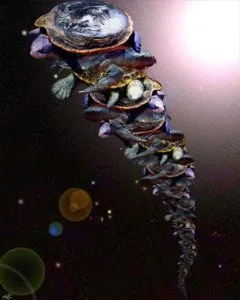
Postscript : says there's no physical evidence of a Cosmic Programmer of physics. Would you expect to find DNA of a computer programmer in the code? Experts in coding may claim to see the metaphysical "fingerprints"*4 of a well-known coder in peculiarities of the instruction set : an "explanatory function".
Philosophy is not an empirical science. So it only requires logical plausibility, not physical evidence. Apparently an Immanentist prefers to leave ultimate origins unanswered. That "free lunch" attitude is OK for a Chemist or a Physicist, but not for a Cosmologist or Philosopher. :wink:
*4. Fingerprints of God --- https://youtu.be/DB_APoFu2BA?si=PB3IUOPM27a_j0zi -
Metaphysics as PoetryYou and I have discussed this numerous times and each time This is pretty close to my understanding of metaphysics except in most cases people who take a particular metaphysical position are not aware that they are. Metaphysics is generally the unconscious, unexpressed, unintentional foundation of what we believe and how we act. — T Clark
I explain how I understand metaphysics. After all this time we have no excuse. Either I explain badly or you are not listening carefully. Either way, we never seem able have a fruitful discussion. — T Clark
Voltaire : “If you want to converse with me, first define your terms”. I agree that we need to make sure we are talking about the same topic.
How did you arrive at that unconventional definition of "Metaphysics" as subconscious Faith?*1 Is it a common Catholic usage? My Protestant background did not introduce me to that notion ; so I missed it the first time around. It might make for an interesting conversation on a different thread. But it's not anywhere near my own usage. I have explained repeatedly that I use the term literally, to refer to the topics that philosophers are concerned with. And which are beyond or outside (meta) the purview of scientists. Why do you equate Poetry (poiesis = creativity) with Faith?*2
What alternative label would you use to include all of the following topics of philosophical interest*3 : First Principles ; Substance ; Causation ; Form & Matter ; Potentiality. In this and other threads I have referred to meta-physics simply as "Philosophy". But some mis-read it as a reference to Religious philosophy. However, I explicitly exclude the Catholic Theology that centuries later came to be identified by the "meta-" term. If these traditional metaphysical (non-physical) topics are of interest to you --- now that I know Metaphysics means something bad to you --- I will try to avoid that trigger word in the future. For the record, I'm not a fan of blind Faith. :smile:
*1. Metaphysics, while not inherently synonymous with faith, can be understood as a study that often overlaps with religious beliefs and practices. Metaphysics, broadly defined, is the branch of philosophy that explores the fundamental nature of reality, existence, and the world beyond what can be observed through empirical science. Faith, on the other hand, is a belief that is not based on proof, but rather on trust or conviction.
https://www.google.com/search?client=firefox-b-1-d&q=metaphysics+defined+as+faith*2.
*2. While the connection between poetry and metaphysics is not a strict equivalence, there's a significant overlap and influence between the two. Metaphysics, the study of reality beyond the physical world, often finds expression and exploration through poetic language and themes.
https://www.google.com/search?client=firefox-b-1-d&q=poetry+is+metaphysics
Note --- Poetry : literary work in which special intensity is given to the expression of feelings and ideas by the use of distinctive style and rhythm; poems collectively or as a genre of literature.
From Gnomon post above : "However, I understand the OP as saying that Metaphysics is an imaginative way to describe the world, and not to be taken literally. That's not exactly how I use the term, but I can live with that."
*3.Aristotle's metaphysics explores fundamental questions about reality, existence, and the principles underlying all things. Key topics include substance, causation, form and matter, and the nature of being. He also investigates the existence of mathematical objects, the cosmos, and the relationship between the physical and supra-physical realms.
Here's a more detailed look at some key topics:
Substance :
Aristotle distinguishes between primary and secondary substances. Primary substances are individual beings, while secondary substances are the categories or classes to which they belong.
Causation :
Aristotle identifies four types of causes: material (what something is made of), formal (the structure or form), efficient (the agent that brings about change), and final (the purpose or end).
Form and Matter :
Aristotle's metaphysics is deeply influenced by the concept of hylomorphism, which holds that all things are composed of both form (the essence or defining characteristic) and matter (the material substance).
The Nature of Being :
Aristotle investigates the different ways in which the word "be" is used, exploring the nature of being qua being (being as such) and the different types of being.
The Unmoved Mover :
Aristotle posits a first cause, the Unmoved Mover, a divine entity that is the ultimate source of motion and change in the universe.
Potentiality and Actuality :
Aristotle explores the concepts of potentiality (the capacity to become something) and actuality (the state of being), arguing that all things are in a constant state of becoming and changing.
https://www.google.com/search?client=firefox-b-1-d&q=aristotle+metaphysics+topics
https://plato.stanford.edu/entries/aristotle-categories/
https://plato.stanford.edu/entries/aristotle-natphil/ -
Metaphysics as Poetry
The Big Bang Theory was a product of scientific observation and mathematical extrapolation. But many scientists & philosophers have not been satisfied with the typical interpretation of the Singularity-that-went-Bang myth as a creation or birth event. So, they have gone beyond the evidence, using logic and imagination to explore the Great Beyond.metaphysical concepts are products of the imagination, knowingly fictional, and designed to be useful for thinking rather than corrresponding to "how things really are". — Jamal
This is how I see it, although watching people here on the forum scratch and struggle to defend their metaphysical positions as universal truth, I don't think it is correct to say knowingly fictional. — T Clark
A few of those "products of imagination" are Inflation, String Theory, Multiverse, & Many Worlds. My own contribution is Enformationism, which assumes that causal Energy necessarily existed prior to the Bang. That's because the BB theory has no empirical answer to where the power-to-go-bang and the laws-of-evolution came from. They are just taken for granted as Axioms.
Those speculative conjectures are seriously intended to reveal "how things really are", not just as aesthetic poetry. Yet they lack the imprimatur of empirical Science. So, such imaginings could be construed as Hypothetical Metaphysics (useful for thinking), not as "knowingly fictional" (apart from multiverse movies) , and not as "universal truth".
I would add my own personal philosophical worldview to that list of pre-Bang speculations. And you are not expected to accept it on faith as a description of the post-Bang world. It is instead, a guide for thinking about philosophical Meta-physics (Ontology -- the Why of being), not empirical Physics (the How of evolving). :smile: -
Information exist as substance-entity?
I think you are on the right track. The noun "information" refers to the act of informing*1, which is typically construed as imparting knowledge to a mind. As a verb, it takes the form of "to inform"*2. In a conventional context, the word "form" typically refers to the shape or configuration of something that is perceived by the senses as a physical object, and is stored in memory as an image.In both cases the information is presupposed on the side of the interpreted. A correct expression according to my theory would be, "In-form me!" In the sense of causing something in the interpreter. — JuanZu
But sometimes it refers to the logical structure or design that can only be inferred & conceived by a functioning human mind. Architects and Artists refer to the conceived Form as the "design intent"*3 or meaning of the art. In which case you (interpreter) can read the mind of the artist (the enformer).
In my personal worldview, I have made Information an integral element of How and Why the world works as it does (evolution). Since enforming (transforming) is a causal act, I view it as a form of Energy. With that in mind, I coined the term : EnFormAction : the power to cause change in Matter & MInd. Does that make sense to you? :smile:
*1. According to the Oxford English Dictionary, the earliest historical meaning of the word information in English was the act of informing, or giving form or shape to the mind, as in education, instruction, or training. The English word was apparently derived by adding the common "noun of action" ending "-ation" [Hence, En-Form-Action] ___ Wikipedia
https://enformationism.info/enformationism.info/page2%20Welcome.html
*2. The suffix "-ation" is a common way to form nouns in English, typically indicating an action, process, state, or condition. It often transforms a verb into a noun, for example, "create" becomes "creation".
https://www.google.com/search?client=firefox-b-1-d&q=%22-ation%22+suffix
*3. In design, "form" refers to the visual and aesthetic qualities of a design, encompassing elements like shape, color, texture, and overall appearance. It's the aspect of a design that people visually perceive first, and it plays a crucial role in conveying emotions, communicating messages, and establishing brand identity. Form can be a 3-dimensional representation in graphic design, created through illusions like shadows, shading, and highlights
https://www.google.com/search?client=firefox-b-1-d&q=%22form%22+as+design -
Metaphysics as Poetry
In another thread, we clashed about my unconventional (Aristotelian) definition of Meta-Physics*1 (abstract ideas vs concrete things) ; i.e. non-physical ; mental ; conceptual. But, at the time, I didn't know how you understood the term, or why you found my version so repugnant. So I assumed you considered Metaphysics to be a reference to Theology-in-general, or Catholic Scholasticism in particular. Which does not apply to my Information-Science-based hypothesis. But the quote above seems to narrowly define Metaphysics as something like "faith in fictional concepts", or perhaps "unsupported personal opinions"*2. Is that close to your understanding?This is pretty close to my understanding of metaphysics except in most cases people who take a particular metaphysical position are not aware that they are. Metaphysics is generally the unconscious, unexpressed, unintentional foundation of what we believe and how we act. — T Clark
The OP gives an example of Metaphysics as Poetry : "You just write it as-if". Yet the term "as-if" can be used positively to describe a scientific Hypothesis *3, or negatively to indicate dis-belief in something Impossible. The first usage is close to my own philosophical notion, but the latter is teen-lingo and often accompanied by an eye-roll and an exclamation point.
However, I understand the OP as saying that Metaphysics is an imaginative way to describe the world, and not to be taken literally. That's not exactly how I use the term, but I can live with that. For example, the Standard Model of fundamental sub-atomic particles ascribes fanciful properties to Quarks, such as "charm" and "strange". I would accept them as placeholder names, not as physical properties.
Likewise, when scientists explore the world beyond the physical limit of the Big Bang --- e.g. String Theory --- they are doing Philosophy, not Physics, and not Poetry. Yet their fanciful descriptions of an invisible realm of 11 dimensions, could even be categorized, with tongue-in-cheek, as Poetry. However, when I make postulations about the Cause of the Big Bang, I think of it as Philosophy, and I suppose it could also be Poetry. But not in the sense of religious Faith or unsupported Opinions. :smile:
*1. Meta-physics :
The branch of philosophy that examines the nature of reality, including the relationship between mind and matter, substance and attribute, fact and value.
1. Often dismissed by materialists as idle speculation on topics not amenable to empirical proof.
2. Aristotle divided his treatise on science into two parts. The world as-known-via-the-senses was labeled “physics” - what we call "Science" today. And the world as-known-by-the-mind, by reason, was labeled “metaphysics” - what we now call "Philosophy" .
3. Plato called the unseen world that hides behind the physical façade: “Ideal” as opposed to Real. For him, Ideal “forms” (concepts)
were prior-to the Real “substance” (matter).
4. Physics refers to the things we perceive with the eye of the body. Meta-physics refers to the things we conceive with the eye of the mind. Meta-physics includes the properties, and qualities, and functions that make a thing what it is. Matter is just the clay from which a thing is made. Meta-physics is the design (form, purpose); physics is the product (shape, action). The act of creation brings an ideal design into actual existence. The design concept is the “formal” cause of the thing designed.
5. I use a hyphen in the spelling to indicate that I am not talking about Ghosts and Angels, but about Ontology (science of being).
https://blog-glossary.enformationism.info/page14.html
*1. No, metaphysics is not simply a matter of personal opinion. While it delves into topics beyond empirical observation, its core principles and methods rely on logic, analysis, and reasoned argument, rather than subjective preferences. Metaphysics explores fundamental questions about reality, existence, and knowledge, using philosophical tools to examine these concepts.
https://www.google.com/search?client=firefox-b-1-d&q=metaphysics+mere+opinion
*3. As-If :
An "as-if hypothesis" is a concept where an unproven hypothesis is treated as true for the purpose of explanation, experimentation, or research, even though it hasn't been confirmed. This approach allows scientists to explore ideas and conduct research without needing to first establish the absolute truth of a hypothesis.
https://www.google.com/search?client=firefox-b-1-d&q=as+if+hypothesis -
PROCESS COSMOLOGY --- a worldview for our timeDuring his years of teaching philosophy at Harvard University, Alfred North Whitehead aroused newly intense questions concerning God and the World. Here are some selections from Religion in the Making, Science and the Modern World and Process and Reality.
# Religion is the vision of something which stands beyond, behind, and within, the passing flux of immediate things;
# Today there is but one religious dogma in debate: What do you mean by “God”?
# There are three main simple renderings of this concept before the world.
1. The Eastern Asiatic concept of an impersonal order to which the world conforms. This order is the self-ordering of the world; it is not the world obeying an imposed rule. The concept expresses the extreme doctrine of immanence.
2. The Semitic concept of a definite personal individual entity, whose existence is the one ultimate metaphysical fact, absolute and underivative, and who decreed and ordered the derivative existence which we call the actual world. This Semitic concept is the rationalization of the tribal gods of the earlier communal religions. It expressed the extreme doctrine of transcendence.
3. The Pantheistic concept of an entity to be described in the terms of the Semitic concept, except that the actual world is a phase within the complete fact which is this ultimate individual entity. The actual world, conceived apart from God, is unreal. Its only reality is God’s reality. The actual world has the reality of being a partial description of what God is. But in itself it is merely a certain mutuality of “Appearance,” which is a phase of the being of God. This is the extreme doctrine of monism.
https://www.theatlantic.com/magazine/archive/1925/08/religion-and-science/304220/
My childhood religion taught the Semitic god-concept, but I eventually realized that the Bible was not the revelation of a Hebrew tribal-God, but the work of imperial Roman compilers & editors . So, I gave-up on my inherited religion, but had no philosophical alternative to a god of some kind, to explain the existence of the evolving reality outside of myself.
I was not impressed by the polytheistic Oriental god-models, but godless Buddhism seemed acceptable as a stoic philosophy of self-reliance. Yet modern Science goes beyond mere acquiescence to Fate, and provides a plausible account of the How, if not the Why of the world. So, my current worldview is focused mainly on the open Why questions.
I only became aware of modern non-religious philosophical worldviews late in life. For example, Immanent Pantheism*1, such as Spinoza's deus sive natura, made some sense to me, with one major shortcoming : his 17th century nature-God turns-out to be a temporary flash-in-the-pan, compared to eternal universal principles such as Logos & Brahman. Moreover, his predestined machine-like world --- and its sentient creatures --- was completely determined by the laws of Nature, hence no Free Will. And his "nothing new under the sun" assertion, denied the fecundity & creativity that is now undeniable in cosmic Evolution*2.
So again acquiescence to Fate seemed to be Spinoza's only viable philosophical option. Ironically, the time-bound law-maker God was deemed subject to its own laws & limitations. Spinoza axiomatically assumed that his god-substance (matter) was self-existent. Yet, The scientific Big Bang theory portrays our Cosmos (Nature) as a temporary process, with a sudden birth-like beginning and an inevitable Entropic end. To avoid the obvious creator-god implications, a variety of unverifiable transcendent conjectures, such as Inflation & Multiverse & Cycleverse have been imagined, as place-holders for the traditional transcendent deities.
Cosmologists were astonished that the material world began with an impossibly low level of Entropy, and high level of causal potential (Energy). Which implies that insubstantial & invisible Energy is more fundamental than the complex & crumbling material substances that eventually evolved from near-infinite Potential and near nothing Actual. Therefore, the self-organizing & dis-organizing material world is a feeble substitute for the ancient timeless principles postulated as the First & Final Cause of the space-time world.
So, in recent years, I have developed a personal worldview and God-concept that seems surprisingly close to that portrayed in Whitehead's Process and Reality. One descriptive label for that god-model is PanEnDeism, as proposed by his associate Charles Hartshorne, which describes the deus as both Immanent (Nature) and Transcendent (Super-Nature). :smile:
*1. Spinoza's God was pantheist, a modern version of the God of the Stoics, for whom God was essentially the same as the laws of Nature. And these laws were necessarily completely determined by God.. . . . Nothing is possible but the actions of God, so there are no alternative possibilities to choose between. There is no chance. . . . . Like Spinoza's God, laws of Nature are not something to be prayed to. Spinoza believes that new information is never created. "Nothing new under the Sun.".
https://www.informationphilosopher.com/solutions/philosophers/spinoza/
*2. Is Evolution Creative? :
For example, biological evolution has been described as a creative process , bringing novel living systems into the world.
https://www.researchgate.net/publication/2427106_Is_Evolution_Creative
VARIETIES OF PHILOSOPHICAL GOD MODELS
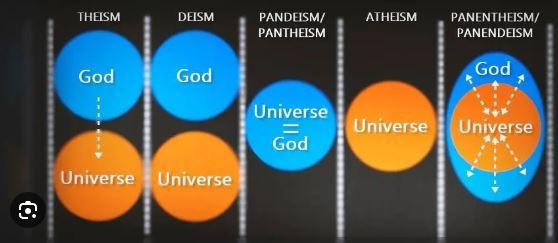
-
What caused the Big Bang, in your opinion?
Ontic Structural Realism is over my head. But it seems to take for granted the timeless existence of real material things (beings) instead of ideal phenomenal percepts that are interpreted from local energetic signals (e.g. light). In any case, OSR seems to be one of several ways to interpret the world based on modern post-quantum physics*1. My own personal (amateur) worldview is also grounded, not in the phenomenal material world, but on the "form or structure" of what we interpret as Reality.I think we could usefully conceive of such efforts as looking at formal causality, not efficient causation. . . . . Ontic structural realism goes in this direction and seems fairly popular in physics. — Count Timothy von Icarus
Almost a century ago, astronomers compiled evidence to construct a model of how the cosmos came to be in the structural form it now is : an expanding sphere of material stuff loosely held together by the mutual attraction we call Gravity. Ironically, the Big Bang theory of instantaneous emergence of matter & energy from who-knows-where? left itself open to biblical interpretations. So other scientists & philosophers have spent the last century re-interpreting the astronomical evidence in hopes of proving that Material Reality is an eternal cycling process, which occasionally goes "pop!", to spin-off a new cycle. Hence no creation miracle necessary.
The BB hypothesis assumed that Causal Energy (including its many forms of matter) and Natural Laws (formal restraints) exist eternally. Is Gravity an energetic force, or a formal law of Nature? Presumably, that ante-BB multiverse was generally formally similar to our current implementation of natural laws. Yet, BB theory implies that our bubble universe is gradually expending its allotment of energy, and trending toward the empty tank of max Entropy. So, the open question here is, in the previous multiverse, "what force triggered the Big Bang outburst of a new cycle of space-time, with surprisingly low Entropy" ?
Yesterday, I came across a Quora forum response with the Transcendent Gravity image below. It illustrated a hypothetical alternative to miraculous creation by a powerful divine being. The god-substitute in this case is Gravity --- an "unobservable entity", which is called a "force', as opposed to Einstein's definition as a geometric (formal) relationship. Would you consider Cosmic Creation by Gravity to be Formal or Structural Realism? If Formal, is this creative force Real or Ideal? :smile:
PS___ I apologize if this post is not well-formed. As I said, such abstruse topics are over my curious little head. I wrote it mainly as an excuse to post the image below in the Big Bang thread, to elicit comments.
*1. "The atoms or elementary particles themselves are not real; they form a world of potentialities or possibilities rather than one of things or facts." ___Werner Heisenberg
*2. Ontic structural realists argue that current physics teaches us that the nature of space, time and matter are not compatible . . . .
Scientific realism requires belief in the unobservable entities posited by our most successful scientific theories. It is widely held that the most powerful argument in favour of scientific realism is the no-miracles argument, . . . .
Structural realism is often characterised as the view that scientific theories tell us only about the form or structure of the unobservable world and not about its nature.
https://plato.stanford.edu/entries/structural-realism/
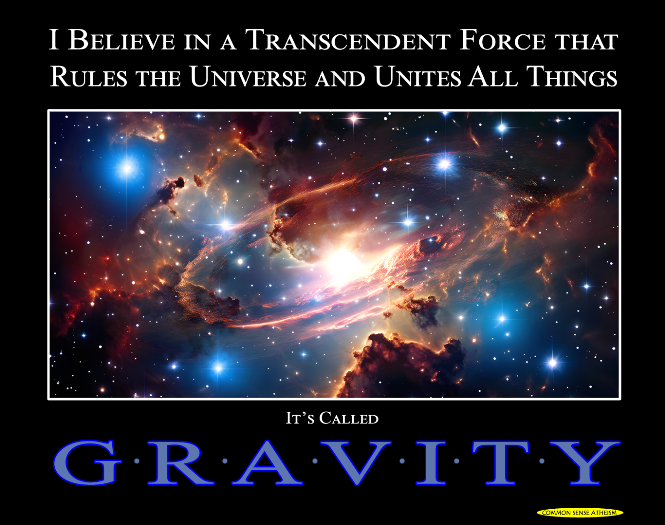
Note --- Gravity is immanent to the material universe, but it is not actually a vectored Force, it is an omnidirectional Form. Gravity is the interactive relationship between lumps of condensed energy (i.e. matter). You could say that Gravity is the Logical Structure of the universe. -
Information exist as substance-entity?
I agree that the USB stick contains no substantial Information in Material form, However, I could say that it does contain Information in Potential form (as a ghost in the machine). It's like a battery, that contains no Electricity (only chemistry), until a circuit is completed. For the “interpreter” (receiver) Information is Meaning, and there is no meaning in the memory stick until a connection (relationship) is made to the Sending mind. In that sense, the information is not a material substance. But meaning can be transmitted by physical means in conventional codes (a la Morse code or ASCII). The code must be meaningful to both parties in order for the Information to be transmitted. And we call that inter-relationship (the circuit) “communication”.Since the information, this is my theory, does not exist inside the USB stick. Nor does it exist in the USB reader.
The information exists in the relationship between the two devices, the interpreting reader and the USB device. But then we cannot say that the information was contained in the USB stick as a ghost in the device. — JuanZu
However, in recent years, scientists have come to equate Information with Energy (negentropy), instead of Shannon's meaningless Entropy. And, Einstein equated Energy with Mass (matter). So, one physicist in particular, Melvin Vopson, now calls Information : “the fifth state of matter”*1. Hence, other scientists have been able to transmit abstract information from one place to another, where it is converted into matter. So, in that sense, you could say that the information existed as a substance : in the USB as electronic components and their code states. But this new way of thinking about Information is not well known. So some posters may take issue with the title of your post.
The new understanding of the role of Information in the world has philosophical implications, as you suggest. I have gone so far as to coin a neologism, EnFormAction, to convey the idea that Information has causal effects in the material world, in addition to the meaningful effects in an immaterial mind*2. So, I'm open to both sides of your post : that Information consists of both metaphysical relationships, and physical substances. :nerd:
*1. information the fifth state of matter? :
If Vopson's proposed experiment turns out the way he expects, it would prove the existence of information as the fifth state of matter in the universe, along with gas, plasma, liquid, and solid states.Mar 30, 2022
https://www.popularmechanics.com/technology/a39588076/information-could-be-the-fifth-state-of-matter/
*2. Information :
Knowledge and the ability to know. Technically, it's the ratio of order to disorder, of positive to negative, of knowledge to ignorance. It's measured in degrees of uncertainty. Those ratios are also called "differences". So Gregory Bateson* defined Information as "the difference that makes a difference". The latter distinction refers to "value" or "meaning". Babbage called his prototype computer a "difference engine". Difference is the cause or agent of Change. In Physics it’s called "Thermodynamics" or "Energy". In Sociology it’s called "Conflict".
https://thephilosophyforum.com/discussion/15896/information-exist-as-substance-entity/p1 -
PROCESS COSMOLOGY --- a worldview for our timeThe MAGIC MOUNTAIN
by Thomas Mann, 1926
"“Aristotle? Didn’t Aristotle place in the individual the reality of universal ideas? That is pantheism.”
“Wrong. When you postulate independent being for individuals, when you transfer the essence of things from the universal to the particular phenomenon, which Thomas Aquinas and Bonaventura, as good Aristotelians, did, then you destroy all unity between the world and the Highest Idea; you place the world outside of God and make God transcendent. That, my dear sir, is classic mediævalism.”
“Classic medievalism! What a phrase!” “Pardon me, I merely apply the concept of the classic where it is in place: that is to say, wherever an idea reaches its culmination. Antiquity was not always classic. And I note in you a general repugnance to the Absolute;"
By contrast with medieval Scholasticism, Whitehead's god-model portrays the Cause of the Process we call Evolution as both Immanent (evolving physical world) and Transcendent (primordial potential for being) : PanEnDeism. I view this model as an update of Spinoza's deus sive natura, to accommodate modern cosmology, which found evidence of a First Tick and Prime Time of our contingent & temporary space-time universe, as it is currently being mapped by physical Science. :nerd: -
PROCESS COSMOLOGY --- a worldview for our time
The Cosmic Conversations video mentioned "Persia Fume" as something that might be of cosmic significance. So, I Googled it and found the image below, but not much else. It portrays an ornate bottle of perfume as-if it has spiritual significance : note the black & white angel emerging from the bottle. What does this mean for "seekers of wisdom"? :smile:seekers of wisdom — Gnomon
The Persian chemist Ibn Sina (also known as Avicenna) introduced the process of extracting oils from flowers by means of distillation, the procedure most commonly used today.
https://en.wikipedia.org/wiki/Perfume
In a spiritual context, an "angel of alchemy" often represents the divine guidance and transformative power associated with alchemical practices. These angels are seen as keepers of alchemical knowledge and guardians of the alchemical process, helping individuals to find their own path of inner transformation and self-realization.
https://www.google.com/search?client=firefox-b-1-d&q=angel+of+alchemy+meaning

-
PROCESS COSMOLOGY --- a worldview for our timeWhy should we prefer 'process philosophy/ontology' against the traditional 'substance theory/ontology' in metaphysics? — Metaphysics of Science
https://www.reddit.com/r/PhilosophyofScience/comments/1eej0sd/why_should_we_prefer_process_philosophyontology/
Materialism is a Substance philosophy, which focuses on the elementary stuff (phenomena) our physical senses are designed to detect. Everything else is interpreted as incidental epiphenomena. Process Ontology is an Evolutionary philosophy, focused on the dynamics (causes ; changes) of the physical world. And two of those evolutionary changes, emergence of biological Life and Psychological Mind, are of special interest to seekers of wisdom.
But why should posters on a philosophy forum focus more on the changes (Causation & Effects) than on the raw stuff being modified, developed, and organized? Einstein provided one good reason for Process preference in his E=MC^2 equation*1. Which implies that causal Energy is more fundamental & universal than the myriad forms of matter.
Ancient philosophers and scientists typically used terms like "Spirit"*2 in reference to what we now know as "Energy". Both are invisible causes of all things (objects) and changes (motion, modification) that we perceive in the world. So, the power to create physical substances and to cause changes in matter seems to be the most important factor in the philosophical view of Nature. Modern Energy may be the Essence that Aristotle defined as essential to Nature*3. Scientific Knowledge may be awareness of material facts, but Philosophical Wisdom is understanding of causes & relationships. :smile:
*1. Albert Einstein is often quoted as saying, "Concerning matter, we have been all wrong. What we have called matter is energy, whose vibration has been so lowered as to be perceptible to the senses. Matter is spirit reduced to a point of visibility. There is no matter.". He also famously stated, "Everything is energy and that's all there is to it," which underscores the fundamental equivalence of matter and energy. This idea is further supported by his E=mc² equation, which demonstrates that mass and energy are fundamentally interchangeable.
PS___ The quote you mentioned is often attributed to Albert Einstein, but there is no direct evidence that he actually said or wrote those exact words. It reflects a philosophical interpretation of Einstein's theories, particularly his famous equation E=mc2, which describes the relationship between mass (matter) and energy.
https://www.google.com/search?client=firefox-b-1-d&q=einstein+matter+energy+quote
Note --- Quora Asistance Bot :
Einstein did express ideas related to the nature of matter and energy in various writings and speeches, but this specific quote is not found in his documented works. It's more likely a paraphrase or interpretation of his views on the relationship between matter and energy.
https://www.quora.com/Did-Albert-Einstein-say-Concerning-matter-we-have-been-all-wrong-What-we-have-called-matter-is-energy-whose-vibration-has-been-so-lowered-as-to-be-perceptible-to-the-senses-There-is-no-matter
*2. The term "spirit" is used metaphorically to represent a fundamental, underlying reality or energy from which all matter is derived.
While Einstein's words have been interpreted in various ways, they generally point to a view of reality where energy is the fundamental substance, and matter is a condensed or manifested form of that energy.
https://www.google.com/search?client=firefox-b-1-d&q=Matter+is+spirit+reduced+to+a+point+of+visibility
*3. In Aristotelian philosophy, substance refers to a thing's fundamental and durable nature, the thing itself, while essence is what makes a thing what it is, its defining characteristic. In simpler terms, substance is the "what" of a thing, while essence is the "whatness" or the defining properties that make it that kind of thing.
https://www.google.com/search?client=firefox-b-1-d&q=aristotle+essence+and+substance -
PROCESS COSMOLOGY --- a worldview for our time
Whitehead's metaphysical worldview encompasses all of the various human experiences*1, including Who, What, When, and Why? Empirical Science focuses on What & How? So, it overlooks the subjective & spiritual aspects of human experience. However, the soft subjective science of Psychology does accept "spiritual" experiences as valid topics for investigation*2. Process Philosophy established no religious doctrines of spirituality, but it does make allowances for the diversity of human experiences*3, which each mind can interpret as they see fit.human experience — Gnomon
The Web of Life
Life's a web, of whos, whys, whats, and hows, . . . .
Some threads lead up toward heaven’s distant peak,
Some spiral down where darker answers seek, . . . .
And in their intricate connecting lines
Lies meaning for our brief cosmic stay — PoeticUniverse
My understanding of Spirituality over the eons of human nature, is based on Emotional feelings rather than Rational facts. And, I personally tend to value the rational over the emotional, but that's just me. Yet I'm not atheist or political enough to despise an essential feature of human nature. Some people are sheep, who need to be led to communal Faith. I may not agree with their particular beliefs, but I believe in freedom of belief, because that's the ground of "meaning for our brief cosmic stay". :grin:
*1.What are the 5 human experiences? :
Coaches who support clients to create profound sustainable change will work with the 'whole' person, or as we say, at the five levels of human experience: the physical, mental, emotional, intuitive and spiritual. This is with the belief our mind, body, heart and soul are all connected.
https://www.empower-world.com/blog/supporting-our-clients-at-the-five-levels-of-the-human-experience
*2. The psychology of spirituality, or transpersonal psychology, explores the spiritual and transcendental aspects of human experience, seeking to understand how connection to something beyond the self can lead to growth and self-development. It integrates spirituality and consciousness studies into psychological theory, often exploring themes like meaning, purpose, and connection
https://www.google.com/search?client=firefox-b-1-d&q=psychology+of+spirituality
*3. Reconciling Diverse Intuitions: It aims to reconcile diverse human experiences, including religious, scientific, and aesthetic intuitions, into a coherent, holistic framework
https://www.google.com/search?client=firefox-b-1-d&q=process+philosophy+spiritualism -
PROCESS COSMOLOGY --- a worldview for our timeFor Whitehead, God is not necessarily tied to religion. Rather than springing primarily from religious faith, Whitehead saw God as necessary for his metaphysical system.
https://en.wikipedia.org/wiki/Alfred_North_Whitehead
In Philosophy Now magazine (feb/mar 2025) a letter-to-the-editor said about the Return of God article : "disproof is not a necessity for me. All that is necessary for me is the lack of any reason I can accept to give the God hypothesis serious consideration."
Note --- Presumably the only "reasons" he could accept are physical demonstrations. Which, ironically leaves philosophical reasoning out of the question.
Same magazine : "reasoning without reference to empirical data is appropriate when applied to phenomena which transcend the physical world or constitute its ground of being, such as God".
Note --- If the physical universe could be proven to be self-existent, then a transcendent Cause would be unnecessary. The Big Bang is not proof of God, but it is an indication that our universe is contingent upon something outside of Space-Time as we know it. We accept transcendental numbers & equations because they are useful for the abstract purposes of mathematics.
Note --- Phenomena that transcend the physical world are Noumena (ideas ; ideals).
Obviously, Whitehead's God is neither provable nor disprovable by empirical scientific methods. So, he made no scientific claims. He merely observed an evolving physical (matter) & metaphysical (mind) universe, and made a logical deduction of its metaphysical provenance. Atheists tend to deny all metaphysical arguments, relying simply on Appeal to the Stone. This is a reference to Samuel Johnson's counter-argument to Berkeley's God : he kicked a rock to demonstrate that it was real (i.e. material), as opposed to the unreal (Ideal) deity. Thus, he demonstrated his low opinion of philosophical metaphysics.
A. N. Whitehead was a mathematician, so grounding his metaphysical worldview in a non-empirical axiom is understandable. An Axiom (Greek : Worthy) is not a sensory observation, but a conceptual proposition on which an abstractly defined logical structure is based. Since over 90% of humans over all time have believed in some kind of invisible deity (represented in symbols), he could assume that the general concept would be accepted by most people. Of course, atheists are exceptional, in that they demand hard evidence for any belief. But Whitehead developed his Process theory first, and only added the God postulate later, when the system needed a universally applicable foundation. Obviously, he found that transcendent notion useful for his abstract philosophical purposes. :smile:
Metaphysical immanentism restricts reality either to the data of human experience furnished by the senses, as in the empiricism of D. hume and his positivist heirs, or to the data of human thought, as in subjective idealism.
https://www.encyclopedia.com/religion/encyclopedias-almanacs-transcripts-and-maps/immanentism
Note --- Whitehead's god postulate is based on the "subjective idealism" of metaphysical Mathematical reasoning. His transcendental God has no role in scientific practice, but is just as reasonable and useful as Transcendental Numbers, Sets, Infinity, Zero, etc. -
PROCESS COSMOLOGY --- a worldview for our time
Materialism takes the existence of the myriad concrete forms for granted, without questioning the underlying essence (the information ; EnFormAction ; mathematical structure) that causes form change. In topology, that immaterial interrelationship structure is often represented symbolically as lines of force. In architecture those abstract vectors are converted into concrete elements of physical structure. Engineers can "see" (visualize) those essential abstract lines, while laymen see only the superficial material. But modern computers can make those invisible lines visible {image below}. :smile:We are both essence and form, — PoeticUniverse
In his dialogues Plato suggests that concrete beings acquire their essence through their relations to "forms"—abstract universals logically or ontologically separate from the objects of sense perception. These forms are often put forth as the models or paradigms of which sensible things are "copies".
https://en.wikipedia.org/wiki/Essence
In general, information has been considered as the following essences: as structures; processes (like becoming informed); changes in a knowledge system; some type of knowledge (for example, as personal beliefs or recorded knowledge); some type of data; an indication; intelligence; lore; wisdom; an advice; an accusation ...
https://www.infoamerica.org/documentos_pdf/wiener05.pdf
Information is the invisible interrelations that the human mind interprets holistically as meaning. Information is the syntax & semantics of the world around us. :smile:Informationally derived meanings
Unify in non-reductive gleanings,
In a relational reality,
Through the semantical life happenings. — PoeticUniverse

-
PROCESS COSMOLOGY --- a worldview for our time
Truth, Goodness, and Beauty are human evaluations of their environment. And not necessarily properties of the world-weaving Poet, except in unactualized potential. However, the transcendent creator of a dynamic evolving emerging world is required by logical necessity to include opposing forces, such as hot & cold or action & reaction. So, the natural world is a process of Causes & Effects, which human poets & philosophers describe --- from the mortal human perspective --- in terms of experienced oppositions such as Good & Evil.Love’s spirit weaves the soul’s warp, weft, and wave,
Creating an eternal, perfect braid,
Wound from strands of Truth, Goodness, and Beauty;
Each different forms, but from the same All made. — PoeticUniverse
But some religious apologists & moralists, in their cosmologies, begin with the assumption that God per se is the ideal of Truth, Goodness & Beauty, hence fallen man by comparison is False, Evil, & Repugnant. Even Whitehead uses similar poetic terms to describe his poet-god. But, his eternal Principle of Concretion*1 seems to be the Potential for all possibilities, including both good & evil, both positive & negative, both beautiful & ugly. Although homo sapiens may be the most highly evolved creatures on Earth, we are still a work in progress, and fall short of godly perfection.
Therefore, I think of Whitehead's actual world as equivalent to Spinoza's immanent Nature-god : it is Nature in toto, woven from strands of oppositions that sentient beings interpret as Good or Bad for their own survival. Yet, Whitehead's logically inferred deus sive natura was described as "transcendent", in the sense that any creator or programmer stands apart from its creation. Although I doubt that he was aware of the Big Bang theory, which emerged years after the book, his cosmology was defined in terms of Epochs, that could be interpreted as amenable to the current models*2.
This program of world poiesis is still an ongoing process, hence Reality is not fully actualized. And its Truth, Goodness, and Beauty are relative, not absolute. :smile:
PS___ I read Process and Reality about 20 years ago, but didn't fully understand it. So I'm using this thread to deepen my prehension of his worldview in order to improve my own. Your poems are useful for stimulating new ways of thinking about the poetic Process and the prosaic Reality.
*1. What is God according to Whitehead? :
In Whitehead's metaphysics, God functions as a "principle of concretion." Put differently, God is what determines which things move from a state of possibility to a state of actuality.
https://www.reddit.com/r/askphilosophy/comments/zpyo5u/can_someone_explain_whiteheads_conception_of_god/
*2. Whitehead’s Cosmic Epochs and Contemporary Cosmology :
The notions of the big bang and a dynamic, expanding universe are consistent with Whitehead’s notion of what occurs within a cosmic epoch.
https://www.csun.edu/~lmchenry/documents/CosmicEpochs%5B1%5D.pdf -
PROCESS COSMOLOGY --- a worldview for our time
This expression reminded me of Douglas Hofstadter's book : Gödel, Escher, Bach -- The Eternal Golden Braid. It weaves a complex argument for Evolutionary Emergence : "that consciousness arises from organisms crossing a complexity threshold. Seasoned with ideas from chaos theory, complex adaptive systems theory, and what came to be called the study of emergence."*1 Emergence theories attempt to explain --- contrary to Atomism/Reductionism --- how sophisticated novel functions, such as Life & Mind, can evolve from simple formal beginnings.Love’s spirit weaves the soul’s warp, weft, and wave,
Creating an eternal, perfect braid,
Wound from strands of Truth, Goodness, and Beauty;
Each different forms, but from the same All made. — PoeticUniverse
For example, some thinkers interpret the Singularity*2 as merely a compressed particle of matter ; while others view it more like cosmic DNA, the braid of life : containing all the mathematical information necessary for the gradual construction of a physical universe with built-in observers. In my own worldview, that non-dimensional Singularity functions like a computer program by "braiding" bits of abstract information into a plethora of forms. So all real forms are made from the same ideal Information, which I call EnFormAction, of which physical Energy is the best known instance.
The philosophical enigma of the Big Bang theory is : how did the Singularity come to compress a vast universe into a minuscule seed of data?*3 Several possible solutions have been proposed : A. Cosmological Principle, infinite, hence unlimited possible states (multiverse) ; B. Cyclic Cosmology, eternal cycles of physical expansion & contraction of matter as an alternative to instantaneous Inflation from quantum fluctuations ; C. Miracuous act of creation by an eternal deity in need of slavish worshippers ; D. Dramatic execution of an information program (poiesis) encoded in a seed-like Singularity, for unknown reasons, written by Whitehead's anonymous poetic principle of concretion. :smile:
*1. https://www.reddit.com/r/books/comments/1ay0xoo/godel_escher_bach_the_eternal_golden_braid/
*2. In the context of the Big Bang theory, a singularity refers to a hypothetical point of infinite density and temperature, where all known physical laws break down, and from which the universe is thought to have originated.
https://www.google.com/search?client=firefox-b-1-d&q=big+bang+singularity
*3. In particular, the big bang model of the universe begins with a singularity—a point that appeared out of nothing and contained the precursors of everything in the universe in a region so small that it had essentially no size at all.
https://www.scientificamerican.com/article/the-universe-began-with-a-bang-not-a-bounce-new-studies-find/ -
PROCESS COSMOLOGY --- a worldview for our timeNon-duality is a Buddhist concept that refers to the fundamental unity of all things. My background is not in oriental philosophy, but based on post-quantum physics and Information Theory, I have come to view the world as essentially monistic (single substance). And the common essence of all things can be described as Information (EnFormAction : the creative power to give form to the formless). Perhaps the easiest way to grasp that concept is to view Generic (begetting) Information in terms of physical Energy, which is not a material substance, but a causal essence (E=MC^2).
Materialism is an ancient monistic philosophy (Atomism). But modern physics seems to view active Energy, instead of passive Matter, as the Single Substance of the physical world. Based on that primacy of Causation over Concreteness, we could easily assume that the world has been trucking along forever. Except that physical laws describe dynamic Energy as something that can be metaphorically "burned up", and converted to the ashes of Entropy.
On top of the second law of thermodynamics, we have astronomical evidence that the material world has evolved from a Singularity, which is a mathematical description of Infinity. So, our best science to date, implies that ballooning space-time emerged from formless & unbounded infinity-eternity. And that may be why Whitehead adopted the concept of an undefinable unitary deity, to explain the pluralistic reality we now know.
I just came across the article excerpted below, which interprets Process Philosophy in terms of Non-Duality. But it also takes an allegorical poetic stance instead of a dogmatic religious position. And, like Whitehead himself, it describes the creator of the world as a Poet, not as a King. :smile:
Non-Duality and Process Philosophy :
Alfred North Whitehead was considered by many to be an absolute genius of his time. Here was a man who was as gifted creatively as he was intellectually. He somehow managed to balance metaphysics — which many 20th CE. philosophers would commit to the flames — with mathematics, physics, and poetry. In fact, he was so good at metaphysics that his imaginative brilliance shone through in the empirical sciences. When one is reading Whitehead, there is a feeling that you are being thrown into a place of poetic rapture, and at the same time, attending to the undeniable facts of existence. When you look out at the world after reading Whitehead, existence is poetry. In fact, he defined God as being a poet: “Whitehead’s God is the everlasting world-soul whose values erotically lure each moment of finite experience toward the ideal of beauty (which is nothing other than the true and the good). This is not an omnipotent Creator deity. If anything is omnipotent, it is Creativity; God is a creature of Creativity like every other. God is the poet of the world, “with tender patience leading it by his vision of truth, beauty, and goodness.”
https://medium.com/@prestonbryant/non-duality-and-process-philosophy-an-exploration-of-consciousness-in-alfred-north-whitehead-and-3f4ba86bf484
Note --- Medium is a website for writers, not for contacting ghosts :joke:
Poetry :
The word "poetry" originates from the Greek word "poiesis," meaning "a making" or "creation," and the verb "poiein," which means "to make".
https://www.google.com/search?client=firefox-b-1-d&q=poetry+greek+meaning

-
PROCESS COSMOLOGY --- a worldview for our time
In my view, human Life & Mind did come about via evolution, without miraculous "help". And the only reason we look beyond ongoing physical evolution for a jump-start is the physical evidence that the natural process had a beginning and will have an end. That observed fact leaves an ellipsis before and after for human reasoning to explain. The traditional gap-filler has always been a humanoid god outside of space-time. But some modern thinkers imagine a hypothetical Multiverse (eternal evolution) as a mundane God substitute.I still wonder why it should be that a human life and mind is so impossible to come about without help but so easy for there to be a god or a deity there without help. — PoeticUniverse
Another alternative to a supernatural deity is to assume, like Spinoza, that the physical universe is a God in some sense : Pantheism or Immanentism. But Spinoza's 17th century substantial Nature-God was assumed to be both eternal and physical. So,'s 2025 solution to the God problem seems to be to just ignore the evidence for Big Bang & Big Sigh (the standard model of cosmology), then assume that the natural world has been ticking right along for eternity. Hence, no gap to be filled, and no need for super-natural "help". In that case, we would not be living in a uniquely created Universe, but something like an eternally morphing Multiverse, going nowhere in particular.
With unlimited time to evolve, and no Entropy to tear things down, you'd think the hypothetical Omniverse should be perfected by now, unless it's just going in circles. If that ideal immanent world was not limited by the second law of thermodynamics, the energy propelling evolution would never run down. Or maybe, the empty batteries of one cycle could be miraculously recharged, to begin the next cycle with a Bang! Meanwhile, the matter of the Omniverse would have the seemingly magical power to make Life & Mind from malleable clay (like the Jewish Golem, or the medieval science of spontaneous generation). Do atoms randomly agglomerate into molecules, and then into living bodies with thinking minds?
If I could just forget what empirical scientists have been telling me all my life, I could easily label my worldview as Immanentism. And if I could believe what my religious upbringing taught me, I would label myself as some form of Judeo-Christian. Instead, I began to construct a worldview of my own, based on 21st century science & philosophy. Instead of the typical tyrannical supernatural ruler though, my Enformer/Programmer is a natural rational Principle, similar to Plato's Logos, or perhaps to Spinoza's deus sive natura. I don't postulate any personal or powerful characteristics beyond what is necessary to explain the Reality we experience with our limited senses. Anything more than that would be metaphorical poetry. :smile:
The multiverse theory, while intriguing, faces significant challenges, including its lack of empirical evidence, the difficulty of testing and falsifying such a concept, and the potential for metaphysical issues that go beyond scientific inquiry. . . . .
There's currently no empirical evidence to support the existence of other universes, and no way to directly test the theory. . . .
The universe appears to be finely tuned for life, with specific constants and conditions that, if altered slightly, would prevent the formation of stars, planets, and life as we know it. . . . .
The scientific method relies on empirical evidence and testability, and the multiverse theory, in its current form, falls short of these standards.
https://www.google.com/search?client=firefox-b-1-d&q=problems+with+the+multiverse+theory -
PROCESS PHILOSOPHY : A metaphysics for our time?
I agree with Rovelli. Although we tend to think of Space-Time as essential to Nature, those categories seem to be inferred from human experience with Change & Extension, and then attributed to Nature as-if they are objective things. Nevertheless, the "illusion"*1 of a river of time serves a valid function for humans attempting to swim with or against the flow.In chapter 11 of the Annaka Harris audiobook Lights On, she has a conversation with Carlo Rovelli. Most of the conversation is about Rovelli's view that time is not fundamental, but is an emergent experience from the structure of the universe. Part of the conversation, though, touched on Rovelli's view of objects-as-processes. — flannel jesus
Since flowing time is not a material substance, Whitehead warned us not to confuse the Now of our conception with an atom of Time : a "durationless instant"*2. So, there are no Real increments of time, equivalent to seconds, yet we construct an Ideal model of space-time as-if made of malleable matter.
Similarly, all observed objects are dynamic processes, not static things. That fact became evident when quantum physicists discovered that sub-atomic particles are actually continuous waves in the flow of Time. Which is the process of world creation. And even observed processes are mental models (ideas) created by the brain to explain change in the world. So, all discontinuities are man-made. Hence, we don't cut Nature at its physical joints, we carve at the logical intersections of the structure of reality ; whatever that means.
I suppose that counter-intuitive fact of flow is the crux of his Idealistic worldview, which serves as a Critique of Materialism*3. And which makes it difficult for many thinkers on this forum, including me, to understand what he was talking about. :smile:
*1. Theoretical physicist Carlo Rovelli argues in his book, "The Order of Time," that our perception of time as a flowing, universal entity is an illusion, and that time may not exist in a fundamental way, but rather emerges from a complex network of events.
https://www.google.com/search?client=firefox-b-1-d&q=rovelli+time+does+not+exist
*2.Rejection of Instantaneous Time :
He argued that the concept of a durationless instant as an ultimate entity is problematic and leads to difficulties in understanding reality.
https://www.google.com/search?client=firefox-b-1-d&q=a+m+whitehead+on+time
*3. Alfred North Whitehead's philosophy, particularly his "Philosophy of Organism," is a critique of scientific materialism, arguing that reality is not simply a collection of independent material objects but a dynamic, interconnected web of processes and events, a view he articulated in works like "Process and Reality".
https://www.google.com/search?client=firefox-b-1-d&q=whitehead+materialism -
PROCESS COSMOLOGY --- a worldview for our time
has been trolling Gnomon for several years. Presumably, because the Enformationism worldview seems to him, to be diametrically opposed to his Imminentism belief system. He acts like an incensed Catholic defending the Faith from a heretic. But my information-based worldview is personal, not a religion, not anti-science, and not intentionally opposed to any other philosophical system. I make reference to my own worldview, only to distinguish it from others under consideration. Not to impose my belief on anyone else. So, I don't know what gets his panties in a bind.
Since his unsolicited responses are arrogant and supercilious, and I don't want to invite any more ad hominem attacks, I don't engage him directly --- but indirectly through third parties. I do attempt to provide relevant evidence and arguments in favor of my own views. It's good exercise for me to defend my own thesis, and the primary reason for posting on this forum. But, I'd prefer a more amicable exchange of views, unlike the one excerpted below. :smile:
PS___ FWIW, my Whiteheadian* God is both Immanent and Transcendent.
*In Alfred North Whitehead's process philosophy, God is conceived as both transcendent and immanent, meaning God is not limited to the world but also actively engaged in and shaped by it, a concept that differs from traditional views of a completely detached, omnipotent deity.
https://www.google.com/search?client=firefox-b-1-d&q=whitehead+god+transcendent
Excerpt from Thomas Mann's The Magic Mountain :
In which two haughty & sarcastic philosophers argue over adversarial concepts like Nominalism vs Idealism or Immanence vs Transcendence.
"“Aristotle? Didn’t Aristotle place in the individual the reality of universal ideas? That is pantheism.”
“Wrong. When you postulate independent being for individuals, when you transfer the essence of things from the universal to the particular phenomenon, which Thomas Aquinas and Bonaventura, as good Aristotelians, did, then you destroy all unity between the world and the Highest Idea; you place the world outside of God and make God transcendent. That, my dear sir, is classic mediævalism.”
“Classic medievalism! What a phrase!” “Pardon me, I merely apply the concept of the classic where it is in place: that is to say, wherever an idea reaches its culmination. Antiquity was not always classic. And I note in you a general repugnance to the Absolute;"
Gnomon

Start FollowingSend a Message
- Other sites we like
- Social media
- Terms of Service
- Sign In
- Created with PlushForums
- © 2026 The Philosophy Forum