
-
A world based on total empathyActually, my philosophy and practise is pretty straightforward. Individuals have different sets of abilities and capabilities based both on innate differences and on situational differences. So there will always be some set of actions that are 'easier' for one person than for another. So when you find yourself in a situation where (relatively speaking) it is easy for you to do something for someone else where it would be relatively much more difficult for that person to do it, then you should invest the time and effort. I think it makes for a pretty good standard of universalizability.
And yes, I do make every effort to be aware when opportunities like these present themselves, and to act on them. -
A world based on total empathyEmpathy is a joke, everyone talks but it's rarely a noteworthy counterweight to other human motivations. — Judaka
Just because few people undertake to act empathically doesn't undermine its importance. It has been a conundrum since ancient times, if everyone desires 'the good' (which must be what is most beneficial) then why do so few people do it?
I for one believe firmly in the value of empathy. In fact, I believe that acting to help others wherever it is within your power constitutes the golden rule. -
We are responsible ONLY for what we do NOT controlWorks for me. Then it becomes more of a social phenomenon. I'm still not clear on the reasoning behind being accountable for the unintended consequences of my actions. Is that because I was acting irresponsibly by engendering some result that I ought to have foreseen?
-
We are responsible ONLY for what we do NOT controlNot at all. We regularly distinguish between those (held) responsible for their actions and those not, if by means of age, mental capacity, or otherwise. — StreetlightX
A person can have no idea of the consequences of his or her actions but still be "responsible" for those actions in the actual sense of having done something. It seems like what you are talking about is actually "accountability" not responsibility. Those are, I agree, two very different things. -
We are responsible ONLY for what we do NOT controlif we were able to master every last consequence of what we said and did, we would not need to be response-able for them: there would be no response required, no ability to be exercised as a result of what we have done. — StreetlightX
Why does responsibility require a response? If A does x, then A is responsible for the consequences of x. Why does this description require further amplification? Whether or not we intended or foresaw all the consequences, the essence of the term responsibility is a causal attribution. Why do we need to go one step further?
For as Butler notes, responsibility is ultimately relational: it is only in relation to another that one is responsible, accountable, for what one has said and done. There would be no ‘problem of responsibility’ without the relation to the other. — StreetlightX
Similarly, responsibility is not a 'problem,' it is a descriptive condition or attribute. A caused x (and all further consequences) ergo A is 'responsible.' -
Bias against philosophy in scientific circles/forumsSystems Philosophy is a relatively new discipline which is a convergence of the scientific and, lets call it 'exo-scientific' perspectives. It utilizes the inter-disciplinary perspective of systems theory (cybernetics), which lends itself to successful descriptive models across theoretical domains.
"Systems Philosophy is the philosophical component of Systemology, the transdisciplinary field concerned with the scientific study of all kinds of systems. Systems Philosophy was formally founded in the 1970s as a scientific branch of philosophy, that is, one that respects and incorporates the findings of science, and proceeds in the way science does, i.e. by insisting on rigour, internal consistency, clarity, consistency between theory and observations, and subjecting its theories and models to empirical testing. As a scientific philosophy it embraced moderate forms of Naturalism (the idea that all changes in the concrete world are proportionate to changes elsewhere), Realism (the idea that the world has some objective aspects) and Scientism (the idea that science progressively reveals the truth about the nature of the concrete world). It nevertheless remained philosophical in the sense that its objective is to make sense of the world and our place in it, and it tries to find ways to answer questions of ultimate concern. As a philosophical framework it started out as a systems oriented and moderate version of what is sometimes called "Scientific Realism" or "Scientific Materialism". In its original form it was the philosophical component of what was then called "General Systems Theory in the broad sense", and which has since been more appropriately renamed "General Systemology" (see papers by Pouvreau and Drack in the reading list).
The field of systems studies has expanded greatly in the last half century. As academics from different disciplines increasingly engaged with the systems paradigm the philosophical perspectives within Systemology diversified, and today Systems Philosophy includes not only the naturalistic strand it started as but it also has strands that are unscientific, anti-scientific, heuristic or phenomenological, e.g. grounded in Radical Constructivism, Postmodernism, Idealism, Radical Holism, Discordant Pluralism, and so on. That said, the 'centre of gravity' of Systems Philosophy in terms of attention by academic philosophers still lies with the scientific realist approach of the founders of Systems Philosophy "
http://www.systemsphilosophy.org/ -
Does consciousness = Awareness/Attention?Seems like consciousness always appears as a feature of a system, within which it functions. This theory is known as distributed cognition (I've read the term 'embedded cognition' also). It describes how our minds constantly use information and cues from the environment, thus consciousness is not so localized as we like to think.
-
OverwhelmedRussell's History of Western Philosophy makes a good introductory read and covers a lot of ground.
-
Epistemic standard for spiritual knowledge?
I think equating spirituality with awe and wonder makes perfect sense.“Spirituality” is just a place holder some people use for feelings of awe, wonder, etc., and for heightened or altered states of consciousness. They can call it whatever they want, I suppose. — Noah Te Stroete -
What do we really know?Maybe there is a need here to distinguish between "to know" and "to understand" — alcontali
Hmmm. Yes, I thought that is exactly what you were doing! -
What do we really know?
To me, it seems that the distinction between "storing" the knowledge from an authoritative source and "knowing" must relate to the application of said knowledge in some way. Someone who knows, can do something with that knowledge. -
Does consciousness = Awareness/Attention?As a nominalist, a relativist, and what I call a "perspectivalist," it's impossible for them to be the same. — Terrapin Station
But do you think they are different in the way two things of the same type are different, i.e. two oranges, or are they different in the way things of different kinds are different, i.e. an apple and an orange? -
What do we really know?Thus, useful knowledge is more compelling than scientific knowledge. — Noah Te Stroete
Nice. -
Does consciousness = Awareness/Attention?If consciousness is awareness, not insofar as it or its effects are observable, but as a subjective state, maybe what I experience as consciousness and what you experience as consciousness are not the same? Different people have different subjective experiences of the same objective thing, different beliefs, different values, different abilities. Why not different types of conscious awareness?
-
Epistemic standard for spiritual knowledge?Yes, introspective-meditative traditions are quite another thing.. Other discussions I've encountered on this forum have been wholly unaware of this dimension. Happy to cede this point!
-
What do we really know?If individual knowledge shapes a world, then it is false that a world shaped by knowledge is not the same as having knowledge about the world in which you live. It is your knowledge that shapes the world in which you live, for you. — Mww
I know that my house is built of bricks. But I don't know how to build a house out of bricks.
Isn't that the refutation of your statement? -
What do we really know?Yes, which is why alluded to knowledge being "embedded" in the world in which we function practically from day to day. I do think that this is the case and that knowledge should ultimately have some kind of practical impact or implications, or at least that these should form part of the measure of what knowledge is.
-
Are science and religion compatible?Ya...so what do you do when you know the burden of proof has shifted, but the other person isn't willing to acknowledge it?
Since you know it, then you know that you have been successful. I'd suggest just walking away with the W. Allowing your own arguments to deteriorate into insults (whether warranted or no) adds nothing to your position. -
What do we really know?I really like your honest exposition of your own thought process because it is pragmatic, how belief and knowledge really 'work' in your experience. And I agree that a pragmatic approach (how do we actually use knowledge) can be more productive that a complex analysis of "what constitutes knowledge." Especially where there are so many disagreements over details.
-
What do we really know?
Well, if source A relies on corroboration from source B, which relies on corroboration from source C, etc.,
Unless you are explicitly saying that there is some 'foundational set' of authoritative sources which all mutually validate one another. Like a coherence theory. Even so, I would still ask, do the subject matter authorities then have a kind of knowledge (about their authoritative domain) that is superior to the knowledge that they have of other domains? -
What do we really know?
Ok, so there is a "reliability hierarchy".
Do you need to be aware of that hierarchy? Doesn't this lead to an infinite regress? Or a 'conspiracy of mutual endorsement'? And is knowledge based on accepted authority the same as authoritative knowledge? -
Epistemic standard for spiritual knowledge?I think it is pretty much universally accepted to refer to "spiritual beliefs" vs. "spiritual knowledge." Since an epistemic standard is a standard of knowledge, the term spiritual knowledge is a misnomer.
Bear in mind, it is possible to have true beliefs without evidence, so spiritual beliefs can still be true, they just don't rise to the level of knowledge by traditional epistemic standards. Hence the centrality of "faith" in many religions. -
Are science and religion compatible?It was an example of a religion — S
Right. Which is why your argument was an overgeneralization. There are myriad religions, many of which do not share the characteristics of Christianity which you find so troubling.Which you would know if you had done any serious studies in comparative religion. Which I have.
I have to say, you have repeatedly taken an aggressive and dismissive posture and tone which I, personally, find offensive, and which I think debases the spirit of philosophy in general. I won't be dignifying any further response of yours. You are persona non grata. -
Concerning the fallacy of scientismPersonally, I think it is self-evident that there is 'more going on' than falls within the limits of science. At least a science that rejects phenomena that don't fall neatly into its current schema.
If you follow current theories in dark matter and energy and quantum field theory, however, you will find that there are lots of credible cross-domain thinkers. And that many modern physicists are seeking to broaden science to include the concept of mind.
Obviously, thousands of years studies in the humanities have immense value. So if the adherents of a narrowly construed science are dismissive, what of it? I study everything with equal curiosity, interest, and effort. -
What is progress?
LOL!Through the fallacy of scientism, everything else seems to regress, to the point that scientific and technological progress have even become self-defeating. In my impression, people who believe in the fallacy of scientism will die out, simply because they are even failing to sexually reproduce. -
The basics of free willToo, these automisms may represent 'cognitive habits' that have evolved either ontogenetically or phylogenetically. They may be pre-conscious or sub-conscious or peri-conscious but it may still be reasonable to describe them as part of consciousness, particularly if they are susceptible of modification (through training, repetition, etc).
-
The basics of free willWhat do you make of this excerpt from Bergson's "Creative Evolution" where he describes consciousness as not requiring a brain:
Between mobility and consciousness there is an
obvious relationship. No doubt, the consciousness
of the higher organisms seems bound up with certain
cerebral arrangements. The more the nervous system
develops, the more numerous and more precise become
the movements among which it can choose ; the
clearer, also, is the consciousness that accompanies
them. But neither this mobility nor this choice nor
consequently this consciousness involves as a necessary
condition the presence of a nervous system ; the latter
has only canalized in definite directions, and brought
up to a higher degree of intensity, a rudimentary and
vague activity, diffused throughout the mass of the
organized substance. The lower we descend in the
animal series, the more the nervous centres are simpli-
fied, and the more, too, they separate from each other,
till finally the nervous elements disappear, merged in
the mass of a less differentiated organism. But it is
the same with all the other apparatus, with all the
other anatomical elements ; and it would be as absurd
to refuse consciousness to an animal because it has no
brain as to declare it incapable of nourishing itself be-
cause it has no stomach. -
The basics of free willI don't mind being a passenger as long as the driver always goes where I want.
-
Are science and religion compatible?
It isn't causing any dissonance for me. Quite the reverse. -
The basics of free will
Right, but what I am saying is, based on the way learning evolves, that choice could still be construed as "conscious" in a more inclusive kind of consciousness. Even in our day to day reality it is clear that some people are "more conscious" of their choices than others.The choice is still already accomplished and so it precedes the awareness of it -
Are science and religion compatible?
That's right. It's pretty much the whole point that has been made. Conclusions about god are not scientific. Science and religion are different domains, that's all. They are neither compatible or incompatible. They could, however, be complementary.That is to say, conclusions that there is a god are not scientific.
The two are not compatible. -
The basics of free will
What you are talking about is more or less synonymous with "Background processing". John Searle has described how conscious awareness "rises to the level" of background processing. This is certainly true of "performance knowledge." A beginning skier focuses on "shifting weight to the inside leg" making each turn. An advanced skier focuses on "choosing a path down the hill." But the advanced skier does not cease to be conscious of what he or she was conscious while learning, it has simply been internalized.Except that there can't be conscious decisions, for the decisions reflected in consciousness have already been made elsewhere. We can't get around this.
So could it not make sense to say that the now-internalized mechanisms behind conscious-choice are what once was conscious, and in that sense, still are part of the framework of consciousness? -
Are science and religion compatible?So you can't both adhere to the scientific method, which would result in scepticism at best, and at the same time hold beliefs which fly in the face of that scepticism.
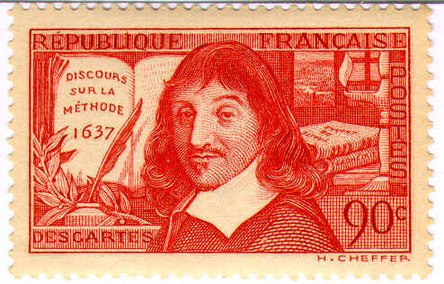
Descartes is the father of methodological skepticism, of the strictest kind. And he was a devout Catholic. Maybe it just requires exceptional abilities. -
Are science and religion compatible?I think this whole confusion stems from a lack of exposure to the true breadth and depth of religious materials. Maybe William James' Varieties of Religious Experience would be a good jumping off point.
-
Are science and religion compatible?
This would be the fallacy of overgeneralization. Christianity is not religion, any more than you are "humanity."Core claims in Christianity
The topic is not "Are science and scripture compatible" or "Are science and Christianity compatible". -
Words restrict Reality?
Well, this is kind of the goal of the phenomenolgical reduction or epoche. To reduce the vagaries of perspective to the lowest common denominator of consciousness.To understand the Individual reality of all 'things' We need to remove the Human Identification/Meaning Label? We need the ability to temporarily remove the Human Identification and Meaning to understand something from the 'standpoint of its own Individual Existence? Some kind of. New form of Empathic Understanding??
Pantagruel
Start FollowingSend a Message
- Other sites we like
- Social media
- Terms of Service
- Sign In
- Created with PlushForums
- © 2026 The Philosophy Forum