
Comments
-
Understanding Human BehaviourI didn't say our choices were predetermined. I said that our choices are determined and constrained by our genes, environments, nutrients and experiences. This happens in the present continuous, not in the past. — Truth Seeker
Determined? Predetermined? Not sure there is a significant difference here.
It doesn't seem like we can say that genes, environments, nutrients, and experiences operate in the continuous present, and not in the past. Don't determinants and constraints pretty much HAVE to operate in the past? How much of the immediate continuous present do we even perceive / experience? The bell that you hear ringing began to ring in the past -- before you heard it. The lightning bolt you saw had already changed by the time your brain registered the flash. Whatever caused you to choose vanilla ice cream over chocolate was in operation before you decided what to get. The past might be only milliseconds old, but it is still the past (of the high-speed CNS).
I don't like it that we make decisions before we are aware of what the decision is going to be, but like it or not, reality seems to work that way.
I mostly agree with you that "genes, environments, nutrients, and experiences" determine and constrain who we are, and the choices we might or might not make. The ideas I have about socialism, gay liberation, personal finances, religious practices, preferred foods -- so on and so forth -- didn't arise randomly. They were / are shaped by all sorts of factors. I didn't make up Karl Marx, Stonewall, double entry bookkeeping, prayer, or bananas.
If we look at dogs as an example (dogs are not an unflattering model for human behavior) we see that "genes, environments, nutrients, and experiences", for instance, produce millions of dogs who all do the same things. They all do some things because we all do some things--like feed them at the same time every day. If we let them run loose (which we used to do in small towns) they didn't beg for a walk. (On the other hand, they got run over by cars a lot more often.). Dogs are exceptional animals in that they readily follow the human gaze. Most animals don't. Dogs employ a hard stare, for instance, to compel us to act on their needs and wants -- "feed me now", "let me go outside", "let's go for a walk", etc. Dogs solicit play by the same posture -- front legs on the ground, rump in the air, mouth open, bright eyes. They attempt dominance by humping a leg (it's not sexual--males and females both do this). -
Understanding Human BehaviourYou have a choice, but it is not a free choice. It is a determined and constrained choice. — Truth Seeker
It is difficult to identify a range of freedom vs. a range of determination and constraint. It might not matter, because whatever "the reality" is, we proceed forward doing what we do, thinking what we think, and being what we are. Predetermined? How would we know? -
How can I achieve these 14 worldwide objectives?I didn't intend to be a nay-sayer against your admirable aims.
I greatly admire Dorothy Day who with Peter Marin founded the Catholic Worker movement.
Dorothy Day (1897-1980) was a prominent American journalist, social activist, and co-founder of the Catholic Worker movement. She dedicated her life to promoting peace, social justice, and direct aid to the poor, becoming a leading figure in 20th-century Catholic social activism. Her work included founding "Houses of Hospitality" for the destitute, advocating for pacifism, and leading the Catholic Worker movement in its fight for worker's rights, civil rights, and women's rights
I'm not Catholic, not devout anything else at this point in life (I'm 78). One of the things I have admired about Dorothy Day is how she found joy and delight in the midst of what were often very dreary surroundings--she lived with the destitute. I could not begin to do what she did. (She is also a great writer!)
Was she successful in saving the world? In the big picture, no. Zero in on the 'little pictures' of individual lives, then yes -- she was successful. Likewise with any hero you might choose.
It is not "settling for little" to find success in changing individual lives. In order to increase results beyond the individual, you might begin or join a larger movement, and that is hardly a risk-free strategy. Organizations can get stuck in weedy ruts much faster than an individual's efforts.
So, carry on carrying on! -
How can I achieve these 14 worldwide objectives?1. The saving of lives.
2. The advancement of health.
3. Preventing and relieving poverty.
4. Helping those in need due to age, ill health, disability, financial hardship, and other disadvantages.
5. Advancing education.
6. Promoting equality and diversity.
7. Promoting religious and racial harmony.
8. The advancement of human rights, conflict resolution, and reconciliation.
9. Advancing the arts, heritage, culture, and science.
10. The advancement of citizenship and community development.
11. Protecting and improving the environment.
12. Promoting animal welfare.
13. The advancement of public participation in sport.
14. Promoting veganism. — Truth Seeker
Your list covers pretty much everything that might need doing. That's the main part of your problem. You've heard of hubris? add "Diminish my hubris" to the list.
Kudos for donating blood, putting your body up for parts (upon your death), and contributing to charities. I know NOTHING about you -- absolutely nothing. But it is possible for you to have done everything that you claim to have done, have the highest objectives in mind, and STILL BE A VERY UNPLEASANT PERSON. Not saying you are, just that you could be.
My recommendation is that henceforth you strive only to be a kind, decent man. By being kind and decent you will have made a little progress toward several goals. A little progress? Yes, just a little. You are one man among 8 billion men alive. You may have another 47 years of life to live -- 47 years among the thousands of years we have been stumbling around is not a long time.
Look after your own actions; try to be the kind of person you wish we all were. -
What Is Fiction and the Scope of the Literary Imagination: How May it be Understood Philosophically?I am also wondering where autobiography lies in the scope of narratives and identity. How much is about 'objective fact', and subjective meaning? — Jack Cummins
Autobiography, which might contain objective material ("I was born in North Dakota during a snow storm" for example), will also contain subjective material -- of necessity in the case of autobiography. More, the act of writing an autobiography is likely to a) alter one's identity to some degree and b) is likely to be somewhat misleading/.
I wrote an 80 page autobiography some years ago (which will never see the light of day). I attempted to be objective -- warts and all -- but inevitably, the text became slanted in my favor. "In my favor" was as misleading as the text becoming increasingly "against my favor". I find myself editing my internal, unwritten, autobiography quite often -- seeking to find a positive spin on periods when I was spinning my wheels.
I suppose if one wants to know a person's history well, one should read his autobiography and the best biography available.
The issue of "lying" is especially important in biography and autobiography both. There ARE facts about a life, and then there are aspects about a life that can't be factual. We can agree on what Robert Moses built, but I'm not sure we can agree on whether Robert Moses (The Power Broker) was a "great man"; much less can we agree on whether he was a "good man". Was he "good" for New York City? I don't know that we can say for sure, either way. -
ICE Raids & Riotscome up with reasons to support what Trump is doing that are good reasons — Benkei
People are not crossing the border into the United States by taking a bus to Nuevo Laredo and strolling across the bridge to Texas.
In many cases they have paid traffickers to deliver them to somewhere along the border, and then it is up to the migrant to figure out how to get the rest of the way. A lot of the territory along the US-Mexican border is hot, dry, and sparsely populated. One can get stranded and die fairly easily. A similar situation exists for migrants attempting to get to Europe or from France to the UK.
True enough, the US is a ready market for the labor of illegal aliens created by employers who want cheap. exploitable, expendable labor. It may be that cut-rate pay scales in the US are better than where they came from, but it is easier to hire "gut suckers" in poultry slaughter plants among aliens than among Americans. It isn't that Americans don't want to work (as conservative Americans are fond of saying): it's that Americans don't want to work at substandard wages in dangerous working conditions with no benefits, no protection, and no security. Campbell Soup used to employ Americans as gut suckers (nobody thought it was a great job) before millions of illegal aliens arrived.
Exploitated illegal workers on hog and beef disassembly lines, run a higher speeds now than they were formerly, can expect to be injured seriously at least once a year unless they are lucky. Workmen's compensation? Nope--not covered. Disability coverage? Nope. Health insurance? There's the local E. R.
Hospitals are required to provide care in Emergency Rooms. That doesn't mean they are compensated for the care. Free care drives up operating costs; driven up high enough, and the ER service will be closed to protect the hospital as a whole.
Granted, illegal immigrants have established themselves as valuable workers in the economy--especially valuable because they are low paid, exploited, lack most protections legal immigrants and citizens receive, and are expendable. No unemployment costs to pay! -
A discourse on love, beauty, and good.isn't the treatment for neglected infants nurture and love? — GregW
Yes. What else but nurture and love would help?
One problem is that such therapy can't be delayed for 20 or 30 years and still be effective. While the brain is famously plastic, as far as I know it isn't readily plastic in all ways at all time. Just for example, paralysis from injury to the CNS is best treated right away. I suppose that the best time for therapy vanishes over time. 30 years later, therapy might not help much.
Can 30 year olds, who are very disturbed personalities with poor mental development resulting from pervasive neglect in their first years, be emotionally rehabilitated? I doubt it, but I have little expertise about the matter. -
A discourse on love, beauty, and good.I’ve worked with a lot of career criminals and gang members, and I would say that some people never experience love and, as a result, may not be able to give or receive it.
— Tom Storm
I believe this is possible only if love is just a desire. — GregW
In the 1970s Prof. Harry Harlow, University of Wisconsin, deprived one group of baby chimps of anything resembling a mother--nothing soft, nothing warm, nothing stroking the babies. Another group of baby monkeys were provided with mother surrogates -- a warm cloth dummy. Both groups were provided bottled milk (but were not held during feeding). The second group of monkeys, the one with the surrogates fared much better -- their behavior was more normal; they grew faster; etc. The ones who were not provided with so much as a surrogate dummy did not fare well at all. (I heard about this about 50 years ago, and am relying on memory.)
After the 1985 fall of the Nicolae Ceaușescu regime in Romania, a similar but "non-experiment" was found in a number of orphanages where human infants had lived, in some cases for years, with very minimal human nurture. They were victims of extreme neglect. Like Harlow's chimp babies, these human children not normal; they hadn't thrived, their development was poor, their personalities had not developed well at all. Many of the children were placed in foster care and many of them were rehabilitated to a large extent. (That was all 40 years ago--I'm relying on memory here.)
So there is experimental and observational evidence that primates infants (that includes us) who do not receive love and adequate care fail to develop normally, and in turn are not able to attach to partners or infants.
Humans are normally and naturally capable of love, and it's essential that we receive it in infancy going forward. We are able to love because we have received love--maternal and paternal love given readily and abundantly. You might say that 'love is the chain of being'. -
On the Nature of SufferingUnlike the other two forms of suffering, mental suffering is fully within one's control. — Martijn
This would be true IF we were entirely self-possessed, entirely in charge and managing our central nervous systems. We are not. The seat of reason, emotion, and physical control are afflicted with limitations, deficiencies, and disorders. Granted, habits of mind can create or aggravate mental suffering. However, the habits of mind which afflict us may hobble our ability to unravel those same habits. We are not masters of our own houses. -
ICE Raids & RiotsLife is indeed cruel. But like I mentioned before, people like to grandstand, but at the end of the day, when the cameras aren't rolling, you can bet the bank #1 is looked out for above any other living being or soul. — Outlander
"Self" is a dominant interest in human affairs. I was going to call "self" an "overriding interest", but that is too extreme. If, indeed, people only looked out for #1, life would be a lot crueler than it already is. Maybe not often enough, but many people sacrifice a percentage of self interest--smaller & larger--for those they love or for causes to which they are deeply committed.
I understand migrants move to improve their lives, but migrating from one country to another is an inherently risky project -- even under very good circumstances. Migrating and entering illegally, migrating with the help of human traffickers, coyotes (guides), migrating through hazardous terrain (Darian Pass, deserts, mountains, etc.), and so on puts children at risk. Being here illegally with an "anchor baby" (child born in the US to illegal immigrants) places the child at risk of future disadvantages and the possibility of their parents being removed.
But moving from a place where opportunities are minimal to another place where they are more plentiful is a gamble. Many of our decisions in life are gambles; more often we lose than we win. If we're lucky, we don't lose too much too often!
But one thing, an unpopular fact, must be noted. Reproducing is literally the easiest, cheapest thing any living being can do. It's second nature. An immoral man who has convinced (or perhaps forced) a woman into spawning offspring does not make him any different than what he was before — Outlander
Reproducing is relatively cheap for the man. That's true pretty much across the biological board. I don't know for what percentage of pregnancies sex was not at least somewhat agreed by the woman. Humans like sex--men and women both -- especially when it's done well. That doesn't mean we like raising children. -
Push or Pull: Drugs, prostitution, public sex, drinking, and other "vices"I agree that cannabis is simply not a class I drug like cocaine, heroin, meth, et al. I rate it as more consequential than coffee. Cigarettes (pipe tobacco, cigars, chewing tobacco) are all certified carcinogens. IF one smoked as much pot as millions smoke tobacco, I would expect negative health outcomes. Still, I rate cannabis as more consequential than cigarettes, because it has a more significant immediate effect on the brain. Tobacco is a long-term killer.
Two of my nephews (brothers) were both heavy pot smokers and were alcoholics. One of the two was a multi-drug user. Both of these guys were once bright effective persons. Over time pot, booze, and benzodiazepines gradually degraded their lives and brains to wrecks. Both of them died early. Not typical, of course. Maybe both of them suffered from mental illness which had nothing to do with alcohol, pot, or benzos. There's no way (in retrospect) to sort that out.
I continue to think that most 'progressive' social policy is in danger of being too rigid. What worked in the past may not work now, in our post-liberal, social media driven new world. — Jeremy Murray
When I last worked in a public health / education role the personal computer had just arrived and the internet didn't amount to much yet. There were no smart phones and no social media. It's difficult for me to imagine how different it would be if AIDS made its first appearance in 2021 instead of 1981.
Social policy is always in danger of rigidity, which is a significant problem. Oddly enough, it was easier to do cutting edge work under Reagan (1980-1988) than it was under Bush. Reagan didn't care about AIDS and he didn't want anything to do with it. Under Bush (2000-2008) social policy in connection with AIDS was much stricter, more rigid.
Even though I think safe drug use sites are a good idea, I wouldn't want to work or live next to one or have it next to a school; it would attract some disreputable people. I wouldn't want to live next to a gay sleaze bar or an outdoor cruising area either, even though I was one of the disreputable people who used to patronize such venues. Gay bath houses usually presented no problems to the public because they located themselves as inconspicuously as possible. Straight health clubs (aka brothels), on the other hand, tended to locate in heavy traffic areas, and bothered the public a lot. -
ICE Raids & Riots
WHAT IS DACA?
DACA, or Deferred Action for Childhood Arrivals, is a U.S. immigration policy that provides temporary protection from deportation and work authorization for certain undocumented immigrants who arrived in the U.S. as children. It essentially allows them to live and work openly in the country, though it does not grant permanent legal status or a path to citizenship.
Key aspects of DACA:
Eligibility:
To be eligible, individuals must generally have arrived in the U.S. before their 16th birthday, be under the age of 31 as of June 15, 2012, have continuously resided in the U.S. since June 15, 2007, be physically present in the U.S. on June 15, 2012, and have no lawful immigration status at that time.
Benefits:
DACA provides a renewable two-year period of deferred action from deportation and allows recipients to apply for a work permit, Social Security number, and driver's license.
Not a path to citizenship:
DACA does not grant lawful permanent residency (a green card) and does not provide a direct path to U.S. citizenship.
Ongoing legal challenges:
Despite its broad support, DACA has faced numerous legal challenges, and its future is uncertain.
In summary, DACA is a policy that offers temporary protection and some rights to undocumented immigrants who came to the U.S. as children, but it does not provide a permanent solution to their immigration status.
AI Response to the question -
How do you determine if your audience understood you?Social dominance may come into play — frank
One's place in the social hierarchy influences behavior, even among friends and siblings. People learn their place in a hierarchy through others' and their own behavior.
A lower ranking person is less likely to challenge or question the speaker. Less might be expected of the lower ranker. The non-responder might be (or consider himself) too low ranking to speak up, especially to ask "What the hell does that even mean?" You said the guy who spoke up responded appropriately -- we'll have to take your word for it. Maybe he got the benefit of friendship.
High ranking persons are heard; low ranking persons may discover that their voices have been (apparently) turned off. They speak and nobody in the conversation group responds at all. The content of the low ranked isn't a problem, and aural acuity isn't either -- it's that no one in the group were felt like noticing.
Hierarchical position is a factor along side content.
Sometimes people in (relatively) powerful positions seem to have learned how to say absolutely nothing at great length, lest clear statements give their bold enemies and competitors something to seize-upon and use against them. Most of us have no need to labor over meaningless comments--they just come tumbling out. -
Push or Pull: Drugs, prostitution, public sex, drinking, and other "vices"Naive, impressionable Bittercrank has often been lured by the relentless marketing machine. I was not just pushed -- I was rammed into the Apple Store against my will where I bought an iPhone 16+, proof of my susceptibility to the devious powers of Capitalists. PUSH
On the other hand, as a naive young gay man in post-stonewall Podunk City, it was necessary to go out and find sexual opportunities (pull). No one was marketing gay bars and bathhouses; there was no place in which to advertise such establishments (1970). No push.
Part of the attraction of smoking cigarettes derived from the many instances in B&W movies where suave or tough characters lit up, inhaled smoke, and expelled it with what seemed like great sophisticated satisfaction. Typewriters and smoking were often paired, the writer struggling to get the story out. Pull.
Nicotine is a stimulant, and maybe it really does help writers get their thoughts together. But then you smoke too much and it begins to repel, until the OD wears off and it becomes suave again.
This is from memory. I haven't smoked for ... 25 years? -
Push or Pull: Drugs, prostitution, public sex, drinking, and other "vices"Good observations, all. Thanks. Welcome to The Philosophy Forum; you are not the only Canadian amongst us. Glad you are here. We do not have a tariff on Canadian ideas.
I get that there are different aspects of addition, and that 'addiction' isn't a single kind of experience. I think your professor was right. Gambling addiction is quite difficult--and it's destructive. It's got dopamine, serotonin, and norepinephrine going for it, and there are probably lifestyle and 'self image' issues involved. Plus its got everybody from the Mafia to to the church to the state pushing it.
Substance addictions aren't all equal either, and habituation sometimes gets confused with addiction. I'm addicted to caffeine, but am habituated to the morning routine of making coffee. I have quit drinking coffee on a couple of occasions, and it was easy. I've been addicted to nicotine too, and that was far more difficult an addition to break. I liked "being" a smoker (the stage business of smoking) and smoking, of course, soothed the desire for another dose. Plus, the smokers' lounge was communications center. I used to run smoking cessation classes which were attended by people who had not been successful in quitting on their own. This was before nicotine gums, patches, and so on became readily available -- which has changed the picture (since 1984).
Once, back then, I was looking for the hospital meeting room my quit-smoking group had been assigned to, and I mistook the number and opened the door on a Gambling Anonymous group. I was struck by how different the two groups looked! A totally different demographic.
Minnesota plows a portion of its gambling income into an Arts and Heritage fund. Smart move! It buys off some of the criticism from people that object to gambling -- culture snobs like me, for instance. I think it's an abomination when people at the supermarket buy stacks of lottery tickets. The odds are stacked heavily against their winning a ¢, and they aren't going to get an arts grant from the fund. Ditto for horse racing, sports betting, on-line gambling, or real slot machines and poker games, etc.
Public health, public order, law enforcement, and various community interests have conflicting goals and conflicting constituencies. Conflicts makes it difficult for legislators to decide what to allow and what to forbid -- for legalization of addictive substances, criminalization, and for harm reduction. Then there is tax revenue.
I have mixed feelings and thoughts about legalizing cannabis. On the one hand, pot doesn't do for me what it seems to do for other people, which is annoying. On the other, getting high is a form of intoxication. I have nothing against intoxication (been there), but driving high and driving drunk aren't all that much different. At least that's what I've gathered. I guess one should have a sober designated driver for pot, too.
I'm 78. Maybe it gets harder to get pleasantly high as one ages? -
Push or Pull: Drugs, prostitution, public sex, drinking, and other "vices"True enough, there are no new vices (at least, very few) under the sun.
Vices don't affect everyone equally, but few vices have no effect on society. Pot smoking has been considered harmless at times, but then became Public Enemy #1 (like in "Reefer Madness"). Pot used to be a "pulled drug" mostly for recreational purposes. It wasn't addictive enough to be "pushed". Heroin, on the other hand, was worth the dealer's time to push and hook, setting up long-term sales.
So was tobacco: Tobacco companies worked quite hard to get people to smoke cigarettes, men and women both. In tobacco's "peak year" 54% of the population smoked. It's down to 11% now. Why? Because the push of all-media advertising was halted; another reason, the indoor clean-air act which required smokers to go outside (not a law in all states). Once hooked, smokers can be coaxed from one brand to another -- as in, "I rather fight than switch" But many smokers did switch brands, periodically.
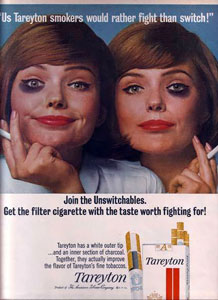
Smoking, whether tobacco, pot, meth, heroin, or whatever does affect society.
One would think that states would not want to engage in vice, but they do. One of the first state to do so was New York, when it launched a lottery to compete (and undermine) the numbers racket. Nevada legalized prostitution (as have a number of countries). Now the various state lotteries sell around $113 Billion worth of tickets. The global business is worth $361 Billion. States legalizing (not just decriminalizing) marijuana become pushers, because budgets always need more revenue, and tobacco taxes are not yielding all that much now but taxes in some states are very high to discourage tobacco smoking, often by the same states legalizing other smoked product. So for many people, pot has shifted from a pulled to a pushed product.
Another factor in pushing is the rotation of addictive drugs: fentanyl, heroin, meth, cocaine, alcohol, and others. Nobody asked for fentanyl to be added to heroin (or anything else), but in tiny amounts it added a kick, apparently. In more than tiny amounts is was the final kick one got. There is a core demand for heroin, meth, and cocaine, but quantities and purity vary a lot. I do not know how far up the supply chain it is that one drug suddenly becomes plentiful and cheaper for a period of time.
The relevance of pulling and pushing is how the state goes about controlling harmful substances (counting gambling as a 'substance' here). When it is both pusher and policer, I would predict tax revenue will trump arrest stats.
Another angle on pushing: One of the strategies of cutting down on overdose deaths and disease transmission connected to drug use is to open supervised shooting galleries where sterile equipment, dosage, and bad reactions can be properly managed on the spot. So far, no state has allowed cities to use this strategy (as far as I know). Some experiments have been tried. The state feels that safe shooting galleries cross the line from public health to pushing drugs. [Safe sites do not supply the drugs, and they do not offer introductory doses for non-addicts.) But the state that says no dice on safe shooting galleries may, at the same time, be degrading lives by promoting gambling and promoting "socially acceptable" drugs like alcohol and cannabis. -
Push or Pull: Drugs, prostitution, public sex, drinking, and other "vices"Let's start by acknowledging that it's both, in varying degrees, at different times. But which is dominant is important.
Several of my "vice behaviors" -- smoking, drinking, and promiscuous sex were PULLED. I sought out opportunities. I learned to smoke as an adult; I began regular (not problematic) drinking as an adult by choice, and of course I sought out opportunities for frequent sex. At the same time, were cigarettes not ready available and affordably priced (in 1970), and had I not been surrounded by cigarette smokers, I would not have smoked. Cigarettes are no longer available at affordable prices (they're $8+ a pack in Minnesota). Were there no bars, bathhouses, secluded parks, and adult bookstores, promiscuous sex would have been much more difficult to arrange.
Indeed, one of the key harm reduction strategies for AIDS was to reduce the supply (push) of easily obtainable casual sex (in parks, bathhouses, and adult book stores.). At the same time, fear of dying a very unpleasant death reduced demand (pull). -
Magma Energy forever!If you say so. — karl stone
I am, of course, quoting other people--like G. Peter Domhoff, author of "Who Rules America". Professor Domhoff teaches at University of California, Santa Cruz. "Who Rules America" was updated in 2023. But surely you are aware of the concentration of power in the United States and elsewhere? It isn't a very well-kept secret, really.
However, the organization of power isn't within the scope of geothermal energy, even if it is a deep topic.
You should write Donald Trump a letter. He likes the expression, "drill, baby, drill", and geothermal energy does require drilling, maybe with a more certain pay-off than drilling for oil. Maybe you can deflect him from drilling for oil to drilling for magma, -
Magma Energy forever!It doesn't care about those who lose out because a cheaper source, method or product came along. — karl stone
It cares a great deal if it is their ox that is getting gored.
Capitalism isn't a single entity; it is any number of rationally self interested actors in competition — karl stone
In an ideal capitalist economy, there would be independent capitalists and industrialists in competition. we do not have an ideal capitalist economy.
What we have are a set of interlocked banks, investment companies, and corporations. For instance, Autos, chemicals, and large banks are likely to have shared boards of directors, shared stock holdings, and shared ownership. Many institutions (retirement funds, endowment funds, insurance companies, etc.) own large stakes in capitalist organizations. Never mind individuals who own bits and pieces. They don't have a significant vote.
The point is, capitalists have both shared and conflicting interests. True, geothermal generation would be cheaper. However, J P Morgan may be reluctant to threaten coal or natural gas interests in which it has a large stake. Consolidated Edison may be reluctant to build new generation when it has major debts on existing plant. Wells Fargo Bank may be unwilling to lend the money to build new facilities when it hasn't recouped costs from huge fires.
Lots of good things--important and necessary--do not get done BECAUSE those who have great wealth (banks, corporations, individuals, investments funds, etc.) don't care; they have other concerns.
I'm not an apologist for capitalism; I'm a socialist of the dispossess the possessors variety. I'm only trying to provide an explanation for what you consider mysterious behavior. "Capital" and "Capitalists" are rational in textbooks. In reality, not so much. -
Magma Energy forever!Allow me to expatiate a bit more on the tragedy.
"The people" -- everyone pretty much everywhere -- is a captive of the larger economic system in which they operate. Billions of people recognize global warming as a threat to themselves, their families, their communities, and their futures. Still, the people desire to better their material circumstances, and this usually requires drinking from the common cup of fossil fuels and allied industries.
The decision to shift from 1 billion internal combustion engine automobiles to 1 billion battery operated autos was made in a few dozen board rooms far away from the people. And even if every corporate interest voted "Yea" for this shift, it isn't going to happen overnight.
Geothermal energy is a solution to several major problems just as very good public transit is a solution. So again, why not?
Take public transit. Where the economic commitment is extremely high for concrete highways, rubber tires, and individually operated vehicles, there is one extremely good reason to not invest in trains, buses, light rail, trolleys, etc.: the loss of the captive market. (In the United States -- a very large place -- there is no easy alternative to the automobile, except in selected sections of dense urban areas.)
Once upon an ancient time ending around 1955-1965, many American cities had good public transit systems (generally street cars and inter-urban light rail) plus many heavy-rail passenger trains between many cities. The street cars and the passenger trains didn't go out of business for lack of use: it was another decision made in several board rooms.
I happen to prefer all-cotton clothing. I don't want elastane added to my my denim blue jeans and cotton shirts. What do I find? Virtually every clothing maker now uses between 1% and 20% elastane in their clothing. Polyester shirts have dominated the shirt market since the 1970s. The decision to change the fabric content is another board-room level decision. A lot of changes in life come about that way.
Don't "the people" have a say in all this? To a large extent, no. We don't have a say. We want clean geothermal generated energy? Well, too bad. You're not going to get it until we the capital investment banks decide it's worth a lot to us.
Theoretically, "The People" have a say. We can organize our inchoate power and force changes we desire. But there is a very wide gap between what is theoretically possible and what is practically doable.
In the 1960s into the 1970s there were huge nationwide demonstrations against the war in Vietnam. Did these demonstrations force the Nixon administration to withdraw the troops? No, it did not. Did demonstrations force utilities to install solar and wind power? No. It was the falling price of wind and solar, compared to coal, that led to the windmills and solar farms. Etc. Etc. Etc. -
Magma Energy forever!"Big oil" didn't come into existence because people wanted a petroleum-based economy. It was driven into existence by capitalists (like Rockefeller) who found there was a market for grease and kerosene, and soon gasoline. What started out as a small business turned into a gigantic industry upon which the present economy was built and came to depend. Before oil there was coal, steel, and railroads which drove the economy.
Capital isn't directed into geothermal energy because it would compete with the sunk investments in petroleum (the whole vast infrastructure).
"The people" would be as happy with geothermal energy as they have been with fossil fuel-based energy (probably happier), BUT "the people" do not have the financial, technical, and organizational capacity to bring an industry into existence. Why not?
Well, start with cost. It takes a large capital investment to drill and capture geothermal heat. Then more capital is needed to build a generating plant. More capital still is needed to set up distribution lines for the electricity. Capital comes from the pool of cash held by banks and various investment firms, who already have a huge stake in fossil/wind/solar energy. It takes decades to pay off the necessary loans to build.
The upshot of this is that investment decisions are top-down, not bottom up. Starting any new industry, or changing an old one, requires the backing of capital. I don't like it, but that's the way it is.
So, it doesn't matter to "the people" that there is clean, 'infinite' geothermal energy waiting to be tapped. "The people" don't get a vote on where capitalists invest their money.
It is really just one more tragedy of the commons where "the people" get shafted or neglected by the lords and masters of the economy. -
Magma Energy forever!Not much in the way of high temperature geothermal resources in Minnesota — karl stone
Perhaps the "cold" areas like Minnesota are the result of the thick granite Laurentian Shield, part of the North American Craton. The Tower-Sudan underground iron mine in northern MN is 2300 feet deep, and is not warm.
Yellowstone would be a great place to operate geothermal plants, at least until the caldera blows up again. National park fans would probably object. No matter. There do seem to be a lot of hot spots in the western US. -
Magma Energy forever!Benefits of Geothermal in Minnesota:
Energy savings:
Geothermal systems can significantly reduce heating and cooling costs, sometimes by as much as 70% on heating and 50% on cooling compared to conventional systems. AI text
The projects I have seen here use shallow installations to dissipate heat in summer and and acquire heat in the winter. For instance, a Lutheran church within 2 miles of me uses shallow wells located under the church parking lot to cool and heat. A housing development project within 1/2 mile was / is slated to use geothermal for heating and cooling. ("was/is" because the post is from 2023 and I haven't seen much activity of any kind on this large lot as of 2025.)
Putting in underground pipes to circulate water should be relatively easy given the use of shallow horizontal drilling. A lot of this is done for cable, gas, and water lines. How deep? Don't know.
A heat-pump extracting heat from very cold air doesn't make a lot of sense; taking heat out of 50º water should work a lot better.
Extracting energy in this manner isn't likely to generate electricity. That's OK by me. Geothermal would reduce fossil fuel use significantly. -
Magma Energy forever!@Karl StoneHaving very large power plants introduces requirements on the grid that don't currently exist — Benkei
It is the case in parts of the US that any large expansion of electric production (thinking here of wind and solar) requires substantial improvements in regional and national grids which are difficult. Cost is one factor, but that is probably less important than animosity towards having the hardware of the grid marching across privately owned land. -
Magma Energy forever!The short answer is, to solve the climate and ecological crisis. — karl stone
The Eternal Return all over again, from about 3 years ago. I thought this horse had been beaten to death.
As for solving the climate and ecological crisis (one and the same): Those who can solve it (petroleum producers, refiners, and distributors; coal companies; car companies; Wall Street investment funds, capitalists ad nauseam) prefer to keep the profits and the doomed future they know.
I can't agree with them, but I can empathize with their stubborn death grip on fossil fuel: It has fueled a long and fantastic period of innovation, economic growth, and prosperity. How could all that good stuff be bad? Indeed, it is hard to imagine. Billions of people can't imagine it, while other billions of people can see fossil fuels as a losing proposition. There's no one, single alternative. Sure, tap geothermal power while we also tap wind power, solar power, nuclear power, wave power, hydropower, and REDUCE CONSUMPTION.
The radical shift from fossil fuel to everything else will be a hard wrenching change. It just isn't going to be a pleasant walk in the park. That's what scares people as much as the doom of global warming. -
Why elections conflict with the will of the peopleThere are, you know, markets that can mostly meet the diverse wants of the people. Grocery stores in the US do not have many parsnips for sale, while they do have large numbers of carrots available. This is a result of the market, not government policy. If 50,000,000 Americans decided that parsnips were better than carrots, then the ratio of parsnip to carrot would shift in favor of parsnips. (I do not expect this to happen.).
But markets are not beneficent angelic forces. Yes, it can get you apples and oranges, but If you want narcotics, the market can get you those as well.
Elections (in the United States -- the only ones I'm familiar with) not only conflict with the will of the people fairly often, sometimes they positively subvert the people's will. How can this be? Over the years, various rules of weighting representation have given some congressional districts and states more political weight than others. So it is that a majority of people can vote for X candidate, while Y wins the Electoral College vote. Prohibition became law in 1920 because rural voters, who tended to be in favor of prohibition, were more heavily weighted than urban voters.
Elections are managed by the parties, and the party leadership may have interests that are more aligned with elites than with 'the people'. No major party in the US has ever had a platform plank that called for the abolition of capitalism. Hell, they haven't called for even moderate inconvenience for capitalism.
Individuals voters do not always know exactly what they want or how to get it. 100,000,000 voters may be in the same boat. Part of the problem is that sometimes voters can not know what they are voting for because politicians may lie -- as in "liars, thieves, knaves, and scoundrels". -
Differences/similarities between marxism and anarchism?Anarchism is a great subject! I don't know what, how much, by whom, or when you read about anarchism and communism or socialism. Keep reading! I want to mention a famous Lithuanian - American anarchist, Emma Goldman (1869 – 1940). She never actually said "If I can't dance, it's not my revolution" but she meant it.
Goldman was an anarchist and feminist. While she never said the exact words, she conveyed the idea that revolutions should be joyous and embrace personal freedom, including the freedom of self-expression. It's a call for a revolution that uplifts and empowers individuals, not one that stifles them or demands absolute conformity.
I read her autobiography many years ago and found it inspiring. Leftist activists and thinkers can come off as repressive kill-joys, just as their hard line right-wing counterparts can. So find writers who uplift rather than harangue. Emma Goldman is one -- she's not the only good writer, and there are more contemporary ones. (I haven't read in this field for a long time, so I defer from suggesting authors.)
You might want to look into Anarcho-syndicalism, too. Their thinking involves the role of trade unionism which might be a bit dated now. Other leftist groups (Socialist Labor Party, New Union Party) see a critical role in industrial unionism, which is a broader base than trade unionism. Neither of these groups are anarchist.
Anarchism, socialism, communism, trade unionism, industrial unionism, and so on are part of the rich history of American labor struggles which were never consistent, simple, or unified.
One difference between anarchists and socialist/communists: Anarchists tend to think in terms of horizontal leadership and decision making. Deciding by consensus, for example. Communists tend to think in terms of vertical decision making: The leader decides and the rank and file complies). There are deficiencies and advantages in both systems. -
How do we recognize a memory?It is a good idea to remember our evolutionary history. The capacity to experience, commit to memory, and recall was developed way before our arrival on the scene. What do (other) animals use memory for?
a) to remember where they put their food (some mammals and some birds have excellent location memory)
b) to remember who their mate is (in species where that's important) -- which goose is mine?
c) to remember where home is
d) to remember what is dangerous, and what it looks/sounds/smells like
e) to remember who is in my group, and what their and my rank is
and so on. Luckily, animals don't have to remember when taxes are due, when the next dental hygiene appt is, where to vote, how much the post office now charges for a letter, what brands my partner insists on, did I ever read a book by Nietzsche, or which lies did tell whom and for what purpose? But memory can reliably handle all that, excepts when it slips up.
I don't think we know, yet, precisely how a memory is stored, and where in the brain it rests, nor how we find it 15 years later. But we, geese, crows, squirrels, dogs, and elephants remember what we need to remember. We know what losing the capacity to recall or remember looks like in dementia. Alzheimers demonstrates how critical memory is to being whatever we are. -
How do we recognize a memory?1. No.
2. I can't recall his being there.
3. I distinctly remember that he was not there.
4. I remember noticing at the time that he was not there. — J
Right. Memory isn't a record we can replay to double check attendance. It's not quite reliable enough.
Way-finding is largely memory based. Some animals (and people) navigate by remembering landmarks of some sort. Some have a less overt memory of turns, distances, direction--memory based, but maybe less conscious. I rarely get lost -- my spatial navigation is fairly good. Some people I know get lost very quickly. Way-finding is so ancient a function it's classified as part of the reptile brain.
Gadgets like smart phones, gps map devices, and the like off-load memory tasks, with the result that really very useful memories of telephone numbers, addresses, way finding, and the like are degraded. Writing itself probably degrades memory, something people worried about around 3 or 4 thousand years ago.
One can improve memory using deliberate practices. People doing classic psychoanalysis learn to remember their dreams (by taking notes immediately upon waking). Gradually their dream-memory improves. Students learning history, German, music, or whatever, also improve memory skills using various systems.
The thing is, a lot of functions combine in our brains: sensation, imagination, dreaming, memory, emotion, proprioception, the installed knowledge base (whatever we have solidly learned), physical drives, physical and mental disorders, etc. But still, memory function can be teased out by various testing routines.
I'm an old man. I've been sorting out stuff, and trying to reduce the inventory of miscellaneous stuff. One of the thoughts I have: This object (say an old shirt) isn't technically useful to me now, but it triggers memories of a time and place. If I get rid of my deceased partner's old shirt, will the memory that goes with it still be readily recalled? On the one hand: Yes, the memory is independent of the prompt. But if I don't have the prompt, how will I access the memory? -
How do we recognize a memory?I am somewhat concerned more about forgetting than recognizing a memory as a memory. If I go by memory alone, there were long stretches of time when I didn't shop for groceries, did not do laundry, and never swept the floor. There were no servants doing the work, so I must have. From that same time periods I can vividly recall the smell of the Boston subway. From a different place and a slightly different time I do remember doing chores -- sometimes in detail.
"Memory" can be implanted, it seems. Do I remember an actual ice box on our back porch (circa 1950) or is this memory a plant from the recollection of older siblings? I can't tell which it is. It's a visual memory, no other sensations. My older siblings are pretty sure I wasn't there when the ice box was,
Can a memory even be implanted which is multi-sensual--there is a visual image, sound, smell, and maybe touch. There are all sorts of sensations making up memories of swimming when I was young. The smell of the water, it's chill or warmth, the water's color (brown in the crick, blue in the pool) and sounds.
At least sometimes we can fact-check a memory. Other times we just have to go by probability--like it is highly improbably that in 1970 I neither did laundry nor shopped for groceries. But I can't dredge up how these tasks got done. Where was the laundromat? Where was the supermarket? -
Why did Cleopatra not play Rock'n'Roll?Where should I start? — Quk
You might rummage through popular music of the 20th century to look for the antecedents of Rock and Roll. It didn't just burst on the scene without precedents. That doesn't take anything away from its genius or originality. Bach, Beethoven, and Brahms all had antecedents, too. "There is nothing new under the sun!" Nothing totally new, anyway, 99% of the time.
When I was a young man in the 1960s (or a boy in the 1950s) I didn't especially like rock and roll. Now, pushing 80, I very much enjoy listening to music from that era (not all of it, of course). And I still like Chopin, Mozart, Bach, Praetorius, et al. -
Why did Cleopatra not play Rock'n'Roll?Is there an aesthetical link between the sounds of the industrial era and the sounds of Rock music? Can Rock only work in an industrial environment? Or is that pure coincidence? — Quk
Someone told an early 20th century composer, Arnold Schoenberg, maybe, that they didn't like all of the dissonance and noise of contemporary music. He told them they were born in the wrong century.
Per Karl Marx, the state of production (industry, the economy, etc.) has a strong influence on culture--music, for instance. I'm not knowledgeable about how, exactly, the instruments that were played in 1600 were modified or newly invented over the course of the following 400 years, but they were. Just compare an 1750 piano with a 1950 piano. The Saxophone was invented in 1846. Consider that the first musical recording was in 1888--pretty primitive. Then came 78 rpm record; 33 rpm records; stereo records; audio tape recordings; CD recordings; etc. The first radio broadcast of music was 1906. The quality of radio broadcasts continuously improved.
All the changes that have arisen since the late 19th century industries has made huge changes in how we experience music, and yes, in the music itself.
What Cleopatra didn't have, among other things, was electricity. It would be difficult for any rock and roll band in the last 75 years to create the sound we associate with rock and roll without amplification of instruments and voices. It takes more than a drum and simple harp to do rock and roll.
There is something to the idea that rock and roll also requires sex and drugs. The ancient world had both, but, you know, without a disco ball, a few electric guitars, drum sets, microphones, huge base speakers and powerful amplifiers and all, it just doesn't work. -
A discourse on love, beauty, and good.Never mind my "lust and trust" quip. The person who said it was describing the transition from eros to a more complex love, casual to more serious. I like it because it belongs to an important time and place for me (gay liberation in the early 70s).
But to get serious, we need to reference some Greek terms. It isn't that the Greeks experienced emotions that we do not, but they developed a vocabulary which is maybe more efficient than English's terms.
philia (affectionate friendship)
eros (sexual desire)
agape (unconditional love)
storge (familial love)
Philautia (self love)
mania (obsessive love)
meraki ("to do something with soul, creativity, or love)
ludos (playful, noncommittal love - from Latin)
xenia (the moral obligation of hospitality)
eroteuo (this verb can mean to love, say, an artwork, or a house)
These are not different parts of love, they are different kinds of love. All the various kinds of love, in your phrase "love as a whole", are what attaches us to one another, and without which we would not exist.
It takes a lot of love to make us human.
A human infant will not thrive without loving care--not just food and warmth, but touch, stimulation, eye to eye contact, and so on. From infancy onward, love in its various kinds builds the complex fabric of both personality, mind, and society. -
A discourse on love, beauty, and good.a Grecian urn — GregW
Keates and his overwrought urns and lines of verse!
Beauty is truth, truth beauty,—that is all
Ye know on earth, and all ye need to know.
I've always been reluctant to embrace this statement. Truth defining beauty defining truth: one large abstraction defining another even larger one.
There are many manifestations of beauty for which we should be grateful. Men, trees, mountains, planets (now that we have closeups), galaxies, flowers, horses, houses, towers, oceans and beaches, lakes, rivers, springs, cars (mostly in the past--now they all look alike), sculptures, paintings, film, photos, music (especially music), and more -- much more.
But is a beautiful horse, car, or tree "truth"? Was Keates thinking of a beautiful object conforming to Plato's forms? What about horse shit, car wrecks, and rotten trees? Bombed out Gaza is not beautiful, but there is a grave truth there.
Does Keates think that scientific truths are beautiful? (Don't know enough about the man.) What about Germ Theory; fission; DNA; gravity waves; the speed of light; continental drift? These are, as far as we know, real, true, and reliable. Are they beautiful in the way Greek sculpture, architectural proportion, urn-shape and urn-decoration is beautiful?
Perhaps. But "truth" seems dicier than beauty. Most people would probably agree that Mount Fuji is beautiful. Suppose it blew up (it could; it's considered an active volcano.). Suppose many were killed in the blast. Would it still be beautiful?
Truth, as Trump has demonstrated, is slippery. I think it is true that Donald Trump's policies are a threat to democracy and our economy. Millions will dispute that view. So is it true? -
A discourse on love, beauty, and good.I don't know how it is for others, but when I was young, I was much more needy than I am now. I would expect a person's notion of love to change with age. — Athena
In my youth, sex had an intense urgency; love was more intense than, too. Our "first love" is remembered until we die, and that intense feeling is, perhaps, once and done. The love between mates may cool yet deepen over the decades, and if death parts us from them, we remember them with painful loss for a long time, also till we die. Now, in my old age, sex isn't urgent at all, and in love I feel complete. I have loved and been loved in return. I live alone now, content. I suppose I am waiting to die -- though I am certainly not rushing it.
Indeed, I work at delaying it. I am still delighted to learn new things. My current book is "The British Are Coming: From Lexington to Princeton". I've heard American history since 7th grade, but now I'm finding the (new) gory details of the revolution from both British and American POVs fascinating. It took 78 years to get here, but I'm glad to have arrived. -
A discourse on love, beauty, and good.Isn't love more than lust, more than physical or sexual desire? — GregW
Love is more than lust. It can also entail comfort, security, warmth, and acceptance. The 'feeling' of loving or being loved isn't exclusively a sexual sensation but may be accompanied by it. We are embodied beings; thought, emotion, and physical response are combined. Even the sense of God's love may have a sexual dimension (thinking here of the Ecstasy of St Theresa of Avila). She wrote:
I saw in his hand a long spear of gold, and at the iron's point there seemed to be a little fire. He appeared to me to be thrusting it at times into my heart, and to pierce my very entrails; when he drew it out, he seemed to draw them out also, and to leave me all on fire with a great love of God. The pain was so great, that it made me moan; and yet so surpassing was the sweetness of this excessive pain, that I could not wish to be rid of it. The soul is satisfied now with nothing less than God. The pain is not bodily, but spiritual; though the body has its share in it. It is a caressing of love so sweet which now takes place between the soul and God, that I pray God of His goodness to make him experience it who may think that I am lying.
"The body has a share in it." That is the case, and the necessity of our embodiment as physical beings. What St. Theresa experienced included 'awe' -- a sense now totally degraded in that damned dead-horse-word "awesome". But 'awe' means "a feeling of reverential respect mixed with fear or wonder." Run of the mill love or sex may be 'awesome', but a terrific experience of love might invoke actual awe.
Like when I walk along the river on a sunny day, I can not help but be overwhelmed by a good feeling and feel gratitude for this experience. — Athena
We have an inventory of feelings, senses, and emotions which arise from experiences in the physical world as well as from encounters with ideas, such as those found in great speeches, powerful poetry, or moving novels, and science books. Perhaps what you feel on your sunny river walk is not love, but not therefore worth an iota less. I also am moved by beautiful landscapes as well as by wild storms -- thunderstorms or blizzards. Even an ordinary day with wind and strong gusts can be a significant experience. A good storm is physically exciting, objectively frightening, and altogether fascinating.
These are experiences not to be 'desired' but to be had when they are available. -
A discourse on love, beauty, and good.Welcome to The Philosophy Forum.
Love is a combination of lust and trust. Desire for love -- either to be loved or love someone -- has an essential physical component that accompanies the emotion and thought of desire (for love). Love is said to make the world go round. Nobody ever said that the desire for the beautiful and the good makes the world go round. Of course, "love" requires an object. Free-floating objectless love is... what?
I tend to discount the ancient philosophers when they say things like "non-lovers desire the beautiful and good". Or that the beautiful and the good is loved by all.
Sure: who wouldn't desire what they think is good? Who wouldn't desire what they think is beautiful? Quite possibly Plato, you, and me would not find the same things good and beautiful. I suppose Plato and Socrates spent some time coming to a pat conclusion about what is supposed to be considered beautiful and good. You and me might be in complete agreement with Plato and Socrates, or not. Plato and Socrates also might not have experienced sexual/love desire the same as me. -
Ontological ShockWere it up to me to disclose anything to anybody, I'd advise the aliens that they get the hell away from this solar system at warp speed before a) something bad happens to them and/or b) they acquire some of our very bad traits.
It would be clear to long-time planetary observers that our species possessed considerable intelligence as an admixture of brains and primitive behavior which would make us unsuitable as participants in enlightened societies.
Now, IF these intelligent aliens insisted on hanging around earth, I would suspect that they were pursuing a plan to exploit our animal behaviors in some way not to our advantage.. Perhaps they need some low value soldiers in a war. They would have recognized soon that we could be coaxed into berserker behavior. We have reached a large population from which enough crazy berserker-types could be recruited. And if the rate of human death in the alien's war were quite high, so what? What good were we to them?
High levels of intelligence and technology do not tell us much about the state of the aliens' hearts (if they even have hearts). They could be bright, shiny, and ever so smart but still be children of the Prince of Darkness (to employ earthenware). -
Never mind the details?Welcome!
I think of myself as a "big picture" thinker; however "big picture" thinking had better anchor itself in relevant details if is going to be of any use. The world is a very detailed place but we (humans) have a large but very limited capacity to process all the possible details. -
Toilets and AblutionsIf you are looking for a cheap book to read in the toilet, Amazon is selling "The General Theory of Employment, Interest, and Money" by John Maynard Keynes for 39¢. Such a deal!
BC

Start FollowingSend a Message
- Other sites we like
- Social media
- Terms of Service
- Sign In
- Created with PlushForums
- © 2026 The Philosophy Forum