
-
Why the is-ought gap is not a big dealOne of the consequences of the scientific revolution was science as a 'mode of knowing' that proceeded by deliberately bracketing out the subjective. — Wayfarer
But isn't this exactly what my semiotic naturalism is about - bringing four causes thinking back into scientific thought?
So there is a dualistic divide which most of the posters here embrace - matter vs mind.
And I speak for a pansemiotic holism - matter and sign.
The idea was that what was amenable to mathematical quantization is the primary reality, and what is subjective is delegated to the mind/soul/observer, and made in some basic sense private. — Wayfarer
Yep. There is a good reason for mathematical quantification to be the "ultimate" in this regard.
Once we accept semiosis as our epistemic condition - we can't experience the world in transcendentally direct fashion, we can only form a pragmatic sign relation - then numbers are the most honest way of dealing with the noumenal. We drop all the pretence of dealing with reality in phenomenologically direct terms and treat our signs as openly and transparently just signs.
We didn't invent maths and science because it was a crazy thing to do. We did it to lift ourselves out of the merely biological to become a community of thinkers, self consciously employing an asbtracted system of sign.
But it's still not a 'first philosophy' in the sense of being a guide to lived experience, in my opinion - which is what I presume John was referring to in 'literature, the arts, and religion'. — Wayfarer
Sure, the mechanical view of nature leaves out most of what might matter. But I'm not arguing for the mechanical view here am I? -
Why the is-ought gap is not a big dealLiterature, the arts, and religion do a much better job when we want to get beyond purely practical (pragmatic) considerations. — John
Folk are always saying this kind of thing. But on what grounds should my freedoms be constrained by artistic or religious notions? Can you provide a specific example that isn't simply already commonsense.
You are making a pretty huge claim in saying "Literature, the arts, and religion do a much better job...". You might need to back that up with the evidence.
But I also acknowledge that there is room for more than one view on these kinds of questions, in the sense that others are entitled to their views, and that a diversity of views, even if some of them must be wrong, or at least less right, is nonetheless a good thing; do you? — John
No, I don't support a diversity of views just so that folk can be wrong. I don't see that as an important right to uphold. Paedophiles, psychopaths, crack addicts, nazis ... I'm quite happy with the idea that diversity has its limits.
This is of course a natural principle. In a flourishing system, a balance must be struck between stability and plasticity, constraint and freedom. So the genetic variation of species is tuned to suggest many small tweaks and avoid creating a generation of "hopeful monsters".
A natural system will evolve an appropriate balance of diversity. There is a creative optimum where the system ensures it has sufficient variety so that it can continue to learn and adapt, given the irreducible unpredictability or vagueness of the future. Things are "good" when the degree of diversity matches the degree of uncertainty in accurate fashion. -
Why the is-ought gap is not a big dealRight. So there are two ways you are prepared to view my contributions here. Either I'm wrong, or if I'm right, I'm only stating the obvious.
Cool.
But the point of all the abstruseness is to get beyond the commonsense level of analysis and develop general mathematical models of natural phenomena. A theory of these things allows for concrete measurement and prediction.
Commonsense is always handy. But knowledge is more potent. -
Why the is-ought gap is not a big dealThis approach to Aristotle can with quite a bit of pushing and pulling be shaped into the sort of systematic 'new naturalistic' approach that apo favours, as I read it. It certainly has an ecological ring. — mcdoodle
Natural philosophy is this hierarchical approach to telos. The telic is understood as a cascade of increasingly specified constraints.
So telos can be parsed as {teleomaty {teleonomy {teleology}}}. That is, a hierarchically developing gradation from universal tendencies to general functions to private purposes.
The Cosmos only has to have its telomatic tendencies to be considered telic. But for Baconian scientism, even this maximally attentuated notion of human purpose is heresy. So naturalism is outside the mainstream in that regard.
See for instance http://www.nbi.dk/natphil/salthe/Meaning_as_Finality.pdf
In order for Nature to become susceptible to a semiotic analysis, we need to reconstruct our model of the physical-chemical world, as irreducibly triadic. This amounts to a need to incorporate into our accounts of Nature some generalized form of meaning. I suggest in this paper that such meaning can be assimilated to finality. -
Why the is-ought gap is not a big dealWe probably don't value the difficulty of climbing the mountain simply for itself, but more likely for the changes that overcoming the difficulty in order to climb, or simply the act of climbing, might bring about in us. — John
So you agree that gravity has a direction in that regard? For some reason, making an effort is morally improving. The underlying entropic telos of nature has come into sight right there.
In any case gravity itself is not the value, but merely provides the difficulty (and in a global sense the possibility) we find ourselves faced with if we want, or need, for whatever reasons that do involve vales, to climb a mountain. — John
Sure, the difficulty is the value. That is, the difference in gravitational potential that has been thus created.
So this is the simple example that illustrates the general principle. Human morality is naturally focused on the notion of building the potential for powerful action. We have to sweat to build muscle - whether that is physical, mental or emotional muscle. It costs a lot of entropy production to get there, but we see it as the highest good to build a psychosocial capacity for negentropic action. -
Why the is-ought gap is not a big dealSo how, in your solipsistic ethics, do you handle paedophiles and crack addicts? They are just doing what makes them feel good, right? Should you be able to curtail their pleasures by introducing some kind of constraint on their lives?
And is virtue not a good even if virtue means some degree of personal sacrifice?
Where do your ethical simplicities stop and some real moral theory start? -
Why the is-ought gap is not a big dealWhich do we celebrate more - going up the mountain or trotting back down?
-
Why the is-ought gap is not a big dealSo do you have to care about gravity or not?
What I explain is both what we need to care about and what we don't. The world is a hierarchy of increasingly generalised constraints. So something like gravity or thermodynamics are global constraints on our freedoms. And yet if we work within those bounds, that by definition becomes our degrees of freedom.
It's hardly rocket science. But the difference lies in accepting this is the logical structure of nature. Humans aren't nature's exception. We play by the usual cosmological rules. And so even ethical and aesthetic complexity can be explained as pragmatic. Organisation that reflects the "spirit" of the Cosmos.
For anyone interested in the actual application of dissipative structure theory to social order, books are being written about it - http://download.e-bookshelf.de/download/0000/0015/66/L-G-0000001566-0002335645.pdf -
Why the is-ought gap is not a big dealWe're too moral for this world. — darthbarracuda
Now that's funny, -
Why the is-ought gap is not a big dealEven if the desire the Universe encodes is its heat death, isn't Thanatos or a death drive recognised as a telos in Romantic/Freudian thought?
But don't make the mistake of thinking I have to anthropomorphise the Universe to make sense of it's tellic nature. That gets it exactly the wrong way around. The Universe doesn't have to be characterised by some overall tendency that I recognise as being "typically human". It doesn't have to be about love or destruction or peace or intelligence. To approach metaphysics with that kind of is-ought thinking (as we are, so ought the Universe) would be ridiculous.
But on the other hand, if we arise naturally as some local expression of that Universe, then we should expect to see some impact of whatever happens to be its most general tendency. So the way the Universe is would have to have an ought attached for us - to the degree that the Universe needs pragmatically to give a fuck. Which as we all know, is not very much. All that is really forbidden is the building of perpetual motion machines. -
Why the is-ought gap is not a big dealWhy do you assume morality must be like science? — darthbarracuda
But that misrepresents what I say. I certainly think natural philosophy (or four causes science) is the right way, the best way, to look at ethics and aesthetics. So that can be assumed as a hypothesis and then checked against the facts. Where's the problem exactly?
What does your ethics fundamentally look like in the every-day, and how does this differ from more popular ethical theories? — darthbarracuda
But you've already heard the answer many times. Mostly I simply support commonsense notions about the hierarchical balancing of dichotomous impulses. Society is founded on being able to encourage both competition and cooperation - global integration and local differentiation, global constraint and local freedom.
So the only difference is that my triadic approach explains its dichotomous underpinnings as being natural, and not unnatural. It is meant to be a case of competition AND cooperation, constraint AND freedom. It is not a case of having to reduce nature to one or the other as the good, or the foundational, or whatever the heck else a reductionist feels to be the imperative when "caught on the horns of a dilemma".
Ethics, as far as I am concerned, is always going to be un-moored from the rest of the world, as it's inherently tied to the individual and the individual's freedom of choice, which includes the phenomenology of transcendence beyond the immanent. — darthbarracuda
Yep. That's how it stands. Your belief system requires its foundation in the transcendent. That makes it essentially a position of personal faith. Champion.
What you are presenting here is, as far as I know, something not particularly similar to any of the mainstream ethical views or any ones in the history of ethics and so you'll have to pardon me when I say I am highly skeptical of your ambitious claims. If you're trying to start a Nietzschean re-evaluation of value, which it seems like you are, you will need to provide more than just a blueprint hypothesis. — darthbarracuda
You are very flattering. But even in this thread I posted what Peirce had to say. And there is nothing much I would say that would amaze a social psychologist or theoretical biologist. -
Why the is-ought gap is not a big dealWhy should I in the end be overly concerned about what you in end claim to believe? That would be crazy, especially when you make it clear your beliefs in the end are non-negotiable. That's why I'm interested in the patterns of the arguments. Those are entertaining and frequently revealing.
-
Why the is-ought gap is not a big dealAs I suspected. You are not here to defend an argument. You just want an excuse to chip in with the ad homs. Stroll on buddy.
-
Why the is-ought gap is not a big dealGlad we agree. — unenlightened
So you agree that "value" is a relation and not a thing? It is thus provisional on something other than itself and not a primary fact of being? -
Why the is-ought gap is not a big dealBig and swinging. Mind your head, coming through.
-
Why the is-ought gap is not a big dealTo remind folk of the key issue as I see it, ethics is generally a topic unmoored because it can't place itself in the world in general fashion. It winds up in transcendental modes of thought where either the conscious self is the solipsistic author of all value, or some appeal has to be made to the dualistic or supernatural, such as determining gods or Platonic ideals.
So I offer the natural philosophy alternative where the Cosmos is granted all four Aristotelian causes. Existence is organic, not mechanical. The Universe in a sense has a mind and a purpose in that it is organised by "reasonable" principles and has generalised habits or tendencies.
This organic view seems hard to swallow because the mechanical view of nature is so technologically triumphant. That in turn leaves notions of the mental or spiritual aspects of life no place to exist except "outside the world". But just because western intellectual culture has driven its articulated truck and got jammed up that particular cul-de-sac doesn't mean that organicism hasn't being off doing its own philosophical thing all the while. Organicism thrives inside science in fact.
Anyway, the point is to grant formal and final cause to cosmological being in a way that is sensible and scientific, not mystical or handwaving. And semiotics is about relations of evaluation or interpreting that start as spontaneous and hesitant suggestions, but which by positive feedback become established as robust habits that have formed their own "umwelt" or world of sign.
So a feeling of good or bad - approach or avoidance, reward or pain - are examples of biological level symbols. They are not perceptions of anything actually noumenal. Just like seeing red or green, they are acts of judgement. When we point to them, we are pointing to signs we have constructed as a reliable and pragmatic way of mediating our interactions with the world.
That is why it is ridiculous to point to feelings as metaphysically primary. They are merely ciphers that stand for an interpretation at the end of the day.
Of course they are ciphers with maximum meaning attached. They really matter to us. Yet still, they are the products of habit and thus emergent and developmental - meaningful to the degree they reliably reduce any requirement for actual further thought or inquiry. That is why "feelings" are fundamentally irrational or anti-philosophic. The Romantic waves them about to put a stop to any unpicking of his or her umwelt. The contextual subjectivity of the sign is treated as an objective fact of being. And when questioned about where this being exists, the Romantic has to give an anti-materialist response as justification. Feelings are have substantial being because they reside in some place called "the Mind", or "Platonia", or "the Spirit".
A cosmological naturalism based on a general four causes realism and the specific mechanics of semiosis (as the way to bridge the gap between "mind and world", or rather top down constraints and bottom up freedoms) instead sets things up as a hierarchy of being. There is a cosmological gradient from the simple to the complex, the entropic to the negentropic, the general to the particular, the necessary to the contingent, etc, etc.
So then from the point of view of the moralising human, we can look out across this orderly hierarchy of concerns and place ourselves within it. We do that intuitively already. We can decide not to eat cows on the grounds they are sentient, but eating cabbages is OK because ... we don't regard themselves as sufficiently sentient just because they can turn themselves to the light or communicate with their peers about pest invasions through chemical signals, or whatever.
Hah. Already I am returning to the point of how unmoored from scientific measurement most moral thinking is in fact. We still do want to apply all or nothing judgements on issues like sentience even when there is a gradient that more careful world modelling would reveal.
Anyway. The point is that naturalism puts mind and meaning back into the material world in a metaphysically rigorous fashion. It models it in a orderly and counterfactual fashion which is what makes it scientific and measurable.
Of course as an intellectual project, this "pan-semiosis" is not yet completed. However if it were a done deal, safely finished, I personally could hardly find it so interesting. The fun is seeing what is happening at the edge of human thought right now. -
Why the is-ought gap is not a big dealAh, solipsism it is then. Pragmatism is the process view, and so it grounds being in acts of evaluation. It is not the feeling that is true (or good, or beautiful) but the sign relation that develops as a persisting balance between a "self" and a "world".
-
Why the is-ought gap is not a big dealYou over-estimate my concern over what you believe. The fun is in watching how the arguments play out.
-
Why the is-ought gap is not a big dealWhat smells very fishy is the claim to ground value in the "being of human" and then to start equivocating when you are asked do you mean "human experience".
-
Why the is-ought gap is not a big dealI could. But I can see you are not really interested in discussing.
-
Why the is-ought gap is not a big dealSounds like you didn't address the argument I happened to be making in the post to which you purported to be responding. Your "questions" amounted to a restatement of your monotonic pessimism where only one value in nature counts. And you did your usual trick of trying to pretend I say all sorts of things I don't say. I mean it is hardly a problem for me that life is sub optimal. How could it even have a goal if it were already there? Little logical idiocies like that keep getting in the way of any sensible conversation with you.
-
Why the is-ought gap is not a big dealYou don't recall stating it but that seems a fair implication. Or can you state in more positive fashion why it isn't.
-
Why the is-ought gap is not a big dealNot just "metaphysical" but "Metaphysical". — darthbarracuda
That's just something my iPad spellchecker started auto-capitalising. I can't be arsed to correct it all the time. :)
Care to elucidate or do you prefer to keep dishing out these empty criticisms? — darthbarracuda
For the 1001st time you will be pleased to hear that I generalise the notion of mind to the metaphysics of sign. So - pansemiotically - the Cosmos has telos or values, even if of the most attenuated kind from our point of view. -
Why the is-ought gap is not a big dealDepends whether and how you can define "mind" in a suitably general Metaphysical fashion.
-
Why the is-ought gap is not a big dealSo the usual dualist or idealist position where only the mind can experience value? And truth, love and beauty are platonically real?
Sounds so, welll, primitive. -
Why the is-ought gap is not a big dealI'm not following. Is the idea of there being some value that is at issue. Or is it the fact that the value claimed might be survival and not something else? And so, what value did you have in mind?
-
Why the is-ought gap is not a big dealSperm are plentiful, and eggs are fewer and this perhaps explains the different moral attitude to male and female sexuality. What it doesn't do is justify it. — unenlightened
If attitudes are explained as serving a purpose, then are they not justified? -
Why the is-ought gap is not a big dealA slight issue could be that a pragmatist metaphysics is empirical in its realism. So reasonableness is tied to acts of measurement. That is how it is can be known what differences make a difference. And that sets quite a high bar in terms of the alternatives you mention.
-
Why the is-ought gap is not a big dealWell, good luck with that; I don't think it will ever work because of the differences in mind sets between individuals. — John
Yeah. That Enlightenment. What a joke, eh? -
Why the is-ought gap is not a big dealWhat do you mean? Is there some other conclusion to the argument as I laid it out?
-
Why the is-ought gap is not a big dealExactly. Hence that characterises theists as not naturalists.
-
Why the is-ought gap is not a big dealI would have no argument with that, either, but I cannot see how such principles necessarily rely on a scientific theory of semiotics or how the latter could even have any bearing on them, is all. — John
In Uroboros fashion, semiotics claims to be a theory of scientific reasoning as well as a science of signs generally. So it explains itself. The ontic is the epistemic, and vice versa. How minds understand the world is based on a triadic modelling relation. And how the world becomes organised is via said triadic modelling relation.
So yes, part of the picture is that semiotics is a science. It is the natural culmination of a history of intellectual endeavour which includes all that good stuff like holism, organicism, general systems theory, cybernetics, self-organising complexity and hierarchy theory - the study of how complexity develops in some completely generalised sense.
But then semiotics is also Peirce's account of the scientific reasoning process by which any model or sign relation gets pragmatically created. Peirce's triad is the cycle of abduction, deduction and induction - the process of creative guess, logical consequences, empirical validation.
Peirce of course really struggled to take ethics or aesthetics that seriously because it was obvious that naturalism makes most of what might be said rather redundant. The problematics that motivate traditional ethics are all focused on the ridiculously specific - the hunt for deterministic specifics when it comes to human behaviour.
Should I eat pork, should I not eat pork? Should I be vegetarian or vegan? On and on with the splitting of hairs - the differences that don't make a difference (or only a tiny difference).
It's just the wrong way to think about moral issues. The whole damn point at the end of the day is to create people with a balanced view of their lives who thus can act wisely pretty much out of unthinking habit. You can't argue people into a state of good sense by ticking off some vast list of commandments they must obey. You want creative thinkers who can make personal choices within a clear framework of constraints.
And that for Peirce was Thirdness or a state of continuity where a fruitful balance between constraints and freedoms has been struck. Morality will manifest given these proper conditions. And it will be flexibly adaptive. Morality doesn't have to be discovered. We have to pay attention to fostering the generalised conditions from which a concrete reasonableness is just the way of our world. -
Why the is-ought gap is not a big dealWe're not doing metaphysics here — darthbarracuda
Of course not. To deny metaphysics is not to do metaphysics. That sounds totally legit.
[Sound of window being slammed, shutters closed, shade wrenched down.] -
Why the is-ought gap is not a big dealIt doesn't collapse at all. Your holism is unnecessary at best, and gets in the way most of the time. If we already both agree that individualism is important, there's no need to pretend we're getting justification from the cosmos for this. Adding whatever it is your advocating here is just redundant. — darthbarracuda
You keep skipping the part where I say it is about a balance. And so that balance does have a cosmic backdrop if you are a natural philosopher who doesn't want to introduce artificial boundaries around what counts as the individual or personal.
Naturalism is a science of boundary making. It accounts for why constraints are placed hierarchically at the positions they are. As I said, in being able to talk about the maximally general constraints like the laws of thermodynamics, already that is also talking of their natural local limits. We can define the point at which differences that make a difference then become differences that don't make a difference. We literally have the mathematics in statistical mechanics and other information theoretic tools, like notions of mutual information or free energy, to do that.
So what irks you is the suggestion that balance is precisely what always goes missing in your highly subjective approach to metaphysical questions. -
Why the is-ought gap is not a big dealMy old teacher, David Stove, pointed this out. He said it was like the mythical snake the consumes itself, the Uroborous: — Wayfarer
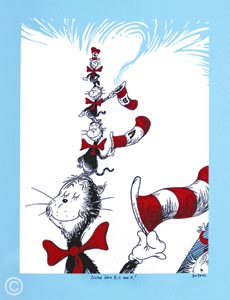
What would a fractal Uroboros look like? What if while eating its tail, it was spawning smaller urobori, each of which in turn produced urobori still smaller?
There would be an infinity of urobori just as the mother uroborous took its own last bite.
-
Why the is-ought gap is not a big dealBecause that is very much in keeping with the mainstream of Western philosophy, I would have thought. — Wayfarer
Yeah. The young are clever, but the old are wise. The specific action becomes absorbed into the general habit and loses it contingency in the process.
The difference with Peirce of course is that he saw the Universe or existence itself manifesting as the result of generalised reasoning (of the semiotic/sign relation variety). So reality is intelligible to us because intelligibility is how existence happens to be the case itself. Physical laws are habits of generalisation - the development of concrete constraints on undirected or spontaneous freedoms.
But Hegel and German Idealism and naturphilosophie were hardly a million miles away from that either. The difference there was they were theist or transcendental in then invoking spirit or God's design for the world. Peirce certainly flirted with the transcendental "get out of jail card", but on the whole thought about this as a scientist looking for a bootstrap story of immanent self-design. -
Why the is-ought gap is not a big dealOK, you seem to be valorizing science over 'mere' philosophy; an attitude which I would count as an expression of scientism. — John
Of course. If you can frame me in this fashion, its a TKO right?
So ignore the fact that I'm not playing the philosophy vs science game. Ignore that I am instead arguing for a natural philosophy metaphysics that you can go read about any time you choose if you pick up a copy of Peirce and check how his ethics was cashed out as the universal growth of concrete reasonableness. Ignore my actual argument and just pretend I believe things I don't. Then TKO!
If the purported relation between ethics and semiotics cannot be explained adequately in purely philosophical or ethical terms, then I can't see how it could be genuinely relevant to philosophy or ethics. — John
Pick any of the many papers on Peircean ethics at random.... http://lnx.journalofpragmatism.eu/wp-content/uploads/2014/12/Herdy.pdf
Peirce’s “second mind” about ethics (or better, Pure Ethics) appears to be related to his category of Thirdness. Roughly, the Third category includes everything that is of the nature of a law and involves the ideas of generality and continuity. It requires the human mind as a “subject foreign to mere individual action” where cognition takes place (CP 1.420, 1896).
In the logic of relations, the idea of a law presents itself as a triad, since it involves a third element that mediates between two other elements, a first and a second; and its mode of being, “consists in the Secondness that it determines” (CP 1.536, 1903). Thirdness belongs to a world of necessity; it is “how
an endless future must continue to be” (CP 1.536, 1903). Pure Ethics is related to the category of Thirdness because it is not concerned with individuality, understood as concrete ideals of conduct (morality), but with generality, understood as habits of conduct. Peirce is not interested in action per se, which belongs to the domain of Secondness, as explained in the previous section, but rather in the “governing”, “mediation”, or “self-control” of human action:
[The] pragmaticist does not make the summum bonum to consist in action, but makes it to consist in that process of evolution whereby the existent comes more and more to embody those generals [...]. In its higher stages, evolution takes place more and more largely through self-control, and this gives the pragmaticist a sort of justification for making the rational purport to be general. (CP 5, 433, 1905)
The point here, which Peirce advanced in the 1903 Lowell Lectures and after, is that the ultimate ideal lies in the process of self-control, the development of what he called“concrete reasonableness” (CP 5.3, 1902)22. Peirce can now see beyond the dualisms that characterize positive morality – they are mere fragments of the process of self-control. Continuity is the key notion in his procedural picture of Pure Ethics.
Peirce now sees an element of generality in ideals of conduct because he does not take them to be a fragment of a continuous process, but the continuous process itself; i.e. ideals of conduct are seen as relations of ideals of conduct. When Pure Ethics is procedurally understood in light of Peirce’s idea of continuity, the role of generality becomes clearer.
To sum up, I recall again Peirce’s words:
I have advanced my understanding of these categories much since Cambridge days; and can now put them in a much clearer light and more convincingly. The true nature of pragmatism cannot be understood without them. It does not, as I seem to have thought at first, take Reaction as the be-all, but it takes the end-all as the be-all, and the End is something that gives its sanction to action. It is of the third category. (CP 8.256, 1902; -
Why the is-ought gap is not a big dealI don't believe that the essence of subjective experience can productively be objectified as a mere "sign relation", any more than I believe it should be understood as being (somehow?) merely material. I don't think such propositions are even adequately intelligible; despite a long history of promissory notes. — John
Everyone has an opinion. Some of us also have the science. From the point of view of Peircean semiosis, that's moving along really nicely. -
Why the is-ought gap is not a big dealMy stance here is that reductionism inevitably gives us stronger reasons for action than holism, as holism inevitably comes into conflict with individuality, — darthbarracuda
So when I argue the exact opposite - that only my holism foundationally requires the irreducible freedom or spontaneity that your reductionism is so focused on denying - you simply pretend I said what you would need me to say so as to make what you say sound the more coherent option?
Champion.
Holism may be true in a descriptive sense but as far as I'm concerned it's irrelevant to any serious moral inquiry. — darthbarracuda
Of course. Your arguments collapse as soon as anyone opens the window and lets any air and sunlight in. So why would you want your right to a completely subjective view on any issue central to your self-esteem publicly challenged?
apokrisis

Start FollowingSend a Message
- Other sites we like
- Social media
- Terms of Service
- Sign In
- Created with PlushForums
- © 2026 The Philosophy Forum