
-
Should Science Be Politically Correct?Talk about thread-drift. I don't like the expression "quantum supremacy" because it implies no further scientific progress is likely in computing. Not because of PC, which I endured for years at the college level. How did this devolve into muscle-shirts? :brow:
-
When/How does Infinity Become Infinite?Cardinality has to do with sets being in a 1:1 correspondence with each other. is not a number in the common sense of the word. It denotes an equivalence class. It is not infinity. The terms "bijection", "injection", and "surjection" apply to functions and replace words such as "onto" or "into", which were easier to comprehend BITD, IMHO. They were introduced by a mysterious Frenchman, whose identity is baffling, in the 1930s. (Please don't try to explain "who" this was!) :nerd:
-
The bijection problem the natural numbers and the even numbersThe proper subset of the infinite set itself has to be infinite — TheMadFool
Really? Consider N={1,2,3,...} and S={1,9} No 1:1 correspondence. You are missing "equivalence"
"A" proper subset? Not "The", I think. -
Chomsky & GradualismLanguage frames much of our thinking, placing thoughts in a context that allows communication of those thoughts, sometimes imperfectly, to others. If not, why does this forum exist?
I'm probably hopelessly naive. -
Is Cantor wrong about more than one infinityAxiom of Infinity is anything but established and self-evidently true. — ssu
And yet it sounds so simple. A set is a collection of "elements" or objects and the axiom says we can consider the collection itself as an object, but perhaps not the same kind of object - but wait, can a set be considered an element of itself??? :roll: -
When/How does Infinity Become Infinite?When you get down to the nitty gritty and use numbers, as in a computer program, they are all rational and thus countable. So how many rational numbers (fractions) do you think lie in the interval [0,1]? :chin:
-
What time is notI don't think measure theory has much to do with this. But maybe it does. A non-measurable set is not a triviality. A point on the real line simply corresponds to a specific real number. In the complex plane, a point corresponds to a specific complex number. If you don't accept Cantor's conclusions that the real numbers cannot be "listed" (counted) then you are destined to wander through a metaphysical jungle. Remember the suggestion: If you come to a fork in the road, take it. :cool:
-
When/How does Infinity Become Infinite?It's interesting that the axiom of infinity and the axiom of choice can lead to such lengthy discussions. On the surface they seem so benign. The first simply says there is a set containing the natural numbers and the second says, roughly, that you can pick an item out of each set in a collection of sets. Most mathematicians go serenely about their investigations giving these two axioms little to no thought.
I have already given my opinions of infinities as being limit concepts, with virtually no mention of "the point at infinity". Infinitesimals, on the other hand, have been placed in a proper mathematical model and can be used to generate calculus. I would think these tiny little objects might generate more controversy than infinity, but apparently not. As part of the hyperreal number system they are intimately connected with infinities.
I never went beyond naive set theory, so these mathematical notions are merely mildly amusing. Keep in mind what I said before: the foundations of mathematics is a relatively recent subject that attempts to place all the math that has worked so well over millennia in "proper" logical frameworks. I suspect there are a few analytic philosophers on this forum who know far more than me. -
What is the difference between actual infinity and potential infinity?www128.pair.com/r3d4k7/Mathematicae7.html
https://en.wikipedia.org/wiki/Riemann_sphere#Extended_complex_numbers
You can't even do links here it seems. This is a page on my website, and it comes up first time, then won't connect. It keeps returning to this forum. I don't know what is going on. The Wikipedia site keeps coming up. Not mine. -
What is the difference between actual infinity and potential infinity?As a professional math guy, here is my opinion regarding infinity and the complex plane:
For me and my colleagues, |z| getting larger and larger without bound means z -> infinity. An actual point at infinity is irrelevant in practice. If I think of time going to infinity, I mean it in this sense. If you look at the projective plane sitting below the Riemann sphere, you can see z moving further and further out, without bound, and as it does so its projection on the sphere moves closer and closer to the north pole, but never reaches it. -
What is the difference between actual infinity and potential infinity?OK. Got the message. $5/month for permission to hot-link images. Maybe, maybe not. We'll see if it's worth it. :sad:
-
What time is notCarry on in your crusade. It's above my pay grade and below my interest. (that's not my quote, someone on Wiki TALK). The link to math stackexchange is more reliable than the Wiki sites IMO. Even there things get out of hand. For me and my colleagues, |z| getting larger and larger without bound means z -> infinity. An actual point at infinity is irrelevant in practice. If I think of time going to infinity, I mean it in this sense. If you look at the projective plane sitting below the Riemann sphere, you can see z moving further and further out, without bound, and as it does so its projection on the sphere moves closer and closer to the north pole, but never reaches it.
-
What is the difference between actual infinity and potential infinity?I can't get the image to stay. Suggestions?
-
What time is notI've never known a mathematician who actually used z/0 = infinity. It's simply a symbol that ultimately refers to the north pole of the Riemann sphere.
Here's a comment from the talk page on Wikipedia. Not mine.
"The Riemann sphere is just the complex plane with an extra point added in, called the point at infinity. For analogy, look at the real line. There, when dealing with limits, it is convenient to pretend that there exist two points ∞ and -∞ which are endpoints of the real line. Then ∞+∞=∞, and all other formal rules makes it easier to deal with limits without worrying much about particular cases of infinite limit.
In the same way, one can pretend that all rays in the complex plane originating from 0 actually have an endpoint, and they all eventually meet at infinity, a point far-far away (not accurate as Elroch mentions above, but helpful in imagining things).
The Riemann sphere is not the same as the usual sphere, but they are topologically equivalent. Imagine a normal sphere, remove the north pole, and make the obtained hole there larger and larger (assume the sphere is made of very flexible rubber). Eventually, that sphere without a point can be flattened in a plane, the complex plane. The original north pole corresponds to the point at infinity in the complex plane.
There is only one Riemann sphere, as the point at infinity is just a symbol, its actual nature is not relevant. "
You need to move away from your fixation on the symbol z/0, which you seem to believe has some quality that disrupts reasoning in mathematics. I suggest you look into the Axiom of Choice, about which there is genuine relevance to mathematical thought.
But you did score a point here! Congrats. :grin: -
What time is notPythagoras demonstrated that the ratio between two perpendicular sides of a square is irrational. — Metaphysician Undercover
What do you mean? The ratio "of"? Take a square with sides =1. The 1/1=1. Are you talking about the hypotenuse of a right triangle? Like each side = square root of two?
The definition used for ∞ is z/0=∞. — Devans99
This is wrong, and shows how difficult it is to debate with you. Apparently you know so little of math you cannot even frame your beliefs correctly.
https://math.stackexchange.com/questions/2424005/what-does-infinity-in-complex-analysis-even-mean/2424111
Software, what is your math background? -
What is the difference between actual infinity and potential infinity?Can you bring an example of an imaginary structure, created neither for the purpose of copying something in the world, nor for the purpose of resolving a specific type of problem — Metaphysician Undercover
You ask, and it shall be so . . .
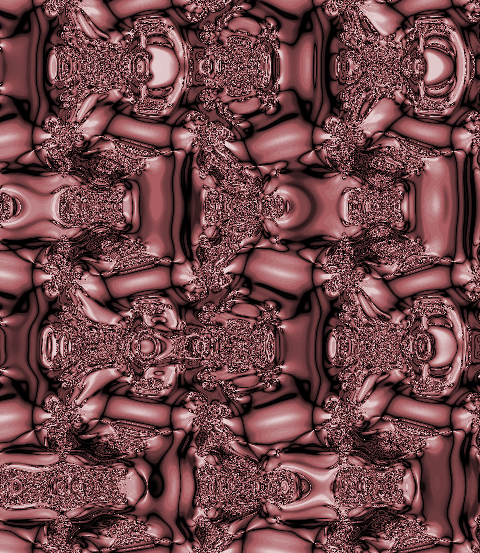
I work with this sort of thing all the time.
Later: Interesting, my image came up perfectly, then when I checked part of the code had been deleted (by whom?). It's coming up now. Let's see how long it will last this time.
Well, it didn't last. There must be a rule against linking to images on this site. -
What time is notThe infinite sum concept in maths has definite problems, see here for an example: https://en.wikipedia.org/wiki/Thomson%27s_lamp — Devans99
It should please you to know that you are at the point mathematicians were at two and a half centuries ago as they pondered what infinite sums meant. Does the sum S=1 -1 +1 -1 + 1 ... make any sense? Indeed, the partial sums are 1,0,1,0,1,... like that pesky light switch (which is seen as pretty silly these days - not a "definite problem"). After Cauchy and Weierstrass and others formalized convergence criteria there was still the amusing question of series that oscillated like the one above. Then other mathematicians developed summation processes (SP) that had the following features: If a series converged in the normal sense, it must converge to the same value in the SP , but some series that did not converge in the normal sense might "converge" in this new way.
For instance, one such SP is to add the first n partial sums and divide by n. If the given series converges as n gets larger without bound, this new process will converge to the same value. But in the above conundrum, note that this process yields a limiting value of 1/2. And some mathematicians long ago stipulated that value for the series, before Cauchy and Weierstrass had their says.
As for measures, although the simplest is the length of an interval on the real axis, used in the Riemann integral, they get much, much more complicated and abstract and are used in what are called functional integrals. I suggest you don't go there. If you are curious, go to my page in researchgate and pull up the note on functional integrals. -
What is the difference between actual infinity and potential infinity?That's ironic, the numbers approach infinity (limitless), as the condition approach the limit — Metaphysician Undercover
Not so for Planck Time. You'll need a real, live physicist to discuss this properly. It used to be that this limit was variable according to some physical features. -
Critical thinkingEven so the guy who solved Fermat’s theorem wasn’t exactly happy about solving it because it left him bereft of purpose. — I like sushi
I'm sure he's found something else to fill those lonely hours. -
What time is notf its uncountable/infinite, then that suggests that 1/0 is legitimate — Devans99
Wow. This goes on forever, doesn't it?
1/0 undefined. Suggest you move on to another topic. "infinite sum" is OK amongst professional mathematicians. -
Critical thinkingIf you have a point with zero length, how many are there on a line segment length one? — Devans99
Each point corresponds to a specific real number. How many real numbers are there in the unit interval?
This all stems from my statement about ‘scientists’ being happy about being wrong — I like sushi
I would question whether "happy" is the appropriate description. In mathematics if I were to work trying to prove a theorem and then a colleague showed the theorem to be false, I would not be "happy" - rather disappointed but resigned to the acceptance of fact - and then cheer myself up by moving on to another project. :chin: -
What time is notWell for example I contend that because a mathematical point has length 0 therefore there are, on a line segment length 1, 1/0=UNDEFINED points, rather than an infinite number of points. — Devans99
"points" are an intriguing notion aren't they? Like "lines" with no thickness. There are theories of time that posit the non-existence of a "present point" But they are not useful in physics. -
Critical thinkingIf you google supertopo forum and go to "what is mind" you will find 25K posts that circle around this question.
-
Ergodic and Butterfly Theories of HistoryWiki: "The mathematical universe hypothesis suggests a new paradigm, in which virtually everything, from particles and fields, through biological entities and consciousness, to the multiverse itself, could be described by mathematical patterns of information"
I don't subscribe to this, but it is an interesting perspective.
I do find a multiverse concept appealing, however. Each "instant" an uncountably infinite number of universes spring into existence with a sort of probability directing event patterns. Time travel without the grandpa effect might be possible.
See, I do metaphysics too. :wink: -
What time is notThe axiom of choice in theory allows one to decompose into pieces a solid sphere of diameter one foot, then reassemble those pieces into a solid sphere of diameter two feet. :gasp:
-
On the very idea of irreducible complexityMy question is - can the idea of irreducible complexity be interesting philosophically? — Wheatley
It appears this concept overlaps with weak and strong emergence. -
What is the difference between actual infinity and potential infinity?It all breaks down as limits are approached:
Wiki: "The term Planck scale refers to the magnitudes of space, time, energy and other units, below which (or beyond which) the predictions of the Standard Model, quantum field theory and general relativity are no longer reconcilable, and quantum effects of gravity are expected to dominate. This region may be characterized by energies around 1.22×10¹⁹ GeV (the Planck energy), time intervals around 5.39×10−44 s (the Planck time) and lengths around 1.62×10⁻³⁵ m (the Planck length). At the Planck scale, current models are not expected to be a useful guide to the cosmos, and physicists have no scientific model to suggest how the physical universe behaves. The best known example is represented by the conditions in the first 10−43 seconds of our universe after the Big Bang, approximately 13.8 billion years ago. " -
What time is notFactoid: The harmonic series (1 + 1/2 + 1/3 + ...) diverges to infinity so slowly that the sum of the first six million terms is less that 21.
Another Factoid: For those of you interested in the real line, did you know that if you have a cube, one foot on a side, say, there are exactly the same number of points within and on the cube as there are along one edge?
And if the Axiom of Infinity disturbs you, you would be frantic if you realized the consequences of the Axiom of Choice: " Informally put, the axiom of choice says that given any collection of bins, each containing at least one object, it is possible to make a selection of exactly one object from each bin, even if the collection is infinite"
Doesn't that sound harmless? :nerd: -
Critical thinkingAssuming you were 20 year old back then, you are approximately 77 right now. You are probably the oldest user here then — Wittgenstein
I'm 82. Oh, for the days of youth (77)! :cool: -
What time is notI meant the real number line but the set of real numbers is uncountably infinite so l think l did mess up there. You can clear things up . :smile:
I hope it is correct now. — Wittgenstein
Any open line segment is in one-to-one correspondence with the entire real line, thus the points on it are uncountable. -
Critical thinkingHis theory was so ahead of his time that even the mathematicians of the highest calibre struggled to understand its importance — Wittgenstein
Indeed. I had trouble with it when I first encountered it in 1962. :yikes: -
What time is notA line segment is made up of countably infinite number of points. That's the way the real numbers work. — Wittgenstein
Actually they don't. You are very wrong. But that's OK, carry on. :scream: -
Why philosophy?Why Philosophy?
To staff philosophy departments.
I do think, however, that philosophy pertaining to human behavior and societal matters is appropriate. Morals. ethics, the law, etc. are all excellent venues for philosophical deliberations.
Metaphysics, not so much. It seems to lead nowhere. -
Critical thinkingWith the right parents CT can be cultivated at an early age, I suspect. Of course, such parents probably have the abilities by nature and thus impart them to children, by nature. All I can say is that students that don't have these skills when they enroll in college classes don't often develop them there.
-
What time is notWe will never, ever, be able to empirically prove spacetime is continuous, but we might be able to empirically prove it is discrete. — Devans99
And I look forward to the day. Spacefoam anyone? :nerd: -
What time is notand we have never found anything infinitely divisible in nature — Devans99
Maybe we haven't tried hard enough? I've seen arguments like this many times, projecting past failures to future attempts. -
What time is notBut that's a tiny minority of possible numbers. The vast majority of numbers have infinite decimal places - that infinity of decimal places (=information) would be the same for the particle in a millimetre of space as for a particle in a light year of space which seems absurd to me. — Devans99
Were you aware there is a one-to-one correspondence between any interval on the real line, no matter how small, and the entire infinite real line? It's easy to construct. You could do it quickly with a pencil and paper. :cool: -
Ergodic and Butterfly Theories of HistoryThe mathematics of analogous dynamic systems is fun to play with, but social sciences are messy, even economics and history where one looks backward rather than forward. I don't have much hope of seeing Lem's ideas quantified in any predictive manner. But it's fun to speculate.
jgill

Start FollowingSend a Message
- Other sites we like
- Social media
- Terms of Service
- Sign In
- Created with PlushForums
- © 2026 The Philosophy Forum